Why Are My Sunflowers Drooping? Causes, Fixes, and Prevention Tips

September 23, 2026
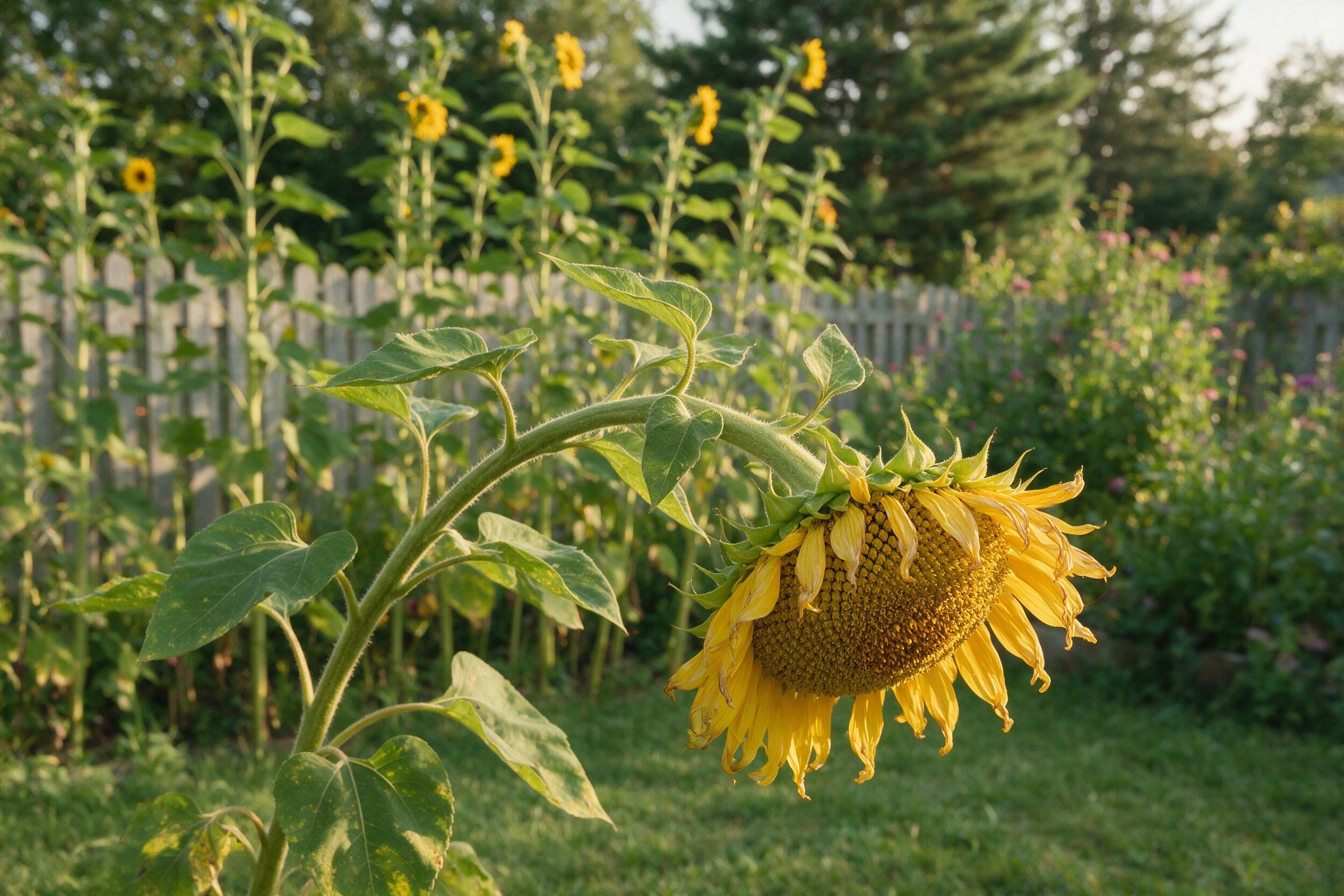
You step outside to check on your garden and notice your sunflowers hanging their heads — stems bent, flower faces pointed at the ground instead of the sky. It can feel alarming, especially when these plants are supposed to be the cheerful, sun-chasing stars of a summer garden.
The good news is that drooping in sunflowers is one of the most diagnosable problems a gardener can face. Drooping sunflowers are almost always a symptom — not a disease — and the most common cause is acute water stress, either from insufficient moisture or from waterlogged soil that suffocates roots. Once you know what to look for, most cases are fixable within a day or two.
This guide walks you through every reason your sunflowers might be drooping, how to tell them apart, and exactly what to do about each one. Whether you’re growing them in a backyard bed, a container on a porch, or cutting them for a vase, the answers are here.
What Does It Mean When Your Sunflowers Are Drooping?
Drooping in sunflowers refers to any downward bending of the stem, flower head, or leaves that takes the plant out of its normal upright posture. It can affect seedlings just a few inches tall, mature plants in full bloom, or cut flowers sitting in a vase — and the cause is different in each case.
Drooping in sunflower plants can occur in both young and older plants. What to do about drooping sunflowers depends on what stage of growth they’re in and the cause of the drooping. A seedling drooping after transplanting means something very different from a mature flower head bowing under its own weight.
Sunflowers watch the sun by way of a process called heliotropism — their flower-faces seek out the position of the sun throughout the day and move along with it. As sunflowers mature and their flower heads become heavy with seeds, heliotropic movement often ceases. Mature sunflower heads typically remain facing east, which allows for rapid warming in the morning and can increase pollinator visits. A mature sunflower head that consistently faces east or droops slightly as seeds develop usually indicates healthy behavior.
Understanding the difference between normal plant behavior and a genuine stress response is the first step toward getting your sunflowers back on track. You can also use a plant identification app to help cross-reference what you’re seeing with known symptoms.
Is Drooping in Sunflowers Always a Sign of a Problem?
No — and this is where many gardeners panic unnecessarily. Some drooping is completely normal and requires no intervention at all.
Mature sunflowers naturally exhibit mild diurnal droop in late afternoon — a harmless circadian rhythm — not a sign of distress. Always rule out this normal behavior before intervening. If you observe between 4–6 PM on a clear, warm day and drooping occurs only then and fully recovers by morning, it’s likely nastic movement — a non-directional response to light and temperature changes. This is normal and requires no action.
If you notice your young sunflowers drooping at night, don’t worry. That’s just their natural heliotropism — they’re tracking the sun all day and resetting at night. It’s a sign of a healthy, growing plant.
End-of-season drooping is also normal. The reason your sunflowers are drooping may simply be that they are fully matured and are ready for harvesting seeds. There is no way of avoiding this because the weight of the seeds is pulling down the structure and causing the heads to droop or nod downwards. You can check if the seeds are ready for harvesting once the back of the head starts yellowing and turning brown and the petals fade.
Pro Tip: Before doing anything, observe your sunflowers at different times of day. If they droop in the afternoon and stand upright by morning, that’s normal behavior. If they’re drooping all day long, that’s your cue to investigate further.
The drooping you should address is persistent, happening throughout the day, and often accompanied by other symptoms like yellowing leaves, soft stems, or visible pests.
Watering Issues Causing Sunflower Drooping
Water problems — both too little and too much — are the number-one cause of sunflower drooping in American home gardens. The tricky part is that both extremes produce similar-looking symptoms.
Underwatering
When sunflowers are healthy, they store enough water in their stalks to hold up the weight of their flower heads without drooping. If you’ve had a dry spell, you might need to water more often. You should keep them regularly watered throughout the growing cycle, and if they’re drooping because they need water, the leaves will start to droop as well.
With underwatering, leaves are dry, wilting, and may turn brown at the tips. Soil is dry and cracked. The fix is straightforward. Water deeply but slowly — apply 1–2 gallons per mature plant, letting water soak in gradually over 20–30 minutes. Within 90 minutes of deep, targeted watering, healthy seedlings and established plants often perk up visibly — provided no irreversible damage has occurred.
Overwatering
Overwatering can suffocate the roots, leading to similar wilting and potentially root rot. The soil should feel moist, not soggy, about two inches down. With overwatering, leaves appear limp and may turn yellow. Soil feels soggy, and a squeezed soil ball retains its shape. Root rot smell or visible mold indicates severe overwatering.
Sow sunflowers in full sun in moderately fertile, well-draining soil. Water them with one inch of water per week depending upon rainfall. Check the soil prior to watering, and allow the top ½ inch of soil to dry between watering, which will help prevent fungal infections.
Pro Tip: Stick your finger 2 inches into the soil before watering. If it feels damp, hold off. If it feels completely dry, water slowly and deeply at the base of the plant — never overhead — to reduce fungal risk.
Light Conditions Behind Sunflower Drooping
Sunflowers are high-demand sun plants, and insufficient light is a surprisingly common cause of weak, drooping stems — especially for seedlings started indoors.
Sunflowers need at least 6 to 8 hours of direct sunlight daily. If they’re not getting enough, they can become leggy and weak, making them prone to drooping. Their rapid growth rate can sometimes outpace the strength of their stems, causing them to bend under their own weight. Insufficient sunlight exposure during this critical period can lead to weak stems and eventual drooping.
Not just sunflower seedlings, but all seedlings grown indoors can get leggy and even fall over as they strain toward the natural sunlight. If you’re growing seedlings indoors, place them in the most sunny spot you can — a south-facing windowsill is ideal.
For potted sunflowers, the solution is simple: move the container to a sunnier location. For in-ground plants that are already established in a shaded spot, you have limited options. Supporting the stem with a stake while the plant adjusts is the most practical short-term fix. If you’re planning next season’s garden, check out this guide on plants suited to low-light areas — sunflowers are not among them.
Soil, Nutrients, and Root Health Causing Sunflower Drooping
What’s happening underground has a direct effect on whether your sunflowers stand tall or slump. Poor soil structure, nutrient imbalances, and root damage are all contributors.
Soil Quality and Drainage
The foundation of any strong plant is its soil. If your soil is compacted, lacking essential nutrients, or doesn’t drain well, the roots won’t develop properly, and the plant won’t have the stability it needs to stand tall.
Nutrient Imbalances
Sunflowers don’t usually need fertilizer, but a little boost won’t hurt them. Too much nitrogen, however, will result in healthy green foliage and few blooms. Use a low-nitrogen food such as a 5-10-10.
Most drooping linked to nutrition stems from low potassium — not nitrogen. If potassium is below 120 ppm, side-dress with sulfate of potash (0-0-50) at 1 tablespoon per plant, worked 2 inches into soil and watered in. Run a simple soil test using a lab-certified kit to confirm nutrient levels before amending.
Root Damage and Transplant Shock
Sunflowers are well-known for hating to have their roots disturbed. Transplanting them from a plastic container can bend or snap that precious taproot. Once that happens, the seedlings typically begin to droop, and they die very quickly after that.
If you must start seeds inside for later transplant, start them in peat pots. When you go to transplant them, tear off the top ½ inch of the peat pot so it doesn’t wick away moisture. Also, harden off the seedlings before planting so they can acclimate to the outdoor temperatures.
For potted sunflowers you suspect have root rot, carefully invert the container and slide the root ball out. Rinse gently with lukewarm water. Healthy roots are white-to-light tan, crisp, and branched. Rotten roots are brown or black, brittle or mushy, and slough off easily. A strong, fermented odor confirms anaerobic decay.
Environmental Stress Triggering Sunflower Drooping
Even well-watered, well-fed sunflowers can droop when environmental conditions work against them. Heat, wind, and physical weight are three factors that catch many US gardeners off guard during peak summer months.
Heat Stress
Heat stress can also cause wilting in sunflowers. Heat stress can be identified by leaf curling, browning edges, and wilting during hot days. Protect your sunflowers by providing shade during the hottest part of the day and ensuring adequate watering to help them cope with the heat. In states like Arizona, Texas, and Florida, afternoon shade cloth over young plants can prevent heat-related drooping entirely.
Top-Heavy Flower Heads
Some sunflowers can attain great heights with large sunny yellow heads. An obvious reason for drooping heads is simply top-heavy sunflowers. This is especially common with giant varieties like Mammoth or Russian Giant. All you need do is provide support to the plant by inserting a stake or cane into the ground and loosely tying the stem to it, especially at its upper half. Secure but loose is the way to tie sunflowers, particularly near the top, as the plant will want to adjust its position toward the sun throughout the day.
Wind Damage
Strong winds can snap or weaken sunflower stems, causing them to lean or droop on one side. Consider dwarf or branching varieties if you live in a windy area or have challenging soil. Staking at planting time is far easier than trying to support a fully grown plant after wind damage. For more on plants that handle tough conditions, see this list of wind-tolerant plants.
Pests and Disease Leading to Sunflower Drooping
Pests and fungal diseases are less common causes of sunflower drooping than watering issues, but they’re harder to reverse — and some are irreversible. Catching them early makes all the difference.
Common Pests
Insects like caterpillars and spider mites can damage young sunflower seedlings, causing them to droop, yellow, and even die. Little critters like aphids, spider mites, or cutworms can wreak havoc — they weaken the stems and disrupt the flow of nutrients, leaving your sunflowers looking sad and droopy.
Stem borers deserve special attention. If drooping persists beyond 24–48 hours after correcting irrigation, inspect for root rot, stem borers (look for sawdust-like frass at the base), or severe nutrient imbalances. If borers are present, cut and destroy infested stems immediately — do not compost. For prevention, apply spinosad-based sprays to stems and leaf undersides every 7 days starting at the 4-leaf stage.
For aphids, blast them off with a sharp spray of water early in the day, then follow with insecticidal soap applied at dusk to avoid leaf burn. Keep the area around the seedlings free from debris and weeds that harbor pests. You can also explore companion planting strategies — some neighbors naturally deter the insects that target sunflowers.
Fungal Diseases
Phoma black stem, caused by the fungi Phoma macdonaldii, and phomopsis stem canker, caused by Phomopsis helianthi, both make Helianthus annuus flower heads bow over. Since they also turn the stems black and cause the plant to wilt, you’ll probably notice those other symptoms first.
According to Robert Harveson, extension plant pathologist at the University of Nebraska-Lincoln, there are no effective fungicides that work to eliminate either disease. It’s more helpful to choose varieties that can resist or tolerate either condition — but don’t expect complete protection.
There is no known chemical control for phoma black stem or phomopsis stem canker, so what remains is to uproot and discard the plants. Do not include these infected plants in your compost, as the disease will spread.
Fungal diseases can cause a number of issues with sunflowers, including damping off. One of the first signs of damping off is wilting or drooping, followed by yellowing foliage, stunting, and failure to thrive. Prevent diseases by ensuring good air circulation, avoiding overhead watering, and monitoring for early signs of infection.
Important Note: Powdery mildew and phoma black stem look different. Powdery mildew presents as a white, dusty coating on leaves and rarely causes drooping on its own. Black stem turns the stalk dark and causes rapid, whole-plant collapse. Identifying the right disease matters before you take action.
How to Diagnose Why Your Sunflowers Are Drooping
A systematic approach saves time and prevents you from applying the wrong fix. Work through this step-by-step process before reaching for the watering can or a spray bottle.
- Check the time of day. Observe between 4–6 PM on a clear, warm day. If drooping occurs only then and fully recovers by morning, it’s likely nastic movement and requires no action.
- Feel the soil. Push your finger 2 inches into the soil near the base of the plant. Bone dry means underwatering; cold and soggy means overwatering or poor drainage.
- Look at the leaves. Disease-related wilting shows yellowing leaves; inspect for pests and environmental factors. Dry, brown-tipped leaves point to drought stress.
- Inspect the stem base. When plants incur fungal ailments, you’ll be most alarmed by the physical change in the plant’s stalks, not the curvature of the flower heads. Look for blackening, soft spots, or frass (sawdust-like powder) that signals borers.
- Check the plant’s age and season. Sunflowers may start to droop toward the end of their life cycle, even if they’re not quite ready for harvest. If petals are fading and the back of the head is yellowing, this is likely natural.
- Ask yourself key questions. Did you fertilize in the last 10 days? Was there heavy rain or irrigation? Was the plant moved recently? Was it exposed to herbicide drift from lawn treatments? Glyphosate exposure — even at low doses — causes rapid, irreversible drooping and necrosis within 48 hours.
If you’re still unsure after working through these steps, a plant care app can help you cross-reference your symptoms with a larger database of known plant problems.
| Symptom | Most Likely Cause | Key Distinguishing Sign |
|---|---|---|
| Droops in afternoon, recovers by morning | Normal heliotropism / heat response | No other symptoms present |
| Whole plant wilting, dry soil | Underwatering | Leaves also drooping, brown tips |
| Wilting with soggy soil, yellow leaves | Overwatering / root rot | Foul odor from soil, mushy roots |
| Flower head drooping, petals fading | Natural end of life cycle | Back of head yellowing or browning |
| Stem turning black, plant collapsing | Phoma black stem or stem canker | Dark discoloration on stalk |
| Seedling drooping after transplant | Transplant shock / root disturbance | Recently moved from pot or indoors |
| Drooping with sticky residue or webbing | Aphids or spider mites | Visible insects on leaves or stems |
How to Fix a Sunflower That Is Drooping
Once you’ve identified the cause, the fix is usually straightforward. Here’s what to do for each scenario.
Fix Underwatering
Water deeply but slowly — apply 1–2 gallons per mature plant, letting water soak in gradually over 20–30 minutes. Once replenished, they’ll perk right up. Going forward, water at the base rather than overhead to reduce fungal risk.
Fix Overwatering and Root Rot
Stop watering immediately and let the soil dry out. If the plant is in a container, check the drainage holes — blocked holes are often the real culprit. For in-ground plants, improve drainage by working compost or coarse sand into the surrounding soil. If root rot is severe, the plant may not recover, but removing it promptly protects neighboring plants.
Fix Transplant Shock
There is not much you can do except keep the plant well-hydrated and keep your fingers crossed. If you have suddenly transplanted the sunflowers from a partially shaded spot to a spot in full sun, arranging a temporary barrier to provide shade during the afternoons may help.
Fix Top-Heavy Drooping
Drive a wooden or bamboo stake into the ground about 6 inches from the stem and use soft garden twine to loosely tie the upper portion of the stem to the stake. If it’s not a lack of water, try adding some support to the stalks to help ease their burden.
Fix Pest Infestations
Treat a drooping plant with a mild insecticidal soap if you suspect a pest infestation. For stem borers, cut the affected stem below the entry point and dispose of it in the trash — not the compost. For spider mites, a strong spray of water followed by neem oil applied in the evening is effective.
Fix Fungal Disease
For phoma black stem or phomopsis stem canker, removal is the only option. The afflicted plants will have to be uprooted and disposed of. Bag them and put them in the trash to prevent spores from spreading. Do not replant sunflowers in the same spot the following year.
Revive Cut Sunflowers in a Vase
To revive drooping cut sunflowers, cut about an inch off each stem at a 45-degree angle and place the flowers back in cold, fresh water. You should begin to see them perk back up within 24 hours. If possible, change the water every day. When placing the flowers back in the clean water, jiggle them about — this will release any air bubbles caught at the bottom of the stem that prevent water from being drawn up and cause wilting.
How to Prevent Sunflower Drooping Going Forward
Prevention is far easier than recovery, and a few smart habits at planting time can eliminate most drooping issues before they start.
- Direct sow when possible. Sunflowers do best when they are seeded directly outside. This avoids transplant shock and taproot damage entirely.
- Choose the right site. Sow sunflowers in full sun in moderately fertile, well-draining soil. A spot that gets 6–8 hours of direct sun is non-negotiable for strong stem development.
- Stake at planting time. For extra-large bloomers, consider putting stakes in the ground at planting time to avoid disturbing the roots later on.
- Mulch the base. Mulching around the base of your sunflowers helps retain soil moisture and keeps the soil temperature more consistent.
- Water at the base, not overhead. Water at the base of the plant rather than overhead to reduce the risk of fungal diseases. Soaker hoses are great for this.
- Rotate planting locations. Rotate where you plant your sunflowers each year to prevent soil-borne diseases from building up.
- Space plants properly. If plants are spaced so close that leaves don’t get enough air circulation to dry properly, the risk of black stem and stem canker increases.
- Consider compact varieties. Consider planting branching varieties with smaller blooms. They’re easier to deadhead, and the droop is not at all noticeable when they’re finishing up their growing season.
Thinking about what else to grow nearby? Companion plants can support soil health and deter pests. Browse this guide to plants that grow well alongside other garden favorites, or explore drought-tolerant options if you’re in a hot, dry region where consistent watering is a challenge. You might also consider adding pest-repelling plants nearby to reduce insect pressure on your sunflowers.
Pro Tip: If you want to grow sunflowers for seed harvest, plant a late-season variety in early summer. That way, if they start bowing down in anticipation of the harvest in late summer or early fall, you won’t be looking at bowed heads for long before the first frost.
FAQ
Why are my sunflower seedlings drooping after transplanting?
Transplant shock may cause sunflower seedlings to bend, wilt, or slump. This doesn’t happen with seeds you sow directly into the garden — sunflowers are well-known for hating to have their roots disturbed. Keep the plant well-watered and shaded during the hottest part of the day while it adjusts. Recovery can take 5–10 days.
Why is my sunflower drooping even though I just watered it?
Paradoxically, a sunflower that droops right after watering may be suffering from overwatering, not drought. If the soil was already saturated, adding more water increases root oxygen deprivation. Check whether the soil is soggy rather than just moist, and look for yellowing leaves and a foul odor near the root zone as confirmation.
Can a drooping sunflower recover?
Drooping sunflowers are almost always a symptom, and the most common cause is acute water stress. Within 90 minutes of deep, targeted watering, healthy seedlings and established plants often perk up visibly — provided no irreversible damage has occurred. Recovery from pest damage or transplant shock takes longer but is still possible in most cases. Fungal stem diseases like phoma black stem are generally not recoverable.
Why do my cut sunflowers droop in the vase?
Sunflower stems are thick and require a lot of water. If your cut sunflowers are drooping, it’s likely because they are not drinking enough water. Sometimes air can get trapped in the tips of the stems, which makes it difficult for them to drink. This causes the stem to lose its water tension and begin to droop. Recutting the stem at a 45-degree angle and placing it in fresh, cold water usually solves the problem within a day.
Is it normal for sunflowers to droop at night?
Yes. Young sunflowers actively track the sun during the day and reset their orientation overnight. The apical bud of the plant will track the sun during the day from east to west, and then will quickly move west to east overnight as a result of the plant’s circadian clock. A slight droop or directional shift at night is part of this process and is not a cause for concern.
What pests cause sunflowers to droop?
The most common culprits in US gardens are aphids, spider mites, cutworms, and sunflower stem borers. Check the color of the leaves for yellowing. If they’re turning yellow, inspect them with a magnifying glass for pests like spider mites. Stem borers leave sawdust-like frass at the base of the stalk and cause sudden, dramatic collapse of the upper plant. For more on managing garden pests through plant selection, see this guide to pest-deterrent plants and deer-tolerant varieties that hold up in challenging garden conditions.
When should I harvest sunflowers to prevent drooping?
Waiting too long before harvesting can lead to excessive drooping of the flower heads due to natural wilting processes. To ensure longer vase life and reduced chances of droop, it’s best to harvest sunflowers before the flowers fully open. For seed harvesting, wait until the back of the head turns yellow to brown and the petals have dropped — that natural droop tells you the seeds are ready.