
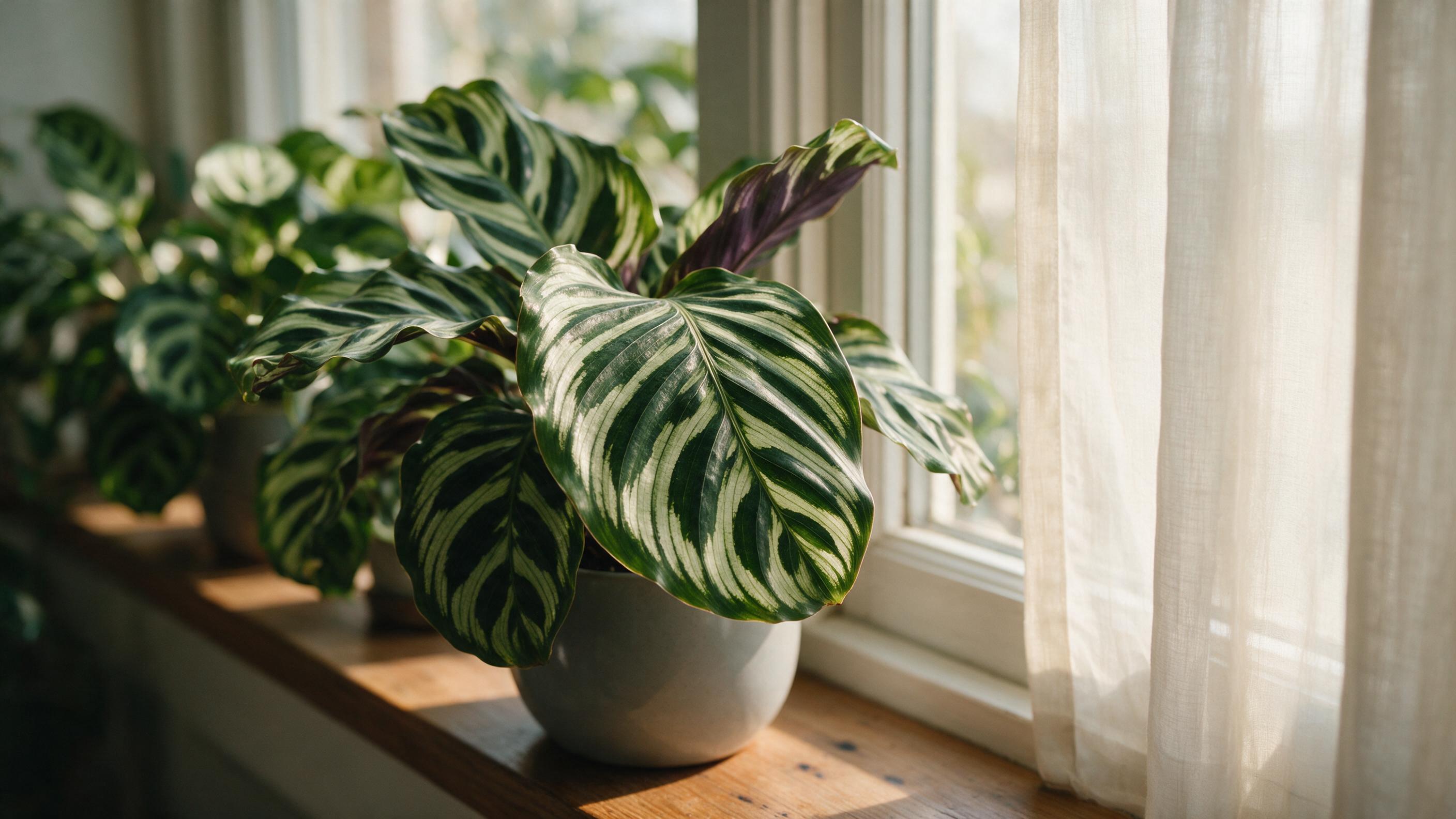
Calathea is one of the most expressive houseplants you can own, and curling leaves are its clearest way of telling you something is off. If you’ve walked over to your plant and noticed the edges rolling inward, you’re not alone — this is one of the most common concerns among calathea owners across the United States.
The tricky part is that six different causes can produce almost identical curling, so reaching for the watering can when the real issue is low humidity will actually make things worse. This guide walks you through every likely reason your calathea’s leaves are curling, how to tell them apart, and exactly what to do about each one.
What Does It Mean When Your Calathea Leaves Are Curling?
When a calathea curls its leaves inward, it’s a defense mechanism. The plant is trying to reduce the surface area exposed to air, which slows down moisture loss through the leaves. It’s essentially saying: “I’m losing water faster than I can replace it” — whether because the air is too dry, the roots aren’t getting enough water, or the roots are too damaged to deliver water to the leaves.
The time to worry is when the outer edges begin to roll up on themselves. This is usually your plant’s first response to protecting its leaves, since it can help preserve energy, keep moisture in, and protect it from scorching.
Calathea plants (Calathea spp., family Marantaceae) are native to tropical Central and South America and are known for their boldly patterned foliage. Because they evolved in humid rainforest understories, they’re finely tuned to their environment — and quick to react when conditions drift from what they need. Understanding that reaction is the first step to fixing it. You can learn more about the wide variety of types of plants and their care needs to better understand how tropical species like calathea differ from other houseplants.
Is Curling in Calathea Always a Sign of a Problem?
Not always — and this distinction matters before you start changing anything about your care routine. Calatheas naturally fold their leaves upward at night as part of their circadian rhythm. This is called nyctinasty, and it’s completely normal.
Like their cousin Maranta leuconeura, the prayer plant, calathea experiences nyctinasty — the opening and closing of leaves in response to light. At night, calathea pull their leaves inward and upward, as if in prayer, to collect dew that settles on their leaves. In the morning, their leaves relax downward and spread outward again to take full advantage of the sunlight.
However, if leaves are curling inward — not upward — and staying curled during the day, that indicates a problem, usually low humidity or underwatering. The key question to ask yourself is: are the leaves still curled when you check on your plant in the middle of a bright afternoon? If yes, something in your care routine needs attention.
Pro Tip: Check your calathea at midday, when it should be fully open. Leaves that remain tightly curled during daylight hours are a reliable signal that a care issue needs your attention — not just normal nighttime movement.
Watering Issues Causing Calathea Leaf Curling
The most common culprit behind curling calathea leaves is dry soil. Your calathea loves soil that stays nicely moist, so it’s best to avoid overwatering or letting it dry out too much. A good rule of thumb is to water when the top 1 to 2 inches of soil feel dry.
These plants store water in their thick leaves. When the soil runs out of moisture that they can pull from, they start drawing on the water reserves in their leaves, and those leaves dry up and curl. When this happens, place your plant in your sink or tub without the saucer, fill the basin with about 3–4 inches of water (make sure it isn’t hot), and allow the plant to soak up water through the drainage hole for at least 45 minutes.
Overwatering causes a different but equally serious problem. An overwatered calathea presents differently: leaves curl and droop and yellow together, rather than simply rolling inward while staying green. The soil stays consistently wet, and you may notice a faint musty or sour smell from the pot — an early sign of anaerobic activity in the root zone.
Water quality is another factor many US plant owners overlook. If the curling continues after you’ve regulated a watering schedule, another common reason your calathea’s leaves are curling could be your tap water. Tap water contains salts, chlorine, minerals, and fluoride — all of which can build up in the soil and cause the tips of the leaves to burn, turn brown, and curl up.
Chlorine — common in treated municipal water — dissipates readily: leaving tap water in an open container for 24 hours removes most of it. Fluoride does not dissipate and requires a permanent switch in water source. Switching to filtered, distilled, or rainwater fixes the problem for many calathea owners. If you must use tap water, letting it sit out overnight in an open container allows the chlorine to evaporate, though this doesn’t remove fluoride.
| Watering Problem | Symptoms | Fix |
|---|---|---|
| Underwatering | Leaves curl inward, feel dry and brittle, soil bone-dry | Bottom-soak for 45 min; water when top 1–2 inches are dry |
| Overwatering | Leaves curl, droop, and yellow; soil stays wet; musty smell | Let soil dry out; check for root rot; improve drainage |
| Tap water minerals | Brown crispy tips, gradual curling over weeks | Switch to filtered, distilled, or rainwater |
Light Conditions Behind Calathea Leaf Curling
In the wild, calathea plants grow under the canopies of larger trees, so they have adapted to more dappled shade. When growing a calathea indoors, you should make sure it has bright but indirect light and ensure that it is out of the way of direct light at midday.
Excess sunlight will cause curling as the plant tries to protect itself from harsh rays and conserve moisture. It will also cause the leaves to fade and develop brown spots on the parts exposed to direct sun. If you notice the leaves curling and looking dry, it might be a sign they’re getting too much sun — those curled leaves can sometimes look like they need water, but it’s really the sun causing the trouble.
Too little light is also a problem. Calatheas want bright, indirect light — think dappled shade under a canopy. Too little light weakens them and can also lead to curling. For placement, placing your calathea in an east-facing window where it will receive morning sunlight, or in a west- or south-facing window covered with a sheer curtain to diffuse the sunlight, works well. A north-facing window is also a fine option, although plants may benefit from supplemental artificial light in the form of a full-spectrum LED.
Once you correct the lighting conditions for your calathea, you will find the leaves unfurl and recover within days, although you will need to remove any badly damaged leaves. You can explore our guide to the best houseplants for low-light areas if your home has limited natural light and you need to plan your placement carefully.
Pro Tip: A light meter app on your phone gives you a quick read on whether your calathea’s current spot is in the right range. Aim for 1,000–5,000 lux at leaf level — roughly the brightness you’d find 3–6 feet back from a west-facing window with a sheer curtain.
Soil, Nutrients, and Root Health Causing Calathea Leaf Curling
The condition of your calathea’s soil and root system plays a bigger role in leaf curling than many people realize. If you’ve checked everything above and the curling won’t stop, the issue might be underground. Root rot from overwatering or a severely root-bound plant can prevent proper water uptake, and if roots can’t deliver water to the leaves, the leaves curl no matter how perfect your humidity and watering are.
You can check for overwatering and root rot by feeling and smelling the roots and soil. Gently remove your calathea from its pot and shake off the soil to inspect the roots. Healthy roots should be firm and white. If you notice any brown, mushy roots or a foul smell, those roots are rotten and need attention. Trim the affected roots with clean scissors and repot in fresh, well-draining soil.
A root-bound plant is another culprit. The roots are how plants absorb their food. If the plant is root-bound, the roots are too crowded in the pot and can’t get enough nutrients. Move it to a pot 1–2 inches larger and add fresh potting soil.
Fertilizer matters too, but more is not better. Due to excessive fertilization, calathea leaves can begin to curl and dry out. Calatheas grow strongest when given a balanced fertilizer every couple of months during the growing season. But apply too much and you may notice leaf curl soon afterward. Feed your calathea only once a month during the growing season — early spring and summer — and maintain good humidity year-round.
For soil mix, use a light, porous indoor potting soil that retains water but still drains quickly. African violet soil works well. Calatheas are sensitive to salts like fluoride in tap water. Too many salts will cause the edges and tips of the leaves to turn brown. To avoid this, you can flush the soil periodically with distilled water to remove excess salts.
Environmental Stress Triggering Calathea Leaf Curling
Humidity is the environmental factor that causes the most curling problems for calathea owners in the US, where central heating and air conditioning regularly pull indoor air below what these tropical plants need. Calatheas thrive around 60–70% relative humidity in the wild. Most homes sit between 30–50% RH; central heating or AC can drop that even lower.
Although calathea may tolerate moderate levels of humidity (40–60%) for a period, they do best with high humidity above 60% long-term. To raise humidity effectively, use a small cool-mist humidifier set to maintain 50–60% RH around the plant, positioned 2–4 feet away to create a gentle humid zone. A pebble tray — a shallow tray filled with pebbles and water, keeping the pot base above the waterline — also helps as the water evaporates. Grouping 3–5 tropicals together can raise ambient RH by a few percent through collective transpiration.
One common piece of advice worth revisiting: misting is not an effective solution for calathea curling. It only raises humidity for a few minutes and can actually promote fungal problems on the leaves. A humidifier is far more effective, or try a pebble tray or grouping your tropical plants together to create a naturally humid microclimate.
Temperature and air movement also matter. Make sure your plant is not in a drafty area or in the path of heating and cooling vents. Leaves will curl if the plant is cold, or excessively dry from constant warm airflow. Check for air sources within 3 feet of the plant — HVAC vents, drafty windows, exterior doors, and radiators — and move the plant at least 12 inches away from each. Keep the growing area consistently above 65°F.
Pests and Disease Leading to Calathea Leaf Curling
Some pests cause calathea leaves to curl. Spider mites, aphids, and mealybugs suck sap from the plant. If you notice multiple issues appearing at once, pests might be the cause, so it’s best to keep a close eye on your calathea for early signs of infestation.
Spider mites thrive in exactly the conditions that already stress calatheas: dry indoor air and a plant operating below optimal vigor. Iowa State University Extension confirms that dry indoor air and reduced plant vigor seem to favor the mites — making low humidity simultaneously a direct cause of leaf curl and an invitation for the pests that worsen it. Fix the humidity and you reduce both problems at once.
The identifying sign of spider mites is webbing: fine, hair-thin silk on the undersides of leaves or at stem junctions, visible when you tilt the leaf toward light. For mealybugs, look for white cottony clusters tucked into leaf joints and along stems. Aphids tend to cluster on new growth.
To treat pests, try gentle solutions like plant-safe soap spray and neem oil. Always treat the undersides of leaves, where most pests hide. Repeat treatments every 5–7 days for at least three cycles to break the pest life cycle. If you’re not sure whether you’re dealing with a pest problem or another issue, our guide to the best iPhone apps for identifying plants can help you get a closer look and a faster diagnosis. Pet owners should note that calathea is safe for pets, so you don’t have to worry if your cat or dog gets curious around it.
Important Note: Fungal leaf spot can also cause leaf distortion and curling. It typically appears as dark, water-soaked spots that expand over time. Improve air circulation, avoid wetting the leaves when watering, and remove affected leaves promptly to prevent spread.
How to Diagnose Why Your Calathea Leaves Are Curling
When your calathea starts curling, resist the urge to change everything at once. A methodical check takes only a few minutes and points you to the right fix immediately. Work through these steps in order:
- Check the time of day. If the leaves are folded upward in the evening and open flat by mid-morning, that’s normal nyctinasty — not a problem.
- Feel the soil. Place a finger two inches into the soil. If it is dry, that is a clear sign it’s time to water your calathea. If the soil feels soggy and the leaves are also drooping and yellowing, overwatering is the likely cause.
- Check the leaf appearance. If you see crispy brown leaf tips and edges before visible curling, often with a faint yellow halo, and the soil looks fine, the pattern worsening gradually over weeks rather than appearing overnight points to water quality issues.
- Assess the light. Scorched patches with stark brown marks point to direct sun. Pale, washed-out leaves with slow growth suggest too little light. Curling with fading patterns indicates light stress from either extreme.
- Measure humidity. Pick up an inexpensive digital hygrometer and check the reading at leaf level. If it’s consistently below 40%, low humidity is almost certainly contributing to the curling.
- Inspect for pests. Tilt leaves toward a light source and check the undersides for webbing, white clusters, or tiny moving dots.
- Check the roots. Gently remove your calathea from its pot and inspect the roots. Healthy roots should be firm and white. Brown, mushy roots or a foul smell indicate root rot.
How to Fix a Calathea That Is Curling
Once you’ve identified the cause, here’s how to address it. If you fix the underlying cause quickly enough, most curled calathea leaves will uncurl within a few days to a week.
For underwatering: Place your plant in your sink or tub without the saucer, fill the basin with about 3–4 inches of water, and allow the plant to soak up water through the drainage hole for at least 45 minutes. Going forward, water the plant when the top inch of soil feels dry, using room-temperature water.
For overwatering and root rot: If your calathea’s leaves are curling even though the soil isn’t dry, the plant might have been overwatered and its roots have started to rot. Take the plant out of its pot and examine the roots. If any have started going black, repot your calathea into fresh potting compost to allow it to recover. Hold off on watering for five to seven days after repotting to let the remaining roots stabilize. If root loss is extensive, trim proportional top growth so the reduced root system can support it.
For low humidity: A cool-mist humidifier running nearby is the most reliable solution. Set it to maintain 50–60% RH and position it 2–4 feet from the plant. A pebble tray or grouping plants together also helps. Placing your calathea in a bright bathroom where shower steam adds moisture naturally is another option many US homeowners use successfully.
For light problems: Move the plant into an area with less light if it’s getting too much sun — it shouldn’t be completely dark, simply moved away from the path of direct sun. Cut off any burnt or damaged leaves and the plant should unfurl within a couple of days. For too-little-light situations, move the plant closer to an east- or west-facing window, or add a full-spectrum LED grow light.
For tap water issues: Switch to filtered water (reverse osmosis removes fluoride), distilled water, or collected rainwater. Trim existing brown margins with clean scissors — these will not recover — and new growth that emerges after the switch will come in clean.
For excess fertilizer: Flush the soil thoroughly with distilled or filtered water to wash out accumulated salts, then hold off on feeding for 4–6 weeks before resuming at a diluted rate.
For pests: Isolate the plant immediately to prevent spread to other houseplants. Treat with insecticidal soap or diluted neem oil, focusing on the undersides of leaves. Repeat every 5–7 days for three weeks. You can also find helpful guidance in our article on how to keep cats out of houseplants if curious pets are disrupting your treated plants during recovery.
How to Prevent Calathea Leaf Curling Going Forward
Preventing calathea leaf curl comes down to maintaining the stable, humid, warm environment this plant evolved for — and making small, consistent adjustments rather than dramatic corrections.
- Water consistently. Water about once a week, when the top inch of soil feels dry. Calatheas like evenly moist soil, so do not let them dry out completely. Use filtered, distilled, or rested water to prevent brown tips.
- Maintain humidity year-round. These plants thrive in high humidity of 60–70%, so you may need to place a humidifier near your plant or place it on a pebble tray filled with water. During dry US winters when indoor heating drops humidity significantly, a humidifier is especially important.
- Keep temperatures stable. Calatheas need bright, indirect light, consistently moist (never soggy) soil, and high humidity. Keep them warm at 65–80°F, out of direct sun, and water with filtered or distilled water to keep their patterned leaves healthy.
- Avoid drafts and vents. Check that your plant is at least 12 inches away from HVAC vents, exterior doors, and drafty windows — all common in US homes.
- Feed lightly during the growing season. Calatheas appreciate a drink of liquid fertilizer in the warmer months — try to do this every four weeks during spring and summer. Skip feeding entirely in fall and winter when growth slows.
- Repot when root-bound. Only repot once the plant has started to outgrow its current pot. Choose a pot only slightly larger than its current pot to avoid adding extra stress. Too large a pot can also increase the risk of overwatering.
- Inspect leaves regularly. A quick weekly check of the leaf undersides helps you catch pests before they become a serious infestation.
Calatheas are sensitive to changes in temperature, humidity, and light, so seasonal adjustments are key to keeping them happy year-round. In summer, your plant may drink up to two to three times more water than it does the rest of the year. Adjust your watering frequency as seasons change rather than sticking to a rigid schedule. If you enjoy growing other tropical and ornamental plants, our guide to types of leaves can help you better read the health signals different plant shapes and textures send.
Key Insight: A cheap digital hygrometer placed at leaf level near your calathea removes all guesswork from humidity management. If the reading consistently stays below 50%, add a humidifier or pebble tray before curling even starts — prevention is far easier than recovery.
FAQ
Why are my calathea leaves curling inward?
When a calathea curls its leaves inward, it’s a defense mechanism — the plant is trying to reduce the surface area exposed to air, which slows down moisture loss through the leaves. The most common causes are low humidity, underwatering, or root damage from overwatering.
Can curled calathea leaves uncurl?
Yes — if you fix the underlying cause quickly enough, most curled calathea leaves will uncurl within a few days to a week. Leaves that have turned brown and crispy at the edges won’t recover their green color, but they will stop curling further once conditions improve.
Should I mist my calathea to stop the curling?
Misting is not an effective solution for calathea curling. It only raises humidity for a few minutes and can actually promote fungal problems on the leaves. A humidifier is far more effective.
Can tap water cause my calathea’s leaves to curl?
Yes. If curling continues after you’ve regulated a watering schedule, your tap water may be the cause. Tap water contains salts, chlorine, minerals, and fluoride — all of which can build up in the soil and cause the tips of the leaves to burn, turn brown, and curl up. Switching to filtered, distilled, or collected rainwater solves the problem for many plant owners.
Is calathea leaf movement at night normal?
Calatheas naturally fold their leaves upward at night as part of their circadian rhythm. This is called nyctinasty, and it’s completely normal. If the leaves open back up fully during the day, there’s no cause for concern.
How often should I water my calathea to prevent curling?
The watering frequency for calatheas generally falls between 7–14 days, but this can vary based on your environment. If unsure, it’s always better to test the soil moisture before watering. The finger test — inserting your finger about an inch into the soil — is the most reliable method.
What humidity level does a calathea need?
Calatheas thrive around 60–70% relative humidity in the wild. Most homes sit between 30–50% RH; central heating or AC can drop that even lower. Aim to keep humidity above 50% year-round, especially during dry US winters.