
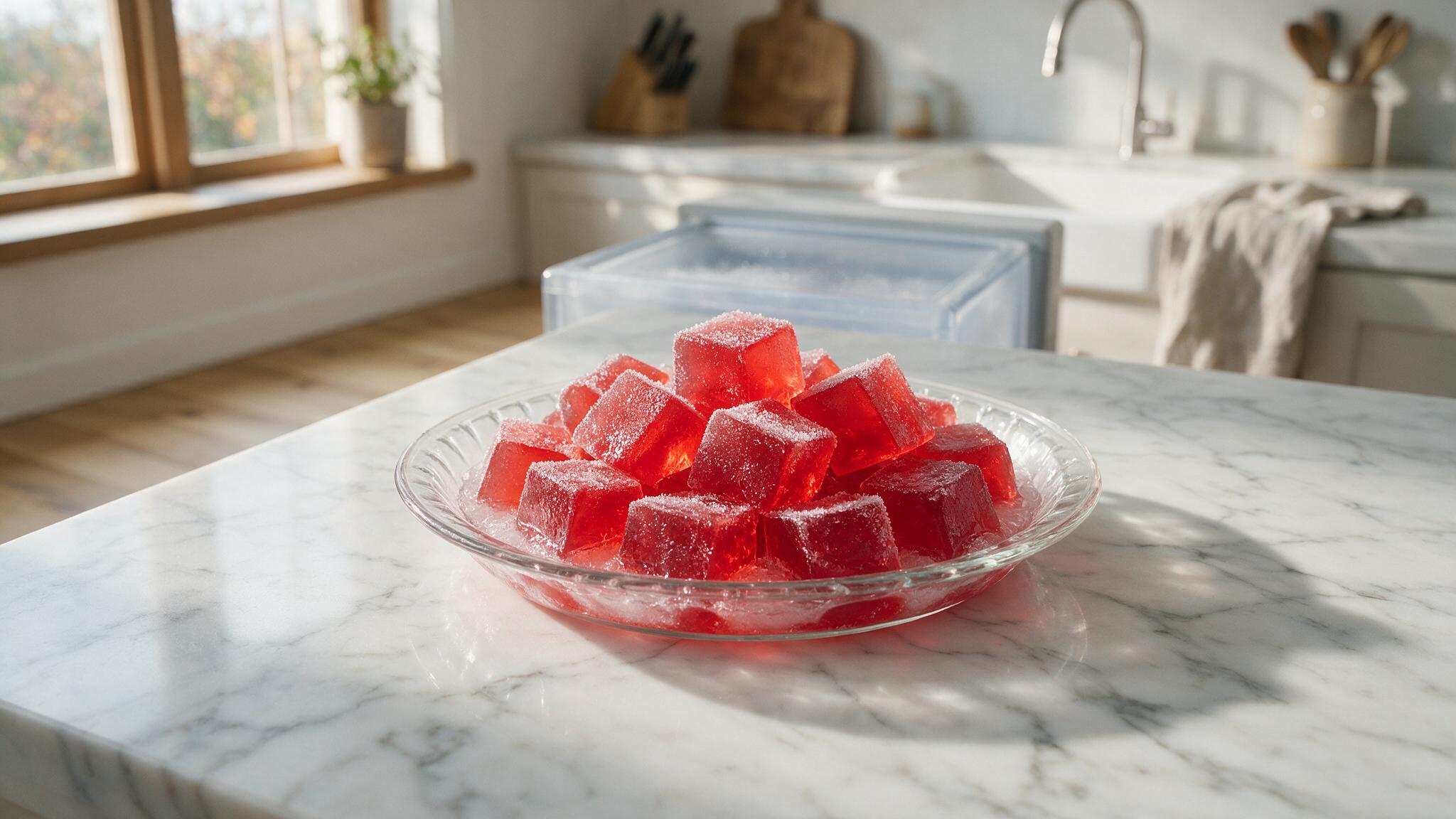
Jello is one of those American kitchen staples that seems to show up everywhere — potluck dessert tables, hospital trays, summer cookouts, and holiday molds. So it makes sense that you’d want to stretch a batch further, especially if you’ve made too much or want to prep ahead for a party.
The short answer is yes, you can freeze jello. But there’s a catch that matters a lot depending on how you plan to use it. Freezing will not retain jello’s original consistency, and it may separate into a mixture of gooey jelly and ice slush when thawed. That said, frozen jello has some genuinely useful applications — you just need to know what you’re working with before you commit a whole pan to the freezer.
Can You Freeze Jello?
You can freeze jello, but it will change the texture and consistency. Since jello is a food, you can put it in the freezer and store it there, but you might be disappointed in the outcome if you’re not prepared.
Here’s why: jello starts as flavored liquid with dissolved gelatin. When you chill it, long strands of gelatin tangle together and trap water and flavor. That network creates the classic soft wobble that makes jello fun to slice and spoon. The freezer disrupts that network entirely.
In the freezer, water in the dessert turns into ice crystals. Those crystals push apart the gelatin network and break some of the bonds. Back in the fridge or at room temperature, the ice melts, yet the structure does not rebuild in the same way, so the dessert can turn grainy, watery, or uneven.
The good news? Freezing jello does not affect the flavor. The flavor of frozen jello is unaltered. So while the texture takes a hit, the taste stays intact — which opens up a few smart ways to use it (more on that below).
Pro Tip: If your goal is to speed up the setting process, skip the freezer. Instead, use the ice trick on the back of the Jello box — replace the cold water with ice cubes. It cuts setting time significantly without damaging the gel structure.
Does Freezing Change the Texture or Taste of Jello?
Yes — and the texture change is the main reason most food experts advise against freezing standard jello. Freezing jello doesn’t just make it colder. It alters the consistency, creating a firmer, chewier texture. Ice crystals form within the gelatin matrix when it’s frozen, which can change the jello from a delicate wobble to a firmer structure.
When you thaw it, things get worse. Thawed jello often feels grainy on top, rubbery in the middle, and watery at the bottom. Sugar-free mixes, fruit pieces, and dairy layers can make those changes even more obvious.
There is one scenario where frozen jello actually delivers a pleasant result: eating it straight from the freezer without thawing. It will take about an hour to freeze, but after the freezer has done its job, take a bite and be prepared for the texture to surprise you. It is crunchy like soft ice, but still squishy on the interior when you bite into it. These contrasting consistencies make for a delicious and unexpected jello experience.
Jello shots with alcohol behave a little differently. Alcohol lowers the freezing point, so high-proof versions may stay soft no matter how long they sit in the freezer. If they do freeze, the texture often shifts away from the smooth bite that party guests expect.
How to Freeze Jello the Right Way
If you’ve decided freezing makes sense for your situation, these steps give you the best possible outcome. The method you choose depends on whether you want to eat the jello frozen or thaw it for use in another recipe.
- Let it set first. To freeze jello, you must first let it set at room temperature, and then place it in the refrigerator until it reaches the desired firmness. Never pour warm jello liquid directly into the freezer.
- Cut it into portions. Follow the instructions on the box, making your jello with hot and cold water, and let it set in a rectangular baking dish. Cut it into squares, use a cookie cutter for shapes, or just scoop the prepared jello into balls and lay them out (separated) on a flat-surfaced pan to freeze.
- Use the right container. Freezing jello requires careful consideration of containers to maintain texture and flavor. Glass or plastic airtight containers with secure lids are ideal, as they prevent freezer burn and minimize air exposure. Avoid using metal containers, as they can react with the gelatin and alter the taste.
- Keep it flat. Make sure that you keep your container as flat as you possibly can. It’s worth the time to sort out your freezer before you add the jello in and designate a lower shelf or compartment (usually the coldest one) to freeze your jello.
- Label everything. Use frozen jello within four to six weeks for the best flavor and texture. Without a date and flavor on the bag, frozen cubes can turn into mystery blocks that sit in the freezer far longer than you planned.
Important Note: Do not place hot jello liquid straight into the freezer. According to USDA food safety guidance, placing hot liquid straight into the freezer slows cooling and can raise the temperature of nearby foods. A household refrigerator at or below 40°F (4°C) and a freezer at 0°F (-18°C) or below keep chilled foods in a safer range.
How Long Can You Freeze Jello?
Frozen jello does not last indefinitely, and quality drops the longer it sits. Jello can be frozen and kept in the freezer for one to three months without any problem, or even longer — up to a maximum of six months if your freezer is in good running order.
For the best eating experience, aim for a shorter window. To ensure optimal quality, eat the frozen jello within two months of freezing. Jello with added fruit, dairy layers, or whipped toppings should be used even sooner, as those ingredients are more prone to separation and texture changes.
| Jello Type | Fridge Shelf Life | Freezer Shelf Life | Notes |
|---|---|---|---|
| Plain prepared jello | 7–10 days | Up to 3 months | Best eaten frozen, not thawed |
| Jello with fruit | 5–7 days | 1–2 months | Fruit texture degrades faster |
| Jello with dairy/whipped topping | 3–5 days | 1 month or less | Dairy separates easily |
| Jello shots (with alcohol) | 3–7 days | Not recommended | Alcohol prevents proper freezing |
| Dry jello powder (unopened) | N/A | Indefinitely (pantry storage preferred) | Store in cool, dry place |
How to Thaw Frozen Jello
How you thaw jello matters just as much as how you freeze it. Rushing the process leads to uneven texture and increases the risk of bacterial growth. Thawing is just as crucial as freezing. Never thaw jello at room temperature, as this encourages bacterial growth and accelerates syneresis. Instead, transfer it to the refrigerator 24 hours before serving.
If you’re short on time, there is a faster option. Place the sealed container in a bowl of cold water, changing the water every 30 minutes until thawed. Never use hot water or a microwave, as these methods can cause uneven melting and further damage the texture.
Keep your expectations in check after thawing. Fully thawed jello rarely regains its old wobble, yet you can still build pleasant desserts out of it. For soft icy bites, eat cubes straight from the freezer after a brief rest on the counter. The outside softens while the center stays cold.
Also, remember the two-hour rule: leftover jello should move back into the fridge within about two hours of serving, or within one hour if the room is especially warm. This applies whether the jello was previously frozen or freshly made.
Can You Refreeze Jello After Thawing?
Refreezing jello is not a good idea. Technically it’s possible to re-freeze previously frozen jelly, but it is not recommended. You run the risk that something will go wrong with the jelly, it might get too soggy and bacteria might develop since it’s already been defrosted before. It’s just not worth the hassle.
Each freeze-thaw cycle breaks down the gelatin structure further. What was already a grainy, watery result after the first thaw becomes worse after a second. If you’ve thawed a portion and have leftovers, keep them refrigerated and use them within a day or two rather than returning them to the freezer. Portion your jello into individual servings before freezing so you only thaw what you need.
Pro Tip: Freeze jello in an ice cube tray for single-serving portions. Once solid, transfer the cubes to a labeled zip-top freezer bag. You can grab exactly what you need without thawing the whole batch.
How to Use Frozen Jello (Best Uses After Freezing)
If you’ve already frozen your jello — or you’re planning to freeze it intentionally — there are several ways to make the most of the changed texture rather than fight against it.
- Jello bites: Eat cubes straight from the freezer. The texture changes to a less-wiggly, soft, and chewy version of itself with tiny bits of ice sprinkled throughout, but it’s not so hard that it hurts your teeth to bite it. Kids love these on hot summer days.
- Jello popsicles: One way to successfully freeze jello is by making jello popsicles from scratch. Pour your jello mixture into popsicle molds before it fully sets, then freeze solid. This is the most reliable frozen jello application.
- Jello granita: Scrape frozen jello into a shallow dish and rake it with a fork, similar to granita. The crystals fall into bright, fluffy shards that work well as a topping for fruit salad or as a light dessert on their own.
- Blended drinks and smoothies: One of the easiest options is to blend separated jello into drinks. Toss cubes into the blender with ice, fruit, and a little juice or yogurt. The broken gel adds body and flavor, and no one sees the uneven texture because the mixture turns smooth.
- Shaved ice: Freeze jello in ice cube trays, and throw them in your ice shaver machine to make a summertime favorite. Bright colors and bold fruit flavors make this a crowd-pleaser at backyard gatherings.
- Trifle layers: Chop thawed jello into small pieces and fold them into a trifle with cake cubes and whipped cream, where the mixed layers hide minor flaws.
- Jello clouds: Make frozen jello clouds by adding an 8-ounce container of whipped topping just before the gelatin has completely set (fold it in and don’t overmix!). Scoop out dollops on a sheet pan and freeze for at least an hour. The mix won’t completely freeze solid, so you’ll get an airy, fluffy bite.
For more creative ways to work with food in the kitchen, check out this guide on whole plant-based foods that pair well with gelatin-based desserts, or browse ideas on foods that start with Q for unique mix-in inspiration.
Signs That Frozen Jello Has Gone Bad
Not every textural change in frozen jello means it has spoiled — some of it is just the natural result of freezing. But there are specific signs that tell you the jello is no longer safe to eat.
Look for these red flags:
- Visible mold: Mold or bacterial growth means it’s time to toss that jello. These growths show up as white or dark spots or patches on the surface of the jello and could be harmful to consume.
- Off smell: Jello that is fresh and safe to consume should have a mildly sweet odor or no odor at all. If there is a noticeable bad odor or strong sour or unpleasant odors emanating from the jello, it’s a clear indicator that spoilage has occurred. Do not ignore a bad smell, as it is a key sign that the jello is no longer suitable for consumption.
- Watery pools on the surface: Prepared jello will start to break down as it ages and eventually separate. Once you see pools of liquid forming on the surface of the jello, it has spoiled and should not be consumed. Note: some liquid separation after thawing is normal — large pools combined with other signs are the concern.
- Sour or bitter taste: The first sign of caution is when you see pockets of watery liquid and the sweet taste is replaced with a sharp, bitter flavor.
- Discoloration: Jello should have a uniform color. If there are spots that look faded or a different color, it may indicate spoilage.
When in doubt, throw it out. It’s generally not advisable to consume jello left unrefrigerated for more than a few hours, as it may result in foodborne illness. The same caution applies to any jello that has been stored for longer than recommended, even in the freezer.
For broader food safety tips and storage guidance, the U.S. Food and Drug Administration and the USDA’s food safety resources are reliable references. You can also explore foods that support healthy skin and superfoods for a healthy heart if you’re thinking more broadly about what goes into your diet.
Frequently Asked Questions
Can you freeze store-bought jello cups?
Yes, you can freeze store-bought jelly. Plain fruit jelly is the best one for freezing and one that will last as long in the freezer as homemade jelly. The same texture trade-offs apply — it works best eaten frozen rather than thawed.
Can you freeze jello shots?
The short answer is no. You really shouldn’t freeze jello shots. While it may seem convenient to make them ahead of time and store them in the freezer, freezing ruins their texture. The gelatin in jello doesn’t hold up well when frozen — it becomes grainy, rubbery, or even separates when thawed. Make jello shots a day or two ahead and keep them in the fridge instead.
Can you put jello in the freezer to make it set faster?
To cool jello faster, either use the official ice trick found on the back of the box, or place the mixture in the freezer for 15–20 minutes. Don’t leave it there to let it freeze, though. A short stint in the freezer is fine; leaving it there is not.
Does freezing jello extend its shelf life?
Freezing jello will not prolong its shelf life, so your best bet is just to keep it stored in a covered container in the refrigerator. The fridge is always the better long-term storage option for prepared jello.
What is the best way to freeze jello for kids?
Jello popsicles and frozen jello bites are the two kid-friendliest options. Pour the jello into popsicle molds before it sets, or cut set jello into cubes and freeze on a sheet pan before transferring to a freezer bag. Both hold up better than simply freezing a bowl of jello and thawing it later.
Can jello with fruit be frozen?
Any jello puddings with cream or other non-jello layers are a bit trickier to freeze and might not look (and taste) their best when you defrost them. The same applies to jello with embedded fruit — the fruit softens and releases extra moisture during freezing, making the texture even more watery after thawing. If you do freeze it, use it within a month and plan to incorporate it into a blended recipe rather than serving it as-is.
If you enjoy experimenting with food storage and preparation, you might also find value in reading about how to manage food after dental procedures — jello is often a go-to option in those situations. For more on nutrition and food choices, explore articles on powerful nutrients and foods and foods that support liver function.