What to Serve with Thai Green Curry and Rice: 4 Traditional Thai Pairings

November 28, 2026
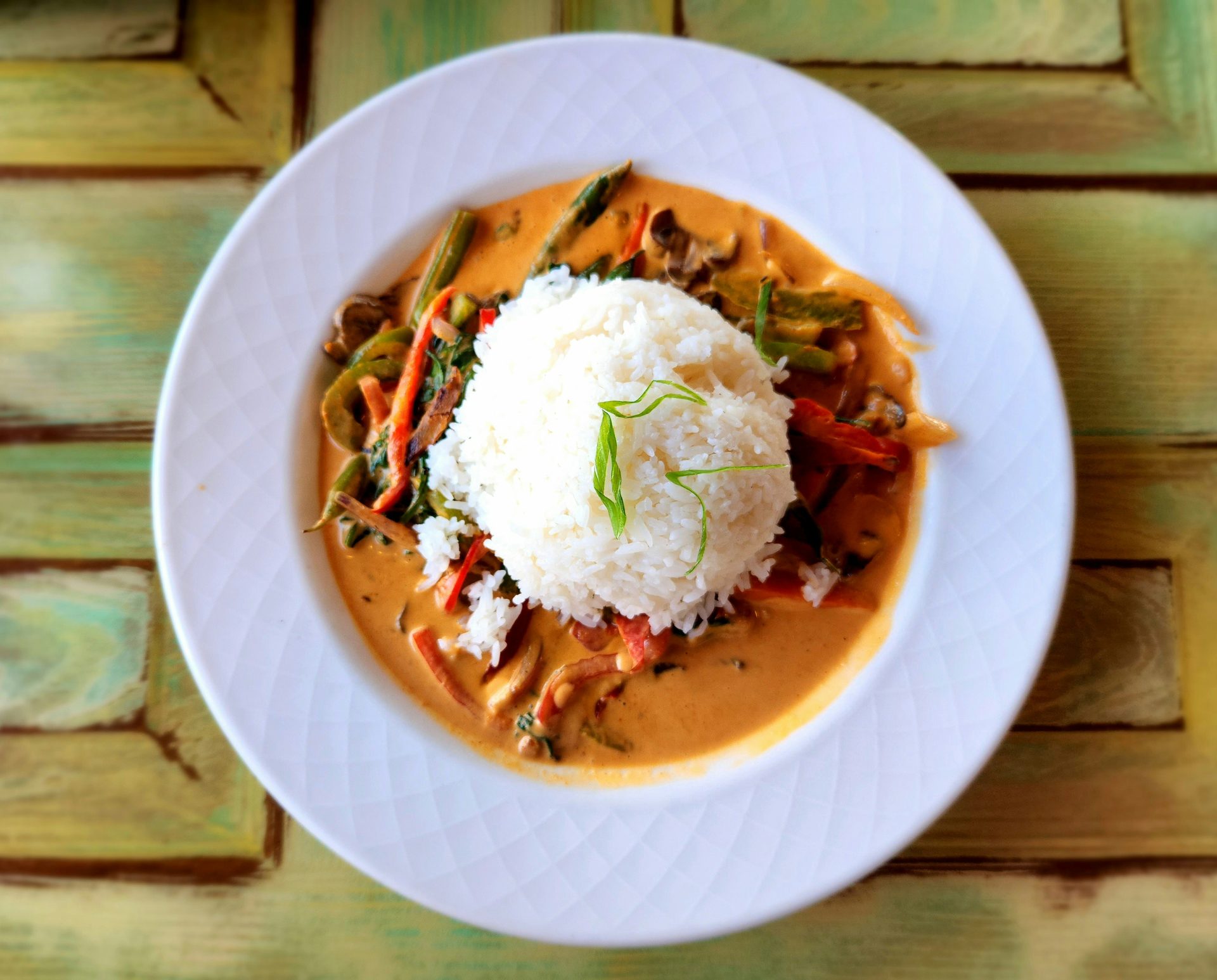
If you’ve only ever ladled Thai green curry over a plain scoop of jasmine rice, you’re missing half the story. Across Thailand, the starch underneath that creamy, herbaceous curry changes by region and occasion — sometimes it’s rice, sometimes it’s noodles, and sometimes it’s fried bread you tear with your hands. The curry’s signature color even has a simple explanation: it comes from the green chilies blended into the paste, not food coloring or spinach, as Wikipedia’s entry on green curry notes.
In this guide, you’ll walk through the four bases Thai cooks reach for when building a green curry plate: jasmine rice, sticky rice, khanom chin noodles, and roti. Each one changes the texture and feel of the meal in a different way, and knowing when to use which one will make your next curry night taste a lot less like a one-note takeout order and a lot more like a real Thai table. If you enjoy building out a full spread, you might also like browsing ideas for other naturally green dishes that share that same vivid color.
1. Jasmine Rice
Jasmine rice, a fragrant long-grain variety of the rice plant (Oryza sativa), is the base most American home cooks default to, and for good reason. According to Wikipedia’s overview of Thai curry , curries are eaten with the long-grained jasmine rice in central and southern Thailand, which is also where green curry itself originated. The grains stay separate and slightly fluffy, so they soak up the coconut milk sauce without turning into mush.
Getting the texture right matters more than people think. Rice that’s too wet turns gluey the moment curry sauce hits it, while rice that’s too dry just sits there instead of absorbing any flavor. A simple three-step approach keeps it consistent every time:
- Rinse the rice twice before cooking to wash away surface starch that causes clumping.
- Use a 1:1.25 ratio of rice to water, which gives you grains that are tender but still distinct.
- Let it rest, covered, for five minutes off the heat before fluffing with a fork.
Pro Tip: If your curry already looks thin and soupy, lean toward the drier end of your rice texture so the plate doesn’t turn watery once the two meet.
Jasmine rice also plays well as a neutral backdrop for other savory elements on the table — grilled meats, a quick cucumber salad, or a fried egg on the side. If you like building out rice-based comfort plates in general, the approach isn’t all that different from what you’d use for a chicken parmesan dinner, where a mild starch is there to balance a bold, saucy main. The combination of coconut milk, fish sauce, and herbs in green curry is also a textbook example of what makes a dish genuinely savory rather than just spicy.
2. Sticky Rice
Sticky rice, also called glutinous rice, is a stickier variety of the same rice plant used for jasmine rice, but it behaves completely differently on the plate. Most home cooks outside Thailand reach for jasmine without a second thought, yet Thai Spoon Las Vegas points out that sticky rice is traditional in Northern Thailand and brings something distinct to the table. It isn’t just a regional preference, either — it changes how the curry eats.
The chewier grains grip thicker curry sauces better than loose jasmine ever could, and if your green curry is on the thicker side, sticky rice is actually the better technical match, according to the same source. You’ll also notice the eating method shifts entirely:
- Sticky rice is typically formed into small balls with your hands and dipped directly into the curry rather than eaten with a fork.
- It holds its shape at room temperature far longer than jasmine rice, which makes it practical for shared, family-style meals.
- It pairs especially well with grilled or roasted proteins, similar to how you might round out a plate of A5 Wagyu with something that can soak up rich drippings.
Because sticky rice needs steaming rather than boiling, it does take a bit more planning than jasmine rice — soak the grains for a few hours or overnight, then steam them in a bamboo basket or a steamer lined with cheesecloth. If you’re already comfortable building rice-adjacent seafood spreads, the logic behind pairing a chewy starch with a rich sauce is the same one at play when you’re deciding what to serve alongside seared ahi tuna.
3. Khanom Chin Noodles
Khanom chin, sometimes spelled khanom jeen, are fresh, thin white rice noodles that trade the chewiness of sticky rice for a soft, slippery bite. Wikipedia’s entry on khanom chin explains that they’re made from rice fermented for three days, boiled, and extruded through into boiling water through a sieve, and that despite the name, this type of noodle originated from the Mon people rather than from China.
There’s an entire dish built around pairing these noodles with green curry: khanom chin kaeng khiao wan kai, which consists of green chicken curry served over khanom chin, fresh Thai rice noodles, and is usually accompanied by a selection of raw vegetables and herbs on the side. That combination of cool, raw crunch against hot, creamy curry is part of what makes the noodle version feel lighter than a rice-based plate, even though it’s just as filling.
| Base | Texture | Best Curry Match | How It’s Eaten |
|---|---|---|---|
| Jasmine Rice | Light, fluffy, separate grains | Thinner, soupier curries | Spooned alongside or under the curry |
| Sticky Rice | Chewy, dense | Thicker curries | Formed into balls and dipped by hand |
| Khanom Chin Noodles | Soft, slippery | Curries served with raw herbs and veg | Curry ladled directly over the noodles |
| Roti | Flaky, crisp exterior | Richer, thicker curries | Torn by hand and used to scoop curry |
If khanom chin isn’t sold near you, Hot Thai Kitchen recommends a workaround: what you want is Vietnamese rice vermicelli, which are round sticks and come in various sizes, and they only need to be boiled in water for 7-10 minutes until tender before serving. It’s a close enough substitute that most diners won’t notice the swap. This noodles-under-curry approach is the same logic behind a good shrimp boil spread, where the starch is there to catch every bit of the flavorful liquid rather than sit next to it.
Important Note: Authentic khanom chin is fermented and has a faint tang that plain rice noodles don’t replicate. If you’re using a substitute, a splash of lime juice in the curry can help close that gap.
Khanom chin also works well at a casual gathering where guests build their own bowls, much like you’d set up a build-your-own station for loaded chicken nachos — noodles in the center, curry and herbs on the side, everyone assembling their own plate.
4. Roti
Roti is the outlier on this list because it isn’t rice-based at all. It’s a flaky, pan-fried flatbread, and Wikipedia’s Thai curry overview notes that certain curries can also be eaten with roti, the Thai version of the Indian-style fried flatbread from Malaysia called roti canai. You’ll usually find it alongside curry at Thai restaurants and street stalls rather than at everyday home dinners, since it takes more hands-on technique to stretch and fry than steaming a pot of rice.
What makes roti worth trying with green curry is the contrast: a crisp, buttery, slightly chewy bread standing in for utensils. You tear off a piece and use it to scoop up the sauce, vegetables, and meat, the same way you might use crusty bread to mop up a rich pan sauce. In fact, the appeal is close to why people reach for bread with fettuccine alfredo — it’s there to catch every drop of sauce that would otherwise get left in the bowl.
Roti tends to work best with greenn curry that’s on the thicker, richer side, since thinner curry soaks through the bread too quickly and turns it soggy. If you’re serving a curry made with extra coconut cream or less stock, roti is worth setting out as an alternative to rice rather than a replacement for it — let guests choose. It’s a similar hand-held, scoop-and-eat approach to serving meat empanadas or other handheld mains where the starch and the filling are meant to be eaten together in one bite.
Pro Tip: Warm roti briefly in a dry skillet right before serving. It loses its crispness fast once it sits, and a quick reheat brings the flaky layers back.
None of these four bases is the single “correct” answer — they’re regional defaults that solve the same problem in different ways: giving the curry something to cling to. A weeknight dinner calls for jasmine rice because it’s fast and familiar, a northern-style meal calls for sticky rice because that’s simply what’s on hand, a noodle craving points you toward khanom chin, and a special-occasion spread might call for roti at the table. Try rotating through all four over a few curry nights and you’ll start to notice which texture you actually prefer, the same way you’d experiment with different starches when figuring out what pairs best with chicken piccata. Once you’ve found your favorite, you’ll never look at a plain bowl of curry and rice the same way again.