What to Serve with Korean BBQ: 15 Banchan Dishes for an Authentic Spread

November 26, 2026
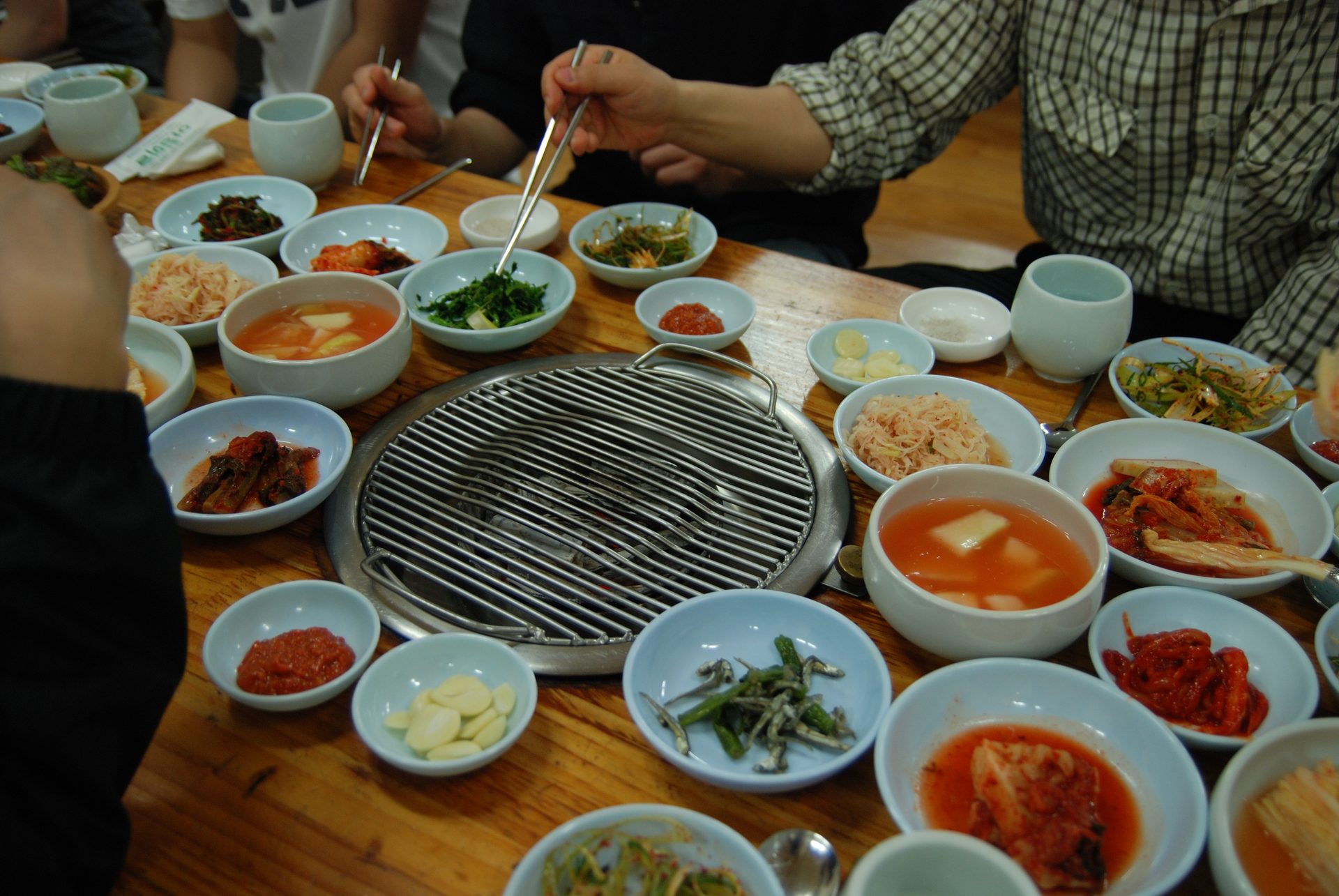
If you’ve ever wondered what to serve with Korean BBQ beyond the grilled meat itself, the answer is almost always banchan: the small shared side dishes that fill every open inch of the table. A proper spread balances the richness of grilled beef and pork with something tangy, something crunchy, something cold, and something fermented, all at once.
This guide walks through 15 banchan that regularly show up at Korean BBQ restaurants and home grills across the United States, from fermented kimchi to quick vegetable salads and savory pancakes. If you’re planning a full spread for a backyard cookout or an indoor tabletop grill session, you’ll also find ideas in our guide to building a shareable shrimp boil spread, since the same “lots of small plates” logic applies.
1. Baechu Kimchi
Baechu kimchi, made from whole or quartered napa cabbage, is the dish most people picture when they hear the word “kimchi.” It’s a traditional Korean side dish (banchan) consisting of salted and fermented vegetables, most often Chinese cabbage or Korean radish, seasoned with gochugaru, spring onions, garlic, ginger, and jeotgal, or salted seafood.
The fermentation gives it a sharp, sour-spicy bite that slices right through fatty cuts like pork belly or short rib. Because it’s already seasoned and ready to eat, baechu kimchi needs almost no prep beyond pulling it from the container and cutting it into bite-sized pieces. Its bold, savory profile is a good example of what makes a dish genuinely savory in the culinary sense, layering salt, umami, and acid in one bite.
Pro Tip: Buy a smaller jar of kimchi specifically for the grill table. Older, more fermented kimchi is better suited for frying into kimchi jjigae or fried rice later in the week.
2. Kkakdugi
Kkakdugi is diced radish kimchi made with Korean radish, though other vegetables or fruits can also be used. The radish is cut into roughly inch-sized cubes, salted briefly, and tossed with chili powder, garlic, ginger, and scallions before it’s packed away to ferment.
What makes kkakdugi worth putting next to grilled meat is texture: it stays crunchy even after it sours, unlike leafy cabbage kimchi. Recipe developer Maangchi notes that the amount of hot pepper flakes depends on taste, and a vegetarian version can swap fish sauce for soy sauce, which is handy to know if you’re buying store-made kkakdugi and want to gauge how spicy a batch will be before setting it on the table.
| Kimchi Type | Base Vegetable | Texture | Best Paired With |
|---|---|---|---|
| Baechu Kimchi | Napa cabbage | Soft, leafy | Pork belly, bulgogi |
| Kkakdugi | Radish, cubed | Crunchy | Short ribs, fatty cuts |
| Dongchimi | Radish, whole/halved | Crisp, watery brine | Spicy marinated meats |
3. Dongchimi
Dongchimi is a water-based kimchi, made with Korean radish, napa cabbage, scallions, pickled green chilli, ginger, Korean pear, and a watery brine rather than a thick chili paste. It’s served ice-cold, often as much for the tangy brine as for the radish itself.
According to recipe developer Beyond Kimchee, the finished dish is a chilled, vegan water kimchi with a crisp bite that cuts through BBQ and spicy dishes. A small bowl of dongchimi and its liquid works almost like a palate-cleansing broth between bites of grilled meat, which is why it often appears alongside the heavier, chili-forward banchan rather than replacing them.
4. Danmuji
Danmuji is the bright yellow pickled daikon most people recognize from kimbap rolls, but it also earns a spot on the BBQ table on its own. It’s commonly used as a side dish, as well as a component in dishes like kimbap, and its color traditionally came from gardenia seeds before turmeric became the more common dye.
On its own, danmuji adds a refreshing crunch that’s sweeter and milder than kkakdugi, making it an easy side for anyone at the table who wants something tangy without much heat. If you’d rather make your own instead of buying it pre-pickled, you can find danmuji packed in plastic near the refrigerated kimchi section at most Korean or Asian grocery stores .
5. Pickled Garlic
Whole cloves of garlic marinated in soy sauce are a quieter banchan, but regulars at Korean BBQ restaurants often reach for them first. As one Korean banchan retailer describes it, the whole cloves of garlic marinated in a deep, umami-rich soy sauce turn crunchy yet mellow, with a savory-sweet balance that pairs beautifully with fatty meats like pork belly.
- Serve chilled, straight from the jar, in a small shared dish
- Pair with fattier cuts like pork belly or marbled short rib
- Store leftover brine; it works as a quick dressing base for simple cucumber salads
If you’re building a richer spread around a premium cut, pickled garlic also shows up often in our guide to what to serve with A5 Wagyu, where its sharpness helps offset heavily marbled beef.
6. Pickled Onions
Quick-pickled onions aren’t always listed as a classic banchan the way kimchi is, but they’ve become a common addition at Korean BBQ tables in the United States, especially alongside spicy marinated meats. A simple brine of vinegar, sugar, and salt softens the onion’s bite while keeping some crunch, and the color often turns a pale pink after a few hours in the fridge.
Because the flavor is light and acidic rather than fermented or spicy, pickled onions work well as a “reset” bite between richer banchan. They’re also a familiar enough pairing outside Korean cooking that they show up in plenty of other spreads; if raw-fish dishes are also on your menu, our guide to what to serve with ahi tuna covers similar pickled accompaniments.
7. Kongnamul
Kongnamul is seasoned soybean sprouts, blanched briefly and dressed simply so the sprouts stay crisp rather than limp. It’s described in Korean BBQ side-dish guides as seasoned soybean sprout banchan with sesame oil and garlic, and it appears often enough at family-style KBBQ dinners that one food writer lists it among the handful of banchan that restaurants usually serve alongside kimchi and japchae.
Because it’s served at room temperature or chilled and has a mild, nutty flavor from the sesame oil, kongnamul is an easy side even for guests who aren’t used to spicier Korean flavors. It’s the kind of simple, vegetable-forward side that pairs well with lighter mains too, similar to the sautéed vegetable sides you’ll find in our guide to what to serve with chicken piccata.
8. Sigeumchi Namul
Sigeumchi namul is the spinach version of the same namul technique used for kongnamul: quickly blanched, squeezed dry, then tossed with sesame oil, garlic, and a little soy sauce. Korean BBQ guides describe it simply as spinach namul banchan seasoned with sesame oil and garlic, and that short ingredient list is exactly why it works so well on a crowded table — it doesn’t compete with the stronger, spicier banchan around it.
The dish is meant to be served at room temperature rather than piping hot, which makes it one of the easier banchan to prep ahead of a BBQ night. A small bowl, dressed and ready before guests arrive, holds up fine on the counter while the grill does the rest of the work.
9. Kale Namul
Kale namul isn’t a classic, centuries-old banchan the way baechu kimchi or kongnamul are, but it’s become a popular modern substitution in Korean-American kitchens that want a heartier, more fibrous green on the table. The technique borrows directly from traditional namul preparation: a quick blanch to soften the leaves, since quick-blanching removes a raw taste and makes vegetables easier to season, followed by the same sesame oil, garlic, and soy seasoning used for spinach or bean sprouts.
Kale holds up better than spinach if the dish needs to sit out for a while during a longer BBQ gathering, since it doesn’t wilt into a watery puddle as quickly. It’s a practical swap if you’re already buying kale for other weeknight cooking and want to stretch it into a Korean-style side.
10. Gamjajeon
Gamjajeon is a Korean potato pancake, made from grated or blended potato starch fried into a crisp, golden disc. It’s often grouped with other savory pancakes served at BBQ restaurants, described as a crispy savory side dish for Korean BBQ in the jeon category alongside pajeon.
The appeal here is contrast: where most banchan are cold, pickled, or fermented, gamjajeon comes to the table hot and crunchy on the outside, soft in the middle. A simple dip of soy sauce with a splash of vinegar is usually all it needs. If crispy, starchy sides are your favorite part of any meal, you’ll likely enjoy the same comfort-food pairing logic in our guide to what to serve with chicken parmesan.
11. Pajeon
Pajeon is a savory scallion pancake, batter mixed with plenty of chopped green onion and often seafood like shrimp or squid, then pan-fried until the edges turn lacy and crisp. It’s one of the most recognizable banchan-adjacent dishes outside Korea, and food writers covering Korean BBQ note that traditional Korean BBQ side dishes include banchan such as kimchi, seasoned vegetables, and savory pancakes like pajeon.
Pro Tip: Cut pajeon into smaller squares before serving rather than wedges. It cools faster at the edges, stays crispier longer, and is easier to share across a crowded BBQ table.
Pajeon is usually cut into wedges or squares and shared from the center of the table rather than plated individually, much like other shareable appetizers. If you’re rounding out a menu with more finger-food style sides, our guide to what to serve with chicken nachos has a similar approach to building a shareable spread.
12. Yeongeun Jorim
Yeongeun jorim is braised lotus root, simmered slowly in a soy-based sauce until it turns a deep brown and softens just enough to bite through while keeping its distinctive lacy cross-section. It falls into the jorim category of banchan, which Korean BBQ guides describe broadly as a braised side dish made with ingredients like sweet potatoes, burdock root, or lotus root.
The sauce is usually a mix of soy sauce, sugar, and a little sesame oil, giving the lotus root a glossy, slightly sweet coating. Because it’s served at room temperature and keeps well in the fridge for days, yeongeun jorim is one of the more practical make-ahead banchan for a BBQ night, since it only gets better as the flavors settle.
13. Japchae
Japchae is stir-fried glass noodles made from sweet potato starch, tossed with thin strips of vegetables and sometimes beef, all coated in a slightly sweet soy-sesame sauce. It’s consistently listed among the staple sides at Korean BBQ dinners, with one food writer noting that restaurants usually serve stir fried glass noodles (japchae) alongside kimchi and kongnamul, and another describing how the dish’s slightly sweet soy-based sauce pairs seamlessly with grilled and fried proteins alike.
Common Mistake: Overcooking the glass noodles turns japchae gummy and clumped. Cook them just until tender, then rinse briefly in cold water and toss with sesame oil right away to keep the strands separate.
Because japchae is filling on its own, it often doubles as a light carb option at the table for guests who want something besides rice. It’s a similar role to the noodle and starch sides covered in our guide to what to serve with meat empanadas, where a hearty side dish rounds out a protein-heavy meal.
14. Oi Muchim
Oi muchim is a spicy, crunchy cucumber salad, usually thin-sliced cucumbers tossed with gochugaru, garlic, vinegar, and a touch of sugar. My Korean Kitchen describes it as a side where the bright, zippy flavors awaken your taste buds and beautifully complement a variety of Korean main dishes, which is exactly why it’s a staple at BBQ tables.
It’s also fast: most versions take about 15 minutes from cutting board to table, with little to no fermentation wait involved. That makes oi muchim one of the easiest banchan to prep same-day if you’re short on time but still want something cold and refreshing next to the grill.
15. Potato Jorim
Potato jorim is braised potato, cut into bite-sized chunks and simmered in a sweet soy glaze until the outside turns glossy and slightly caramelized while the inside stays tender. It belongs to the same braising family as yeongeun jorim, following the jorim principle of slow-simmering root vegetables in a soy-sugar sauce until the flavor penetrates fully.
The result is a comforting, slightly sweet side that balances the saltier and spicier banchan around it, offering what Korean food culture treats as a deliberate contrast of hot and cold, spicy and mild, crunchy and soft across the whole table. If creamy, comforting sides are usually your favorite part of a meal, you’ll find a similar appeal in our guide to what to serve with alfredo.
Putting together a full Korean BBQ spread doesn’t mean making all 15 of these banchan at once. Most home cooks pick four or five: usually one kimchi, one namul, one pickle, and maybe a pancake or noodle dish, then fill in the rest from a Korean grocery store’s refrigerated banchan section. Once the meat starts hitting the grill, the small plates do the rest of the work, and you can finish the night on a lighter note with something simple like the ideas in our guide to what to serve with angel food cake.