What a Traditional Diwali Breakfast Includes in a South Indian Home

November 23, 2026
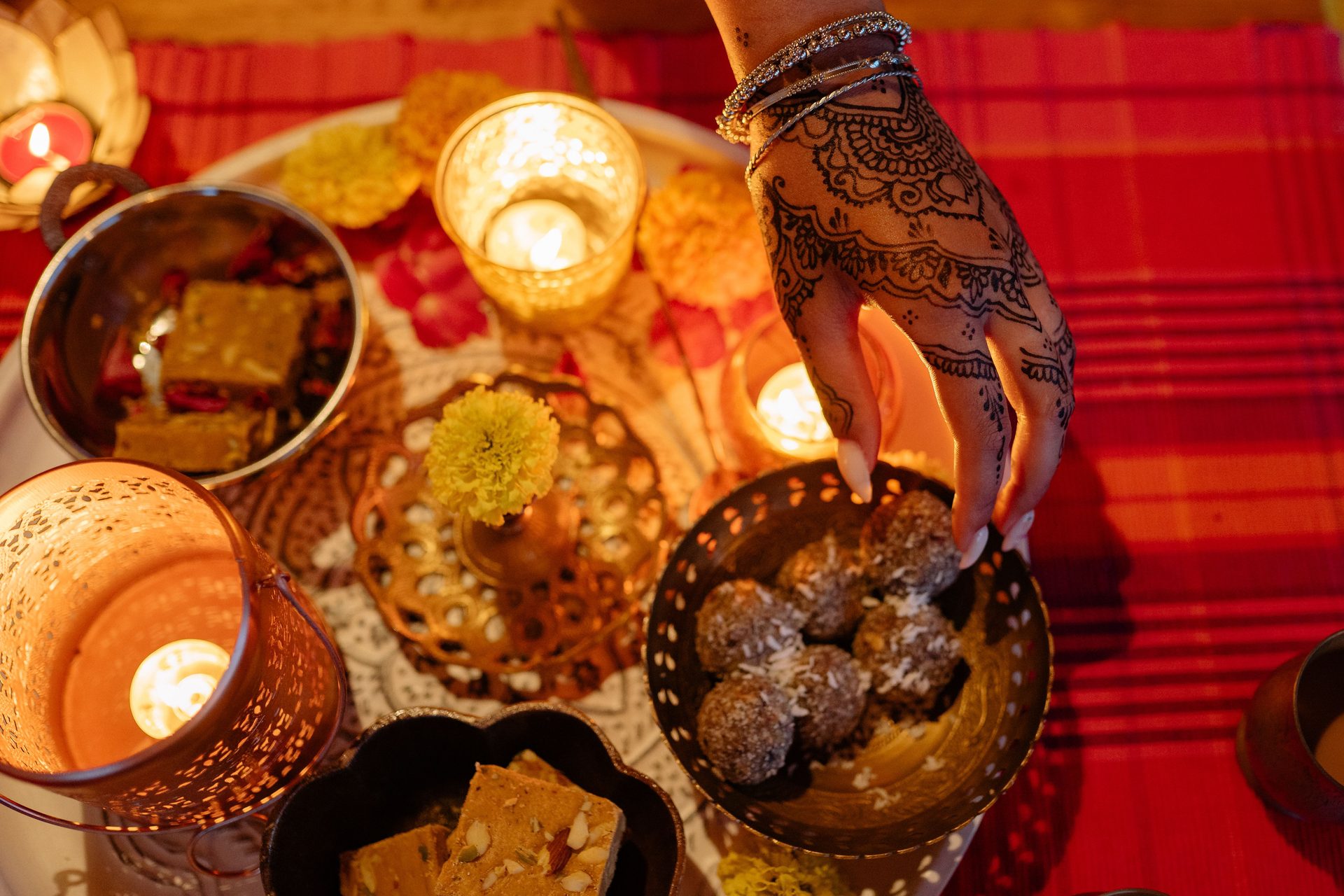
Long before the fireworks and the exchange of sweets, the real work of Diwali begins in the kitchen before sunrise. In many Tamil households, a traditional Diwali breakfast is the meal that sets the tone for the entire festival, built around dishes that families have fried, steamed, and ground by hand for generations. It is not one dish but a full spread, built so that a savory bite and a sweet bite always sit side by side on the same plate.
Unlike an everyday morning meal, this breakfast is planned days in advance, with batters soaked overnight and sweets fried the evening before so that the first light of Diwali morning can be spent eating together rather than cooking. If you enjoy exploring how different cultures treat the first meal of a holiday, the same instinct to go all-out at breakfast shows up in festive breakfast spreads built around a special occasion elsewhere in the world.
Six dishes anchor most Tamil Diwali breakfast tables: idli, ulundhu vadai, coconut chutney, idli milagai podi, suzhiyan, and adhirasam. Here is a quick look at how each one fits into the spread before getting into the detail behind each recipe.
| Dish | Role on the Plate | Main Ingredient | Flavor Profile |
|---|---|---|---|
| Idli | Base/staple | Fermented rice and urad dal | Mild, slightly tangy |
| Ulundhu vadai | Savory fritter | Whole urad dal | Crisp, peppery |
| Coconut chutney | Accompaniment | Fresh coconut | Cooling, mildly spiced |
| Idli milagai podi | Dry accompaniment | Roasted lentils and chilies | Spicy, nutty |
| Suzhiyan | Sweet fritter | Coconut and jaggery | Sweet, fried |
| Adhirasam | Festival sweet | Rice flour and jaggery | Dense, caramel-like |
1. Idli
Idli is the quiet workhorse of a traditional Diwali breakfast: soft, steamed cakes made from a fermented batter of rice and split urad dal, ground fine and left overnight to rise naturally. Because the batter can be made a day ahead, idli is often the first thing to go onto the plate on Diwali morning, steamed in batches while the rest of the spread is finished.
Its plainness is the point. Idli has almost no flavor of its own, which is exactly why it works so well as a canvas for the spicier, sweeter dishes served alongside it. Readers curious about how idli fits into the wider pattern of South Asian cooking can find more context in this overview of traditional Indian foods.
Pro Tip: For Diwali morning, grind the idli batter the night before and let it ferment at room temperature for 8 to 10 hours so it is ready to steam first thing without any extra prep.
2. Ulundhu Vadai
Ulundhu vadai, also called medu vada, is the savory fritter that gives the breakfast spread its crunch. The word “ulundhu” refers to urad dal, the whole black gram that is soaked, ground into a thick batter, and shaped into a doughnut before frying. Yummy Tummy Aarthi notes that vada batter is flavoured with onions, chillies, curry leaves, ginger and asafoetida, then shaped and fried so it turns out crispy on the outside and fluffy inside.
Beyond its place on the breakfast plate, ulundhu vadai carries religious weight in many homes. According to Subbus Kitchen , this vadai is also made as a god offering, or neivedhyam, for most festivals, which is why some cooks leave out onion and garlic entirely when preparing it for Diwali. The hole in the center, pressed in with a wet thumb before frying, helps the vadai cook through evenly without turning doughy at the core.
For the full technique, including how to shape the batter without a machine, Raks Kitchen’s medhu vadai guide walks through the soaking, grinding, and frying steps in detail. Most homes serve it with the same two condiments described below, so a traditional Diwali breakfast rarely has one without the other.
3. Coconut Chutney
Coconut chutney is the cooling counterpart to the fried dishes on the plate. It is made by grinding fresh coconut with roasted gram (chutney dal), green chilies, and a little ginger, then thinning the paste with water until it reaches a spoonable consistency. A final tempering of mustard seeds, curry leaves, and sometimes a dried red chili in hot oil is poured over the top just before serving.
Because coconut grows abundantly across South India, this chutney varies slightly from kitchen to kitchen, some versions lean sweeter with less chili, others add a spoon of tamarind for tang. Coconut-based condiments are not unique to Tamil cooking; similar coconut pastes and sambals show up in traditional Malaysian cooking, where coconut plays an equally central role in everyday meals.
Important Note: Fresh coconut chutney does not keep well at room temperature for more than a few hours, so most families grind it fresh on Diwali morning rather than preparing it the night before.
4. Idli Milagai Podi
Idli milagai podi solves a practical problem: on a morning with six dishes to prepare, not everything can be made fresh. This dry, spiced powder, sometimes called “gunpowder” by English-speaking cooks outside India, is made by dry-roasting urad dal, chana dal, dried red chilies, and sesame seeds before grinding them coarse with salt and a touch of asafoetida.
Mixed with a spoon of sesame oil right before eating, the podi turns into a thick, spicy paste that works as a standalone dip for idli or vadai. Its shelf life, often several weeks in an airtight jar, makes it one of the few Diwali breakfast components that can be made well ahead of the festival. Dry spice blends that serve a similar backup role appear across the region, including in traditional Pakistani cooking, where roasted spice mixes are kept on hand for exactly the same reason.
5. Suzhiyan
Suzhiyan is the sweet fritter that often surprises first-time visitors to a Tamil Diwali breakfast table, since it looks more like a savory snack than a dessert. A filling of grated coconut, jaggery, and a little cardamom is rolled into a ball, dipped in a lightly spiced gram-flour batter, and deep-fried until the outside turns a deep golden brown.
Some families make suzhiyan from leftover payasam (a sweet lentil or rice pudding) by using it as the filling instead of plain coconut-jaggery, a practical way to use up extra festival cooking rather than let it go to waste. The combination of a crisp fried shell around a soft, sweet center is a pattern that shows up in festive breakfasts well beyond Tamil Nadu, including the stuffed and fried morning dishes found in traditional Japanese breakfast spreads, though the fillings and frying methods differ considerably.
Pro Tip: Keep the gram-flour batter thin enough to coat the filling in a single light layer; a thick batter shell will taste doughy once fried and mask the coconut-jaggery center.
6. Adhirasam
Adhirasam is the sweet most people associate with a Tamil Diwali table, a dense, dark disc made from rice flour and jaggery syrup, fried until the surface turns glossy and slightly crisp at the edges. According to Wikipedia , the same sweet goes by different names across India: kajjaya or athrasa in Kannada, ariselu in Telugu, and anarasa in Marathi, which gives a sense of how far this particular sweet travels beyond Tamil Nadu.
Raks Kitchen describes adhirasam as a traditional deep-fried Deepavali snack from Tamil Nadu, and the recipe is notoriously fussy to get right. Curry Trail notes that in many families, this recipe has been passed down for generations, with the exact ratio of rice flour to jaggery syrup often kept as a closely guarded family measurement rather than written down precisely.
Key Insight: The rice flour and jaggery dough for adhirasam is traditionally rested overnight, sometimes wrapped in cloth, before frying. Skipping this resting period is one of the most common reasons the sweet turns out too hard or too oily.
Unlike the savory dishes on the plate, adhirasam is usually made in bulk days before Diwali and stored, which is part of why it anchors the breakfast spread rather than being a last-minute addition. Readers interested in how other cultures build a sweet, fried centerpiece into a holiday breakfast can find a different take in the fried pastries common to traditional Greek foods, where syrup-soaked fried dough plays a comparable role at celebrations.
Bringing the Spread Together
What makes a traditional Diwali breakfast distinct is not any single dish but the deliberate balance across the table: soft idli next to crisp vadai, cooling chutney next to fiery podi, and a sweet fritter sitting beside a dense festival sweet. Each component is designed to be made at a different point in the preparation timeline, batters the night before, podi weeks in advance, adhirasam days ahead, so that Diwali morning itself is spent serving and eating rather than cooking from scratch.
For anyone looking to recreate the spread at home, starting with the idli batter and the adhirasam dough a day or two ahead makes the morning itself far more manageable. Those interested in exploring how other regional breakfast traditions balance make-ahead and fresh components can browse more breakfast traditions from around the world, or compare notes with the hearty, savory style found in traditional Venezuelan food, another cuisine built around a substantial first meal of the day.