Traditional Iranian Breakfast: 10 Dishes That Define Persian Mornings

November 22, 2026
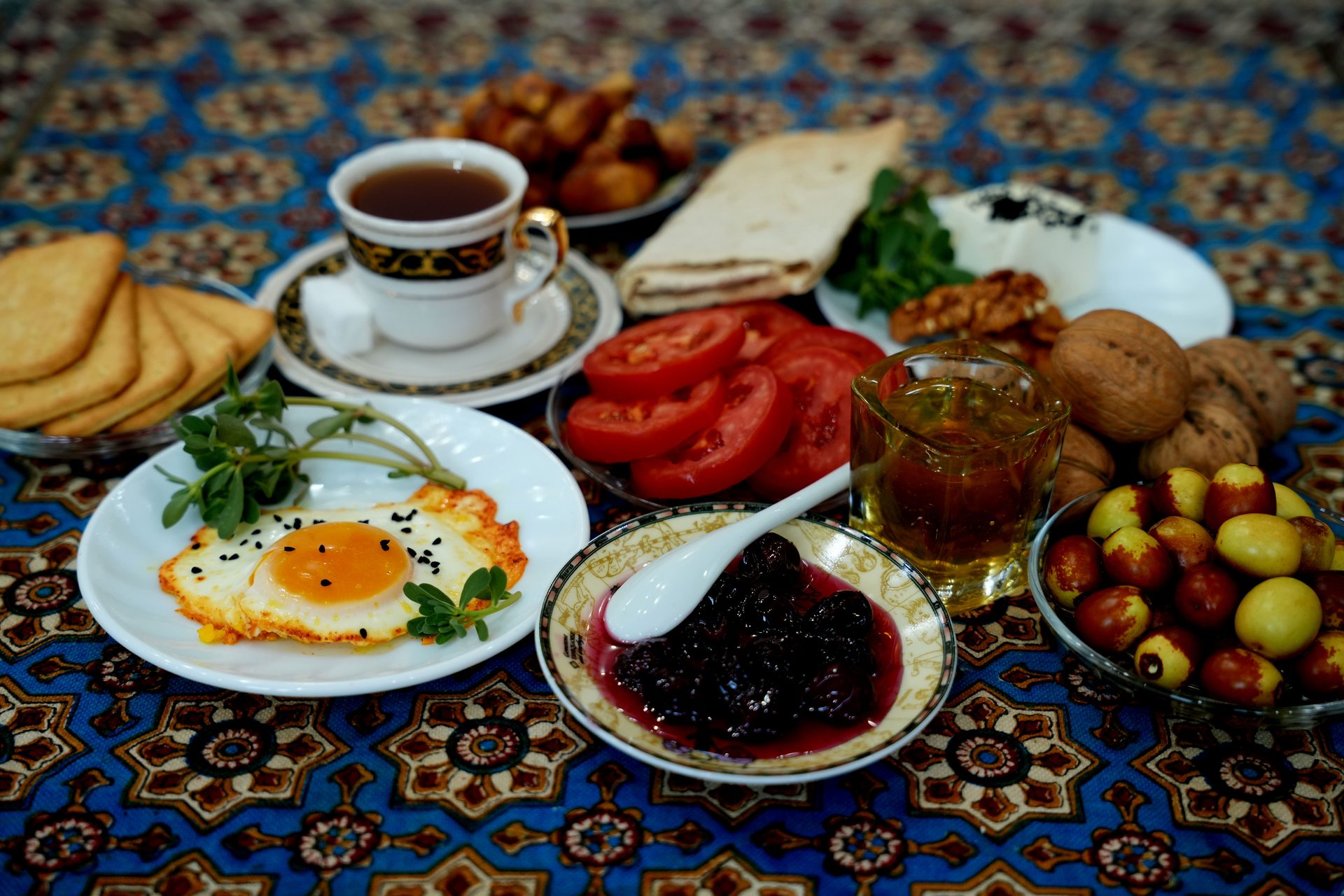
Few morning meals ask for as much patience as a traditional Iranian breakfast. In many households, a pot of wheat and lamb simmers through the entire night so it’s thick and ready by sunrise, while a tray of fresh herbs, warm bread, and strong tea waits alongside it. The result is a table that feels less like a quick meal and more like a small daily ceremony.
Compare it with a traditional Balkan breakfast built around byrek and yogurt, or a tray of rice and grilled fish from Japan, and the contrasts are sharp—yet the purpose stays the same everywhere: warmth, company, and fuel for a long day. This guide walks through ten dishes that make up a traditional Iranian breakfast, from a centuries-old wheat porridge to the sweet tea that closes out the meal. Readers curious about how other regions approach their first meal of the day can also compare Japanese morning meals for a different take on Iranian breakfast traditions and beyond.
1. Halim
Halim, also spelled haleem, is a thick porridge of wheat and meat that Iranians have long treated as cold-weather fuel. According to the Encyclopaedia Iranica , halim is a traditional Persian breakfast dish for the winter, now also served at lunch and dinner, typically made with lamb and wheat. The dish is seasoned simply, and it is usually finished with salt, pepper and cinnamon, then sweetened with sugar or honey.
What sets halim apart is the labor behind it. The mixture needs to be stirred with a large spatula for hours in an open-fronted oven until the lamb and wheat become indistinguishable, and families traditionally take turns stirring the pot through the night so it’s ready by breakfast. That demand for round-the-clock stirring eventually turned into a trade of its own: professional halim cooks, known as halim-pazi, sold the dish in the bazaar, and until around 1980 vendors would display the whole cooked lamb on a decorated tray the day before serving it.
Pro Tip: Look for halim-e bademjan on a menu if eggplant and lentils sound more appealing than wheat—it’s a distinct, meat-optional version of the same dish, not to be confused with the eggplant dip covered next.
The dish carries weight well beyond breakfast tables. Historical accounts described by a tourism expert to Iran’s ISNA news agency note that halim has been documented as a popular dish in Persia since ancient times, with versions common across the wider Middle East, according to Iran Daily . It also carries religious meaning for some communities: it is a tradition among Persian Jews to eat haleem on Shabbat, since—like cholent and hamin—it’s a slow-cooked dish that can be prepared ahead and left to cook overnight, per Wikipedia’s entry on haleem . The same slow-cooked, communal spirit shows up far from Iran, too, in dishes like Pakistani haleem, which shares a name and a cooking method but takes on its own spice profile.
2. Kashke Badenjan
Kashke Badenjan—often written kashk-e bademjan or kashk bademjan—turns roasted eggplant into a tangy, savory dip rather than a porridge. Per Wikipedia , the dish is a staple Iranian dish made from kashk and eggplant, usually served as a dip and garnished with liquid saffron, sautéed onions, garlic, and often walnuts. Kashk itself is the defining ingredient, a fermented dairy product that gives the dip its sour edge.
Home cooks treat it as one of the most beloved items on a Persian spread. Persian Mama describes how kashke bademjan ranks among the most popular Persian appetizers, with bademjan meaning eggplant in Farsi and kashk referring to a yogurt product traditionally made through a long straining process. The dip typically arrives with:
- Caramelized onions cooked until deep golden
- A drizzle of saffron-infused oil
- Dried mint sautéed until fragrant
- Crushed walnuts for texture
It’s rarely eaten plain. One recipe developer notes that serving it alongside sangak or another flatbread is the standard approach, which sets up a natural pairing with the breads covered next. The dip’s smoky, creamy profile puts it in the same family as other Mediterranean dip traditions built on roasted vegetables and tangy dairy.
3. Sangak
Sangak is the bread most associated with a bakery queue at dawn. It’s a long, whole-wheat flatbread traditionally baked directly on a bed of small, hot river pebbles, which leave characteristic dimples across its surface and give it a slightly smoky, chewy crust.
Because it’s made with whole wheat and naturally leavened dough, sangak has a denser, more rustic bite than Iran’s other breads. Bakeries typically sell it fresh and warm, sliced to order, and it’s the bread most often paired with kashke badenjan, feta, or a soft-boiled egg. Its heft and nutty flavor place it closer to other hearty, grain-forward loaves found in Egyptian flatbread culture than to the thinner breads that follow on this list.
4. Barbari
Barbari is thicker and softer than sangak, with a glossy, slightly crackled top that’s often brushed with a flour-and-water glaze called roomal before baking. Bakers frequently scatter sesame or nigella seeds across the surface, and the loaf is scored lengthwise so it bakes with distinct ridges.
Its mild flavor and buttery crumb make it an easy match for sweet toppings—quince jam, honey, or clotted cream known as sarshir. Many households buy barbari specifically for breakfast rather than dinner, treating it as the softer, more indulgent counterpart to sangak. That same instinct for a thick, chewy breakfast loaf shows up in crusty bread traditions found across Europe, even though the techniques differ.
5. Lavash
Lavash is the thinnest and most practical of Iran’s breads, rolled or stretched until it’s nearly translucent before a quick bake in a very hot oven. Because it dries out and keeps well, it travels and stores more easily than sangak or barbari, which makes it a common choice outside of major cities and in regions across the Caucasus and Central Asia that share the same bread culture.
At the breakfast table, lavash works less as a stand-alone food and more as a wrapper or scoop—folded around feta, herbs, or a spoonful of jam. Its neutral flavor makes it adaptable, which is part of why it shows up at nearly every meal, not just breakfast, throughout the region.
6. Taftoon
Taftoon sits between lavash and barbari in thickness, baked quickly against the hot wall of a tandoor-style oven until it puffs slightly and develops light char marks. It’s softer than sangak but sturdier than lavash, which makes it a versatile everyday bread rather than one reserved for a specific dish.
Seeing all four breads side by side makes their differences easier to track:
| Bread | Thickness | Texture | Typical Pairing |
|---|---|---|---|
| Sangak | Long, substantial | Dense, chewy, smoky crust | Kashke badenjan, feta, eggs |
| Barbari | Thick | Soft, glossy, ridged top | Jam, honey, sarshir |
| Lavash | Very thin | Crisp to pliable, dries well | Wraps, scoops for dips |
| Taftoon | Medium | Soft with light char | General, everyday use |
None of these breads is strictly better than another—Iranian bakeries typically produce all four, and which one lands on a given breakfast table often comes down to neighborhood habit as much as taste.
7. Adasi
Adasi is a slow-simmered lentil stew that gives the breakfast table a savory, protein-rich option beyond bread and dairy. Brown lentils cook down with onion, garlic, and warming spices like cumin and turmeric, and the stew is often finished with a piece of dried lime (limoo amani) that adds a sharp, citrusy backbone.
It’s naturally vegan, which has helped it stay popular even as diets shift, and it’s filling enough to serve as a full meal on cold mornings or weekends when there’s time to let it cook low and slow. Cooks sometimes mash a portion of the lentils and stir in a little flour to thicken the stew just before serving, then top it with crispy fried onions or a drizzle of date syrup. The format—a hearty, spoonable dish built for a slow morning—isn’t far from hearty one-pot stews found in other cold-weather food cultures.
8. Sabzi Khordan
Sabzi khordan translates loosely to “herbs for eating,” and it’s exactly that: a platter of fresh, raw herbs served alongside the rest of the breakfast spread rather than cooked into a dish. It functions as both garnish and palate cleanser, meant to be eaten in small bites between bread, cheese, and eggs.
A typical plate includes a mix of:
- Tarragon and mint
- Scallions (spring onions)
- Radishes
- Fresh basil
- Watercress, when in season
The herbs are usually rinsed, trimmed, and arranged whole rather than chopped, so diners tear off what they want by hand. It’s a simple addition, but it’s one of the few elements that appears at nearly every Iranian meal, not just breakfast—a habit shared with other fresh herb platters served across South Asia and the Middle East.
9. Kaleh Pacheh
Kaleh pacheh is the most polarizing dish on this list: a long-simmered soup made from sheep’s head and hooves, cooked for hours until the meat, tongue, brain, and marrow turn soft and gelatinous. It’s traditionally sold at specialized shops that open before dawn, since the broth needs an overnight cook and regulars often line up early to get a bowl while it’s hottest.
Important Note: Kaleh pacheh has a strong, distinctive smell and flavor that takes some getting used to for first-time eaters. It remains a winter favorite in Iran precisely because of—not despite—its intensity, so approaching it with an open mind helps.
Diners typically tear bread directly into the broth and eat the meat separately, often with a squeeze of lime and a sprinkle of cinnamon. It’s considered especially fortifying in cold weather, which places it in the same category as other traditional offal dishes that show up in cuisines built around using every part of the animal.
10. Chai Shirin
Chai shirin—sweet tea—is less a single dish than the thread that ties the entire breakfast table together. Strong black tea is brewed in a samovar and poured into small glass cups called estekan, then sweetened generously, often to a degree that surprises first-time visitors.
Key Insight: Many Iranians still drink tea the traditional way, with a sugar cube (ghand) held between the teeth rather than stirred into the cup, letting the tea pass over it sip by sip.
Tea accompanies every course of breakfast rather than closing it out, refilled continuously as the meal stretches on. That central role mirrors tea culture traditions found elsewhere in Asia, where a shared pot or samovar does as much to anchor a meal as any single dish.
Put all ten dishes together and a traditional Iranian breakfast starts to look less like a single meal and more like a small buffet—bread, dips, herbs, stews, and tea, each with its own regional backstory. The same instinct drives breakfast tables everywhere, whether that means an authentic Albanian recipe for byrek and petulla or a Persian spread anchored by sangak and sweet tea. What stays consistent is the idea that breakfast, done right, is worth the time it takes.