18 Traditional Taiwanese Breakfast Dishes You Need to Try

November 21, 2026
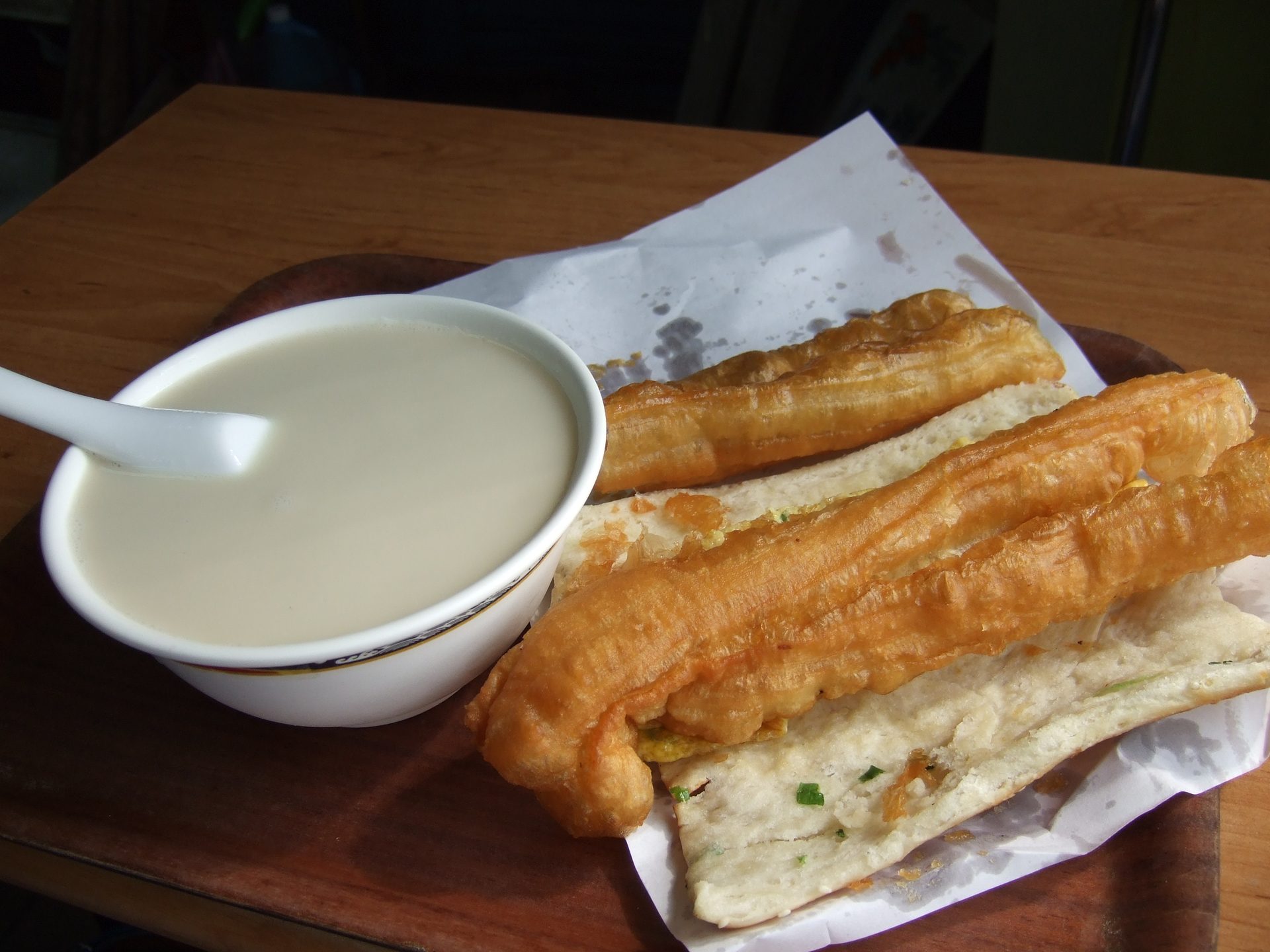
Long before most households switch on a coffee maker, Taiwan’s breakfast shops are already three deep at the counter. Commuters queue for hot soy milk, flaky pastries, and rice rolls wrapped to order, a morning ritual that carries as much weight as the meal itself. Traditional Taiwanese breakfast draws on waves of migration, including Hokkien settlers, Hakka communities, and mainland Chinese arrivals after 1949, each contributing dishes that now sit side by side on the same stainless-steel counter.
This guide walks through 18 dishes that make up that spread, from baked breads and soup-filled dumplings to the savory soy milk and milk tea that wash them down. Readers will find how each dish is made, where its roots likely lie, and what sets it apart from the cereal-and-toast version of breakfast traditions found elsewhere in the world.
1. Shaobing
Shaobing is a baked wheat-flour flatbread, layered and brushed with oil before it goes into a hot oven, which gives it a flaky texture closer to pastry than flatbread. Street vendors typically split the bread open and tuck in a crisp you tiao, a fried egg, or both, folding it closed like a sandwich. The lamination process shares a lot in common with French pastry techniques, where repeated folding and baking build the same airy layers.
Fillings vary by vendor and region. Some versions carry shredded pork and pickled mustard greens, while simpler ones stop at a scattering of sesame seeds baked into the crust. Because it is baked rather than fried, shaobing keeps its crunch longer than most other breakfast breads, which makes it a popular grab-and-go choice for commuters.
2. Dan Bing
Dan bing is a thin, scallion-flecked batter cooked flat on a griddle, with a cracked egg poured over it while it is still soft enough to absorb the egg into the surface. The cook rolls the whole thing around a smear of sauce, usually a mix of soy paste, sweet chili, or a vinegar-based dressing, then slices it into bite-sized pieces.
Ordering one typically follows a set pattern at breakfast counters:
- Pick the wrapper style, usually a plain egg crepe or a scallion-pancake base.
- Choose a filling such as ham, corn, cheese, or shredded pork.
- Select a sauce, ranging from mild soy to spicy chili.
- Decide on a drink to go with it, most often soy milk or milk tea.
The cheese-and-ham version has become one of the more popular modern twists, giving the dish a texture closer to an omelet wrapped in a crisp shell.
3. Cong Zhua Bing
Cong zhua bing translates roughly to “scallion hand-grabbed pancake,” a name that describes how the dough is pulled apart by hand after cooking to reveal its flaky layers. The dough is rolled with oil and chopped scallions, coiled into a spiral, then pan-fried until the outside turns golden and crisp while the inside stays soft and layered.
It is often eaten plain, dipped in soy sauce, or used as the wrapper for a dan bing instead of the usual thin batter. The scallion flavor is subtle rather than sharp, which makes the pancake a common base for heavier fillings without overwhelming them.
4. Xiaolongbao
Xiaolongbao, the soup-filled dumplings steamed in small bamboo baskets, trace back to snack shops on the outskirts of Shanghai. It evolved from the guantangbao (soup-filled dumplings/buns) of Kaifeng, Henan province, which was the capital city of the Northern Song Dynasty (960–1127), with Shanghai-style xiaolongbao originating in Nanxiang, a neighboring village that later became an outer suburb of Shanghai. They became a fixture of Taiwanese breakfast tables largely through one restaurant: xiaolongbao, loved around the world thanks to Taiwanese restaurant Din Tai Fung, originated in snack shops in a town on the outskirts of Shanghai.
The restaurant’s founder, Yang Bing-yi, didn’t start out selling dumplings at all. His store sold cooking oil and steamed xiaolongbao on the side, but when the oil business ran into trouble after the invention of salad oils packaged in metal tins in 1972, the shop devoted more of its storefront to the dumplings, which soon became popular enough that the name changed to just Din Tai Fung. The flagship location on Xinyi Road in Taipei opened in the 1950s selling cooking oil on one side and xiaolongbao on the other, and today the chain has grown to more than 100 branches across more than a dozen cities, some holding Michelin stars.
Pro Tip: Bite a small hole in the top of the dumpling first, let the steam escape, then sip the broth before eating the rest. Biting straight in sends hot soup everywhere.
Each dumpling holds a portion of seasoned pork along with a spoonful of gelatinized broth that liquefies into soup once steamed, which is what makes the first bite such a surprise for newcomers.
5. Mantou
Mantou is a plain steamed bun, soft and slightly sweet, with no filling at all. It is one of the simplest items on a Taiwanese breakfast counter, often served alongside a bowl of soy milk or dipped in sweetened condensed milk for extra sweetness.
Some stalls also serve a fried version, where the steamed bun is sliced and shallow-fried until the exterior turns golden and slightly crisp, a texture contrast that pairs well with the soft interior. As a plain carbohydrate base, mantou functions much like rice or bread does in other breakfast cultures, a neutral partner for richer, saltier dishes served beside it.
6. Baozi
Where mantou stays plain, baozi carries a filling, whether that is seasoned pork, mixed vegetables, or sweetened red bean paste. The dough is proofed, wrapped around the filling by hand, pleated at the top, and steamed until it puffs up into a soft, pillowy shell.
Steamed, stuffed buns appear across much of Asia in slightly different forms, and Malaysian breakfast staples include their own versions shaped by the same Chinese diaspora influence. In Taiwan, baozi are usually sold by the piece and kept warm in bamboo steamers stacked near the counter, so customers can see exactly what they are buying before ordering.
7. Fan Tuan
Fan tuan is a Taiwanese rice ball built around a core of savory fillings, most commonly a crisp you tiao, pork floss, pickled mustard greens, and a boiled or fried egg, all pressed together inside warm glutinous or regular rice and wrapped tightly in plastic for portability.
The format echoes Japanese rice ball traditions, where rice is similarly shaped around a filling and eaten by hand, though fan tuan tends to pack more ingredients into a single roll. It is one of the more filling options on this list, closer to a full handheld meal than a light snack, which makes it popular with commuters who need something sturdy for the morning commute.
8. You Tiao
You tiao is the long, golden fried dough stick found at nearly every Taiwanese breakfast stall, and its origin story is tied to a specific moment in Chinese history. According to folklore, a respected military general named Yue Fei was betrayed and executed after being falsely accused of treason, and many people blamed a government official and his wife for the injustice, so outraged citizens allegedly shaped dough into two figures representing the couple. The food became known as “you zha gui,” which translates roughly to “deep-fried devils,” a name that was later shortened and evolved into the modern term “you tiao”.
Traditionally, the dough is made from simple ingredients: flour, egg, sugar, salt, and water, stretched into long strips and pressed together before frying so the two halves puff apart slightly in the hot oil. Youtiao are normally eaten at breakfast as an accompaniment for rice congee, soy milk, or sweetened milk.
Pro Tip: Tear the stick into pieces and dip them into warm soy milk until they soften slightly. That’s the classic way it’s eaten at breakfast counters, not as a standalone snack.
9. Xian Doujiang
Xian doujiang is the savory counterpart to sweetened soy milk, served warm in a bowl rather than a cup. A splash of vinegar curdles the milk slightly into soft, tofu-like curds, which are then topped with dried shrimp, chopped scallions, cilantro, chili oil, and sometimes pieces of pickled mustard green or torn you tiao.
The result sits somewhere between a soup and a drink, a format that surprises visitors expecting a sweet version. Taiwan’s broader tea and soy milk culture runs through nearly every breakfast shop menu, and xian doujiang is usually the first thing poured once a customer sits down.
10. Jiucai He
Jiucai he is a pan-fried dough pocket stuffed with garlic chives, often combined with vermicelli noodles, dried shrimp, and egg. The dough is sealed around the filling, then fried flat on both sides until the shell turns crisp and golden while the chive filling stays soft inside.
Common filling combinations include:
- Garlic chives with egg and vermicelli noodles
- Garlic chives with dried shrimp and glass noodles
- Garlic chives with minced pork for a heartier version
The strong, slightly pungent flavor of garlic chives makes this one of the more distinctive items on a breakfast tray, usually eaten on its own rather than paired with a sauce.
11. Luobo Gao
Luobo gao, or radish cake, is made from shredded daikon radish mixed into a rice flour batter, steamed into a loaf, then sliced and pan-fried until the surface turns crisp while the inside stays soft and slightly chewy. Dried shrimp, shiitake mushroom, or Chinese sausage sometimes gets folded into the batter for extra flavor.
Important Note: Food writers often point out that radish cake has roots in southern Chinese dim sum traditions rather than being native to Taiwan, which is why the dish shows up on both Taiwanese breakfast counters and Cantonese dim sum carts in a nearly identical form.
It is typically served plain or with a drizzle of soy sauce and chili, and its texture contrast, crisp outside against a soft center, is the main draw rather than any strong flavor on its own.
12. Congee
Congee is rice simmered slowly in a large amount of water or broth until the grains break down into a thick, smooth porridge. At breakfast shops, it is usually served plain and finished at the table with whatever toppings a customer wants: preserved egg, pork floss, pickled mustard greens, century egg, or crumbled you tiao stirred in for crunch.
Rice porridge culture runs deep across Asia, with similarities to the rice-based morning dishes found in other Asian breakfast traditions, even though the specific toppings and seasoning differ sharply by region. In Taiwan, congee tends to sit on the lighter end of the breakfast menu, often ordered by people looking for something gentler than fried dough or dense buns.
| Dish | Main Ingredient | Flavor Profile |
|---|---|---|
| Shaobing | Laminated wheat dough | Savory, flaky |
| Xiaolongbao | Pork, gelatinized broth | Savory, juicy |
| Fan tuan | Glutinous rice, pork floss | Savory, hearty |
| Dousha bao | Steamed dough, red bean paste | Sweet |
| Luobo gao | Daikon radish, rice flour | Savory, mild |
| Nai cha | Black tea, milk | Sweet, creamy |
13. Dousha Bao
Dousha bao is a sweet steamed bun filled with smooth, sweetened red bean paste. The outer dough stays soft and slightly chewy, a deliberate contrast to the dense, sticky filling inside, and the sweetness level tends to be mild rather than dessert-level sugary.
It often shows up on the same tray as savory baozi, giving customers a sweet option without stepping outside the steamed-bun format. Paired with a cup of plain soy milk or tea, it works as a lighter, almost dessert-adjacent way to close out a breakfast order.
14. Rou Bao
Rou bao is a meat-filled bun, typically built around seasoned ground pork or braised pork belly in a savory, soy-based sauce. The filling tends to be juicier and more heavily seasoned than a standard baozi, and the buns themselves often run slightly larger.
Vendors keep them warm in steamers near the register, and the bun stays soft enough that most people eat it with just a napkin, no utensils needed. It is a dependable, filling choice for anyone who wants something meat-forward without ordering a full plate of noodles.
15. Tie Ban Mian
Tie ban mian, or iron-plate noodles, brings a sizzling-platter presentation to the breakfast counter. Wheat noodles get stir-fried with egg, cabbage, bean sprouts, and a protein such as pork or beef, then served directly on a hot iron plate that keeps the dish audibly sizzling as it reaches the table.
While it leans closer to a lunch dish in other settings, breakfast shops with griddle stations often serve a lighter version earlier in the day for customers who want something heartier than a pancake or bun. The theatrical presentation, steam rising off the plate, makes it a popular choice for anyone eating in rather than taking food to go.
16. Mi Jiang
Mi jiang is a warm rice milk drink made by soaking rice, blending it with water, then straining and lightly sweetening the result. It has a thinner, more neutral flavor than soy milk, which makes it a common alternative for anyone avoiding soy.
It sits alongside the rest of Taiwan’s traditional beverage lineup, usually served hot in the same stalls that pour soy milk and tea, and it pairs well with both sweet and savory items since its own flavor stays mild enough not to compete.
17. Nai Cha
Nai cha is Taiwanese milk tea, made by brewing black tea strong, then mixing it with milk and sugar. At breakfast counters, it is usually served hot rather than iced, a contrast to the cold, blended versions sold at tea shops later in the day.
Key Insight: The sweet, milky tea served at breakfast shops shares a direct lineage with Taiwan’s global bubble tea industry, which built its entire concept around the same base of strong tea, milk, and sugar.
It’s a common drink pairing for shaobing or dan bing, and its sweetness makes it a popular choice for anyone looking to balance out saltier fried items. Taiwan’s broader tea-drinking culture runs from this simple breakfast version all the way up to the elaborate tea shops found on nearly every city block.
18. Houbing
Houbing is a baked pastry rooted in Hakka culinary tradition, made from a dense wheat dough wrapped around a sweet filling, often mung bean paste or a peanut-and-sugar mixture, then baked until the outside turns golden. It is denser and less flaky than shaobing, closer to a thick biscuit than a layered bread.
The pastry carries strong ties to Hakka festival customs, where it was traditionally baked in large batches and shared during community gatherings tied to Hakka cultural heritage and festival traditions. It is less commonly found outside Hakka communities, which makes it one of the more regionally specific items on this list, typically paired with plain tea rather than a sweeter drink.
Taiwan’s breakfast counters pack an unusual amount of variety into one meal, swinging from flaky baked breads to soup-filled dumplings to savory soy milk within the space of a single order. That range reflects the island’s layered history as much as its appetite. Travelers curious about how other regions build their own version of a morning meal might find it useful to compare notes with Mediterranean breakfast traditions, which lean on an entirely different set of staples but share the same instinct: start the day with something made fresh, not packaged.