
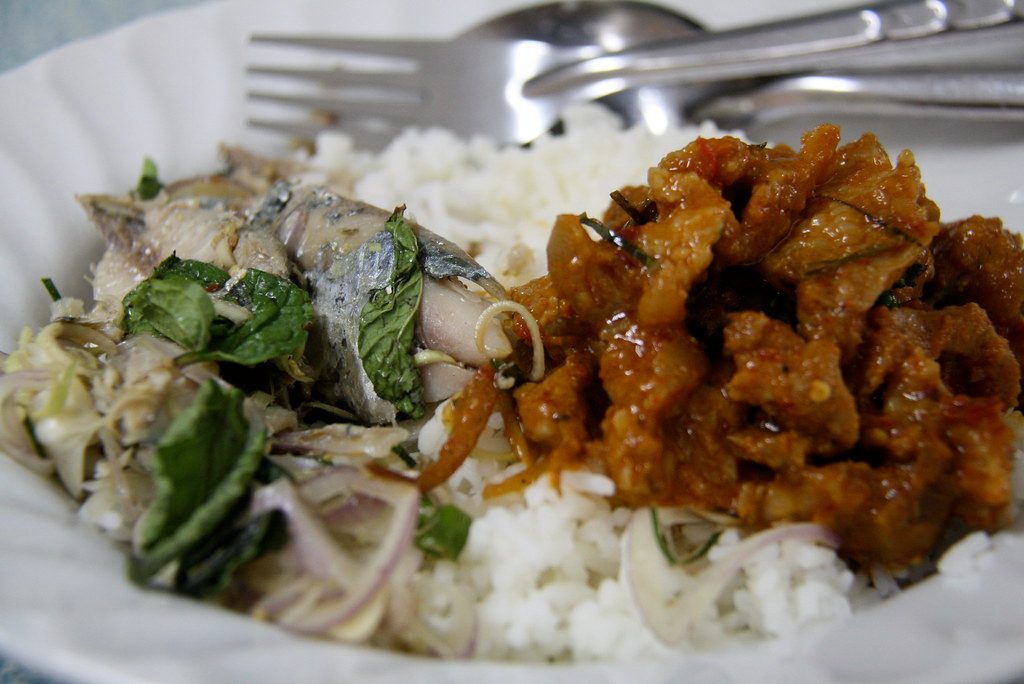
A traditional Thai breakfast rarely looks like toast and cereal. Instead, mornings in Thailand often start with the same savory, spicy, and sometimes surprising flavors found at lunch or dinner. Breakfast traditions around the world reveal just how differently cultures define the first meal of the day, and Thailand’s version leans heavily on rice, broth, and grilled meat rather than anything sweet.
Street vendors open before sunrise, and locals grab a bag of something hot on the way to work rather than sitting down to a plated meal. The seventeen dishes below cover the full range of what actually fills Thai breakfast tables, from gentle rice porridge to a jolt of strong iced coffee.
| Dish | Type | Core Ingredients |
|---|---|---|
| Jok | Rice porridge | Broken jasmine rice, pork, ginger |
| Khao Tom | Rice soup | Jasmine rice, broth, pork or chicken |
| Tom Luad Moo | Blood soup | Pork blood, offal, herbs |
| Khao Kai Jeow | Rice and omelet | Rice, eggs, fish sauce |
| Moo Ping | Grilled skewers | Marinated pork, sticky rice |
| Gai Yang | Grilled chicken | Chicken, garlic, herbs |
| Patongo | Fried dough | Wheat dough, oil |
| Nam Tao Hoo | Soy milk | Soybeans, sugar, pandan |
| Nam Khing | Ginger drink | Fresh ginger, sugar |
| Salapao | Steamed bun | Dough, pork or custard filling |
| Khao Neow Sang Kaya | Sticky rice custard | Glutinous rice, egg custard |
| Kai Luak | Soft-boiled egg | Eggs, soy sauce, pepper |
| Khao Rad Gaeng | Rice and curry | Rice, curry, assorted toppings |
| Aeb Pla Nin | Grilled fish parcel | Tilapia, herbs, banana leaf |
| Khao Yam | Rice salad | Rice, herbs, dried shrimp |
| Dim Sum | Steamed snacks | Dough, pork, shrimp |
| Oliang | Iced coffee | Coffee, sugar, condensed milk |
1. Jok
Jok is Thailand’s take on rice congee, and it tends to be the first thing many people think of when asked about a traditional Thai breakfast. Jok, pronounced “joke,” is the Thai version of congee, also known as rice porridge, and is about as comforting as a Thai breakfast can come. Street vendors cook the rice in large pots, often over charcoal, until the grains collapse into a smooth, almost silky base.
A bowl typically arrives with small pork meatballs and the option of a soft egg cracked in to thicken the broth further. The porridge is normally served with small pork meatballs and a soft boiled egg, then garnished with slices of ginger, a drizzle of soy sauce, sometimes vinegar, and a dash of black pepper. Diners mix in as much or as little of each garnish as they like, which is part of why jok remains popular with everyone from young kids to elderly grandparents.
Pro Tip: Ask for the egg “sot” (raw) if you want it to cook gently in the hot porridge for a creamier texture, or “suk” if you prefer it fully set.
2. Khao Tom
Khao tom looks similar to jok at first glance, but the two dishes are built differently. Khao tom shares similarities with jok since both are comforting rice dishes often eaten for breakfast, but while jok is slow-cooked until the rice breaks down into a creamy consistency, khao tom is made by adding individual grains of cooked jasmine rice to a clear broth. The result is lighter and brothier, closer to a rice soup than a porridge.
Protein varies by region and household, with minced pork, chicken, or fish all common additions alongside fried garlic, white pepper, and fresh herbs. Some versions lean spicier and thicker, closer to what one home cook described as a thick and spicy chicken soup over poached eggs rather than a plain broth. It shares the comforting, easy-to-digest quality found in rice-based morning meals across Asia, including the rice porridges eaten across India.
3. Tom Luad Moo
Tom luad moo is a pork blood soup built around organ meats, coagulated blood cubes, and a peppery broth thickened with fresh herbs. It sits closer to the savory, offal-forward end of Thai breakfast cooking, often sold alongside noodle soups at the same street carts.
The dish leans on bitter greens, Chinese celery, and a generous hit of white pepper to balance the richness of the blood and organs. It bears some resemblance to the way hearty, one-pot meat soups function as a morning anchor in other cuisines, much like a German eintopf built from whatever meat and vegetables are on hand.
Important Note: Pork blood dishes should always be sourced from reputable vendors and fully cooked before eating, since raw or undercooked blood carries food safety risks.
4. Khao Kai Jeow
Khao kai jeow pairs steamed jasmine rice with a Thai-style omelet, fried hot and fast in oil until the edges turn crisp and lacy. The eggs are beaten with a splash of fish sauce rather than milk, which gives the omelet a savory depth that plain eggs lack.
It is one of the simplest dishes on this list and one of the most common, largely because the ingredients are cheap and nearly always on hand at home. Street food researchers studying typical Thai breakfasts have noted that Thai omelets, or “Kai Jiew,” rank among the most frequently eaten morning dishes nationwide, alongside porridge and grilled chicken with sticky rice. Quick egg dishes show up in breakfast traditions everywhere, including the egg-forward spreads featured in romantic breakfast menus built around a well-cooked egg.
5. Moo Ping
Moo ping is grilled pork skewers marinated in a mix of coriander root, garlic, palm sugar, and soy sauce, then cooked over charcoal until the edges caramelize. The skewers are almost always sold with a bag of sticky rice, and together they form what might be the most recognizable grab-and-go Thai breakfast combination.
Vendors set up grills before dawn, and the smoke alone is often enough to draw in customers walking by. The pairing of grilled meat with a starchy side for breakfast is not unique to Thailand; grilling meat over open flame as a morning ritual also shows up in South African food traditions built around the braai.
6. Gai Yang
Gai yang is grilled chicken marinated in garlic, white pepper, and coriander root, then slow-cooked over charcoal until the skin crisps and the inside stays juicy. It is especially common in the north and northeast of Thailand, where it is often eaten alongside sticky rice and a spicy dipping sauce even in the early morning.
Observers of everyday Thai eating habits have pointed out that breakfast in Thailand often looks no different from any other meal, with fried eggs, grilled fish, or grilled chicken appearing just as often as anything resembling a dedicated breakfast dish. That same willingness to eat substantial, protein-heavy food first thing in the morning echoes meat-forward breakfast habits found in Pakistani food culture.
7. Patongo
Patongo is a Thai version of deep-fried dough sticks, closely related to Chinese youtiao, and it shows up at nearly every Thai breakfast market. The dough puffs up as it fries, creating a crisp outer shell around a soft, slightly chewy center.
It is rarely eaten plain. Most people dip patongo into sweetened condensed milk, pandan custard, or a bowl of jok to soften the dough and add sweetness to an otherwise plain fried snack. The idea of pairing a simple fried or baked dough with a sweet spread for breakfast is far from unique to Thailand, echoing the pastry-and-spread tradition found in French breakfast food.
8. Nam Tao Hoo
Nam tao hoo is warm soy milk, usually served slightly sweetened and sometimes flavored with pandan leaf or ginger. It traces back to Chinese immigrant communities in Thailand and remains a staple at markets with strong Chinese-Thai roots.
Vendors typically sell it alongside dough fritters or sesame balls, meant to be dunked into the warm milk before eating. Soy milk’s role as a breakfast staple stretches well beyond Thailand, forming the backbone of morning drink culture across East Asia in much the same way tea anchors traditional Chinese drinks.
9. Nam Khing
Nam khing is a warm ginger drink made by simmering fresh ginger root with sugar until the liquid turns fragrant and slightly spicy. It is often served alongside fried dough or steamed buns as a way to cut through the richness of fried breakfast food.
The drink doubles as a mild remedy for an upset stomach or a cold morning, which is part of why older generations tend to favor it over coffee. Warm, spiced morning drinks built around a single root or spice show up elsewhere too, including the hibiscus and spice infusions common in Egyptian drink traditions.
10. Salapao
Salapao are steamed buns filled with options ranging from sweet custard to savory minced pork or salted egg yolk. Like patongo and nam tao hoo, salapao reflects the deep influence of Chinese-Thai communities on what Thais eat in the morning.
The dough is soft and slightly sweet on its own, which makes even the savory-filled versions feel appropriate for breakfast rather than a heavier meal. Steamed and baked bread-based snacks eaten on the go are common across many food cultures, including the flatbreads that anchor traditional Egyptian food.
11. Khao Neow Sang Kaya
Khao neow sang kaya pairs steamed glutinous sticky rice with a rich egg custard, usually made from coconut milk, eggs, and palm sugar cooked low and slow until it sets into a dense, spoonable layer. It is sweeter than most items on this list, making it one of the few traditional Thai breakfast dishes built specifically around dessert-like flavors.
The custard is typically steamed separately, then sliced and served alongside a mound of warm sticky rice. Sweet rice-and-custard pairings for breakfast appear in other warm-climate food cultures as well, not unlike the honey-and-dairy combinations found in traditional Greek foods.
12. Kai Luak
Kai luak is a soft-boiled egg cooked just long enough to set the white while keeping the yolk runny, then cracked into a small glass or cup. Diners season it right at the table with a splash of soy sauce and a dash of white pepper.
It is often eaten alongside coffee or tea rather than as a standalone dish, functioning more like a protein add-on to round out a lighter breakfast. The simplicity of the dish, just an egg and two seasonings, makes it one of the fastest items to prepare on any Thai breakfast menu.
13. Khao Rad Gaeng
Khao rad gaeng is steamed rice topped with one or more curries ladled straight from large trays at street stalls, letting customers build their own plate from whatever is available that morning. Common toppings include green curry, stir-fried vegetables, fried fish, or a fried egg on top.
The format rewards speed, since vendors can serve a plate in seconds by scooping from pre-cooked trays rather than cooking to order. Building a single plate from rice plus a stew or curry is a familiar breakfast shortcut elsewhere too, similar in spirit to the rice-and-stew plates found in Venezuelan food traditions.
14. Aeb Pla Nin
Aeb pla nin is grilled tilapia, known in Thai as pla nin and scientifically classified as Oreochromis niloticus, seasoned with a paste of herbs, chilies, and spices before being wrapped in banana leaf and grilled over charcoal. The banana leaf keeps the fish moist while it slowly absorbs smoke from the grill.
Unwrapping the charred leaf releases a strong burst of lemongrass, galangal, and kaffir lime that defines northern and northeastern Thai cooking. Wrapping fish in leaves before grilling is a technique shared with several Southeast Asian neighbors, including the banana-leaf grilling methods common in Malaysian food culture.
15. Khao Yam
Khao yam is a rice salad from southern Thailand, tossing cooked rice with shredded herbs, dried shrimp, bean sprouts, and a sour-sweet budu or fish sauce dressing. A Southern Thai mixed meat salad loaded with spices, chilies, and herbs is also sometimes served as part of a traditional breakfast, with raw beef and vegetables mixed with bile and stock for a round, bitter flavor.
Khao yam itself is lighter and more herb-forward than that bolder relative, closer to a composed salad than a soup. The dish’s roots trace back to shared culinary history with neighboring Malay communities, and its bright, herb-heavy profile makes it one of the more refreshing options on a Thai breakfast table.
16. Dim Sum
Dim sum reached Thailand through Chinese immigrant communities, particularly in southern cities with strong Chinese-Thai populations, and has since become a fixture of Thai breakfast culture in its own right. In towns such as Hat Yai, dim sum has become a well-known local breakfast tradition rather than a specialty dish reserved for special occasions.
Steamed dumplings, pork buns, and rice rolls fill the trolleys and trays at morning dim sum stalls, meant to be shared across several small plates rather than eaten as one large portion. The format pairs naturally with hot tea, much like the tea-centered drinking rituals woven through traditional Russian drinks culture.
17. Oliang
Oliang is Thai-style iced black coffee, brewed strong with a blend of coffee and chicory or other roasted grains, then sweetened heavily with sugar and condensed milk. It is served over ice in a tall glass, making it one of the few cold items on an otherwise warm, savory breakfast table.
Street vendors brew it using a cloth filter bag rather than a drip machine, giving the coffee a slightly smoky, bold flavor that cuts through the sweetness. Pairing a strong, sweet coffee with breakfast is a tradition embedded in many cultures, not unlike how black tea or coffee anchors Chinese drink rituals each morning.
Pro Tip: Order oliang “wan noi” if you want less sugar, since the standard preparation is often sweeter than most Western iced coffees.
Bringing It All Together
A traditional Thai breakfast rarely fits into one tidy category. Rice porridge, grilled meat, fried dough, and iced coffee can all show up on the same street in the same hour, served to people heading to work, school, or the market.
Trying even a handful of these seventeen dishes offers a far more accurate picture of daily Thai food culture than a single iconic dish ever could. For travelers and home cooks alike, that variety is exactly what makes Thai breakfast worth seeking out, whether from a street cart at dawn or a recipe recreated at home.