Inside Traditional Yoruba Clothing: 18 Garments from Agbada to Ibante

November 20, 2026
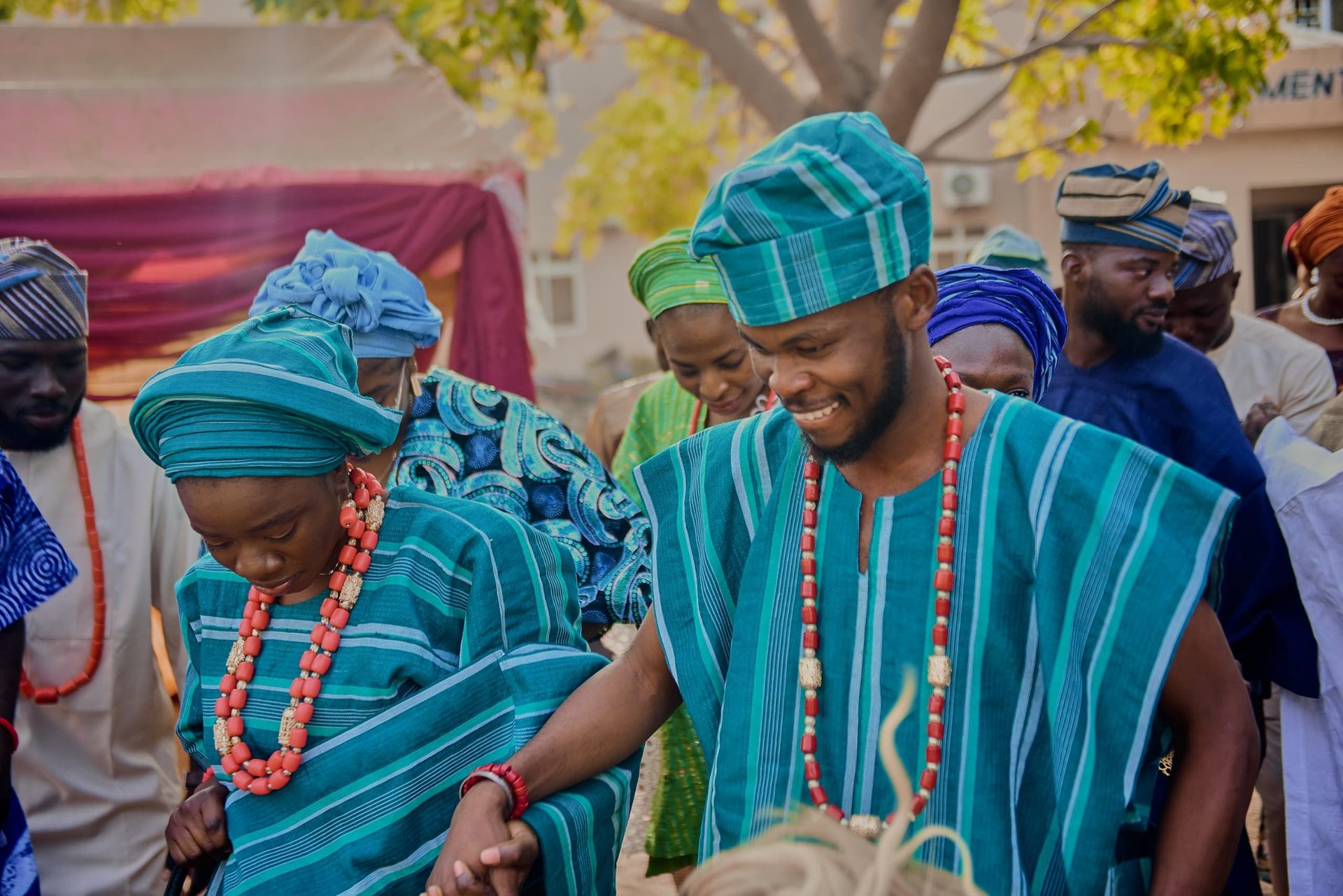
Traditional Yoruba clothing is built from layers, not just fabric but meaning, with every robe, wrapper, and head tie signaling age, status, gender, or occasion before a single word is spoken. A man’s choice between a flowing agbada and a shorter gbariye tells onlookers something about the event he is attending. A woman’s gele height and wrap can say just as much.
This piece walks through 18 garments, fabrics, and accessories that make up the Yoruba wardrobe, from the grand ceremonial robes worn by chiefs to the everyday wrapper-and-blouse combination still common across traditional clothing styles in West Africa. Each entry covers what the piece is, how it is worn, and why it still matters.
| Garment | Category | Typically Worn By |
|---|---|---|
| Agbada | Outer robe | Men |
| Gbariye | Outer robe | Men |
| Dandogo | Outer robe | Men |
| Shokoto | Trousers | Men |
| Kembe | Trousers | Men |
| Danshiki | Shirt/undervest | Men |
| Fila | Headwear | Men |
| Fila Abeti Aja | Headwear | Men |
| Fila Gobi | Headwear | Men |
| Buba | Blouse/shirt | Men and women |
| Iro | Wrapper skirt | Women |
| Gele | Headwear | Women |
| Iborun | Shawl/accessory | Women |
| Komole | Dress | Women |
| Oleku | Dress style | Women |
| Aso-oke | Fabric | Men and women |
| Adire | Fabric | Men and women |
| Ibante | Waist accessory | Women |
1. Agbada
The agbada is the most recognizable piece of Yoruba menswear: a wide, flowing outer robe worn over a shirt and trousers. Wikipedia’s entry on the garment describes it as the flowing robe traditionally worn by the Yoruba people across West Africa, cut with a wide neck opening and dropped shoulders that let air move freely in a hot climate.
The robe has carried status markers for centuries. According to Yoruba Library’s history of the agbada , the garment was originally worn by Yoruba kings and high-ranking officials, symbolizing power and authority, before it became more widely adopted and eventually a staple of formal menswear. The most elaborate versions, sometimes called agbada nla, use heavier embroidery and finer aso-oke cloth reserved for weddings, chieftaincy ceremonies, and festivals.
Other cultures have their own grand ceremonial robes with similar layered logic. Readers curious about how traditional Indian clothing handles formal menswear will notice the same instinct: flowing silhouettes that announce rank before a single word is exchanged.
Pro Tip: The weight and stiffness of an agbada’s fabric usually signals formality. Heavier aso-oke versions are for weddings and chieftaincy events, while lighter cotton or lace agbadas suit everyday wear.
2. Gbariye
The gbariye looks like a close cousin of the agbada, and it often gets mistaken for one. A detailed look at agbada history notes that gbariye, which resembles agbada, is frequently mistaken for it, though the two differ in cut once examined closely.
The main distinction is proportion. A gbariye carries fewer layers and sits shorter than a full agbada, making it a practical choice for warmer days or less formal gatherings where the dramatic sweep of a full ceremonial robe would feel excessive. It still pairs with the same shokoto trousers and fila cap as its larger counterpart.
Layered outer garments that shrink or expand depending on the occasion show up across many dress traditions. The relationship between traditional German clothing and its regional variations follows a similar pattern of formal versus everyday cuts.
3. Dandogo
The dandogo is an oversized, voluminous robe historically associated with Lagos’s elite during the 19th and early 20th centuries. A study on colonial-era Lagos dress, published through the University of Lagos’s history and fine arts journal , notes that even as European tailoring influenced local fashion, smocks, dandogo and gbariye, still retained the pair of openings characteristic of earlier Yoruba garment construction.
Historically, the dandogo signaled wealth partly through sheer fabric volume. Because it used more cloth than a standard agbada, only those with resources to commission extra yardage of aso-oke could wear one regularly, which made it a visible marker of class in pre-colonial and colonial Lagos society.
Garments that use excess fabric as a direct symbol of status aren’t unique to Yorubaland. Similar logic appears in traditional Pakistani clothing, where fabric quantity and quality in formal sherwanis often reflect a family’s standing.
4. Shokoto
Shokoto are the native trousers worn under an agbada, gbariye, or dandogo. They close at the waist with a drawstring rather than a zipper or button, a construction method that has stayed consistent across generations of Yoruba tailoring.
The fit varies by style. Some shokoto are cut close and ankle-length to sit neatly under a long robe, while others are looser through the leg. The drawstring waist means a single pair can often fit a range of body types without tailoring adjustments, which made the garment practical for both everyday wear and occasions where clothes might be borrowed or shared within a household.
Trousers worn as a base layer under a longer outer garment show up in many wardrobes worldwide. The pairing is loosely comparable to how looser trousers function under outer layers in traditional American clothing from earlier centuries, where practicality often shaped the cut.
5. Kembe
Kembe are a distinctly baggy style of trousers, wider and shorter than shokoto. Encyclopedia.com’s reference entry on the agbada ensemble describes kembe as a loose, wide-bottomed one that reaches slightly below the knee, but not as far as the ankle, distinguishing it from the narrower, ankle-length sooro style.
Because kembe stop above the ankle, they move differently than full-length shokoto, giving the wearer more freedom in the legs. This makes them a practical choice for dancing or physical activity during festivals, where a long, close-fitting trouser would restrict movement.
Similar wide-leg silhouettes appear as a deliberate design choice in warm-climate dress around the world, including certain looser garments within traditional Australian clothing adapted for heat and movement.
6. Danshiki
The danshiki (also spelled dansiki) is a sleeveless or short-sleeved smock worn as an undervest beneath an agbada, or on its own as casual wear. A piece on traditional Yoruba attire describes the full agbada ensemble as consisting of trousers, an embroidered pull-over shirt (dashiki), and a large pull-over robe (agbada), placing the danshiki as the middle layer of the outfit.
On its own, without the outer robe, a danshiki works as everyday menswear, especially in warmer months. Its round neckline and loose cut keep it breathable, and simpler cotton versions are common far beyond ceremonial settings.
Loose, round-neck pullover shirts worn as a practical base layer appear across many warm-climate wardrobes, including some looser tunic styles found in traditional Chinese clothing.
7. Fila
Fila is the general term for Yoruba men’s caps, and it covers several distinct shapes rather than one single design. According to Wikipedia’s overview of Yoruba clothing , these are Yoruba men’s caps, and they include Fila Abeti Aja, fila Gobi and Fila Kufi, with each style tied to a slightly different occasion or generation of wearer.
A fila completes the agbada-shokoto-danshiki ensemble and is rarely worn alone for formal events. The choice of cap style often says as much about the wearer’s age group or personal taste as the robe underneath it does.
Head coverings that complete a formal outfit and carry their own set of style rules show up across cultures. Readers interested in how headwear functions within a broader traditional clothing collection will find the same principle at work.
8. Fila Abeti Aja
Fila Abeti Aja takes its name from its two side flaps, which resemble a dog’s ears, abeti aja translating roughly to “dog ears” in Yoruba. The flaps can be folded up, folded down, or left loose depending on the wearer’s preference and the formality of the occasion.
This style is commonly associated with older men, chiefs, and traditional title holders, who tend to favor its more structured, dignified look over flashier alternatives. The movable flaps also give it a practical edge: folding them down offers extra coverage in cooler weather, while folding them up keeps the head cooler in heat.
9. Fila Gobi
The Fila Gobi is a tall, cylindrical cap, one of the more structured styles in the Yoruba cap family. The same agbada reference entry notes that the gobi is cylindrical in form, measuring between nine and ten inches long, and when worn, it may be compressed and shaped forward, sideways, or backward.
That flexibility is part of the appeal. A gobi can be reshaped to suit the wearer’s mood or the occasion, tilted at an angle for a more casual look or worn upright for formal events. Younger men especially favor the gobi for its adaptability compared to the more fixed shape of the Abeti Aja.
Pro Tip: A Fila Gobi’s shape is not fixed. Gently reshaping the brim before wear changes the overall look from formal and upright to relaxed and angled.
10. Buba
The buba is a loose, round-neck blouse worn by both men and women, though the cut differs slightly between genders. Wikipedia’s entry on the wrapper garment explains that a full wrapper ensemble consists of three garments: a blouse, called a buba, the iro, and a headscarf called a head tie, called gele, making the buba a foundational piece of women’s traditional dress.
For men, the buba is typically worn under a danshiki or agbada rather than alone. For women, it is usually fitted close to the body, with sleeve length and neckline varying by region, personal taste, and the occasion. Lace, aso-oke, and cotton are the most common fabrics.
11. Iro
The iro is a large wrapper skirt tied around the waist, worn by women as the lower half of the buba-and-iro ensemble. Per the same Wikipedia entry on wrapper garments, the wrapper is commonly called an iro in Yoruba, and its literal translation is “the act of wrapping.”
Length, width, and pattern vary depending on the fabric and the occasion. An iro cut from aso-oke tends to be stiffer and used for weddings or festivals, while one made from softer cotton or lace suits everyday wear. It can also be worn without the gele or buba as a standalone bottom piece, paired with other tops.
The act of wrapping a single length of cloth into a fitted skirt is a technique shared across many regions. The draping principle echoes how certain wrapped garments function within traditional Japanese clothing, where fold and tie replace cut-and-sew construction.
12. Gele
The gele is the elaborate head tie that completes most formal Yoruba women’s outfits, and tying one well is considered a skill in its own right. Wikipedia’s entry on the gele confirms it is a traditional head tie native to the Yoruba people of Nigeria, Benin and Togo, which comes in specific shapes and designs depending on how it is folded and wrapped.
Gele height, shape, and fabric choice tend to reflect the formality of the event; taller, stiffer wraps in aso-oke or firm synthetic fabric suit weddings and chieftaincy ceremonies, while softer, lower wraps work for everyday outings. Many women have a tie go-to, and some hire specialists for complex styles at weddings.
Pro Tip: Firmer fabrics like aso-oke or stiffened damask hold gele shapes longer through a full day of events than soft cotton, which tends to loosen by midday.
13. Iborun
The iborun is a long scarf or shawl draped over one shoulder, typically worn alongside an iro-and-buba outfit for extra color, texture, or formality. It is closely related to the ipele, another shoulder covering seen in Yoruba women’s dress, though the two terms are sometimes used interchangeably depending on region.
Unlike the gele, which is tied and shaped, the iborun is simply draped, letting it fall loosely over one shoulder or across the back. It often matches or contrasts with the gele in color, giving the wearer a chance to add a second layer of pattern to an outfit without overwhelming it.
14. Komole
The komole is a fitted, often sewn-together dress style that offers an alternative to the separate iro-and-buba combination. Wikipedia’s page on Yoruba traditional weddings notes that the bride wears an Iro ati Buba and Gele, or Komole and Gele, showing the komole as a recognized formal alternative rather than a casual substitute.
Because it is constructed as a single fitted piece rather than a wrapped skirt, the komole tends to move and sit differently than an iro, offering a more streamlined silhouette. It is still paired with a gele to complete the formal look, keeping the headwear consistent even as the bottom half of the outfit changes.
15. Oleku
The oleku is a shorter, more fitted reinterpretation of the traditional iro-and-buba combination, with a slimmer blouse and a wrapper cut well above the ankle rather than floor-length. It emerged as a popular contemporary style among younger Yoruba women looking for a silhouette that felt less formal than a full-length iro while still referencing the traditional ensemble.
Important Note: Exact timelines for when the oleku style became widespread vary across fashion commentary, so this piece describes its defining features rather than attaching a specific date to its rise.
Because the oleku uses less fabric than a full iro, it is often made in bolder prints or lighter aso-oke weaves that would feel heavy in a longer cut. It remains a popular choice for parties, church services, and casual celebrations where a full wedding-length outfit would be excessive.
16. Aso-Oke
Aso-oke is the hand-woven fabric behind many of the garments already covered in this list, from agbada to gele. Wikipedia’s entry on the textile explains that aso-oke, known originally as Òfì, is a hand-woven cloth that originated from the Yoruba people of Yorubaland within today’s Nigeria, Benin and Togo, traditionally woven in narrow strips before being sewn into wider cloth.
The fabric has moved well beyond ceremonial wear in recent years. The same Wikipedia entry notes that designer Kenneth Ize has brought the fabric to international runways, with suiting worn by Naomi Campbell and Imaan Hammam, putting a centuries-old weaving tradition in front of a global fashion audience.
Key Insight: Aso-oke is traditionally woven by men on horizontal looms in narrow strips roughly four to six inches wide, which are later sewn together into full sheets of cloth before tailoring.
17. Adire
Adire is Yoruba tie-dye cloth, typically made using indigo dye and a range of resist techniques, from tying and stitching to wax or starch application, to create patterns before the fabric is submerged. The academic paper on colonial-era Lagos dress referenced earlier notes that tie and dye batik materials, the adire, are equally widespread alongside aso-oke and alari as staple traditional Yoruba textiles.
Patterns range from simple geometric repeats to intricate pictorial designs, with specific motifs often tied to particular weaving or dyeing centers within Yorubaland. Adire is typically lighter and more flexible than aso-oke, which makes it a common choice for everyday buba and iro sets rather than the stiffer ceremonial pieces.
18. Ibante
The ibante is a decorative waist cloth or sash tied over an iro, often used to cinch the waist, add a contrasting pattern, or signal a specific role during a ceremony or festival. It is shorter and narrower than the iro itself, functioning more as an accent piece than a primary garment.
Beaded or embroidered versions of the ibante sometimes appear in masquerade performances, dance troupes, or bridal outfits, where the extra waist detail adds movement and visual interest. Paired with a matching gele and iborun, the ibante rounds out a layered, coordinated look that reflects the broader Yoruba approach to dress: every piece works with the others rather than standing alone.
Taken together, these 18 garments show how Yoruba dress has held onto its structure, robes, wrappers, head ties, and woven cloth, while still leaving room for reinvention, from the oleku’s shorter silhouette to aso-oke’s recent appearance on international runways. The logic behind each piece, layering, fabric choice, and styling, remains tied to occasion and identity much as it has for generations.