Traditional Inuit Clothing: 17 Garments That Define Arctic Dress

November 20, 2026
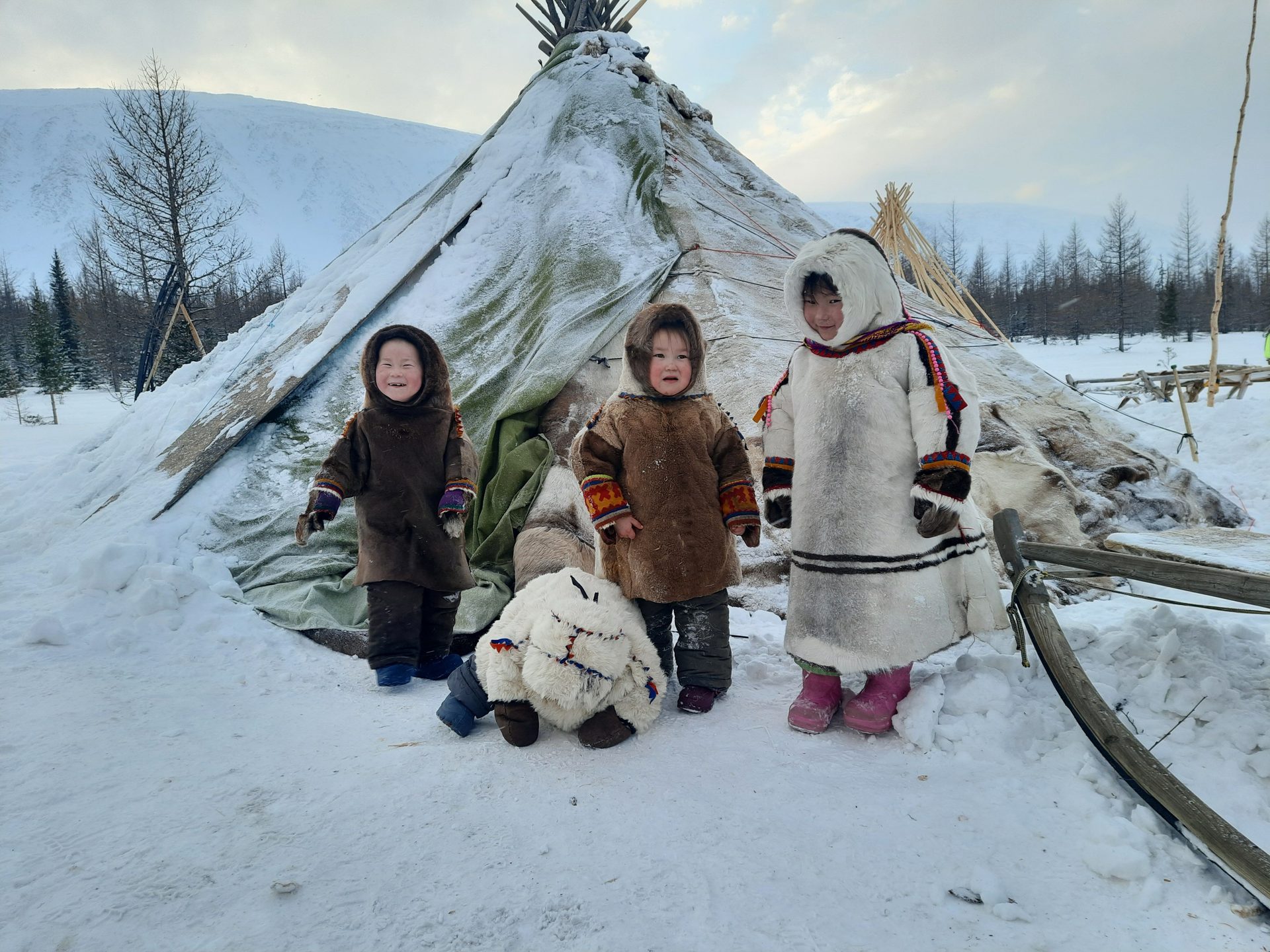
A full traditional Inuit outfit made from caribou and sealskin often weighed only a few kilograms, yet it kept hunters alive through conditions that would disable most modern winter gear within minutes. These clothes were quite light, usually weighing only about 3 to 4.5 kilograms. That balance of low weight and extreme insulation was not an accident. It came from generations of tailoring animal hide to the body, the season, and the task at hand.
Traditional Inuit clothing is best understood as a layered system of parkas, trousers, mitts, and boots, with every piece carrying its own Inuktitut name and its own job in the cold. Traditional Inuit clothing is a complex system of cold-weather garments historically made from animal hide and fur, and the most common sources of hide were caribou, seals, and seabirds. This guide walks through seventeen of those garments, from the heavy outer qulittaq to the watertight kayaking tuilik, and looks at how each one was built and worn across Inuit regions from Alaska to Greenland.
1. Qulittaq
The qulittaq is the outer layer of a man’s traditional two-piece parka system, cut with the fur turned outward to shed wind, snow, and moisture. For a man, the inner layer upper part is called an attigi, and the outer parka is called a qulittaq. Made almost always from caribou (Rangifer tarandus) hide, the qulittaq relied on the hollow structure of caribou hair, which traps air and insulates far better than wool or cotton of similar weight.
This outer parka was not worn constantly. It came out for the coldest stretches of the year and for long trips across the land. In winter, during travel or hunting trips, the parka with the fur on the outside, named a qulittaq, was worn over the one with the leather on the outside and the fur against the skin, named an atigi. The pairing of the two parkas, one inside the other, is the core idea behind nearly every garment on this list.
2. Atigi
Worn directly against the skin, the atigi is the inner parka in that same two-layer system, with its fur turned in for warmth that could be worn through every season rather than just the harshest months. Looking back in the late 1800s and early 1900s, the girl would have different styles of atigi, inner top wear usually made from caribou skin. Because it touched bare skin, the atigi had to be cut and softened with more care than the outer qulittaq, since any stiffness or roughness in the hide would chafe during long days of travel or hunting.
Among young women in particular, the atigi served as a standalone garment for most of the year. The atigi was used as an intermediate layer and was worn year-round by young women. The table below summarizes how the two main torso layers differ.
| Garment | Fur Direction | Typical Use |
|---|---|---|
| Atigi | Fur facing inward, against the body | Worn year-round as the base layer |
| Qulittaq | Fur facing outward | Added on top during the coldest travel or hunting trips |
3. Amauti
The amauti is the women’s parka built around a specific, practical need: carrying an infant safely against the body while leaving both hands free for work. This traditional eastern Arctic Inuit parka, designed to keep the child warm and safe from frostbite, wind and cold, also helps to develop bonding between mother and child. Depending on the region, an amauti could be cut as a long-tailed style or a skirted style, and its construction varied by dialect and community.
Modern versions have adapted to new materials without losing the core design. The amauti can be made from a variety of materials including sealskin, caribou skin or duffle cloth with a windproof outer shell. That flexibility has helped the garment remain in active use even as everyday wardrobes shifted toward store-bought fabric, similar to how other cultures have adapted heritage silhouettes like traditional Japanese clothing for contemporary wear.
Pro Tip: The amauti’s child-carrying design is one of the clearest examples of Inuit clothing solving a parenting problem through tailoring rather than separate equipment, since the pouch and the parka are a single garment.
4. Amaut
The amaut is the pouch itself, not the whole parka, the built-in pocket across the upper back of an amauti where an infant rides against the mother’s skin. The back of the parka has an amaut or pouch for carrying a baby. On decorated amautiit, the surrounding panels carried their own names and functions, a detail documented in museum collections of Arctic clothing.
Families relied on the amaut for an extended stretch of early childhood, not just the newborn months. Amautiit have a large pouch at the back of the woman’s parka, used to carry a newborn until too big to fit, or too heavy. Decoration around the pouch followed consistent anatomical names across Arctic communities. The broad bands of white fur highlight the design elements of the amautik: the kiniq, the back tail (akuq), shoulders (tui), chest (saa), hood (nasaq), and the wrists.
5. Annuraaq
Annuraaq is the broader Inuktitut word for clothing itself, an umbrella term that covers the whole wardrobe rather than one specific piece. In kayaking contexts it narrows to describe a particular paddling anorak worn as part of a two-piece rain system. They wore a fully waterproof garment, cut from seal intestine and stitched with sinew, called a tuilik, or sometimes a separate anorak and spray skirt, the annuraaq and akuilisaq.
That breadth of meaning is typical of Inuit clothing vocabulary, which includes dozens of community-specific garment names beyond any single standard list. A few examples will indicate some of the complexities: ‘Akuitoq: man’s parka with a slit down the front, worn traditionally in the Keewatin and Baffin Island areas’; ‘Atigainaq: teenage girl’s parka from the Keewatin region’; ‘Hurohirkhiut: boy’s parka with slit down the front’; ‘Qolitsaq: man’s parka from Baffin Island.’ This naming pattern repeats across regions and generations, much as regional dress names multiply within traditional Japanese clothing depending on prefecture and occasion. Some documented regional parka and garment names include:
- Akuitoq – man’s parka with a front slit, Keewatin and Baffin Island
- Atigainaq – teenage girl’s parka, Keewatin region
- Hurohirkhiut – boy’s parka with a front slit
- Qolitsaq – man’s parka style from Baffin Island
6. Qarliik
Qarliik are the traditional trousers worn beneath the parka layers, cut from caribou or sealskin and tailored differently by gender and climate. Qarliik trousers were double layered for men, single for women. The extra layer for men reflects the longer hours many spent outdoors hunting or traveling, where a single layer of hide offered too little protection against windchill.
Like trousers in most cold-climate wardrobes, qarliik needed to allow a full range of motion for walking, kneeling, and sledging. Traditional Inuit clothing consisted of a parka, pants and mittens made from caribou or sealskin, worn in one or two layers according to the season, and up to four layers of footwear. The principle of doubling up legwear in harsh conditions is not unique to the Arctic; it shows up in the loose, layered trousers found in traditional Pakistani clothing, though for very different climate reasons.
Important Note: Beyond the handful of garment names documented repeatedly in museum and encyclopedia sources, many Inuit communities use additional local terms for trouser, legwear, and accessory styles that are recorded mainly in Inuktitut-language and oral sources rather than in English references. The sections below on Qarlikallaak, Qukturautiik, Atartaq, and Atajuq reflect that same pattern of community-specific naming.
7. Qarlikallaak
Qarlikallaak belongs to the same family of lower-body garments as the qarliik, representing one of the many localized variants that Inuit seamstresses developed for specific body types, ages, or travel conditions. These community-level naming distinctions rarely make it into standardized English-language references, which tend to settle on a small set of widely cited terms from a handful of well-studied regions. The underlying materials, caribou or sealskin worked soft through careful hand-processing, stayed consistent across these variants even as cut and length changed from place to place, a pattern of regional naming also visible in the many provincial variations within traditional American clothing.
What stays constant across every named trouser variant is the processing method behind the hide itself. Processing skins is a precise skill, and skins are not chemically tanned, but are worked to softness. That hands-on softening process, repeated for every hide regardless of the final garment’s name, is what made Arctic legwear flexible enough for kneeling, kayaking, or long treks over sea ice.
8. Qukturautiik
Qukturautiik sits within the same cluster of leg and foot coverings as qarliik and kamiit, another example of the dialect-specific vocabulary that developed wherever Inuit communities adapted clothing to local terrain and travel style. Coastal groups who traveled mostly by kayak or over sea ice often needed different leg protection than inland caribou hunters who walked long distances on foot, and that functional difference is part of why so many parallel garment names exist across the Arctic rather than one single standardized set. The concept of Inuit clothing encompasses the traditional wear of a geographically broad range of Inuit cultures from Alaska to Greenland, and for the sake of consistency, English-language sources usually default to Canadian Inuktitut terminology unless otherwise noted.
That default toward one terminology set is a documentation choice, not a sign that other regional names are less real or less used. Communities in Alaska, the Canadian Arctic, and Greenland each maintained their own naming systems for similar functional garments, much as traditional Australian clothing varies by Aboriginal nation and region despite serving comparable needs.
9. Atartaq
Atartaq is another community-documented term within the broader Inuit clothing vocabulary, falling among the smaller accessory and fastening pieces that held larger garments in place during travel and work. Pieces like this rarely receive dedicated entries in general encyclopedias, since most English-language overviews focus on the handful of major garments, parka, trousers, mitts, and boots, that appear consistently across regions. Fastenings and sashes used to secure or adjust clothing appear in many traditional dress systems worldwide, from the structured belts of traditional Indian clothing to the cords and ties used throughout Arctic parka systems.
The broader point is one Inuit clothing researchers return to repeatedly: no single list captures every named piece used across the Arctic. The documented examples of regional parka names above, Akuitoq, Atigainaq, Hurohirkhiut, and Qolitsaq, are just a sample drawn from one source, and comparable local vocabularies exist for smaller accessory items as well.
10. Atajuq
Atajuq, like the garment names before it, reflects a local or dialect-specific term within the Inuit clothing system rather than a single, universally standardized piece. Terms at this level of detail are often documented primarily within individual communities and in Inuktitut, rather than translated and repeated across general reference works, which is also why broader category pages such as clothing and style guides tend to summarize Arctic dress at the level of parka, trousers, mitts, and boots rather than every regional variant.
This pattern is worth keeping in mind when researching any traditional clothing system with deep regional roots: the most-cited sources describe the most widely shared garments well, while hyper-local names require community knowledge or specialized ethnographic collections to document fully.
11. Tuilik
The tuilik moves away from land clothing entirely. It is a watertight jacket built specifically for kayaking, sealed at the face, wrists, and around the boat’s cockpit rim. A tuilik is an Inuit watertight jacket, used when paddling a kayak, sealed at the face, at the wrists and around the cockpit coaming. That seal is the entire point of the design: it lets a capsized paddler roll back upright without taking on water or getting wet.
Unlike a modern drysuit top paired with a separate spray skirt, the tuilik combines both functions into one piece. Many kayakers do not use a tuilik but instead a separate spray skirt and kayaking top, while a tuilik integrates the skirt and top into one piece of clothing, with a hood-edge seal rather than a neck seal. The trapped air inside the garment also adds buoyancy if the paddler ends up in the water.
Key Insight: The tuilik’s one-piece design is why experienced Greenland-style rollers often prefer it over modern gear, even though tuiliks are generally less restrictive of motion, but the fit is finnickier than a standard drytop and skirt combination.
12. Akuilisaq
The akuilisaq is the warm-weather counterpart to the tuilik, a traditional spray deck used when full protection from cold water was not necessary. A spraydeck, called akuilisaq or tuiitsoq in Greenland, is a flexible waterproof cover for a kayak with a hole for the paddler’s waist. Rather than lying flat like most modern spray decks, it was pulled up high onto the chest.
Material choice reflected the season it was meant for. The akuilisaq was used during the warmer months when the tuilik was unnecessary, and it was also made of animal skin with the fur facing inwards. Paddlers kept the skin supple and waterproof the same way hunters treated their boots. To maintain the waterproof properties, the skins were fed with animal fat rubbed into them regularly, much like hiking boots are waxed today to keep them supple.
13. Kamiit
Kamiit are the traditional boots that complete the Inuit clothing system from the ground up, built from sealskin for most everyday use. Traditional sealskin kamiks were a core part of the outfit. Boot length varied by task and weather, since a short boot suited camp work while a taller boot was needed for deep snow or open water travel.
Sealskin was favored for kamiit specifically because of how it behaves when wet. Unlike caribou hide, which loses insulating value once soaked, properly prepared sealskin resists water well enough to keep feet functional during travel over sea ice or slush, a durability trait that made it as essential to Arctic footwear as leather and wood are to the clog-based footwear traditions found in parts of traditional German clothing.
14. Aliqsiik
Aliqsiik refers to the inner footwear layer worn beneath the outer kamiit boot, part of the same layered-footwear logic that applied to the parka and trousers above. Arctic travelers typically wore multiple distinct footwear layers rather than a single boot, since no one layer alone could manage both insulation and water resistance equally well. Traditional Inuit footwear involved up to four layers depending on conditions.
That multi-layer approach meant each piece could be replaced or dried separately, which mattered enormously on long trips where a single soaked boot layer could otherwise end a hunting expedition early. Stockings and inner footwear were processed with the same hand-softening care applied to every other hide garment in the system.
15. Pinirait
Pinirait sits within the insulating and lining layer of Inuit footwear and clothing, the soft materials packed or sewn in to add warmth without adding bulk. Arctic peoples across multiple regions used dried grasses, mosses, or extra fur trim inside boots and mittens for exactly this purpose, pulling on whatever locally available material improved insulation during the coldest months. The same instinct toward using padding for warmth without weight appears in the quilted and padded winter garments found in traditional Chinese clothing, even though the specific materials and construction differ completely.
Because insulating liners wear out faster than outer hide, they were typically treated as replaceable components, refreshed between seasons while the outer boot or mitt shell was repaired and reused for years.
16. Pualuuk
Pualuuk are the traditional mitts worn by both men and women, sewn from caribou or sealskin and doubled up when conditions demanded it. Pualuuk mitts were unisex, double layered if necessary. Mitts, rather than gloves with separate fingers, were the standard choice because a single mitt shape retains more shared body heat across the fingers than individually divided compartments.
Construction mirrored the same inner-fur, outer-fur logic used in the parka system, with a softer inner mitt worn against the hand and a tougher outer mitt added for exposure to wind, snow, or handling frozen gear. This consistency across garment types, repeating the same layering principle in parkas, trousers, and mitts alike, is one of the clearest signs of how deliberately engineered the whole traditional Inuit clothing system was.
17. Tuqtuqutiq
Tuqtuqutiq are overshoes, an additional outer layer worn over the kamiit boot when conditions called for extra protection. Tuqtuqutiq overshoes were unisex and worn when needed. Rather than being part of the everyday footwear stack, they functioned as situational gear, added for especially wet snow, rough ice, or long travel days and removed once conditions eased.
That same unisex, situational design shows up across most of the garments covered here: pieces were added or removed layer by layer rather than swapped for an entirely different outfit. Since the 1990s, Inuit organizations have worked to revive these historical skills and pair them with modern techniques. Efforts by Inuit organizations to revive historical cultural skills and combine them with modern clothing-making techniques have led to a resurgence of traditional Inuit clothing, particularly for special occasions, and the development of contemporary Inuit fashion as its own style. That revival keeps garments like the qulittaq, amauti, and tuilik in active use today, not just in museum collections.