Traditional Scottish Clothing for Women: 11 Garments of Highland Dress

November 18, 2026
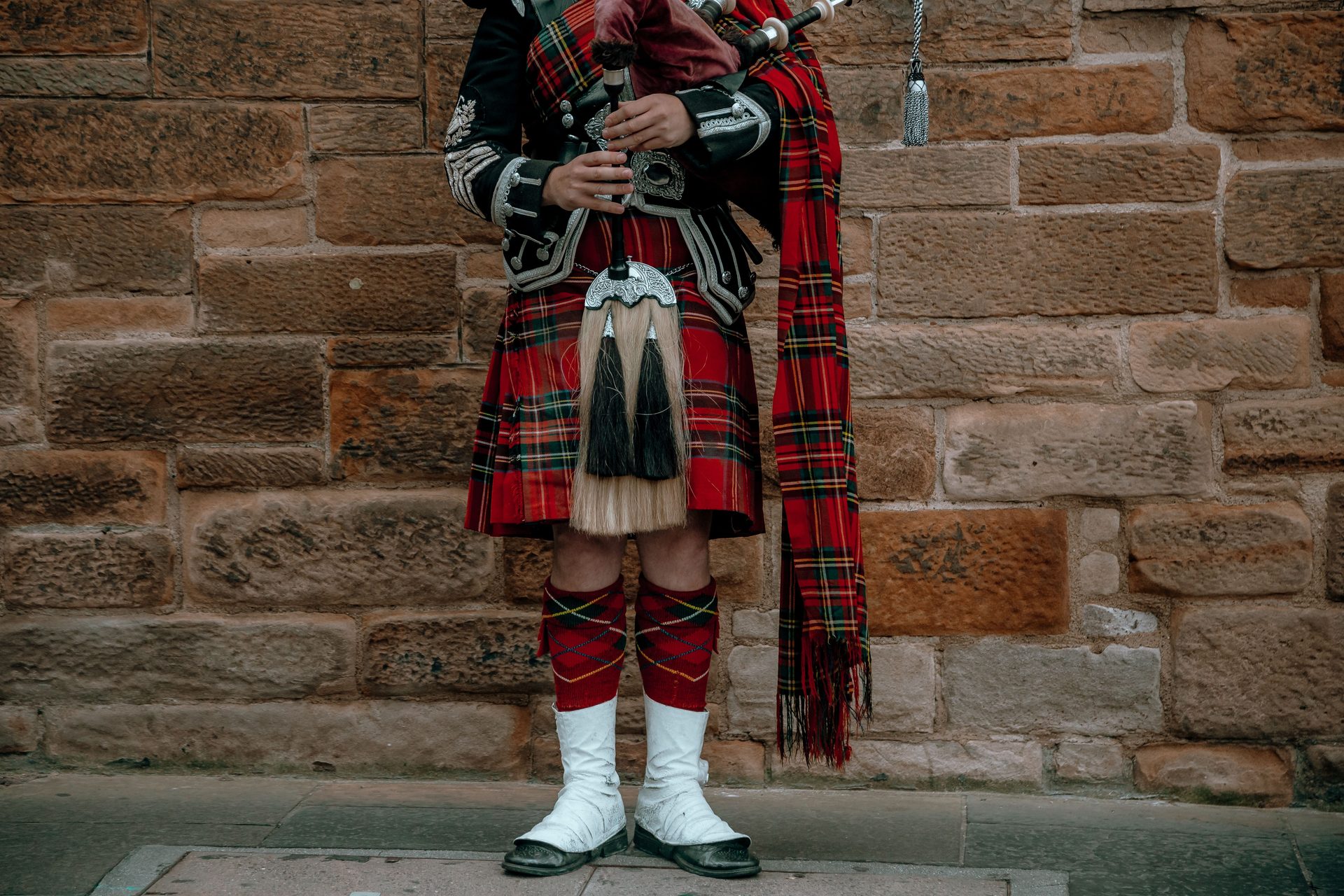
Mention traditional Scottish clothing and most people picture a man in a kilt, sporran swinging at his hip. Yet Highland women built their own distinct wardrobe long before tartan became a global fashion statement, layering draped plaids, woven shawls, and hand-worked silver into garments that marked status, clan, and marital identity just as clearly as any man’s kilt did.
This piece walks through eleven pieces of traditional Scottish clothing for women, pairing historical garments like the arisaid and tonnag with the accessories, headwear, and footwear that completed a Highland woman’s dress. Each item carries its own story about how women in the Highlands and Western Isles actually dressed, long before shortbread tins and tourist shops flattened the picture into a single stereotype.
1. Arisaid
The arisaid, also spelled earasaid in Scottish Gaelic, is a draped garment historically worn in Scotland in the 17th and 18th century, and probably earlier, as part of traditional female Highland dress. It was worn as a dress, a long feminine version of the masculine belted plaid, or as an unbelted wrap.
Colour varied by region and household budget: an earasaid might be brightly coloured or made of lachdann, meaning dun or undyed wool, and some colours cost more than others. The garment functioned as both daily wear and protection from Highland weather, and it consisted of a large length of cloth that could be wrapped around the body and arranged over the shoulders, providing both clothing and protection from the weather. Compared with other national dress traditions, such as the layered silhouettes found in traditional German clothing, the arisaid relied less on tailoring and more on skillful draping of a single large cloth.
For a broader overview of how tartan, kilts, and sashes fit together as a system of dress, Wikipedia’s Highland dress entry notes that the basis of all modern men’s and women’s Highland dress starts with the tartan, either as a kilt, trews, arisaid, sash, or tonnag.
2. Tonnag
A tonnag is a smaller shawl, usually worn layered over the arisaid rather than in place of it. On top of the arisaid, a woman would often wear a tartan shawl called a tonnag, adding an extra layer of warmth without the bulk of the full-length garment underneath.
In Gaelic, this piece is also called guailleachan, and it is a square piece of tartan worn over the shoulders and fastened in front with a brooch. Because it was smaller and easier to make than a full arisaid, a tonag was often designed to protect against rain and cold weather and was passed down as an heirloom through the generations. Highland families treated it similarly to how other cultures preserve heirloom textiles, a tradition echoed in the embroidered pieces found in traditional Japanese clothing.
A tonnag was often a crucial part of the female tartan garb, functioning as a scarf or hood for additional warmth, according to one Scottish heritage retailer. Its practicality made it one of the most enduring pieces of women’s Highland wear, still produced today as a modern shawl.
3. Tartan Sash
The tartan sash is a lighter, more formal accessory than either the arisaid or tonnag. Sashes are light tartan scarves worn over a shoulder and across the chest, and the way a woman crossed hers over her body once carried real social meaning.
The different ways of crossing the sash signaled the woman’s social class, with the wife of a clan chief wearing it crossed above the waist over the left shoulder, fixed with a brooch. Other women in the clan wore it crossed over their right shoulders, and married women who wanted to display their family’s tartan could wear the sash over the right shoulder, joined in a bow on the left hip.
Pro Tip: If you are choosing a sash for a wedding or Highland games outfit today, how you drape and pin it still signals a nod to these older conventions, even though the strict social coding has relaxed.
Modern Highland games attire keeps the sash firmly in rotation. One guide to Highland Games dress notes that women have more flexibility in their attire, with options ranging from a traditional tartan skirt to a tartan sash or wrap in Scottish-inspired patterns, often finished with a tartan sash or a brooch to secure their plaid shawl. This mirrors how sash-style drapes appear in other regional dress systems, including some pieces covered in traditional Chinese clothing.
4. Ankle-Length Tartan Skirt
Unlike men, Highland women did not traditionally wear kilts. Instead, ankle-length tartan skirts are common, paired with a color-coordinated blouse and vest, a combination that remains the backbone of women’s formal Highland wear today.
Length has shifted over time. Female traditional dress of Scotland consists of a tartan skirt, a tartan sash or shawl, and ghillies, with skirts historically ankle-length, though today women also wear knee-length or shorter tartan skirts, plus long tartan dresses. The skirt’s clan tartan typically reflects either the wearer’s birth family or her husband’s clan, giving an otherwise simple garment deep personal meaning, much as regional weave patterns do in traditional Pakistani clothing.
One guide to Scottish Highland dress confirms that tartan choice follows family lines directly, since the pattern itself functions as a visual marker of clan identity rather than a purely decorative choice.
5. Plaid Brooch
A plaid brooch is the fastening that turns a length of tartan cloth into a wearable garment. Writing near the start of the 18th century, Martin Martin described traditional women’s clothing in the Western Islands, including the earasaid and its brooches and buckles, treating the fastening as inseparable from the garment itself.
Today’s versions keep that same role. A tartan earasaid, a large shawl, a sash, or a tonnag, a smaller shawl, can also be worn, usually held in place with a brooch, sometimes bearing a clan badge. The brooch, in other words, is not just jewelry; it is the piece of hardware that makes the whole drape hold its shape through a day of movement.
Key Insight: A plaid brooch and an arisaid buckle serve a similar fastening purpose, but historically the brooch pinned shoulder shawls like the tonnag, while the larger buckle secured the full arisaid at the breast.
Clan badges on these brooches often double as a quiet form of identification, similar to how embroidered motifs signal regional or family origin in traditional Indian clothing.
6. Arisaid Buckle
The arisaid buckle is the specific fastening used to close the full-length draped garment at the chest, and it was often the most valuable single object a Highland woman owned. Martin Martin’s account describes it in detail: the ancient dress worn by women, called arisad, reached from the neck to the heels and was tied before on the breast with a buckle of silver or brass, according to the quality of the person.
Some of these buckles were genuine heirlooms of considerable worth. Martin noted he had seen buckles valued at a hundred marks, broad as any ordinary pewter plate, curiously engraved with various animals. That level of craftsmanship turned a practical fastening into a family treasure passed between generations, not unlike the ornamental clasps and pins found in other European folk dress traditions.
The size and metal of the buckle also signaled wealth. A plain brass clasp served the same mechanical purpose as a silver one, but only the latter announced status at a glance, making the arisaid buckle one of the clearest visual markers of social rank in traditional Highland dress.
7. Kirch
The kirch, more often spelled kertch in English-language sources, was the head covering reserved for married women. In Gaelic it is known as breid caol, and the kertch was a head dress worn by married women in some regions, while unmarried women wore something different.
One overview of traditional Scottish women’s clothing describes it plainly: a married woman wore a kertch, which was a linen head square. The simple fabric square carried outsized social weight, instantly telling observers that the wearer was a wife rather than a single woman, in much the same way head coverings signal marital or social status across many folk dress traditions, including pieces found in traditional Australian clothing.
8. Snood
Where the kirch marked a married woman, the snood marked an unmarried one. Single women wore a snood, which was a long ribbon passed under their hair at the back and fastened with a bow on top.
The snood’s simplicity made it practical for everyday wear, unlike the more elaborate arisaid or tartan sash reserved for formal occasions. Some women opted for a related alternative instead: a close-fitting linen cap known as a mutch, worn by those who preferred a more covered style regardless of marital status. Together, the kirch and snood formed a quick visual shorthand that Highland communities used to read a woman’s marital status at a glance, a function headwear has served across many cultures throughout history.
9. Tanac
The tanac appears in regional accounts of Highland dress as a smaller accessory item, though it is far less documented in accessible English-language sources than garments like the arisaid or tonnag. Terms like this often survive mainly in oral tradition or localized Gaelic usage, which means the details that made it to print are thinner than for the dress’s more famous pieces.
Important Note: Historical documentation for the tanac is limited compared with better-recorded garments such as the arisaid, tonnag, and tartan sash. Readers researching this term in depth may need to consult specialized Gaelic-language or regional Highland costume archives for more detailed sourcing.
What is consistent across accounts of Highland dress is that smaller named accessories, whether a brooch, a buckle, or a lesser-known piece like the tanac, worked together as a system rather than standing alone. Each piece had a defined role in holding together, decorating, or marking the status of the larger garments worn over it.
10. Offan
Like the tanac, the offan surfaces in regional discussions of traditional Highland dress as a more localized term, without the depth of documentation available for core pieces like the ankle-length tartan skirt or the ghillie shoe. Some regional accessory and footwear names from the Highlands and Western Isles were passed down verbally within specific communities rather than recorded systematically in the broader historical literature that survives today.
This gap in the record is not unusual. Highland dress historians have long noted that women’s clothing traditions received far less scholarly attention than men’s kilts and tartans, a point echoed across several of the sources used in this article. The practical result is that pieces like the offan are acknowledged as part of the wider tradition even where a single, universally agreed description has not survived into modern reference works.
11. Ghillies
Ghillies close out the list as the footwear traditionally associated with Highland dancing and formal Highland wear. They are made of supple, soft leather so that they mold to the curvature of the foot, and are quite similar to ballet slippers, with the main difference in the style of appearance and mode of lacing.
The style has old roots. Ghillies look quite reminiscent of early medieval leather shoes, and they are worn by women in both Scottish and Irish dance, as well as by men in Highland dancing. The open lacing that wraps around the ankle is a practical holdover from their original design, keeping the shoe secure during fast footwork.
Ghillies have also moved beyond the dance floor and into general women’s Highland wear. One Scottish footwear retailer observes that just because ghillie brogues originated as part of traditional men’s Highland wear doesn’t mean they’re off-limits to women, since women have been wearing variations of brogues for centuries. Paired with a kilted skirt or a tartan sash, ghillies complete a woman’s Highland outfit the same way a well-chosen shoe finishes any national dress, whether that is a formal gown or a pair of sandals seen in traditional American clothing for ceremonial occasions.
Quick Reference: Traditional Scottish Garments for Women
| Garment | Worn Over | Primary Purpose |
|---|---|---|
| Arisaid | Dress or shift | Full-body draped garment or wrap |
| Tonnag | Arisaid or dress | Smaller shoulder shawl for extra warmth |
| Tartan Sash | Formal dress | Status marker, crossed over chest |
| Ankle-Length Tartan Skirt | Blouse and vest | Everyday and formal clan-tartan skirt |
| Plaid Brooch | Tonnag or shoulder shawl | Fastens shoulder plaid in place |
| Arisaid Buckle | Arisaid | Secures the full drape at the breast |
| Kirch | Hair | Linen head covering for married women |
| Snood | Hair | Ribbon headwear for unmarried women |
| Ghillies | Feet | Soft leather shoes for dance and formal wear |
Traditional Scottish clothing for women tells a far richer story than the kilt-centric version most people picture. From the draped arisaid and its engraved buckle to the quiet social signaling built into a kirch or a snood, each piece reflects practical needs around climate, status, and marital identity that shaped Highland life for centuries. Modern Highland dancers, brides, and heritage enthusiasts still reach for tartan sashes, tonnags, and ghillies today, proof that these garments never fully left everyday use even as fashions around them changed.