Traditional Quechua Clothing: 15 Garments That Tell the Story of the Andes

November 17, 2026
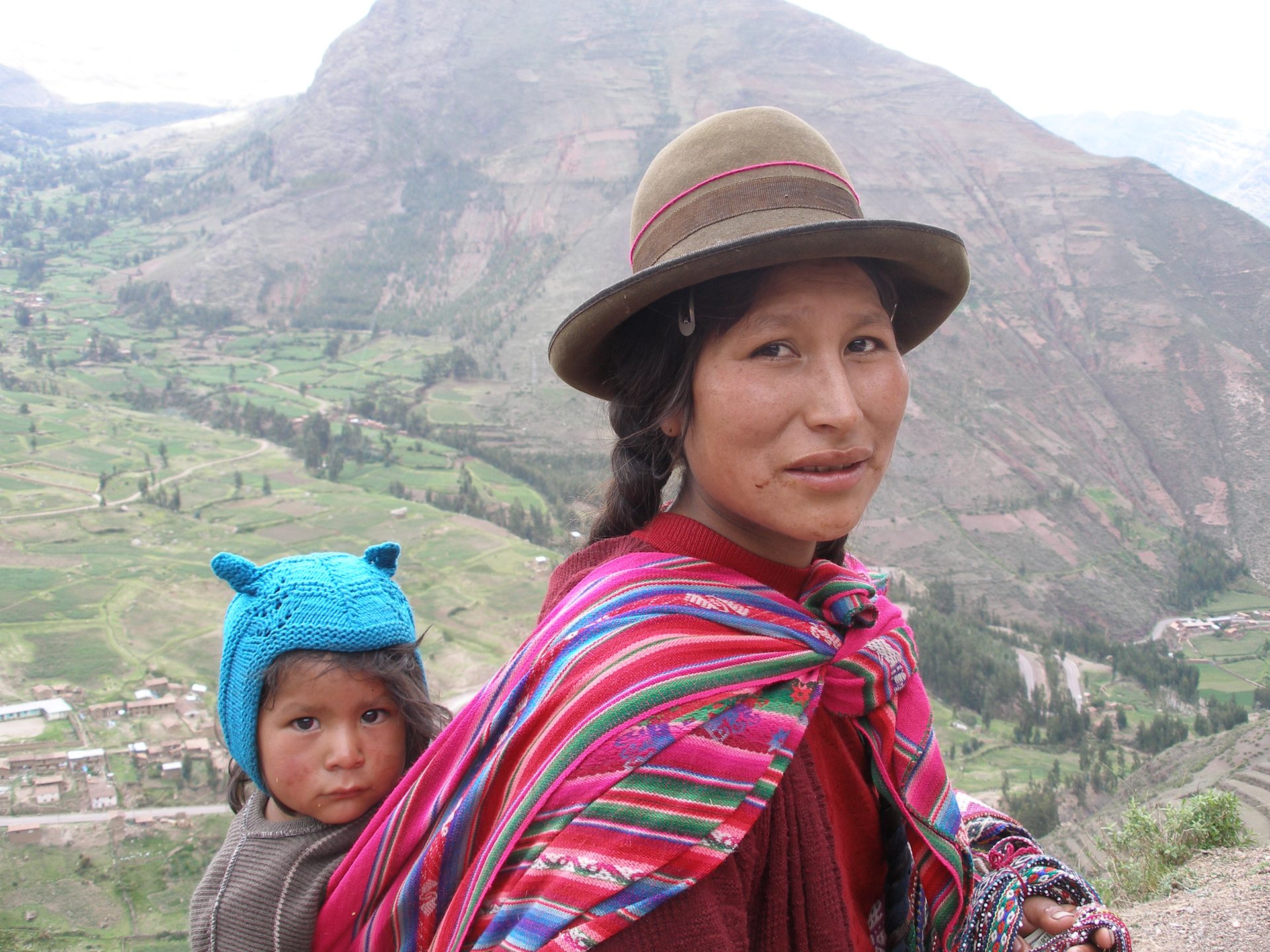
High in the Peruvian and Bolivian Andes, a woman’s shawl can reveal her home village before she ever says a word. Traditional Quechua clothing works this way across an entire wardrobe of garments, where color, pattern, and the placement of a single pin carry information that outsiders often miss entirely. Each piece below, from the woven lliclla to the humble ojotas sandal, still shows up in markets, festivals, and daily life across the Andean highlands.
Understanding these garments means understanding how Quechua communities have blended pre-Inca weaving traditions with Spanish colonial influences over several centuries. The table below offers a quick reference before the deeper look at each piece.
| Garment | Primarily Worn By | Main Material or Use |
|---|---|---|
| Lliclla | Women | Woven shoulder cloth |
| K’eperina | Women and men | Large carrying cloth |
| Tupu | Women | Metal fastening pin |
| Chumpi | Women and men | Woven waist belt |
| Jobona | Women | Button-trimmed wool jacket |
| Montera | Women (regionally men) | Structured hat |
| Sanq’apa | Women | Regional headpiece |
| Pollera | Women | Layered wool skirt |
| Puyto | Women | Skirt trim |
| Bayeta | Women and men | Handwoven wool cloth |
| Ojotas | Women and men | Sandals |
| Poncho | Men | Woven cloak |
| Chullo | Men (children too) | Knitted earflap cap |
| Chuku | Varies by region | Ceremonial headwear |
| Chuspa | Women and men | Coca-leaf pouch |
1. Lliclla
The lliclla is a Quechua word for a type of cape worn by Quechua women, also known as a Manta, and is a square woven cloth that covers the back and shoulders. It is a rectangular, handwoven shoulder cloth worn by Quechua women of the Andes region in Bolivia and Peru.
Women secure the garment at the front, and it is secured at the front using a tupu (straight pin), a sturdy safety pin, or may be worn tied. In communities such as Chinchero, men and women wear distinctive garments identified by wide blue bands called pampakuna, set apart by multi-striped panels filled with colorful geometric designs, with indigo-blue fields characteristic of Chinchero women’s garments.
Beyond daily wear, llicllas are intricately woven and colorfully decorated for festivals and other special occasions, during which women may wear multiple layers. The lliclla also doubles as practical gear: llicllas or mantas can be used for carrying children on the woman’s back, and both women and men use them the same way for carrying cargo. Readers interested in how other cultures use wrapped textiles as daily dress might compare this to traditional Japanese clothing, where fabric folding similarly carries social meaning.
2. K’eperina
When a carrying cloth grows larger than a standard lliclla, it earns its own name. Some call larger mantas k’eperinas when used for carrying loads, distinguishing them from the shoulder cloths worn purely for warmth or decoration.
This distinction appears in academic documentation as well. A q’ipirina is similar to a lliklla but larger, worn over the back to carry small children or all sorts of products, and knotted at the front. The knotting method matters: a k’eperina needs to hold weight securely across long walks between villages, so the fabric is typically woven denser than a decorative lliclla.
Pro Tip: If you see a Quechua woman carrying a bundle on her back, look at how the cloth is knotted rather than pinned. A knot almost always signals a k’eperina doing carrying work, while a pin signals a lliclla worn as a shawl.
3. Tupu
The tupu is the small object that makes the lliclla functional. This object is a tupu, a Quechua term for pin, which women in the Andes have used to fasten textile garments such as the acsu or lliclla. Tupus have a basic form that consists of a head and a stem, but there is wide variation in their design.
Historically, the pin carried more than practical weight. Over its long history of use, the tupu across its variety of forms can be considered a gendered object, typically associated with women. A 1608 dictionary of Quechua recorded the term precisely: González Holguín defined “tupu” as “the pin that Indigenous women use to fasten their sash”, a definition that still matches how the pin functions today.
Materials have shifted with availability and economics. The tupu is a long metal pin, traditionally made of silver, bronze, or copper, used to fasten garments such as the lliclla, and tupu pins are worn by Quechua and Aymara women and may be plain for daily use or highly ornate for ceremonies. The Metropolitan Museum of Art holds several historical examples that show how the pinhead design has changed across centuries of use.
4. Chumpi
A chumpi closes the gap left by a loose skirt or pair of trousers. Women traditionally use a chumpi to close their skirts, and the Quechua language provides this word, which translates as belt. Men also often use chumpis to tie their pants or as a means of supporting themselves with certain heavy loads, and some women even use a chumpi to secure their swaddled babies.
The weaving itself takes real skill. The chumpi is a narrow, tightly woven belt created on a backstrap loom using alpaca or sheep wool that wraps securely around the waist to hold skirts or trousers in place. Its surface is densely patterned with symbolic motifs representing mountains, animals, and agricultural life, and chumpis are worn by both men and women, often indicating community affiliation and weaving expertise.
Belts carrying this much cultural weight are not unique to the Andes. The woven sash traditions found in traditional German clothing show a similar logic, where a single accessory signals regional identity at a glance.
5. Jobona
Under the lliclla sits a garment many visitors never notice. The jobona is a Peruvian traditional clothing item extremely common among Andean women, and it is the Quechua equivalent of a traditional wool jacket. These jackets are usually decorated with colorful button patterns, and they always go under the lliclla.
Fashion has shifted the jobona’s prominence in recent decades. Traditionally, wool jackets decorated with colorful patterns of buttons were worn under the lliclla, but nowadays it is more common to see women wearing sweaters or cardigans under their lliclla. Even so, the jobona remains part of ceremonial dress in many communities, where older button-trimmed jackets get pulled out for festivals and family celebrations.
6. Montera
A montera announces where its wearer comes from before she speaks. Montera is a native Quechua language word for traditional hats that often vary and differ depending on the region, and many times it is possible to identify the village a woman comes from just by looking at the hat.
Construction varies widely by community. The montera is a structured women’s hat worn by Quechua communities, with forms ranging from flat, disc-like shapes to rounded felted crowns, typically made from felted wool, leather, or thick woven cloth, and often decorated with ribbons, embroidery, pom-poms, or metallic trim. Monteras visually communicate regional identity, marital status, and festive occasion.
Chinchero offers a documented example of how formal this symbolism can get. According to a guide drawing on Peru’s Ministry of Culture records , the montera is a traditional hat that forms part of both men’s and women’s ceremonial dress in Chinchero. Readers curious about how other traditions use headwear to mark status might look at traditional Chinese clothing, where hat styles historically signaled rank in a comparable way.
7. Sanq’apa
The sanq’apa is far less documented in English-language sources than the montera, but it occupies a similar place in Quechua women’s dress as a regional headpiece. In several highland communities, women wear a sanq’apa alongside or instead of a montera for specific ceremonial contexts, with the exact shape, color, and decoration tied closely to the wearer’s village.
Important Note: Documentation of the sanq’apa in academic and travel sources is limited compared to garments like the montera or chullo. Readers researching a specific community’s version of this headpiece should seek out local weaving cooperatives or regional cultural centers for the most accurate detail.
What is consistent across accounts is the role headwear plays generally in Quechua dress: it is rarely purely decorative, and it almost always encodes some piece of identity, whether that is marital status, home village, or participation in a particular festival.
8. Pollera
The pollera is the layered skirt most visitors associate with Andean dress. Polleras are colourful skirts made from hand-woven wool cloth called bayeta, and women may wear three or four skirts in a graduated layer effect. On special occasions such as festivals, women may wear up to 15 polleras tied around the waist.
Regional terminology varies even for this single garment. In some areas polleras are also referred to as melkkhay in Quechua. The skirt’s Spanish colonial roots are well documented, since full skirts were among the garments adapted into Quechua dress after contact with European styles, layered over older Andean underskirts that predate the pollera itself.
Readers interested in how layered skirts function as identity markers elsewhere might compare this to traditional Indian clothing, where regional skirt styles like the lehenga carry similarly specific local meaning.
9. Puyto
The puyto is a small but visually important finishing touch on the pollera. Often the trim of each skirt is lined with a colourful puyto which is usually handmade, adding a band of contrasting color or pattern along the hem.
Because polleras are frequently worn in stacked layers, the puyto on each skirt becomes visible at the edges, creating a striped effect as the layers fall. Weavers often match or deliberately contrast puyto colors across a set of skirts, turning a practical hem finish into a decorative statement that changes with each layer a woman chooses to wear that day.
10. Bayeta
Bayeta is the cloth that makes the pollera possible. Polleras are colourful skirts made from hand-woven wool cloth called bayeta, a textile produced on traditional looms rather than factory equipment.
The weaving method behind bayeta connects directly to older Andean textile technology. The Andean loom is tied to the weaver’s own body on the backstrap loom, where one end of the warp is lashed to a post or a tree and the other to a strap around the weaver’s waist, so that leaning back tensions the threads. This same backstrap technique produces the chumpi, lliclla, and most other woven Quechua garments, making bayeta one piece of a much larger textile tradition rather than an isolated fabric.
11. Ojotas
Ojotas are the simple sandals worn across much of the Andean highlands, traditionally made from leather or, in more recent generations, repurposed tire rubber cut to fit the foot. Their flat, durable soles suit the long walking distances common in rural highland life, where paved roads remain scarce and terrain shifts from rocky paths to muddy fields within a single journey.
Unlike the lliclla or montera, ojotas carry less regional symbolism and more practical value, though the straps and lacing style can still hint at local preference. Many Quechua communities pair ojotas with thick wool socks during colder months, a combination that balances warmth with the sandal’s breathability during long days of farming or herding.
12. Poncho
The poncho is likely the single most recognized piece of Quechua clothing outside the Andes. The word itself traces back to the region: a poncho, from the Quechua punchu, is a kind of plainly formed, loose outer garment originating in the Americas, traditionally made of fabric and designed to keep the body warm.
Construction and decoration vary by community, but the Cusco region offers one especially documented style. The Cusqueño poncho is a rectangular garment with a central head opening, woven from alpaca or llama wool, traditionally composed of two woven panels joined together, with characteristic designs including deep red or earth-toned fields with fine linear patterns inspired by Inca aesthetics.
The garment’s roots run deeper than colonial Peru. Ponchos, large pieces of fabric with an opening in the center for the head, were one of the most renowned clothing items worn by the Inca people, who made them from wool and added intricate patterns and designs. Today, ponchos provide extra warmth in Peru’s freezing mountain climate while also marking status at ceremonies and dances. Men’s outerwear traditions built around a single versatile wrap appear elsewhere too, including in traditional Pakistani clothing, where large shawls serve a comparable dual role of warmth and status.
13. Chullo
The chullo is the knitted cap that keeps Andean ears warm through brutal highland nights. The chullo, a wool cap with earflaps, is a regional hallmark that shows the weavers’ skill in creating pieces that are both practical and artistic.
On Taquile Island in Lake Titicaca, the chullo carries detailed social information woven directly into its pattern. One of the island’s best-known elements is the calendar belt, a woven piece that represents cycles related to agricultural and ritual activities, and the chullo also stands out, as its designs can convey information about the age and social status of the men who wear it. A single cap, in other words, can function as a kind of public résumé.
Key Insight: On Taquile Island, men knit their own chullos starting in childhood, a skill passed down specifically because the finished cap communicates personal and social status, not just warmth.
Readers interested in how other cultures use knitted or woven headwear to mark life stage might compare this to traditional Australian clothing, where practical headwear likewise adapts to harsh outdoor conditions, if for different climate reasons entirely.
14. Chuku
The chuku generally refers to more elaborate, often ceremonial headwear worn during specific festivals and ritual dances, distinct from the everyday chullo. Styles differ significantly from one community to the next, with some versions built around tall structured frames decorated with feathers, sequins, or woven bands, particularly for dances tied to religious festivals in the Andean calendar.
Because chuku designs are so tied to specific local festivals, outsiders rarely see them outside of the celebration they were made for. This makes the chuku one of the least standardized pieces of Quechua dress, with its form shaped more by a community’s particular festival traditions than by any single regional template.
15. Chuspa
The chuspa closes out this list as one of the most practically important accessories in Andean daily life. A chuspa, which is Quechua for bag, is a pouch used to carry coca leaves, used primarily in the Andean region of South America.
The bag’s significance goes beyond its contents. Both textiles and coca are very important to the people in Andean South America, and these chuspas are a vital piece of culture, especially important to combat the bitter cold in the mountainous zones of the Andes. These bags are also a way to showcase the cloth, which in itself is a primary artistic medium, traditionally woven from the hair of native camelids such as alpacas and llamas, and more rarely wild vicuña and guanaco.
- Coca leaves, chewed during long work days at high altitude
- Small ritual offerings used in Andean ceremonies
- Personal items carried during travel between villages
As these pouches are important symbols of social identity, the chuspa a person carries often reflects the same community-specific weaving patterns seen in a lliclla or chumpi. For readers exploring how small woven accessories carry outsized cultural meaning across traditions, the general overview at traditional clothing styles offers further comparison points.
Taken together, these fifteen garments show that Quechua clothing was never simply about staying warm in a demanding climate. Each piece, from a single tupu pin to a stack of fifteen polleras, carries information about the wearer’s home, status, and skill that a glance can read instantly within the community. That density of meaning is part of why so many of these garments, unlike fast-changing global fashion, have survived largely intact for generations, much as regional dress has persisted in traditional American clothing communities that have kept historic styles alive through festivals and heritage events.