From Kippah to Kittel: 11 Essential Pieces of Traditional Jewish Clothing

November 16, 2026
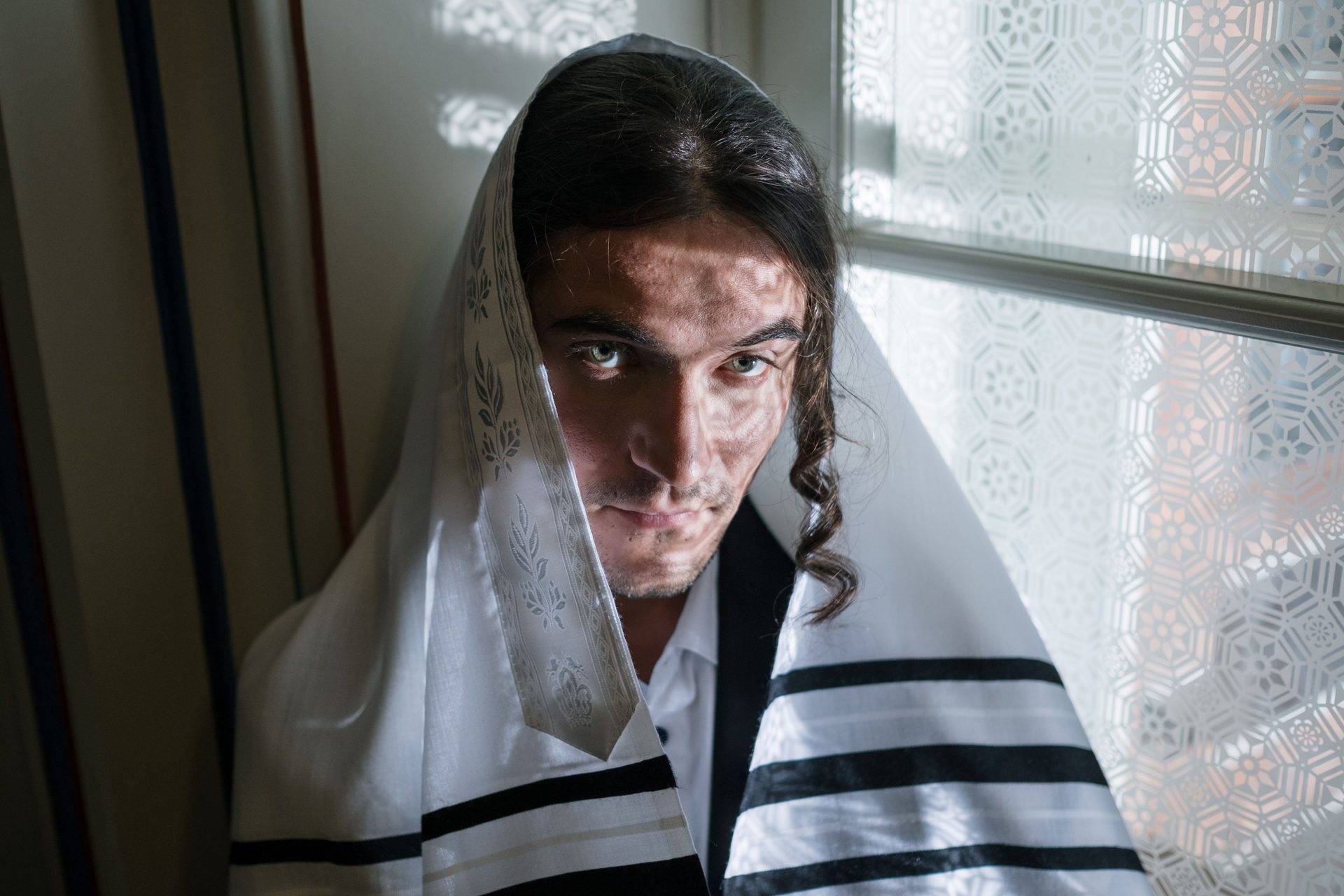
Traditional Jewish clothing tells a story that stretches back to the Torah itself, where specific instructions about garments, fringes, and head coverings set a nation apart from its neighbors. Walk through an Orthodox neighborhood on a Saturday morning and you will see centuries of religious law, Eastern European history, and personal devotion stitched into every coat, hat, and head covering. Some garments are worn by nearly every observant Jew; others belong to specific Hasidic courts or communities.
This piece walks through eleven garments that define traditional dress within Judaism, from daily prayer items like the tallit and tefillin to the distinctive coats and hats associated with Hasidic life. Each one carries its own history, its own rules for who wears it and when, and its own quiet statement about identity.
1. Kippah (Yarmulke)
The kippah, also called a yarmulke in Yiddish, is the small skullcap that covers the crown of the head. Among Orthodox and Hasidic men, it stays on from morning until night as a constant reminder that something greater than oneself sits above. Liberal and Reform communities generally treat the head covering as optional rather than obligatory, which is one of the clearest visible differences between denominations.
The kippah a boy first wears often marks an early milestone in Jewish identity, around the same years families are settling on the Jewish name he will carry for life. Material and color send their own signals within the community:
- Knitted or crocheted kippah — common among Religious Zionist and Modern Orthodox men, often colorful
- Velvet kippah — favored in many Haredi and Hasidic circles, almost always black
- Suede or leather kippah — a plainer, everyday option worn across denominations
Women in some egalitarian and progressive congregations have also adopted the kippah during prayer, a practice that would have been unusual a century ago but is increasingly common in liberal synagogues today.
2. Tallit
Chabad.org describes the tallit as a Jewish prayer shawl with fringes (tzitzit) on its four corners, symbolizing G‑d’s commandments, traditionally worn over the shoulders. The garment is most often white, with black stripes running down two sides, and it is draped over the shoulders like a cape rather than tied or buttoned. My Jewish Learning notes that in some Orthodox congregations, only married men wear a tallit, a custom that varies by community and denomination.
Putting one on follows a set pattern: the wearer positions the atarah against the back of the neck, letting the tallit fall over the shoulders with the tzitzit draped along both the front and back of the body. Because wearing a full-sized tallit all day is impractical for most people, a second, smaller version exists for everyday use under regular clothing.
3. Tzitzit
Tzitzit are the knotted fringes that give the tallit its meaning. Tzitzit are usually attached to the four corners of the tallit gadol, usually referred to simply as a tallit or tallis, and the tallit katan, an everyday undershirt; through synecdoche, a tallit katan may be referred to as tzitzit. Each fringe is built from four strings looped to form eight strands, tied with a series of knots near the corner.
The numbers behind the knots are not arbitrary. Because the five Hebrew letters that spell tzitzit carry a combined gematria value that lines up with the Torah’s 613 commandments once the strings and knots are added in, wearing tzitzit became a sign of Jewish pride, a way of dress that distinguished Jews from the people of the lands in which they lived even in times when that distinction carried real risk. Many men keep the tallit katan tucked under a shirt, letting only the fringes show at the waist.
Key Insight: A tallit gadol and a tallit katan serve different purposes but share the same essential feature. Strip away the fabric and what remains, the tzitzit themselves, is what actually fulfills the biblical commandment.
4. Tefillin
Tefillin, sometimes translated as phylacteries, are two small black leather boxes worn on the left arm and forehead by observant adult male Jews. Inside, the leather boxes contain scrolls of Torah passages, specifically Exodus 13:1-10, 11-16 and Deuteronomy 6:4-9, 11:13-21, hand-written by a scribe on parchment from a kosher animal.
Putting them on follows a specific order:
- Put on the tallit first, since Jewish law treats the prayer shawl as a prerequisite garment
- Wind the arm-tefillin strap seven times around the arm and three times around the middle finger
- Position the head-tefillin above the hairline, centered above the nose
Tefillin are worn only during weekday morning prayers; they must not be worn on the Sabbath or on holidays, and custom limits them to the morning prayer service since the body and mind are expected to stay focused while the boxes are in place. Aish.com explains that the two boxes represent two forms of service: the two ways that we serve God in this world: thought and action; when putting on the arm-tefillin, we focus on devoting our strength to the Almighty, and the head-tefillin imbues us with the idea of subjugating our intellect for the love of God.
Key Insight: Tefillin are traditionally first worn around the age of thirteen, when a boy becomes bar mitzvah, and a set is often gifted by the family to mark the occasion alongside the tallit.
5. Kittel
The kittel is a simple white robe, usually made of cotton or linen, that strips away every signal of wealth or status. A groom traditionally wears one under the chuppah on his wedding day, and many Ashkenazi men put one on again for Yom Kippur, when the plain white cloth echoes the white burial shroud and the themes of judgment and mortality that define the day.
The word itself traces back to the Yiddish and German term for a smock or overshirt, a reminder of how much Ashkenazi Jewish vocabulary and dress absorbed from the surrounding Central and Eastern European world even while remaining distinctly Jewish in meaning.
Key Insight: The same garment appears at a wedding, on the holiest day of the year, and in the grave. That repetition is deliberate: the kittel is meant to strip away rank and remind the wearer that everyone stands equal before God.
6. Shtreimel
A shtreimel is a round, flat-topped fur hat worn by married men in many Hasidic communities on Shabbat, festivals, and at weddings. Traditionally made from the tails of sable, fox, or other fur-bearing animals sewn onto a velvet base, the hat is both an heirloom and a status marker, often purchased new for a groom before his wedding and passed down or replaced only when it wears out.
Exact shape and height vary from one Hasidic court to another, which means a knowledgeable observer can often identify which community a man belongs to just by the silhouette of his shtreimel. The style sits alongside other distinctive community headwear found around the world, from the embroidered caps of Chinese ethnic minorities to regional hats worn across Eastern Europe, each one signaling belonging at a glance.
7. Kapote
The kapote, also called a bekishe, is the long black coat worn over regular clothing by many Hasidic men, particularly on Shabbat and holidays. A silk or satin version is typically reserved for Shabbat and festive occasions, while a plainer wool or polyester version serves as weekday or outerwear. The coat’s cut, often belted and reaching past the knee, descends from the formal dress of the Polish and Eastern European nobility that Hasidic communities adapted and retained long after the surrounding fashion moved on. In that sense it functions much like the long, robe-style garments found in other traditional wardrobes, including the structured layers of Japanese formal dress, where cut and fabric communicate occasion and status.
8. Black Hat
The black hat, typically a felt fedora or homburg, is the standard headwear of Haredi and Litvish (Lithuanian-tradition) Jewish men, worn over a kippah rather than in place of one. Brands known for quality felt, including Italian makers favored across the Haredi world, have become part of the culture’s visual identity, with wider or narrower brims sometimes signaling community affiliation the same way a shtreimel does.
Where the shtreimel belongs to Hasidic Shabbat and holiday dress specifically, the black hat is worn far more broadly, including on weekdays by yeshiva students and working men across the non-Hasidic Haredi world. The table below lines up the major Jewish head coverings side by side.
| Head Covering | Who Typically Wears It | When Worn | Common Material |
|---|---|---|---|
| Kippah | Orthodox and Hasidic men; some liberal women | All day, every day | Knitted fabric, velvet, suede |
| Shtreimel | Married Hasidic men | Shabbat, festivals, weddings | Fur and velvet |
| Black Hat | Haredi and Litvish men | Daily, outside the home | Felt |
| Hair Covering | Married Orthodox and Hasidic women | In public and in mixed company | Synthetic or human hair, cotton, silk |
9. Tachrichim
Tachrichim are the plain white burial shrouds in which traditional Jewish custom dresses every body before burial, regardless of the wealth or status that person held in life. The garments are simple hand-sewn linen or cotton pieces, typically including a shirt, pants, a head covering, and a belt, with no pockets and no decoration.
The custom rests on a well-known teaching attributed to the sage Rabban Gamliel, who asked to be buried in plain linen rather than the costly garments that had become fashionable, so that even the poorest family would not feel shamed by comparison at a funeral. A man is sometimes buried in his kittel as well, layered beneath or over the tachrichim, closing the circle between the garment worn at his wedding and the one worn at his death.
10. Hair Covering (Wig, Scarf or Hat)
Married Orthodox and Hasidic women traditionally cover their hair in public and in front of men outside their immediate family, based on the laws of tzniut, or modesty. The specific style varies enormously by community and personal preference, and several options exist side by side within the same neighborhood:
- Sheitel (wig) — a full wig, often styled to look like natural hair, common among many Hasidic and Haredi women
- Tichel or mitpachat (scarf) — a fabric head scarf tied in various styles, popular in Religious Zionist and some Sephardi communities
- Snood — a loose fabric covering that gathers at the back, often worn at home or for everyday errands
- Hat — worn alone or layered over a smaller covering such as a shpitzel for extra coverage
Some women combine a hat with a partial wig or fall for additional coverage, a layering approach particularly associated with certain Hasidic groups. Among Sephardi and Yemenite Jewish communities, embroidered scarves and head wraps carry their own regional history, echoing the way head coverings in general, from Indian dupattas to Middle Eastern wraps, serve as both modesty garments and cultural markers.
11. Modest Skirts and Dresses
Tzniut extends beyond the head to the rest of the wardrobe, and many Orthodox and Hasidic women favor skirts and dresses over trousers for exactly that reason. The general standard calls for covering the knees, elbows, and collarbone, though the precise interpretation and the strictness with which it is kept differ widely between Hasidic, Yeshivish, Modern Orthodox, and other communities.
Long skirts, below-the-elbow sleeves, and higher necklines dominate the wardrobes of observant women in many communities, with color and pattern choices ranging from somber and understated to bright and fashionable depending on local custom. The underlying principle, covering the body modestly rather than concealing identity, parallels modesty-driven dress codes found elsewhere in the world, from the long tunics of traditional Pakistani dress to other faith-based clothing traditions.
Important Note: Standards of tzniut vary significantly between Hasidic courts, Yeshivish communities, and Modern Orthodox circles, and individual practice within any single community can differ as well. The descriptions here reflect general custom rather than a single fixed rule.
Taken together, these eleven garments show how deeply religious law, regional history, and community identity are woven into Jewish dress. A kippah and a pair of tzitzit carry the same weight of commandment as a shtreimel or a kapote carries weight of history, and a woman’s choice of scarf or skirt length says as much about her community as any of the men’s garments say about theirs. Readers curious about how other cultures encode identity through clothing may enjoy comparing these customs with American or Australian traditional dress, where very different histories produced their own set of rules about what to wear and when.