Why Is Your Monstera Growing Slowly? Causes, Fixes, and Prevention Tips

September 7, 2026
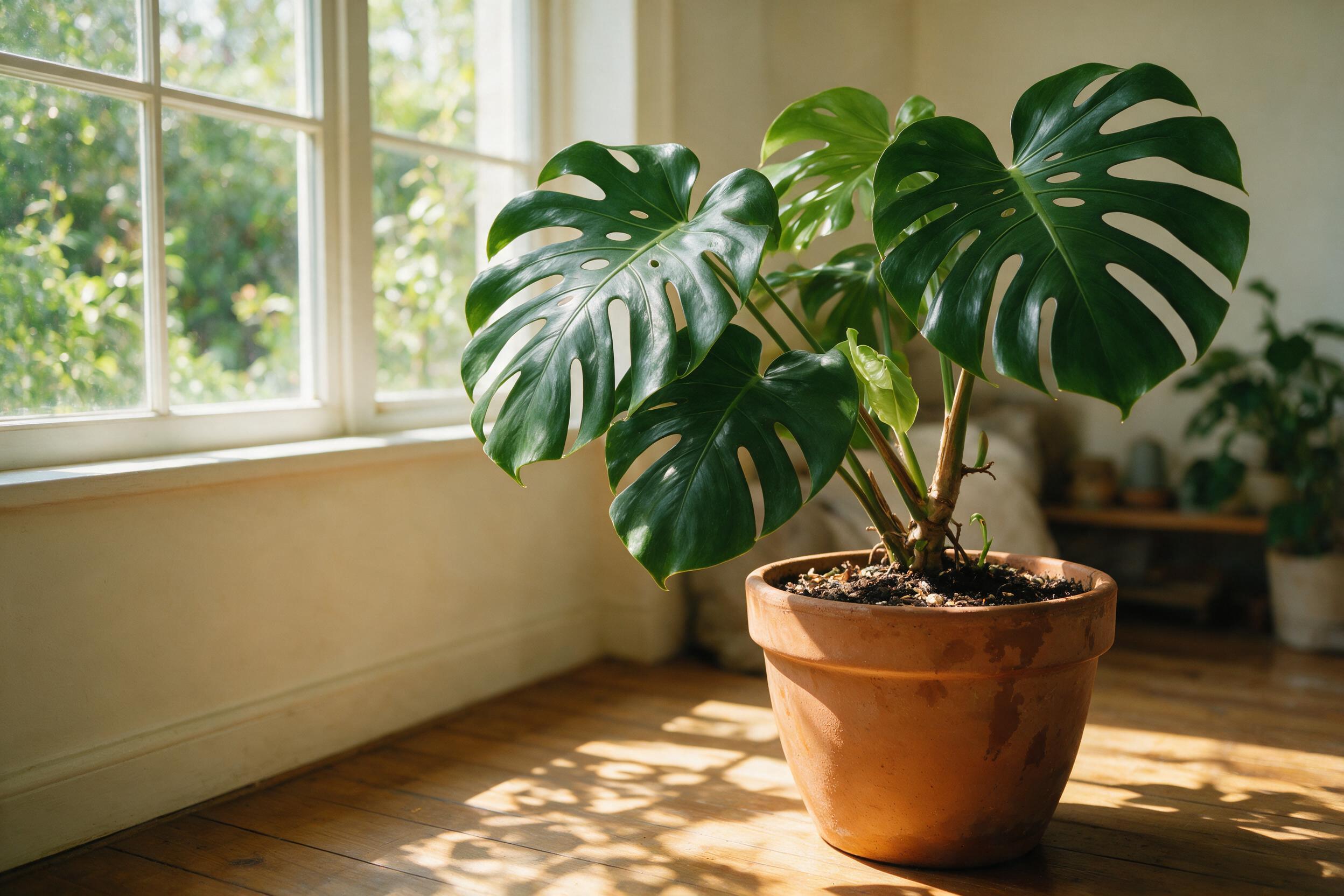
You bought your Monstera for those dramatic, split leaves — and now it seems stuck in place, barely pushing out a new leaf every few months. Before you start second-guessing every decision you’ve made as a plant parent, take a breath. Slow growth is one of the most common complaints among Monstera owners in the US, and in most cases, the fix is simpler than you’d expect.
While these tropical plants are relatively low-maintenance, their slow growth often stems from subtle but correctable issues in care. Unlike fast-spreading houseplants, Monsteras grow deliberately — especially indoors — but when conditions aren’t optimized, that pace can crawl to a near halt. This guide walks you through every major cause of slow Monstera growth and gives you clear, actionable steps to get your plant thriving again.
What Does It Mean When Your Monstera Is Growing Slowly?
Before assuming something is wrong, it’s worth distinguishing between natural growth patterns and true stagnation. In ideal outdoor conditions — such as in its native Central American rainforests — a Monstera can grow several feet per year, climbing trees with aerial roots. Indoors, however, growth is significantly slower. Most healthy indoor Monsteras produce one to two new leaves every few months during the growing season (spring and summer), with little to no growth in winter.
If your plant hasn’t produced a new leaf in over six months, or if new leaves are smaller than previous ones, stunted, or lack fenestrations, then growth may be suboptimal. These signs point not to failure, but to an opportunity to refine your care routine.
The Monstera deliciosa (Monstera deliciosa), commonly called the Swiss Cheese Plant, is native to the tropical forests of Mexico and Central America. The species thrives in warm, humid conditions like its natural habitat, which makes replicating that environment indoors the core challenge for most American plant owners.
Key Insight: A new Monstera leaf goes through several distinct stages from first appearance to fully opened. According to Planet Houseplant , the whole process takes anywhere from two to six weeks depending on conditions — so what looks like no growth may simply be a leaf still developing inside its sheath.
Is Slow Growth in Your Monstera Always a Sign of a Problem?
Not necessarily. Seasonal slowdowns are completely normal and expected. Slow winter growth is completely normal for Monstera plants. Shorter days and weaker sunlight slow plant growth, Monsteras prefer warm temperatures, and cold temperatures slow metabolism.
Slow winter growth is completely normal for Monstera plants. They require less water during winter, and the overwatering risk increases in winter. Many US households also run central heating throughout fall and winter, which reduces indoor humidity and compounds the seasonal slowdown.
There are also variety-specific differences worth knowing. Variegated Monstera plants are actually more difficult to grow than non-variegated plants. The plant has to put more energy into creating the different colors on the leaves. If you want your Monstera to grow quickly, a green, non-variegated plant is the better choice.
The key is knowing when slow growth is seasonal and normal versus when it signals a care problem. If your plant is pausing in December or January, that’s expected. If it hasn’t moved in spring or summer, something needs to change.
Watering Issues Causing Your Monstera to Grow Slowly
Water is one of the most mismanaged aspects of Monstera care, and both overwatering and underwatering will bring growth to a halt. Both overwatering and underwatering stress the plant. Soggy soil suffocates roots, while bone-dry soil prevents nutrient uptake. Monsteras prefer evenly moist (not wet) soil that dries slightly between waterings. Erratic watering disrupts metabolic processes, slowing leaf production.
If the Monstera’s roots sit in water for too long, root rot is almost inevitable. This condition halts growth and can gradually kill the plant. Signs of root rot include yellowing leaves that droop and eventually shrivel and die.
On the flip side, while the Monstera can handle a brief period without water, expecting it to thrive and grow under such conditions isn’t realistic. If the soil becomes too dry, the Monstera will halt its growth, and without timely watering, its leaves might yellow and wither.
Pro Tip: Skip the watering calendar. Every home has different temperature, airflow, and humidity. Watering every seven days regardless of season will eventually cause overwatering. Check the soil, don’t stick to a schedule. Stick your finger two inches into the soil — water only when that layer feels dry.
Also avoid letting the pot sit in standing water. Let all excess water drain away — never let the pot sit in a saucer of water. A well-draining potting mix is essential. Look for an aroid mix containing chunky ingredients like orchid bark, perlite, and coco coir.
Light Conditions Behind Your Monstera’s Slow Growth
Plant growth is fueled by light. Plants utilize light in combination with carbon dioxide in the air and water in order to synthesize food. Light should be your top priority and the first thing you should evaluate if your plant is not growing.
Bright, indirect light is the absolute cornerstone of fast Monstera growth. Picture dappled sunlight under a jungle canopy — that’s their happy place. A spot near a north- or east-facing window is often perfect. For south- or west-facing windows, pull it back a few feet or diffuse it with a sheer curtain to avoid scorching those beautiful leaves.
There’s a real difference between tolerating something and thriving in it. In a genuinely dim spot, your Monstera will survive but produce small, undivided leaves and very slow growth. That’s not the plant most people bought.
A simple test: hold your hand about 12 inches above a sheet of white paper during peak daylight hours. A soft but distinct shadow means sufficient indirect light. No shadow at all, and that spot won’t cut it for a Monstera.
| Window Direction | Light Quality | Monstera Suitability |
|---|---|---|
| North-facing | Low indirect light only | Survival only; place directly at window |
| East-facing | Gentle morning sun | Excellent — place 1–3 feet away |
| West-facing | Strong afternoon sun | Good with sheer curtain filter |
| South-facing | Brightest direct sun | Good — pull back 3–5 feet or use curtain |
If your home simply doesn’t have great natural light, artificial light can work wonders too. Full-spectrum grow lights set on a timer for 12–14 hours daily can meaningfully accelerate growth in low-light apartments common across many US cities. Check out our guide to the best houseplants for low-light areas to see how Monstera compares to other options if your space is consistently dim.
Soil, Nutrients, and Root Health Causing Your Monstera to Grow Slowly
Even a well-watered, well-lit Monstera will stall if its roots are cramped or its soil is depleted. Over time, soil breaks down, loses structure, and becomes compacted, reducing oxygen flow to roots. A pot-bound Monstera struggles to absorb water and nutrients efficiently. Additionally, using dense, non-draining soil mixtures increases the risk of root rot and restricts development.
Monstera often stops growing because it runs out of room to expand. If it’s been living in the same pot for years, it might become rootbound, meaning its roots fill the pot so much that they start to push the soil out. This situation prevents the plant from absorbing enough water and nutrients, halting its growth and potentially leading to illness.
When repotting, pot size matters more than most people realize. Aim for a pot just one to two inches wider than the current root ball. This “snug” fit encourages roots to fill the space efficiently, actively seeking water and nutrients, which directly translates to vigorous top growth. Going too large creates the opposite problem — an oversized pot is basically an invitation for root rot, as excess soil stays wet too long, suffocating those crucial roots and halting growth.
On the nutrition side, nitrogen is vital for lush leaf growth, phosphorus supports strong root development and flowering, and potassium keeps your plant healthy by aiding in water absorption and defending against diseases. For a super-happy Monstera, aim for a fertilizer with an N-P-K ratio of 3-1-2.
For a straightforward feeding schedule: spring to fall, fertilize once a month with a quarter-strength diluted balanced liquid fertilizer. Stop fertilizing entirely from October through February. The plant’s metabolism slows, roots absorb less, and excess fertilizer salts accumulate in the soil and cause brown leaf tips.
Important Note: Yellowing leaves are not automatically a fertilizer deficiency. Before adding fertilizer, check for overwatering and low light first. Those are responsible for yellowing far more often than a lack of nutrients.
Also worth noting: aim for a soil pH between 6.5 and 6.8. A pH over 7.0 is too high. Use a liquid fertilizer designed for aroids, which includes nitrogen, phosphorus, potassium, and magnesium.
Environmental Stress Triggering Your Monstera’s Slow Growth
Temperature and humidity have a direct impact on how fast your Monstera grows. Monsteras thrive between 65–85°F (18–29°C). Keep them away from drafts and sudden temperature changes. In the US, this means keeping your plant away from air conditioning vents in summer and heating registers in winter — both of which create the kind of temperature swings that cause stress.
If the temperature drops below 60 degrees Fahrenheit, the plant won’t produce a new leaf. This is a critical threshold for anyone growing Monstera in cooler climates or near drafty windows during winter months.
Humidity is equally important. Your Monstera thrives best with humidity levels between 40% to 60%. If you’ve been keeping it in drier conditions, that could be the culprit right there. Most US homes run well below this range in winter when heating systems are active.
To raise humidity without resorting to misting — which doesn’t actually help — misting wets the leaves without raising ambient humidity. Use a humidifier or pebble tray instead. A small humidifier placed nearby is the most effective solution for dry American homes.
Climbing support also plays a larger role in growth rate than most people expect. Give your Monstera something to climb. In the wild, they’re epiphytes, using aerial roots to cling to trees, reaching towards brighter light. A moss pole (or coco coir pole) is arguably the single most effective hack for accelerating vertical growth and encouraging larger leaves. As those aerial roots attach to the moist pole, they absorb extra humidity and nutrients, acting like superhighways for growth.
Pests and Disease Leading to Your Monstera’s Slow Growth
When your Monstera’s growth slows to a snail’s pace, it might be signaling SOS because it’s under attack from unwanted guests — pests or diseases. Even a mild infestation quietly drains the plant’s energy and halts leaf production before you notice visible damage.
The most common pests to watch for include:
- Mealybugs — look like tiny cottony spots on stems and leaf undersides
- Spider mites — almost invisible, but their fine webs give them away
- Scale insects — resemble small brown bumps on stems and leaves
- Fungus gnats — larvae live in the soil and damage roots, particularly in overwatered pots
Pests don’t just cause physical damage to plants; they can also cause nutrient deficiencies that lead to leggy growth. Pests such as spider mites or mealybugs, in particular, are known to damage plant tissues and consume nutrients, causing anything from stunted growth to leggy and weak stems.
On the disease side, stem and root rot are caused by overwatering and poor drainage. Bacterial leaf spot appears as dark, water-soaked looking spots. Diseases that affect Monstera plants include bacterial leaf spots and fungal leaf spots. These diseases cause spots on the leaves, which can eventually lead to the death of the leaf. To prevent diseases, you should avoid overwatering your Monstera and make sure the leaves are dry before nightfall.
For treatment, insecticidal soap or neem oil can be used to control pests. These are safe for humans and animals but will kill the pests. Repeat applications every three to four days until the infestation clears. You can use apps to help identify problems early — our roundup of the best iPhone apps for identifying plants includes tools that can help you spot pest damage and disease symptoms quickly.
How to Diagnose Why Your Monstera Is Growing Slowly
A systematic check is the fastest way to find the real cause. Work through the following steps before making any changes, since adjusting multiple variables at once makes it hard to know what actually worked.
- Check the light first. Distance from a window is paramount and is probably the biggest factor in your Monstera not growing. Do the shadow test described above and measure how many feet your plant sits from the nearest bright window.
- Assess the soil moisture. Push your finger two inches into the soil. Is it soggy, bone dry, or evenly moist? Soggy soil points to overwatering or poor drainage; bone dry points to underwatering or a rootbound plant that can’t hold moisture.
- Inspect the roots. If your Monstera is severely root bound, you will struggle to keep it hydrated like it needs and the roots will be starved for moisture and oxygen. You won’t know for sure until you take your plant out of the pot and inspect the roots.
- Check for pests. Grab a magnifying glass and inspect every aspect of your Monstera — leaf undersides, stem joints, and the soil surface.
- Review the season. Slow growth is normal in winter, but severe symptoms may indicate problems. Monsteras usually resume faster growth in spring. If it’s spring or summer and your plant still isn’t moving, something environmental needs to change.
- Consider the variety. If you have a variegated Monstera, variegated Monsteras go much more slowly than regular ones, and they take longer to get established in your home too. As long as your plant isn’t actively declining, it’ll be fine.
How to Fix a Monstera That Is Growing Slowly
Once you’ve identified the likely cause, here’s how to address each one effectively. The goal is to make targeted adjustments rather than overhauling everything at once.
Fix the Light
Monsteras thrive in bright, indirect light. Placing them in dim corners or behind furniture drastically slows growth. Position your Monstera within 3–5 feet of a south- or east-facing window. Rotate the pot weekly for even growth. Move gradually — a sudden shift from low to bright light can stress the plant.
Correct Your Watering
Water thoroughly when the top two inches of soil are dry, then let all excess drain freely. Overwatering is the fast track to a yellow, unhappy Monstera and potential root rot. Your mantra: moist, not soggy. If root rot is already present, remove the plant from its pot, trim any black or mushy roots with clean scissors, and repot into fresh, well-draining aroid mix.
Repot When Needed
Repotting should ideally be done when you see the roots growing out of the bottom, every two to three years. The roots of Monsteras will still function well in constricted situations, but they work well and supply water and nutrients more efficiently when provided with ample space. Early spring is the ideal time of year to repot, as this is when a Monstera enters its most active growth phase and can handle the stress of being repotted.
If your plant’s roots are tightly wound up, always tease the roots apart before you place your Monstera in a new pot (and remember, only go up one pot size). This will help the roots start to grow into the new potting mix in its new pot.
Feed Strategically
A balanced liquid fertilizer (like a 20-20-20 or 3-1-2 NPK ratio) diluted to half the recommended strength is ideal. Apply this with your watering every two to four weeks. Ease off completely in fall and winter when growth naturally slows. Underfeeding means slow progress; overfeeding can damage roots. Finding that balance is important for strong Monstera growth.
Add a Moss Pole
Monstera grow significantly faster when growing vertically than when trailing or sprawling. Installing a moss pole and gently securing the main stem with soft ties encourages the plant to climb, which triggers larger leaf production and faster overall growth. Keep the pole moist to allow aerial roots to attach and absorb extra moisture.
Prune Strategically
Remove any yellowed, damaged, or very old leaves at the base to free up resources for new growth. If your plant is getting leggy (long stems with sparse leaves), you can carefully prune the very tip of a vine just above a node. This often stimulates branching — meaning two new shoots emerge instead of one, leading to a fuller plant. Best done in spring or summer.
Pro Tip: Small leaves are usually a sign of insufficient light or nutrients during the period when that leaf was developing. The next leaf can be bigger if you improve conditions — but you can’t go back and fix the one that’s already out. Focus on optimizing conditions for the next leaf, not the current one.
How to Prevent Your Monstera from Growing Slowly Going Forward
Consistent care is far more effective than reactive fixes. Most slow-growth problems in US homes come from the same handful of repeated mistakes. Here’s how to avoid them long-term:
- Never water on a fixed schedule. Always check the soil first. Every home has different temperature, airflow, and humidity. Watering every seven days regardless of season will eventually cause overwatering.
- Audit your light seasonally. The angle and intensity of sunlight shifts significantly between summer and winter in the US. What works in July may not be enough in January — be willing to move your plant closer to the window in darker months.
- Repot proactively. Replace your pot at least every two years to ensure there’s enough space for the roots. Don’t wait until roots are visibly escaping the drainage holes.
- Use a humidifier in winter. Central heating in American homes drops indoor humidity well below the 40–60% range Monsteras need. A small humidifier near your plant makes a measurable difference.
- Inspect monthly for pests. Catching an infestation early means a quick fix with neem oil rather than a prolonged battle. Make it part of your regular care routine.
- Pause fertilizing in fall and winter. Excess fertilizer salts accumulate in the soil and cause brown leaf tips. If you notice a white mineral crust forming on the soil surface, flush the pot thoroughly with plain water to clear out the buildup.
- Give it something to climb. A moss pole or coco coir pole isn’t just decorative — it actively speeds up growth by mimicking the plant’s natural climbing behavior.
If you enjoy growing tropical statement plants like Monstera, you might also want to explore different types of rubber plants or browse our full overview of types of plants to find other varieties that suit your indoor setup. For homes with pets, it’s also worth knowing how to keep cats out of houseplants — Monstera leaves are toxic to cats and dogs if ingested.
Frequently Asked Questions
How fast should a healthy Monstera grow indoors?
In good conditions, Monstera produce one new leaf per month per growth point. During the active growing season (spring through summer), you may see new leaves unfurl every few weeks. In winter, little to no growth is completely normal.
Why are my Monstera’s new leaves small and without holes?
If you’re seeing small leaves and they don’t have fenestrations, or splits, in them, it’s a pretty good sign that your Monstera needs more consistent light. Insufficient nutrients during the leaf’s development phase can also cause this. Improve light and feeding, and the next leaf should come in larger.
Should I fertilize my Monstera in winter?
Fertilizing in winter is a common mistake. The plant can’t use the nutrients efficiently during its slow period, and salt buildup damages roots. Pause feeding from October through February and resume in early spring when active growth returns.
Can I speed up Monstera growth with a grow light?
Yes. If your home lacks sufficient natural light, a full-spectrum grow light set to run 12–14 hours daily can meaningfully boost growth. Artificial light can work wonders for Monsteras in low-light apartments or rooms without south- or east-facing windows. You can also use the best Android apps for identifying plants to research grow light recommendations specific to your plant variety.
How do I know if my Monstera is rootbound?
If a Monstera plant is kept in a container that’s too small for extended periods, its roots can become pot-bound, meaning they have reached the edge of their container and are circling around themselves or pushing out of the bottom of the pot. You may also notice the plant drying out much faster than usual between waterings, which is another sign the roots have filled the available space.
Is slow growth a sign my Monstera is dying?
Slow growth alone is rarely a sign of a dying plant. Slow Monstera growth isn’t inevitable — it’s often a signal. These resilient plants respond remarkably well to thoughtful adjustments in light, soil, humidity, and support. As long as your plant has firm green leaves and no signs of rot or severe pest infestation, a targeted care adjustment will usually get it moving again.