Tomato Plants Turning Purple: Causes, Fixes, and Prevention Tips

September 30, 2026
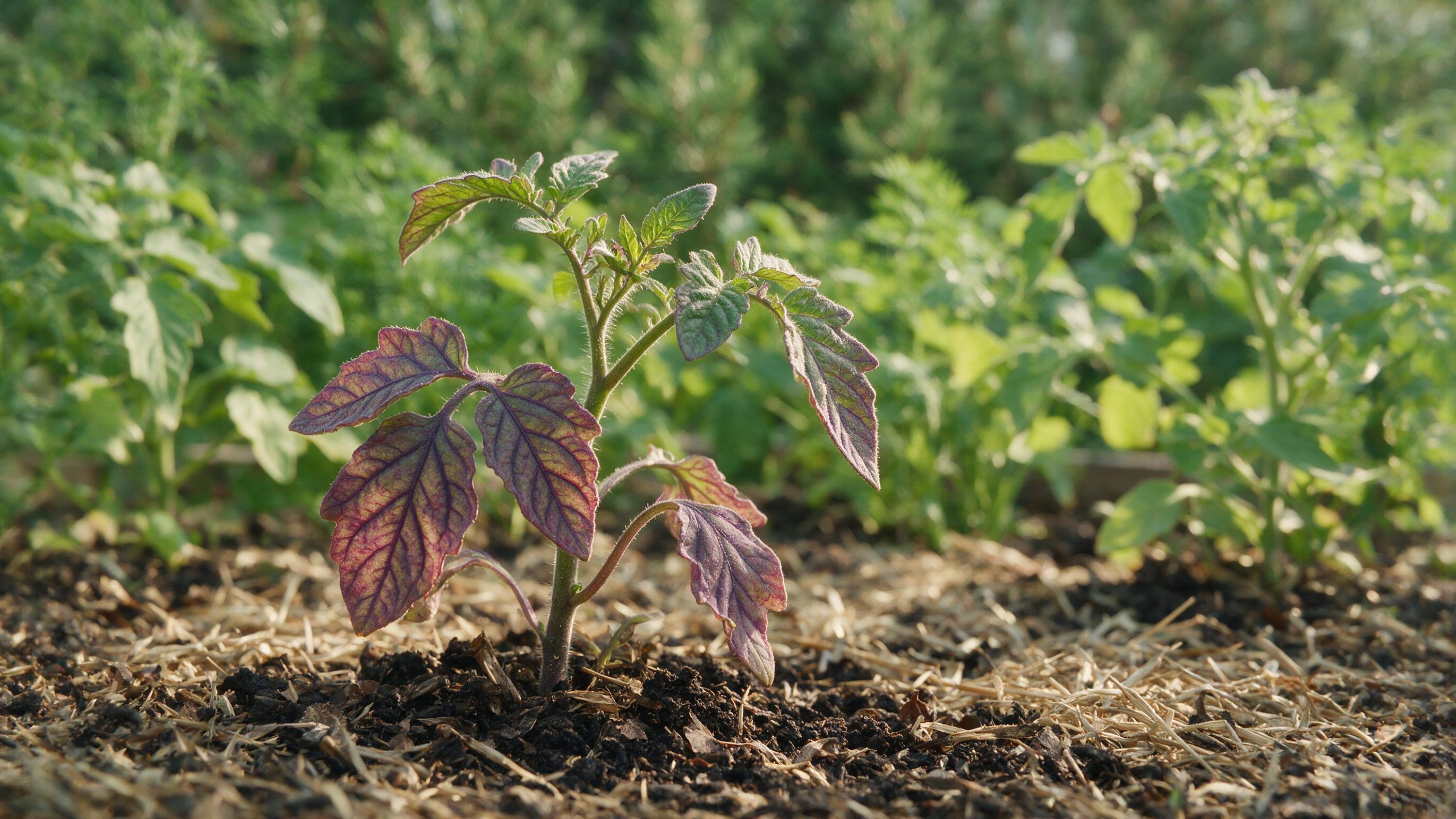
You walk out to your garden, coffee in hand, ready to check on your tomato plants — and something looks off. The leaves, stems, or even the entire plant has taken on a purple or reddish-purple hue that definitely was not there last week. It is a jarring sight, especially when you have been putting real care into your garden all season.
The good news is that purple tomato plants are one of the more common and, in most cases, fixable problems home gardeners in the United States run into. This unexpected color change can be surprising, but it is a common issue with specific, fixable causes. Whether you are growing in a raised bed in the Midwest, a container on a California patio, or a backyard plot in the Southeast, this guide walks you through every possible reason your tomato plant is turning purple and exactly what to do about it.
What Does It Mean When Your Tomato Plant Is Turning Purple?
When tomato plants turn purple, they are producing a pigment called anthocyanin. Plants produce this pigment as a response to stress — think of it as a sunburn or a cry for help. The key is to identify what is triggering that stress response in your garden.
Here is the science behind it: phosphorus plays a key role in various plant functions, including root development, energy transfer, and flower and fruit production. When phosphorus is in short supply, plants struggle to produce chlorophyll, leading to the green pigment being masked by anthocyanins, resulting in the characteristic purple coloration.
Purple discoloration can appear on the undersides of leaves, along the veins, on the stems, or — in more serious cases — across the entire plant. Tomato leaves become purplish (or reddish-purple), most often first on their undersides and later on the tops. Knowing where the purple shows up first is one of the most useful clues for diagnosis, which we will cover in detail below.
Pro Tip: Check the underside of a leaf first. Purple on the underside points strongly toward phosphorus deficiency, while purple on the upper leaf surface is more often linked to Tomato Purple Leaf Disorder or light stress.
Is Purple Coloring in Tomato Plants Always a Sign of a Problem?
Not always. There are at least 10,000 tomato varieties from which to choose, and some offer both purple fruit and purplish leaves. Unless you have a specific variety of tomato plants, such as ‘Indigo Cherry Drops’ or ‘Indigo Rose,’ it is not normal for your tomatoes to sport purple foliage. So the first step is to confirm what variety you are growing.
Beyond variety, seedlings can sometimes show a mild purple tint in their earliest weeks. If your tomato plants are just in the seedling stage, it could just be a normal phase. Whatever the reason may be, it is important to observe whether the purplish color eventually turns to green. A little purple on very young seedlings that fades as they mature is usually nothing to worry about.
A little purpling on seedlings or lower leaves often corrects itself. Focus on the new growth at the top of the plant. If that new growth is coming in green and healthy, your fixes are working. The old purple leaves may not fully recover, but that is okay. However, if the purple is spreading rapidly and new growth is also affected, that signals a real problem that needs attention.
Watering Issues Causing Tomato Plant Purple Coloring
Watering problems — both too much and too little — can contribute to purple leaves in tomatoes, though they usually do so indirectly by blocking the plant’s ability to absorb nutrients through its roots.
When there is too much water, plants are essentially drowning. When the roots are too wet, the air underneath the soil is not properly circulated, which stops the roots from absorbing the nutrients from the soil. When this happens, the leaves cannot get the nutrients they need, causing them to turn yellow or purple.
When the roots are completely soaked with water for long periods of time, it will cause the rotting of the roots. If this is not checked early on, the plant will eventually die. Overwatering is one of the sneakier causes of purple leaves because the problem is underground and easy to miss until the discoloration appears.
To check whether watering is the issue, use the finger test. Stick your finger 2 inches into the soil. If it is soaked, you are overwatering. If it is bone dry, you are underwatering. You can also use an inexpensive soil moisture meter for a more precise reading.
Pro Tip: Clay-heavy soils are especially prone to waterlogging. The soil may look dry on top but underneath it could be waterlogged already — this all depends on the type of soil you have. Clayish soil exhibits this property and tends to hold water for a long time. If you garden in a clay-dominant region like parts of the Southeast or the Midwest, this is a common trap.
Light Conditions Behind Tomato Plant Purple Coloring
Light — both too much and the wrong kind — can trigger anthocyanin production in tomato plants. Seedlings that get too much sunlight or get too close to grow lights may suffer from sunburn. The leaves may turn purple or red and start to curl and crisp if left unattended. Adjusting the light source for the seedlings and treating with a general fertilizer if necessary can help.
Indoor growers starting seeds under artificial lights should pay close attention to light intensity. Studies show that when exposed to intense white or blue lights, many plants, tomato seedlings included, produce more anthocyanins in an effort to protect themselves. This renders their leaves or stems purple and shows that they are under stress.
If you are growing seedlings under LED grow lights, if your tomato seedlings have grown tall enough to reach the growing lights, they might be sunburnt. Some lights are very intense, and not only do the seedlings grow faster, but they can also develop a purple tinge. Raise the light fixture or reduce the intensity to 25–50% during the seedling stage.
On the flip side, too little natural light can also stress the plant. Insufficient sun produces leggy, pale plants with few flowers — tomatoes need six to eight hours of direct sun, ideally eight to ten. If your garden spot gets less than that, consider relocating containers or trimming overhanging branches. You can also explore our guide to best houseplants for low-light areas to see which plants actually thrive with less sun — tomatoes are not among them.
Soil, Nutrients, and Root Health Causing Tomato Plant Purple Coloring
Nutrient deficiency — particularly phosphorus — is the single most common cause of purple leaves in tomatoes. One main reason tomato plant leaves turn purple is due to a phosphorous deficiency in the soil. Phosphorous is an essential nutrient that is needed for proper root development and flowering in all plants.
According to Texas A&M AgriLife Extension , in severe cases the whole plant may take on a purple hue. Tomato roots growing in cold soil, either in the greenhouse or the field, take up phosphorus poorly. Deficient plants lose vigor and yield poorly.
Potassium deficiency is another culprit that is easy to overlook. Potassium deficiency causes the leaves of tomato plants to turn either purple or yellow. It also causes stunted growth even if the leaves turn green when the soil warms up. There is also an interesting paradox at play: unlike phosphorus, potassium is only accessible to the tomato roots in warm soil. It is one of the paradoxes of growing tomatoes — the plants need both cool and warm soil to absorb the necessary nutrients.
Magnesium deficiency can also produce purple patches. When there is not enough magnesium, the photosynthesis process gets disturbed, and that is when you see those purple patches on the leaves. Unlike phosphorus deficiency, where the entire leaf might turn purple, magnesium deficiency typically shows as yellowing leaves with green veins (interveinal chlorosis).
Soil pH matters enormously here. Phosphorus is best absorbed in soil with a pH between 6.0 and 7.0. If your soil is too acidic (low pH) or too alkaline (high pH), the phosphorus gets “locked” and the plant cannot use it. According to Today’s Homeowner , cold soil temperatures, high soil pH levels, poor drainage, and excessive iron in the soil interfere with a plant’s ability to absorb phosphorus, even if it is present.
| Nutrient Deficiency | Where Purple Appears | Other Symptoms | Quick Fix |
|---|---|---|---|
| Phosphorus | Leaf undersides, veins, stems | Stunted growth, slow root development | Phosphorus-rich fertilizer (e.g., 10-20-10); bone meal for organic |
| Potassium | Leaf edges, overall hue | Poor fruit set, weak stems | Potassium-high liquid fertilizer |
| Magnesium | Purple patches between veins | Yellowing with green veins | Epsom salt solution (1–2 tbsp per gallon of water) |
Root health ties directly into nutrient uptake. Cramped in a tiny seed-starting cell, a tomato plant is unable to form roots that would allow it to take up nutrients properly. The easy fix is to simply pot up your seedlings, which allows them room to form a larger root system. If you are growing in containers, make sure your pot is large enough — a minimum of 5 gallons for most varieties.
Environmental Stress Triggering Tomato Plant Purple Coloring
Temperature is one of the biggest environmental triggers for purple leaves, and it catches a lot of US gardeners off guard in the spring. Tomatoes thrive in heat and high temperatures ranging from 65 to 85 degrees Fahrenheit. Planting tomatoes in cooler temperatures, below 50 degrees Fahrenheit, causes purple leaves and slow growth.
The reason cold causes purple leaves is not just about the temperature itself — it is about what cold soil does to nutrient absorption. Cold soil temperatures can inhibit plants’ ability to take up phosphorus, leading to purple leaves even when phosphorus is present in the soil. This is why gardeners in northern states like Minnesota, Wisconsin, or Michigan often see purple seedlings after an early transplant.
Tomatoes are sensitive to extreme temperatures. Cold nights below 55°F or hot days above 90°F can cause temperature stress. You might see the leaves turning purple, but it is just a temporary response to the stress. In most cases, as the plant adjusts to better conditions, the purple discoloration will likely go away on its own.
Transplant shock is another form of environmental stress that can bring on temporary purpling. When you move seedlings from indoors to the garden, the sudden change in light, wind, and temperature can trigger anthocyanin production. Gradually expose indoor-started plants to outdoor conditions over 7–10 days. This reduces transplant shock and environmental stress.
Pests and Disease Leading to Tomato Plant Purple Coloring
While nutrient deficiency is the most common cause of purple tomato plants, pests and disease can also be responsible — and these cases require faster action.
Tomato Purple Leaf Disorder (TPLD) is a disease-related cause that mimics phosphorus deficiency but behaves differently. The first signs appear about 6 weeks after transplanting the tomato seedlings. The upper surface of the leaves turns purple but the veins keep their natural color. Then the purplish hue spreads to the rest of the plant. The disease often appears in parts of the plant exposed to sunlight.
According to the University of Florida/IFAS Extension (as cited in research on the disorder), tomato purple leaf disorder (TPLD) has been observed in several tomato fields in Hillsborough, Manatee, and Miami-Dade counties since 2006. Initial symptoms appear between six and eight weeks after transplanting and could be somewhat confused with mild phosphorus deficiency. There is no treatment against the virus that causes tomato purple leaf disorder yet, and there is still a lot that researchers do not know about the virus or how it transmits.
Tomato Spotted Wilt Virus (TSWV) is another disease concern. TSWV is one that forms dark brown to purple spots on the leaves. The virus is carried by thrips and will cause the fruit to distort and have yellow ring marks. The only way to treat this virus is to treat the thrips.
Curly Top Virus is a disease common in drier western states. Certain viral infections, such as the curly top virus, can also make tomato leaves turn purple. This disease is transmitted between plants by beet leafhoppers. Tomato plants infected with the curly top virus have upper leaflets that curl back, and you might also notice purplish coloring along the veins of the foliage.
Pests can carry viruses that cause different diseases that turn the tomato plants purple. Whiteflies, beet leafhoppers, and western flower thrips are some of the most deadly carriers. Keeping pest populations under control is one of the best ways to prevent disease-related purple coloring. For companion planting strategies that naturally deter pests, check out our guide on different plants to grow with tomatoes.
Important Note: If you suspect a viral disease like TPLD or TSWV, do not wait. The best way to fix the problem is to pull out the infected plants before they spread the virus to the rest of the tomato plants. Isolate or remove affected plants immediately to protect the rest of your crop.
How to Diagnose Why Your Tomato Plant Is Turning Purple
Diagnosing purple tomato plants is a process of elimination. Work through these steps in order before reaching for a fertilizer or pesticide.
- Check the variety. Confirm you are not growing a naturally purple-leafed variety like ‘Indigo Rose.’ If you are, the color is normal and not a concern.
- Identify where the purple appears. Different deficiencies show up in different parts of the leaf and plant. Yellow between veins often means magnesium deficiency. Purple undersides suggest phosphorus deficiency. Pale overall color indicates nitrogen deficiency.
- Check soil temperature. Sow seeds or transplants outdoors when soil temperatures reach 60 degrees Fahrenheit. If your soil is still cold, that is likely the primary cause.
- Test soil moisture. Stick your finger 2 inches into the soil. If it is soaked, you are overwatering. Root suffocation blocks nutrient uptake and causes purple leaves.
- Test soil pH. Tomatoes prefer a pH between 6.0 and 6.8; outside that range, iron and phosphorus become unavailable. Use an inexpensive home pH test kit or send a sample to your local county extension office.
- Look for pest activity. Look under leaves for clusters of aphids or whiteflies, notice sticky honeydew and sooty mold, and scan for large green caterpillars that strip foliage. Pest-transmitted viruses cause purple discoloration that does not respond to fertilizer.
- Watch new growth. Focus on the new growth at the top of the plant. If that new growth is coming in green and healthy, your fixes are working. If new growth is also purple, the problem is active and worsening.
Using a plant identification app can also help you cross-reference symptoms. Our roundup of the best iPhone apps for identifying plants and best Android apps for identifying plants includes tools that can photograph and analyze leaf symptoms in seconds.
How to Fix a Tomato Plant That Is Turning Purple
Once you have diagnosed the cause, the fix is usually straightforward. Here is what to do based on the most common scenarios.
For phosphorus deficiency: A water-soluble fertilizer high in phosphorus (the middle number on the bag) will deliver nutrients most quickly to the plant’s roots. Organic options like bone meal or fish emulsion work well but act a bit slower as they need soil microbes to break them down. Recovery time varies, but you should see improvement within 1 to 2 weeks after you address the issue. Full recovery may take several weeks.
For potassium deficiency: Feed the tomatoes with a fertilizer high in potassium. A balanced liquid fertilizer applied every 7–14 days during the growing season will also help maintain adequate levels going forward.
For magnesium deficiency: Apply a solution of Epsom salts (magnesium sulfate) as a foliar spray or soil drench. Dissolve 1–2 tablespoons of Epsom salts per gallon of water and apply it directly to the leaves or water it around the base of the plant. Be sure to follow specific application rates to avoid overdoing it.
For cold soil: Consider using black plastic mulch to aid in retaining soil warmth and offer protective benefits to your plants. You can also use raised beds to expedite the process of warming the soil. Raised beds have the advantage of accumulating heat more quickly.
For pH imbalance: If pH is too low (acidic), add garden lime to raise it. If pH is too high (alkaline), add elemental sulfur or a soil acidifier to lower it. If pH is correct but phosphorus is low, add a phosphorus-rich fertilizer or amendment — bone meal is a good organic option.
For overwatering: Stop watering, poke holes in compacted soil, improve drainage with coarse sand or perlite, and if roots smell rotten, lift the plant, trim black roots, and repot into fresh well-draining mix.
For viral diseases (TSWV, curly top virus): The only way to treat these viruses is to treat the pest vectors. Try neem oil or insecticidal soap. Stronger action may be required in the form of a pesticide specifically formulated for use on thrips. For curly top virus, the best way to prevent it is to protect the plants with row covers, preventing beet leafhopper access. You can also try growing tomatoes closer together, as beet leafhoppers are more likely to attack plants that have more space between them.
For TPLD: Remove and dispose of infected plants. There is no cure, so acting fast to protect neighboring plants is the priority. You may find our list of types of plants helpful when choosing disease-resistant replacements for your garden.
How to Prevent Tomato Plant Purple Coloring Going Forward
Prevention is always easier than fixing a problem mid-season. These habits will keep your tomato plants green and thriving from transplant to harvest.
- Test your soil before planting. Before planting, conduct a soil test to determine your soil’s nutrient levels. This will help you choose the right fertilizer and avoid deficiencies. Your local cooperative extension office can run a full nutrient analysis for a small fee.
- Wait for warm soil. The best form of defense is to avoid planting your tomatoes too early in the season. Sow seeds or transplants outdoors when soil temperatures reach 60 degrees Fahrenheit.
- Harden off seedlings properly. Gradually expose indoor-started plants to outdoor conditions over 7–10 days. This reduces transplant shock and environmental stress.
- Fertilize consistently throughout the season. Throughout the growing season, provide your tomato plants with a balanced fertilizer according to the needs of your specific soil and plant variety.
- Amend soil with organic matter. Amending your soil with organic matter like compost can help improve its nutrient content and overall health.
- Water deeply and consistently. Inconsistent watering stresses plants and hampers nutrient uptake. Aim for deep, regular watering that keeps the soil consistently moist but not soggy. Mulching helps tremendously with this.
- Control pests proactively. Tomato plants are susceptible to various pests such as beetles, hornworms, and aphids. Keep an eye out for these pests in the garden, which will also impact their overall growth. Companion planting with pest-repelling species is one of the most effective organic strategies — see our article on companion plants for tomatoes for specific pairings.
- Choose resilient varieties. If you garden in a region with cool springs, seek out tomato varieties known for better cold tolerance.
- Manage light intensity for indoor seedlings. Start grow lights at 25% intensity and increase gradually as seedlings mature to avoid light-stress-induced purpling.
FAQ
Why are only the bottom leaves on my tomato plant turning purple?
Purple coloring starts on the older, lower leaves first. The veins on the leaf underside may turn a deep purple. Leaf stems and the main plant stalk can also show purple streaks. This pattern is classic phosphorus deficiency. Address it with a phosphorus-rich fertilizer and check your soil pH.
Can I still eat tomatoes from a plant with purple leaves?
Yes, it is completely safe. The fruit is not affected by the nutrient deficiency causing the leaf color. Just make sure the tomatoes themselves are ripe and show no signs of rot. If the purple is caused by a virus, the fruit may be distorted or discolored — in that case, use your judgment and when in doubt, discard affected fruit.
Why is my tomato plant turning purple even though I fertilized it?
A deficiency does not always mean your soil has no phosphorus. Several factors can lock it up, making it unavailable to your plant’s roots. Cold soil, wrong pH, and poor drainage are the most common reasons a fertilized plant still shows deficiency symptoms. Test your soil temperature and pH before adding more fertilizer.
How long does it take for purple tomato leaves to turn green again?
Recovery time varies, but you should see improvement within 1 to 2 weeks after you address the issue. Full recovery may take several weeks. Focus on new growth at the top of the plant — that is your best indicator that the problem is resolved. Older leaves that are already purple may not fully recover.
Does overwatering cause purple leaves in tomatoes?
Not directly, but overwatering damages roots and leads to nutrient deficiencies. Waterlogged roots cannot absorb phosphorus or potassium, which then triggers the purple coloring. Fix the drainage issue first, then address any resulting nutrient gap. For more information on substitutes for tomatoes in the kitchen if your crop does not recover, we have you covered there too.
Are purple tomato stems always a problem?
Purple stems alone can be a mild sign of phosphorus deficiency or a varietal trait. If the plant is growing well and the leaves look fine, it is probably not a major issue. Monitor it and ensure it has good nutrition. If the purple moves from stems into the leaves and new growth, that is when you need to act.