Why Are My Sunflower Leaves Turning Yellow? Causes, Fixes, and Prevention

August 26, 2026
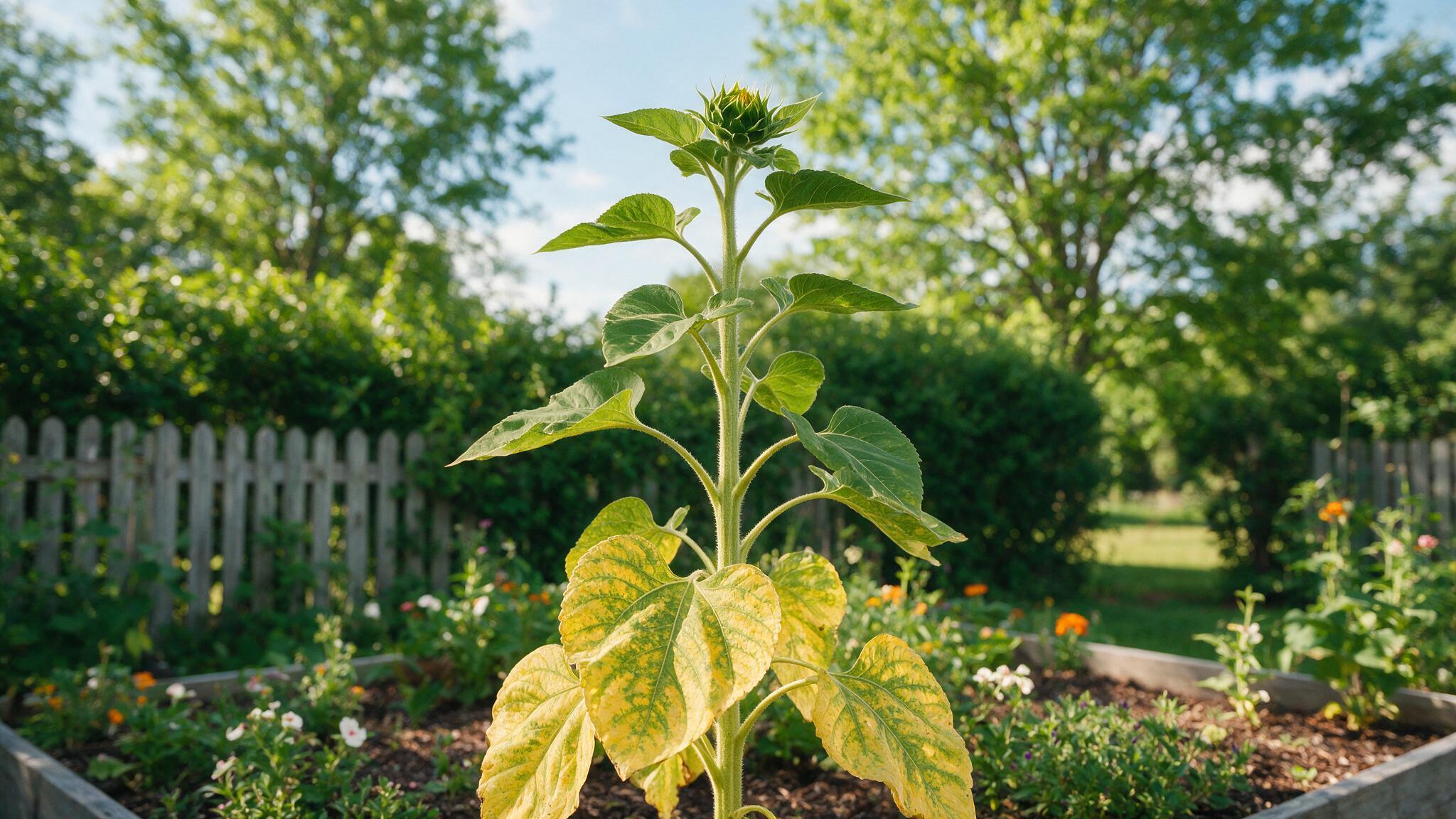
You step outside to check on your sunflowers, and instead of those big, bold green leaves you were expecting, you spot patches of yellow spreading across the foliage. It’s a frustrating sight, but it’s also one of the most common problems home gardeners in the United States run into every summer.
Yellow leaves are often a signal that your sunflower is experiencing stress. The cause may be something simple like watering problems, or it could be related to nutrients, pests, diseases, or environmental conditions. The good news is that most causes are fixable once you know what you’re looking for.
This guide walks you through every reason your sunflower leaves might be turning yellow, how to accurately diagnose the problem, and exactly what to do about it — so you can get back to growing the tall, healthy plants you planted in the first place.
What Does It Mean When Your Sunflower Leaves Are Turning Yellow?
Yellowing leaves — known botanically as chlorosis — are not a disease in themselves. They’re a physiological signal, a visible response to stress that disrupts chlorophyll production or accelerates its breakdown. In other words, your sunflower is communicating that something in its environment is off.
In sunflowers (Helianthus annuus), this symptom carries high diagnostic value because the plant grows rapidly, responds quickly to environmental shifts, and exhibits clear, patterned responses across leaf age and position. Unlike slow-growing perennials, sunflowers reveal problems within days — not weeks — making them excellent bioindicators of garden health.
The location of the yellowing on the plant is one of your best clues. Uniform yellowing on older leaves suggests nitrogen loss; interveinal yellowing on new growth points to iron or magnesium deficiency; yellowing with brown edges signals salt buildup or over-fertilization. Pay attention to these patterns before reaching for any treatment.
Pro Tip: Use a plant identification app to photograph your sunflower’s leaves and compare symptoms against a database of known deficiencies and diseases before diagnosing the problem.
Is Yellowing in Sunflowers Always a Sign of a Problem?
Not every yellow leaf is a red flag. Not every yellow leaf indicates a problem. As sunflowers mature, older leaves near the bottom naturally yellow and die. This is completely normal behavior and does not require any intervention.
As sunflowers approach maturity — especially single-stemmed, pollen-free cultivars like ‘Sunrich’ or ‘Pro Cut’ — the lower three to five leaves naturally yellow and drop. This is programmed senescence, a resource-recycling process where nitrogen and minerals are relocated to developing seed heads. It’s normal, non-pathological, and requires no intervention.
But when yellowing appears on upper leaves, spreads upward, occurs in seedlings or vegetative-stage plants, or coincides with stunting or wilting, it demands immediate attention. That’s your signal to start investigating the specific cause.
| Yellowing Type | Location on Plant | Likely Cause | Action Needed? |
|---|---|---|---|
| Lower leaves only, plant otherwise healthy | Bottom 3–5 leaves | Natural senescence | No — remove if desired |
| Uniform yellowing, older leaves first | Lower to mid plant | Nitrogen deficiency | Yes — fertilize |
| Interveinal yellowing (veins stay green) | Upper/newer leaves | Iron or magnesium deficiency | Yes — test soil pH |
| Yellowing with wilting or mushy stems | Anywhere | Overwatering or root rot | Yes — adjust watering |
| Yellow patches with spots or fuzz | Upper or lower leaves | Fungal disease | Yes — treat immediately |
Watering Issues Causing Sunflower Leaves to Turn Yellow
Watering problems are the number-one cause of yellowing — accounting for roughly 65% of diagnosed cases in home gardens and container trials. Sunflowers evolved on prairie soils: deep, sandy-loam, well-aerated, and fast-draining. When planted in heavy clay, compacted beds, or pots without drainage holes — or watered on fixed schedules regardless of weather — they suffocate.
Overwatering creates oxygen-starved roots that cannot absorb nutrients properly. Soil that is too moist is a perfect breeding ground for fungus, which can cause root rot. This can occur if you are over-watering the sunflower directly, or if the sunflower gets too much rain or the soil isn’t well drained.
Underwatering is just as damaging. While sunflowers are relatively drought tolerant once established, prolonged dry conditions can cause yellowing. This problem commonly appears during hot summer weather. If your region is experiencing a July heat wave, check soil moisture before assuming the cause is something more complex.
The fix depends on which problem you have. Start by checking soil moisture two to three inches deep: if damp and cool, pause watering for five to seven days and improve drainage. If dry, water deeply but infrequently — never daily. Water deeply rather than frequently. Deep watering encourages stronger root systems and improves drought tolerance.
Sunflowers in the garden require about two gallons of water a week. If your sunflower is in a pot, you’ll need to water it more often because it can’t search for water beneath the soil with its long roots.
Pro Tip: Always water at the base of the plant, not overhead. Watering plants early in the morning and keeping the foliage as dry as possible allows foliage to dry out during the day, reducing the risk of leaf spots forming.
Light Conditions Behind Sunflower Leaves Turning Yellow
Sunflowers like warm, sunny weather, as the name suggests. However, too much sunlight or extreme heat can harm them, which causes their leaves to turn yellow. The plant prefers temperatures of 70 to 78 degrees Fahrenheit.
If they receive more than eight hours of direct sunlight, particularly along with very hot temperatures, the plant will begin to wilt. Ensure your sunflowers get direct sunlight for at least six hours daily. The sweet spot is six to eight hours of full sun — enough to fuel growth without heat stress tipping over into leaf damage.
The sun can damage the leaves, which causes them to turn yellow. If they continue to receive too much sun, the leaves may turn brown or black. If your sunflower is in a pot, move it to a shadier area. For in-ground plants in particularly hot climates like the Southwest, afternoon shade cloth can help buffer the most intense heat of the day.
Too little light is also a problem. Sunflowers planted in shaded spots will struggle to photosynthesize efficiently, leading to pale, yellowing foliage and weak stems. If you’re growing other plants nearby, check out this guide on companion planting strategies to make sure your sunflowers aren’t being crowded out.
Soil, Nutrients, and Root Health Causing Sunflower Leaves to Turn Yellow
Nitrogen is one of the most important nutrients for leaf growth. When nitrogen levels become low, sunflowers often begin yellowing from the bottom of the plant upward. A sunflower starved of nitrogen keeps its veins green while the rest of the leaf fades. This bottom-up progression is a reliable indicator that nitrogen — not water — is the issue.
Unlike nitrogen deficiency, iron and magnesium shortages show up on new, upper leaves. Iron chlorosis features sharp interveinal yellowing — veins stay vivid green — while magnesium deficiency shows broader yellow patches that may develop reddish-purple margins. Both occur most often in alkaline soils (pH above 7.2), where iron and magnesium become chemically bound and unavailable.
Over-fertilizing causes its own set of problems. Over-fertilization can affect sunflowers by making their leaves wilt and turn yellow. You may also notice that the leaf margins and tips are turning brown, leaves are dropping, and growth has slowed or stopped.
Even if you water correctly, poorly drained soil can cause yellow leaves. Heavy clay soils and compacted planting areas often trap excess moisture around roots. For optimal sunflower growth, aim for a soil pH between 6.0 and 7.5.
- Nitrogen deficiency fix: Side-dress with half a cup of blood meal (12-0-0) or three-quarters of a cup of alfalfa meal (2.5-0.5-2) per plant, worked two inches deep and watered in.
- Balanced feeding: Consider using balanced NPK fertilizers, like a 10-10-10 mix, or organic options such as compost.
- Iron or magnesium fix: Test your soil pH first — soil pH testing is non-negotiable here. A digital meter or lab test tells you whether amendments will work.
- Clay soil fix: Aerate with a broadfork and amend with two to three inches of composted pine bark or rice hulls.
You can learn more about how different types of plants respond to soil conditions and nutrient availability, which can help you build a better overall garden environment for your sunflowers.
Environmental Stress Triggering Sunflower Leaves to Turn Yellow
Beyond watering and nutrients, environmental factors can push sunflowers into a stress response that shows up as yellowing foliage. Three non-biological triggers account for roughly 12% of yellowing reports: herbicide drift — even minute amounts of glyphosate or 2,4-D cause cupped, twisted new growth and bright yellow streaks along veins. If you or a neighbor recently applied lawn herbicide, this is worth investigating.
Research has shown that 44 degrees Fahrenheit is the lowest temperature sunflowers can tolerate. They can tolerate hot temperatures as long as they have plenty of water. Cold snaps in spring or early fall can stress young plants enough to trigger chlorosis, especially in northern states.
Sunflowers grown in containers are more likely to experience yellow leaves because nutrients and moisture levels fluctuate more quickly. Container gardeners should check soil moisture more frequently and use a well-draining mix to avoid the swings that stress roots.
Pro Tip: If you live in a region with frequent wind events, physical stress from repeated leaf abrasion can also contribute to yellowing. Explore wind-tolerant plant options if you’re gardening in an exposed location and want more resilient companions for your sunflowers.
Pests and Disease Leading to Sunflower Leaves Turning Yellow
Aphids are notorious for infesting sunflowers, appearing as small, green insects that suck sap from the leaves. Other pests like spider mites and whiteflies can also cause significant damage. Signs of pest damage include yellowing leaves, sticky residue known as honeydew, and distorted growth.
Telltale signs of red spider mite infestation include spotting on the top of the leaves and yellowing around the edges. Spider mites commonly attack plants in warm climates and cause damage by sucking plant juices, causing plant leaves to droop and turn yellow or brown, stunting their growth. Check the undersides of leaves closely — that’s where mites and aphids tend to congregate.
On the disease side, several fungal issues cause yellowing:
- Downy mildew: Yellow angular patches on upper leaves with white fuzzy growth underneath and distorted new growth.
- Verticillium wilt: A soil-borne fungus causing one-sided yellowing, vascular browning inside stems, and sudden collapse. No cure — remove and destroy affected plants.
- Rust: Rust appears as lesions or spots on the leaves that can be red, orange, yellow, or brown, and they break open, releasing rust-colored powdery spores.
- Powdery mildew: More likely in hot, humid conditions, the signs include white patches or spots on foliage and stems. Large, broad leaves are usually susceptible to this fungus. Powdery mildew is not fatal but causes stunted growth and leaf loss.
For pest treatment, neem oil is an effective treatment for over 200 kinds of insect pests, and is most effective on soft-bodied chewing insects such as aphids, mealybugs, scale, spider mites, and whiteflies that feed on plant foliage. Mix neem oil with water at typically one to two tablespoons per gallon, adding a surfactant like mild liquid soap to help the solution adhere better to plant surfaces. Use a spray bottle to evenly coat affected plants, ensuring thorough coverage of both the upper and lower leaf surfaces.
To prevent downy mildew: rotate crops (don’t plant sunflowers in the same spot for four or more years), space plants at least 24 inches apart for airflow, and avoid overhead watering after 10 a.m.
How to Diagnose Why Your Sunflower Leaves Are Turning Yellow
Good diagnosis starts with observation before action. Work through these steps systematically rather than guessing and treating randomly — the wrong treatment can make things worse.
- Check soil moisture first. Always check soil moisture one to two inches below the surface before watering. Wet, soggy soil points to overwatering; bone-dry soil points to drought stress.
- Identify which leaves are affected. Are only certain leaves affected? This might indicate disease or nutrient issues. Bottom-up yellowing = nitrogen. Top-down yellowing with green veins = iron or magnesium.
- Inspect the undersides of leaves. Regularly inspect your plants, especially the undersides of leaves. Look for fine webbing between leaves and stems, small moving dots on leaves, and stippled or discolored leaves.
- Look at the whole plant. If young leaves are losing their luster or the plant looks generally unwell, it’s a distress signal. Rapid yellowing, especially in new growth, is your cue to investigate further. Keep an eye out for other symptoms like stunted growth or brown spots with yellow halos.
- Consider recent weather and care. Has there been a heatwave or cold snap? Extreme temperatures can cause stress. Think back to the last time you fertilized or applied any garden chemicals nearby.
- Test your soil. Soil testing is your first step — grab a sample and get it analyzed to know what you’re working with. This will reveal your soil’s pH and nutrient levels, crucial for sunflower success. Many US county cooperative extension offices offer low-cost soil testing.
If you want extra help identifying what you’re seeing, a good plant identification app for Android can help you match your sunflower’s symptoms to known conditions quickly.
How to Fix a Sunflower That Is Turning Yellow
Once you’ve diagnosed the cause, apply the targeted fix below. In many cases, damaged leaves remain yellow. Focus on correcting the problem so new growth emerges healthy and green. Don’t expect yellow leaves to turn back to green — your goal is stopping the spread.
For overwatering: Stop watering until the top three inches of soil feel dry and crumbly. For containers, repot into fresh, porous mix (two-thirds potting soil plus one-third coarse perlite or horticultural grit).
For underwatering: Water deeply and consistently. Water deeply but infrequently to promote deep root growth. Mulching around the base of the plant helps retain soil moisture between watering sessions.
For nitrogen deficiency: Apply a balanced organic liquid like fish emulsion (5-1-1) at half label strength every 10 days for three applications. Avoid excessive feeding, however, as too much nitrogen can reduce flowering.
For iron or magnesium deficiency: Amend soil pH to the 6.0–7.5 range. In alkaline soils, apply chelated iron or Epsom salt (for magnesium) as a foliar spray or soil drench after confirming the deficiency with a soil test.
For pests: Spray leaves with cold water several times a day. Apply insecticidal soaps, horticultural oils, or neem oil to the leaves of affected plants. Spray leaves with a mixture of one quart water to one teaspoon dish soap several times a day for two weeks.
For fungal diseases: Remove and destroy infected foliage. For confirmed downy mildew, apply copper fungicide (0.5% Bordeaux mixture) at first sign — then stop, as copper accumulates in soil. Removing impacted leaves is a quick and easy way to treat leaf spots. Destroy infected foliage to prevent the spread, then apply a fungicide.
Pro Tip: When removing diseased foliage, sterilize your pruning shears between cuts with rubbing alcohol or a diluted bleach solution. This prevents spreading fungal spores from one part of the plant to another.
How to Prevent Sunflower Leaves from Turning Yellow Going Forward
Healthy soil, proper watering, quality seed, and good garden practices remain the foundation for successful sunflower growing. Building these habits into your routine is far easier than treating problems after they appear.
- Improve soil before planting. Mix in organic matter to your soil for better nutrient content and drainage. Compost worked into the top six to eight inches gives sunflowers the nutrient base they need from day one.
- Space plants correctly. Provide sunflowers with full sun exposure for at least six to eight hours daily, and plant them in well-drained soil, spacing them 12 to 18 inches apart to promote good air circulation.
- Mulch consistently. Mulching is a great way to retain moisture and suppress weeds around your sunflowers. A two- to three-inch layer of straw or shredded wood chips around the base works well.
- Rotate your crops. Prevent rust by removing plant debris at the end of the season and giving plants adequate space when planting. Rust is less likely to be an issue when there is sufficient airflow, so don’t crowd plants.
- Monitor regularly. Check plants at least twice a week to identify spider mites or any common garden pests or diseases. Early detection is always easier and cheaper to address than a full-blown infestation.
- Use neem oil preventively. For active infestations, spray the foliage or drench the soil every seven days until the pests are eradicated. As a preventative measure, apply a soil drench every three weeks to keep pests at bay.
- Adjust watering with the weather. Avoid watering on a strict schedule. Check soil moisture before watering. A simple finger test two to three inches into the soil tells you everything you need to know.
If you enjoy growing a wide range of garden plants alongside your sunflowers, take a look at some drought-tolerant plant options that pair well with sunflowers in hot, sunny beds and won’t compete aggressively for water. You might also explore deer-tolerant plants to protect your garden beds from browsing wildlife that can stress your sunflowers indirectly.
FAQ
Why Are My Sunflower Leaves Turning Yellow from the Bottom Up?
Nitrogen is one of the most important nutrients for leaf growth. When nitrogen levels become low, sunflowers often begin yellowing from the bottom of the plant upward. This pattern is one of the clearest signs of nitrogen deficiency. However, it can also indicate natural senescence in a mature plant approaching the end of its growing cycle.
Can Overwatering Really Cause Yellow Sunflower Leaves?
Your sunflower’s leaves will turn yellow if the plant is overwatered. Overwatering leads to wet soil, which allows fungal rot. The fungus feeds on the plant’s roots. Since the roots are damaged, they can’t transport nutrients and water properly — even though the sunflower gets plenty of water and you provide the correct amount of nutrients, discoloration follows.
Should I Remove Yellow Leaves from My Sunflower?
Yes, you can remove yellow leaves — especially if they’re diseased or pest-damaged — to improve airflow and prevent spread. Not every yellow leaf indicates a problem. As sunflowers mature, older leaves near the bottom naturally yellow and die. This is completely normal, and if that’s what’s happening, there is usually nothing to worry about. Simply remove aging leaves if desired.
Why Are My Sunflower Seedlings Turning Yellow?
Yellowing in seedlings is almost always a watering or soil issue. Young plants have shallow roots and are highly sensitive to both overwatering and underwatering. Check soil moisture first, ensure the container or bed drains freely, and confirm the seedlings are getting adequate light. If they’re indoors under grow lights, they may simply need more hours of light exposure each day.
What Is the White Fuzzy Growth on My Sunflower Leaves with Yellow Patches?
Downy mildew causes yellow angular patches on upper leaves with white fuzzy growth underneath and distorted new growth. Downy mildew is a mold that can infect the foliage of sunflower plants. Cramped growing conditions and a lack of airflow cause downy mildew. Improve spacing, avoid overhead watering, and apply a copper-based fungicide at the first sign of infection.
How Do I Know If My Sunflower Has an Iron Deficiency?
Iron deficiency manifests as yellowing between the leaf veins, a condition known as interveinal chlorosis, where the veins themselves stay green. Iron plays a crucial role in photosynthesis and enzyme function, making its presence in the soil essential for healthy sunflowers. This symptom appears on newer, upper leaves — not older, lower ones. A soil pH test will confirm whether iron availability is the issue.