
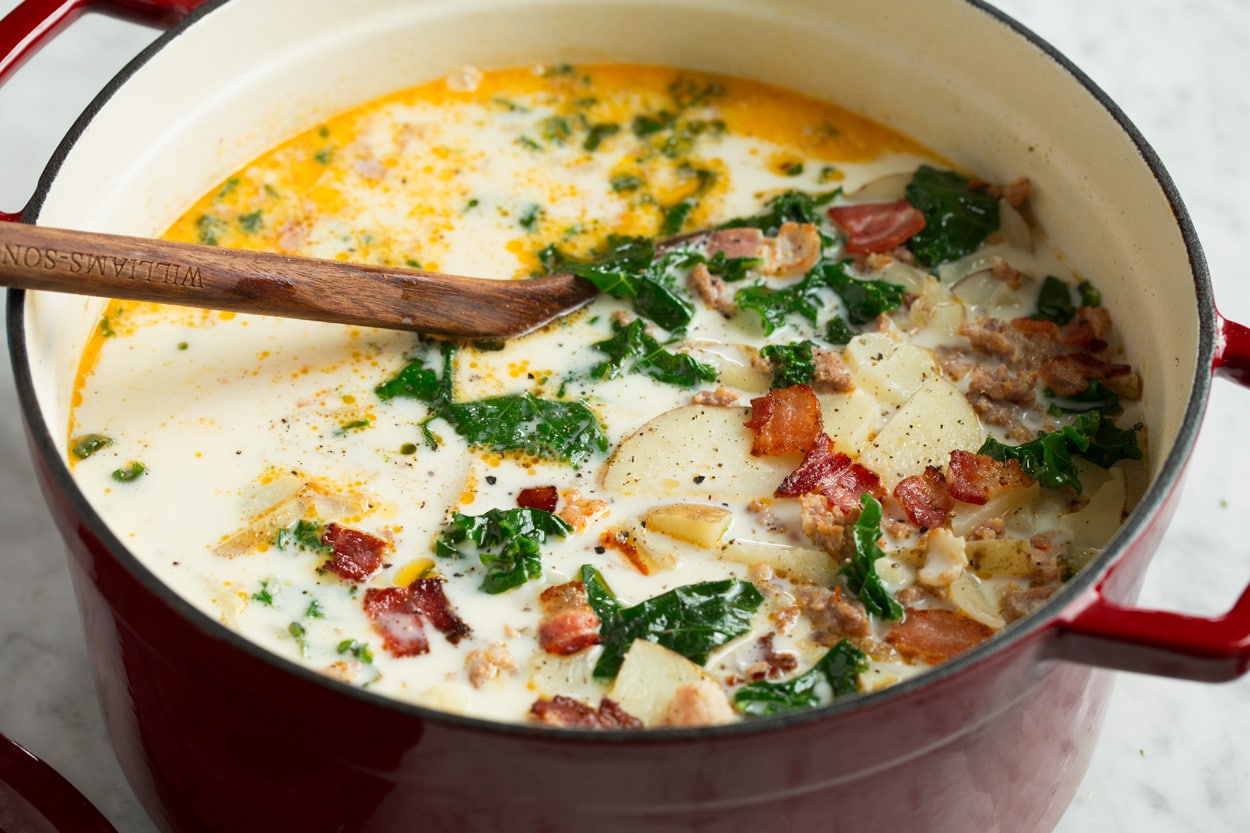
Zuppa toscana is one of those soups you almost always make too much of — and that’s not a bad thing. The hearty Italian-American classic loaded with Italian sausage, potatoes, kale, and a rich cream broth is just as popular at home as it is at Olive Garden. The real question is what to do with the leftovers.
The good news: you can absolutely freeze zuppa toscana soup. The catch is that a couple of its ingredients — heavy cream and potatoes — don’t survive the freezer perfectly without a little planning. Follow the right steps and you’ll pull a bowl out of the freezer that tastes nearly as good as the day you made it. Check out our guide on what to serve with zuppa toscana if you’re planning a full meal around it.
Can You Freeze Zuppa Toscana?
Yes, you can freeze zuppa toscana soup. While this leftover soup is best stored in an airtight container in the refrigerator and enjoyed within a few days, you can freeze it for up to 2–3 months. That makes it a solid candidate for batch cooking and meal prep.
The soup’s sausage, onion, garlic, and broth base freeze without any issues. This soup actually does freeze well, but it’s recommended to leave the heavy whipping cream out of any portion that is to be frozen. To freeze, add the cooled soup to a large glass or plastic container with a tight-fitting lid.
Freezing the cream-free base and adding fresh cream when you reheat is the single most effective technique for getting great results from frozen zuppa toscana. Soup is one of the easiest things to make ahead as a freezer meal. Plan ahead and you’ll always have a comforting dinner ready to go.
Pro Tip: If you’re making zuppa toscana specifically to freeze, hold back the cream entirely during cooking. Add it fresh after thawing and reheating for the best texture and flavor.
Does Freezing Change the Texture or Taste of Zuppa Toscana?
Freezing does affect two specific ingredients in zuppa toscana: the cream and the potatoes. Understanding what changes — and why — helps you manage expectations and take steps to minimize the impact.
Freezing soups that contain dairy and potatoes can be tricky, as the texture might change upon thawing. Dairy-based soups can separate and become grainy, while potatoes can turn mushy. Neither problem is catastrophic, but both are worth knowing about before you freeze a big batch.
Potatoes can turn a little mushy after being frozen. It will still taste delicious, but the texture is a little different than the original. If soft potatoes bother you, the easiest fix is to undercook them slightly before freezing, or skip them at the freezing stage altogether.
Regular potatoes don’t hold up well in the freezer, so sweet potatoes are the way to go if making it as a freezer meal. If you want to use regular potatoes, leave them out at the freezer stage and add them fresh on the day of cooking.
The sausage, kale, broth, and aromatics hold up well and retain their flavor. The overall taste of the soup remains satisfying — it’s primarily the mouthfeel of the cream and the firmness of the potatoes that shift slightly after freezing.
How to Freeze Zuppa Toscana the Right Way
The method you use matters more than you might think. Skipping a step or two is what leads to grainy, watery soup after thawing. Here’s how to do it correctly:
- Hold the cream. To freeze zuppa toscana, make the soup according to instructions but don’t add the cream and don’t cook the potatoes until tender. You’ll add both when reheating.
- Undercook the potatoes slightly. Since potatoes soften further in the freezer, pulling them off heat when they’re just barely fork-tender gives them more structural integrity after thawing.
- Cool the soup completely. Ladle the soup into a freezer-safe container, and let it cool before putting it in the freezer. Putting hot soup directly into the freezer raises the internal temperature and can cause freezer burn or uneven freezing.
- Choose the right container. Use a large glass or plastic container with a tight-fitting lid. A gallon zip-lock bag works too — if using glass, make sure the mixture is completely cooled before putting it into the freezer.
- Remove excess air. Whether you’re using a bag or a container, minimizing air contact reduces freezer burn. Squeeze bags flat before sealing.
- Label with a date. Write the freeze date on the container so you know exactly when it needs to be used by.
Pro Tip: Freeze zuppa toscana in individual or two-serving portions. Smaller portions thaw faster and let you pull out exactly what you need without defrosting the whole batch.
If you’re interested in other hearty, nutritious foods worth stocking up on, our articles on superfoods for a healthy heart and whole plant-based foods are worth a read.
How Long Can You Freeze Zuppa Toscana?
After allowing the soup to cool, store it in a freezer-safe container for up to 3 months. Most sources agree on this window as the sweet spot for quality — the soup remains safe beyond that point if kept consistently frozen, but flavor and texture start to degrade.
Here’s a quick reference for zuppa toscana storage times:
| Storage Method | How Long It Lasts | Notes |
|---|---|---|
| Refrigerator | 3–4 days | Leftover zuppa toscana will last in an airtight container in the fridge for 3–4 days. |
| Freezer (with cream) | Up to 1 month | Cream may separate; use quickly for best results |
| Freezer (without cream) | Up to 3 months | Best quality; add cream fresh when reheating |
The takeaway is simple: freeze without cream and you get the full 3-month window. Freeze with cream already stirred in and plan to use it within a month before the texture becomes noticeably grainy.
How to Thaw Frozen Zuppa Toscana
Thawing properly is just as important as freezing properly. Rushing this step is one of the most common reasons reheated soup ends up with a broken, watery texture.
Best method — overnight in the refrigerator: Thaw overnight in the fridge and rewarm on the stove, cooking potatoes until tender, and then stir in cream. This slow, cold thaw keeps the soup’s texture intact and is the safest method from a food safety standpoint.
Room temperature thaw (faster option): To thaw, remove from freezer and set at room temperature for a few hours before transferring it to a pot and warming over the stove. Only use this method if you plan to cook the soup immediately afterward — do not let it sit at room temperature for extended periods.
Straight from frozen on the stovetop: To reheat this soup after it has been in the freezer, reheating it directly from the freezer in a pot — not letting it thaw first — is another option. Use low to medium-low heat and stir frequently to prevent scorching on the bottom.
Important Note: No matter which thawing method you use, always reheat zuppa toscana gently over low heat. Reheating gently over low heat prevents the dairy from separating and ensures the soup heats evenly without boiling, which could affect the texture of the potatoes and greens.
When reheating, you will probably need to add extra broth or water to get it back to its soupy consistency. Start with a splash and adjust from there. This is also the moment to stir in your fresh heavy cream if you held it back during the original cook.
Can You Refreeze Zuppa Toscana After Thawing?
Refreezing zuppa toscana after it has already been thawed is not recommended. Each freeze-thaw cycle degrades the texture of the potatoes further and increases the risk of the cream base breaking down into a grainy, separated consistency. The kale also becomes increasingly limp and soft with repeated freezing.
From a food safety perspective, the USDA advises that foods thawed in the refrigerator can technically be refrozen, but quality loss is significant. For a cream-based soup like this one, that quality loss is especially noticeable. The better approach is to portion the soup before freezing so you only thaw what you need.
If you thawed the soup in the refrigerator and haven’t reheated it yet, you have a short window. Refrigerate any leftovers in the fridge for up to three days. Use it within that window rather than putting it back in the freezer.
How to Use Frozen Zuppa Toscana (Best Uses After Freezing)
Once your frozen zuppa toscana is thawed and reheated, it works well in several ways beyond just a bowl of soup. The hearty sausage-and-potato base holds up to a few creative uses, especially if the texture has shifted slightly from freezing.
- Classic bowl with crusty bread. The most straightforward use. Add a splash of fresh cream, adjust the seasoning, and serve with a thick slice of sourdough or Italian bread for dipping. This is the format that best masks any minor texture changes from freezing.
- Pasta sauce base. If the potatoes turned mushy, mash them into the broth and toss the thickened soup with cooked rigatoni or penne. The sausage and kale become a hearty pasta sauce.
- Baked potato topper. Ladle the reheated soup over a split baked russet potato. The creamy broth soaks into the potato and the sausage and kale make it a full meal.
- Grain bowl base. Spoon the soup over cooked farro, barley, or white rice to stretch it further and add texture if the original potatoes softened too much.
- Casserole starter. Pour the thawed soup into a baking dish, top with shredded mozzarella or Parmesan, and bake at 375°F until bubbly. The result is a creamy, baked pasta-style casserole.
For more ideas on building a full meal around this soup, check out our guide on what to serve with zuppa toscana. If you’re thinking about the nutritional side of what you’re eating, our articles on powerful nutrients and foods that fight cancer and foods for healthy skin explore how specific ingredients contribute to your overall health.
Signs That Frozen Zuppa Toscana Has Gone Bad
Even properly frozen soup can go bad if it’s been stored too long, wasn’t cooled properly before freezing, or experienced temperature fluctuations in the freezer. Here’s what to look for before you reheat a container:
- Off or sour smell. Fresh zuppa toscana has a savory, slightly spicy aroma from the sausage and garlic. If the thawed soup smells sour, rancid, or “off” in any way, discard it without tasting.
- Visible freezer burn. Large ice crystals on the surface of the soup or a grayish, dried-out appearance on the top layer are signs of freezer burn. The soup is still technically safe to eat but will taste bland and have a poor texture. If only the surface is affected, you can scrape it off — but if the burn is extensive, it’s better to toss it.
- Unusual color. The sausage should remain a brownish color and the kale should look dark green (though it will be very soft). If you notice any pink or gray discoloration in the meat, or if the broth looks cloudy in an unusual way, don’t eat it.
- Slimy texture after thawing. Any sliminess in the sausage or on the surface of the soup after thawing is a sign of bacterial growth. Discard immediately.
- Past the 3-month mark. If the label shows the soup has been frozen for more than 3 months, it’s safest to throw it out even if it looks and smells fine. Quality and safety both decline past this point for cream-based soups.
Important Note: When in doubt, throw it out. The ingredients in zuppa toscana — cream, sausage, and potatoes — are all perishable. It’s not worth the risk of eating spoiled soup to avoid wasting a few servings.
Keeping your freezer stocked with well-labeled, portioned meals is one of the best ways to reduce food waste and eat well on busy nights. For more on building a nutrition-conscious kitchen, see our pieces on fibroid healing foods and foods that can help enhance your liver function.
Frequently Asked Questions
Can you freeze zuppa toscana with the cream already in it?
Milk-based soups tend to be more challenging to freeze since they have a tendency to separate. You can freeze it with cream, but the texture will be noticeably grainier after thawing. For best results, always freeze the base without cream and stir it in fresh when reheating.
How do you keep potatoes from getting mushy when freezing zuppa toscana?
To freeze zuppa toscana, make the soup according to instructions but don’t add the cream and don’t cook the potatoes until tender. Slightly underdone potatoes hold up better through the freeze-thaw cycle. Alternatively, if you want to use regular potatoes, leave them out at the freezer stage and add them fresh on the day of cooking.
Can you freeze zuppa toscana in zip-lock bags?
Yes. Gallon-sized freezer bags work well and save space. Lay the bags flat while freezing so they stack easily. Remove as much air as possible before sealing to prevent freezer burn. Double-bagging adds extra protection against leaks and odor transfer.
Can you freeze store-bought or restaurant zuppa toscana?
Yes, the same rules apply. If the soup already contains cream, freeze it quickly and plan to use it within a month. Let it cool completely before freezing, and reheat gently on the stovetop with a splash of fresh broth to restore consistency.
Is zuppa toscana good for meal prep?
You’ll enjoy prepping several bags on the weekend to add to your freezer stack. Pull out a bag or two depending on how many mouths you have to feed, put it in a slow cooker, and enjoy dinner in minutes at the end of your long day. It’s one of the better soups for batch cooking precisely because the base (without cream) freezes so well.
How long does zuppa toscana last in the fridge after thawing?
Once thawed in the refrigerator, treat the soup the same as fresh leftovers. Zuppa toscana is good for up to 3 days. Make sure to store it in an airtight container in the fridge. Reheat only what you plan to eat rather than reheating the entire batch at once.