
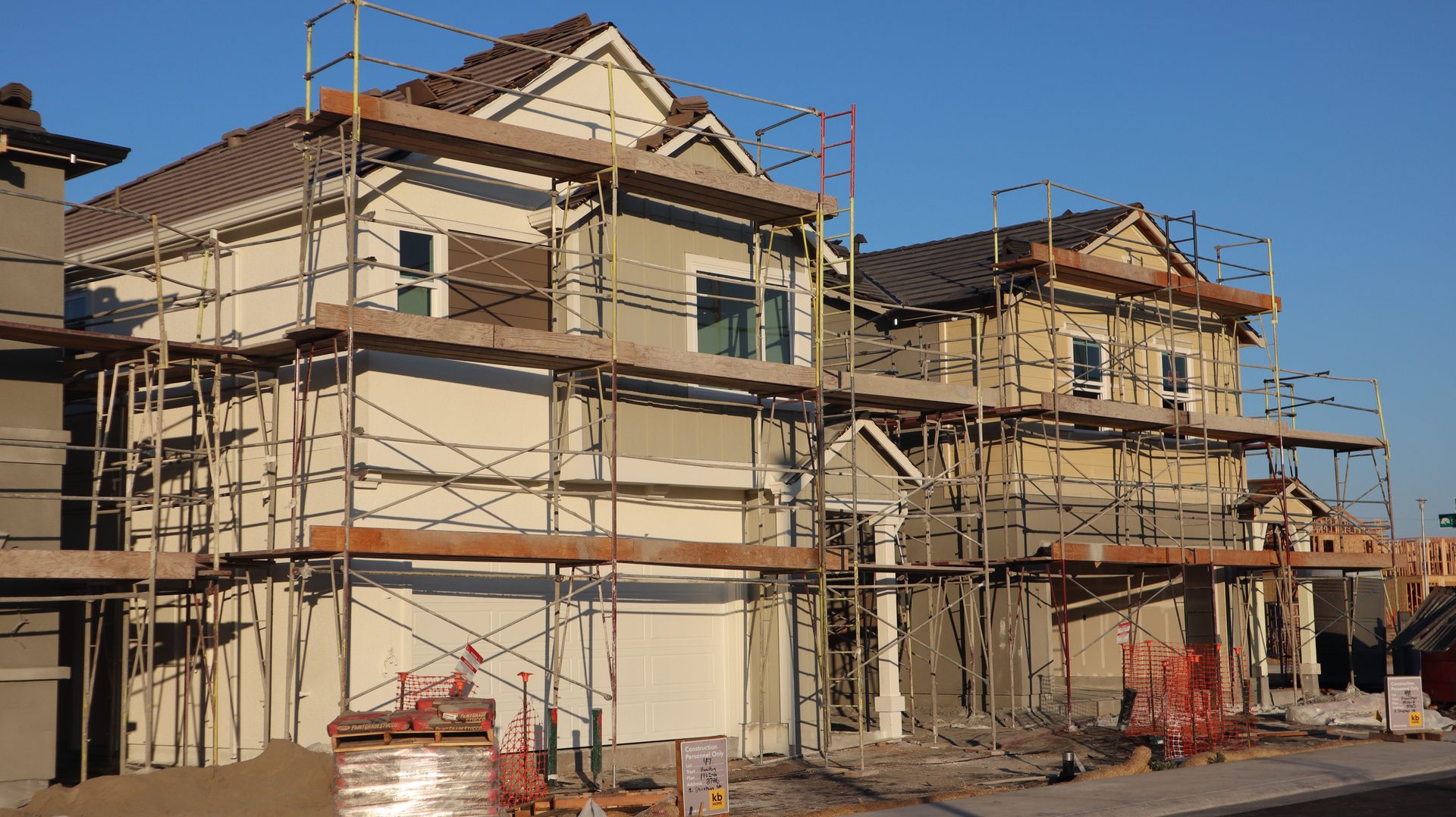
Vancouver consistently ranks among the most expensive cities in the world to build a home — and the numbers behind that reputation are striking. Whether you’re dreaming of a custom build in Kitsilano or a new family home in North Vancouver, understanding the full cost picture before you break ground can save you from serious budget surprises.
This guide walks you through everything you need to know about building a house in Vancouver: average total costs, per-square-foot breakdowns, land prices, the key factors driving your budget, and practical strategies to keep costs under control. All figures are in Canadian dollars unless otherwise noted.
Average Cost to Build a House in Vancouver
The average custom home build cost in Vancouver typically ranges between $450 and $800 per square foot, though these figures can vary widely depending on design complexity, materials, and location specifics. When you translate that into real project dollars, the totals climb fast.
A custom home sized between 2,000 and 2,500 square feet can carry construction costs ranging from $900,000 to over $1.75 million. When you factor in land and permits, budgets may reach $1.2 million to over $5 million, especially in premium areas like Vancouver West.
Standard-sized lots in Vancouver are typically 33 x 122 feet, and single-family homes on these lots are approximately 2,800 square feet. The cost of constructing a quality-built custom home on a standard-sized lot ranges from CAD $980,000 to CAD $1.4 million, while a high-end custom home on the same lot starts at CAD $1.4 million.
Key Insight: Construction costs in Vancouver are among the highest in Canada. According to the Altus Group’s 2025 Canadian Cost Guide (as cited by the Canadian Condominium Institute), residential construction in Vancouver averages $330–$405 per square foot for multi-unit buildings up to 12 storeys — and custom single-family homes run considerably higher.
For context on the broader Metro Vancouver market, the average home price in Greater Vancouver was $1,201,123 in March 2026, while the average sale price of detached houses reached $1,988,579 — a 7.1% decrease from March 2025. Building new does not automatically mean building cheaper, especially once land is included.
Cost to Build a House Per Square Foot in Vancouver
Per-square-foot pricing is the most common way builders and homeowners talk about construction costs, but it’s important to understand what that number actually includes — and what it often leaves out.
The range of costs breaks down roughly by build tier: basic projects with simpler designs and standard finishes start around $450 per square foot; mid-range builds with upgraded finishes and custom design elements run around $650 per square foot; and upscale custom homes featuring premium materials, advanced technology, and bespoke features can push beyond $800 per square foot.
| Build Type | Cost Per Sq Ft (CAD) | Example Total (2,500 sq ft) |
|---|---|---|
| Spec / Entry-Level | $185–$315 | $462,500–$787,500 |
| Standard Quality Custom | $450–$600 | $1,125,000–$1,500,000 |
| Mid-Range to Upscale Custom | $600–$800 | $1,500,000–$2,000,000 |
| High-End Luxury Custom | $800–$1,000+ | $2,000,000+ |
Spec builders — developers constructing a single-family home for resale — might pay their trades between $185 and $315 per square foot in Vancouver. However, these low prices do not include many additional construction costs such as design, management, some finishes, landscaping, and appliances.
While typical construction costs for single-family homes may range from $275 to $550 per square foot depending on materials and complexity, prime residential lots in major cities often start well above a million dollars, reflecting the premium placed on location.
Important Note: Per-square-foot quotes from builders are not standardized. One builder’s $500/sq ft may include permits and design fees; another’s may not. Always ask for a detailed scope document listing every inclusion and exclusion before signing anything.
Regional variation within Greater Vancouver also matters. West Vancouver custom homes often command the upper end of the market, with build costs ranging from $600 to $900 per square foot. North Vancouver offers custom home build costs generally between $450 and $750 per square foot. Burnaby presents competitive pricing with custom home costs typically ranging from $400 to $700 per square foot.
Cost Breakdown: What You’re Actually Paying For in Vancouver
A Vancouver home build involves far more than lumber and labour. Understanding where your money goes at each stage helps you budget realistically and avoid being blindsided mid-project.
Foundation work — including excavation, pouring the concrete foundation, and any necessary waterproofing — typically costs $15,000 to $25,000. The type of foundation (slab, crawl space, or full basement) affects the cost.
Framing, which forms the skeleton of your house including walls, floors, and roof structures, runs $20,000 to $50,000. More complex designs or multi-story homes will increase framing costs. HVAC, electrical, and plumbing systems together typically cost $30,000 to $75,000.
- Design and Architecture: Typically 3–7% of total construction cost
- Foundation: $15,000–$25,000
- Framing: $20,000–$50,000
- HVAC, Electrical, and Plumbing: $30,000–$75,000
- Interior Finishes: Varies widely based on material choices
- Landscaping: $15,000 and up for most homes
- Permits and Development Cost Charges: See below
Permits and fees deserve special attention in Vancouver. A typical house in Vancouver carries a building permit fee, development cost levy, utility development cost levy, Metro Vancouver development cost charge, Translink development cost charge, and a density bonus fee (applicable to multiplex projects).
Development Cost Charges vary widely. Vancouver’s DCCs for a single-family home can exceed $80,000, while some Fraser Valley municipalities charge under $20,000. Permitting timelines also affect cost indirectly — longer waits mean extended carrying costs on land and construction financing.
Energy efficiency compliance adds another layer. BC’s Energy Step Code compliance adds roughly $15 to $40 per square foot depending on the step level. Vancouver currently mandates Step 3 for Part 9 residential buildings, and the province is moving toward net-zero-ready requirements by 2032.
Hidden and additional expenses — such as permits, inspections, and landscaping — often add an extra 15–25% to your overall budget. Building a contingency fund of at least 10–15% on top of your base construction estimate is strongly recommended. You may also want to explore how much it costs to build a greenhouse if you’re planning additional structures on your property.
Pro Tip: Ask your builder to separate hard construction costs from soft costs (design, permits, engineering) in their quote. This makes it far easier to compare bids apples-to-apples and identify where you can trim without cutting into build quality.
Cost of Land in Vancouver
In Vancouver, land is often the single largest line item in your entire budget — and it’s the one cost you have the least control over once you’ve chosen your neighbourhood.
In BC, land prices vary significantly by region. In Metro Vancouver, a buildable lot typically costs between $800,000 and $2.5 million. Land in metropolitan centres or popular suburban towns can surpass the cost of constructing a custom home. Prime residential lots in major cities often start well above a million dollars, reflecting the premium placed on location.
Expect to pay between $50 and $200 or more per square foot for land in Vancouver, with prime lots in regions like Vancouver West costing millions — think $2.5 million to $2.8 million for a 2,500 square foot lot.
In BC’s cities, high land values are driven primarily by limited availability, restrictive zoning, and strong market demand in desirable locations. Land in metropolitan centres or popular suburban towns can surpass the cost associated with constructing a custom home.
| Location | Typical Buildable Lot Price (CAD) |
|---|---|
| Vancouver (City Proper) | $1,500,000–$2,800,000+ |
| West Vancouver | $2,000,000–$4,000,000+ |
| North Vancouver | $1,200,000–$2,500,000 |
| Burnaby / Coquitlam | $800,000–$1,800,000 |
| Surrey / Langley | $500,000–$1,200,000 |
Houses in Vancouver appreciate based on the land — and Vancouver land is scarce. As the city continues to grow upward, not outward, land remains the most valuable piece of the puzzle. That scarcity is a key reason why land costs dominate the total build budget in ways that don’t apply to most other Canadian cities.
If you’re comparing housing costs across different cities, it’s worth looking at apartment costs in Vancouver as a baseline for understanding the local market, or checking how costs compare in other metros like San Francisco or Manhattan.
Factors That Affect Building Costs in Vancouver
No two builds in Vancouver cost the same, even on adjacent lots. A wide range of variables push costs up or down, and understanding them helps you make smarter decisions before you commit.
Labour Availability and Wages
Labour already makes up 20–40% of project costs in BC, and wage growth is set to outpace most other industries. Competition for skilled workers further pushes overall construction costs higher. Skilled labour shortages in Vancouver are further contributing to rising construction costs. Labour is a significant aspect of the cost structure, especially for complex custom projects.
Design Complexity and Finishes
High-end custom cabinetry, hardwood flooring, luxury appliances, and premium exterior finishes can significantly raise the price per square foot. On the other hand, opting for more standard materials can help manage costs without compromising quality or style.
Site Conditions
Vancouver has higher construction costs due to elevated land values that drive up Development Cost Charges, stricter energy efficiency requirements under BC Energy Step Code, higher skilled-labour rates, and longer municipal permitting timelines. Site access constraints on narrow lots also add cost.
Seismic and Energy Requirements
Policy changes and regulations — including requirements related to building sustainability such as the change from BC Energy Step Code 3 to Step Code 4 — and building performance requirements that necessitate high-performance glazing or a certain level of air-tightness all add cost. New seismic requirements are also having a big impact on construction costs, as BC is more seismically vulnerable than Ontario and thus has more stringent requirements.
Tariffs and Material Costs
Tariff pressures and supply-chain uncertainties continue to impact Canada’s construction sector. The new round of US tariffs on steel, aluminum, and metal materials — and Canada’s corresponding counter-tariffs — have increased costs for many materials.
Common Mistake: Relying on cost estimates from friends or family who built several years ago. Many people rely on years-old pricing information from friends or relatives who built homes in the past. Prices for materials, labour, and land have gone up significantly in Vancouver in the last decade, especially in the last 3–5 years.
Project Timeline
Most custom homes in Metro Vancouver take 10 to 18 months from building permit approval to occupancy. Pre-construction — design, engineering, and permitting — adds another 4 to 8 months depending on the municipality. Every month of delay carries additional financing costs, which is why timeline management directly affects your bottom line.
Building vs. Buying a House in Vancouver
For many families, the decision between building and buying an existing home in Vancouver comes down to more than just price — it’s about control, timing, and long-term goals.
The choice between building and buying varies significantly across BC. In Vancouver, land scarcity makes building exceptionally expensive, often favouring existing home purchases. In suburban areas like Richmond, Surrey, or Burnaby, building lots may be more accessible and affordable.
| Factor | Building New | Buying Existing |
|---|---|---|
| Upfront Cost | Very high (land + construction) | High, but more predictable |
| Customization | Complete control | Limited without major renovation |
| Timeline | 14–26 months total | 30–90 days typical closing |
| Energy Efficiency | Built to current Step Code standards | Older homes may need upgrades |
| Hidden Costs | Permits, DCCs, overruns | Inspection issues, PTT, agent fees |
| Warranty | New Home Warranty (BC) | Buyer beware on older homes |
When buying an existing home in Vancouver, you face significant transaction costs of your own. BC’s Property Transfer Tax is a major expense many buyers overlook. You’ll pay 1% on the first $200,000, 2% on the portion from $200,001 to $2 million, and 3% on amounts over $2 million. First-time homebuyers can claim exemptions on properties under $500,000.
The benchmark price of detached houses in Vancouver was $1,854,800 in March 2026, meaning a PTT bill on a typical detached purchase alone can exceed $50,000. When you’re spending that kind of money on transaction costs, building new starts to look more financially logical — provided you have the time and patience for the process.
Building makes the most sense if you want complete design control, plan to stay long-term, and have a flexible timeline. Buying is better if you need to move quickly, prefer a known cost, or are targeting a specific established neighbourhood where no vacant lots exist. For a sense of what the rental market looks like while you wait for your build to complete, see Vancouver apartment costs or compare to markets like Washington DC and Miami.
Pro Tip: If you’re seriously comparing building vs. buying, model both scenarios with a mortgage broker. Include land carrying costs, construction financing interest, and your current rent during the build period. The true cost comparison is rarely as simple as “build price vs. listing price.”
How to Save Money When Building a House in Vancouver
Vancouver’s construction costs are not negotiable in any broad sense — but there are smart, proven strategies that can meaningfully reduce your total spend without sacrificing the quality of your finished home.
1. Simplify Your Design
Complex rooflines, irregular floor plans, and multi-level layouts all increase labour and material costs. Rectangular or L-shaped footprints with standard ceiling heights are significantly cheaper to build per square foot than architecturally dramatic designs. The complexity of the design significantly contributes to the overall cost of construction. Basic designs with standard layouts are generally less expensive than custom designs. Elaborate features such as vaulted ceilings, large windows, or open floor plans will increase both material and labour costs.
2. Choose Your Finishes Strategically
You don’t have to compromise on everything to stay on budget. Prioritize high-quality finishes in the spaces you use most — kitchen, primary bathroom, and main living areas — and opt for standard materials in secondary bedrooms, utility rooms, and storage spaces. Your home style will impact both its cost now and its resale value later. If you’re not married to a particular style, consider going with a mid-century modern, farm style, or craftsman style, as all allow you to get away with lower costs on interior finishes.
3. Get Multiple Comparable Quotes
Ask each builder to price the same scope with the same finish schedule, allowance amounts, and exclusions list, then compare line-by-line rather than just the bottom number. If one bid looks cheaper, it is often because something is missing, under-allowed, or assumed differently. A lower headline number is not always a better deal.
4. Build in the Right Neighbourhood
The cost of building in BC can fluctuate based on where you’re building. Custom homes in areas like Vancouver and West Vancouver are more expensive due to higher demand and stricter building codes, whereas cities like Chilliwack and Kamloops offer more budget-friendly options. If your lifestyle allows flexibility on location, building in Burnaby, Coquitlam, or Surrey can save hundreds of thousands on land alone.
5. Understand Energy Code Compliance Costs Early
Higher Energy Step Code levels demand better insulation values, triple-pane windows, heat recovery ventilators (HRVs), and blower-door airtightness testing. Compliance adds roughly $15 to $40 per square foot depending on the step level. Knowing this upfront lets you budget accurately rather than discovering it mid-design.
6. Lock In Prices Early and Manage Your Timeline
Skilled labour is a key part of any successful custom build. Working with an experienced, reputable builder helps keep the project on track and avoids delays, which can otherwise lead to unexpected expenses. Quality craftsmanship is worth the investment, as it directly impacts the longevity and value of your home.
7. Plan for Contingencies
Even well-managed builds encounter surprises — unexpected soil conditions, permit delays, or material substitutions. Build a contingency reserve of at least 10–15% of your total construction budget before you start. Treating this as a non-negotiable line item, rather than a last resort, is one of the most effective ways to avoid financial stress mid-build.
Key Insight: Incorporating modern, sustainable features not only reduces ongoing costs but also adds long-term value to your investment. Energy-efficient systems may cost more upfront but typically pay back through lower utility bills and higher resale values — a worthwhile trade-off in Vancouver’s climate.
Building a house in Vancouver is one of the most complex and expensive undertakings you can take on as a homeowner, but it also gives you something no existing home can: a property built exactly to your specifications, meeting today’s energy and safety standards, in one of the world’s most desirable cities. Going in with accurate numbers, a realistic contingency, and the right builder makes all the difference between a dream project and a financial nightmare. For more housing cost comparisons across North America, explore what renters pay in cities like Honolulu, New Jersey, and Phoenix.