Beijing Apartment Costs: What You’ll Actually Pay to Rent or Buy

April 29, 2026
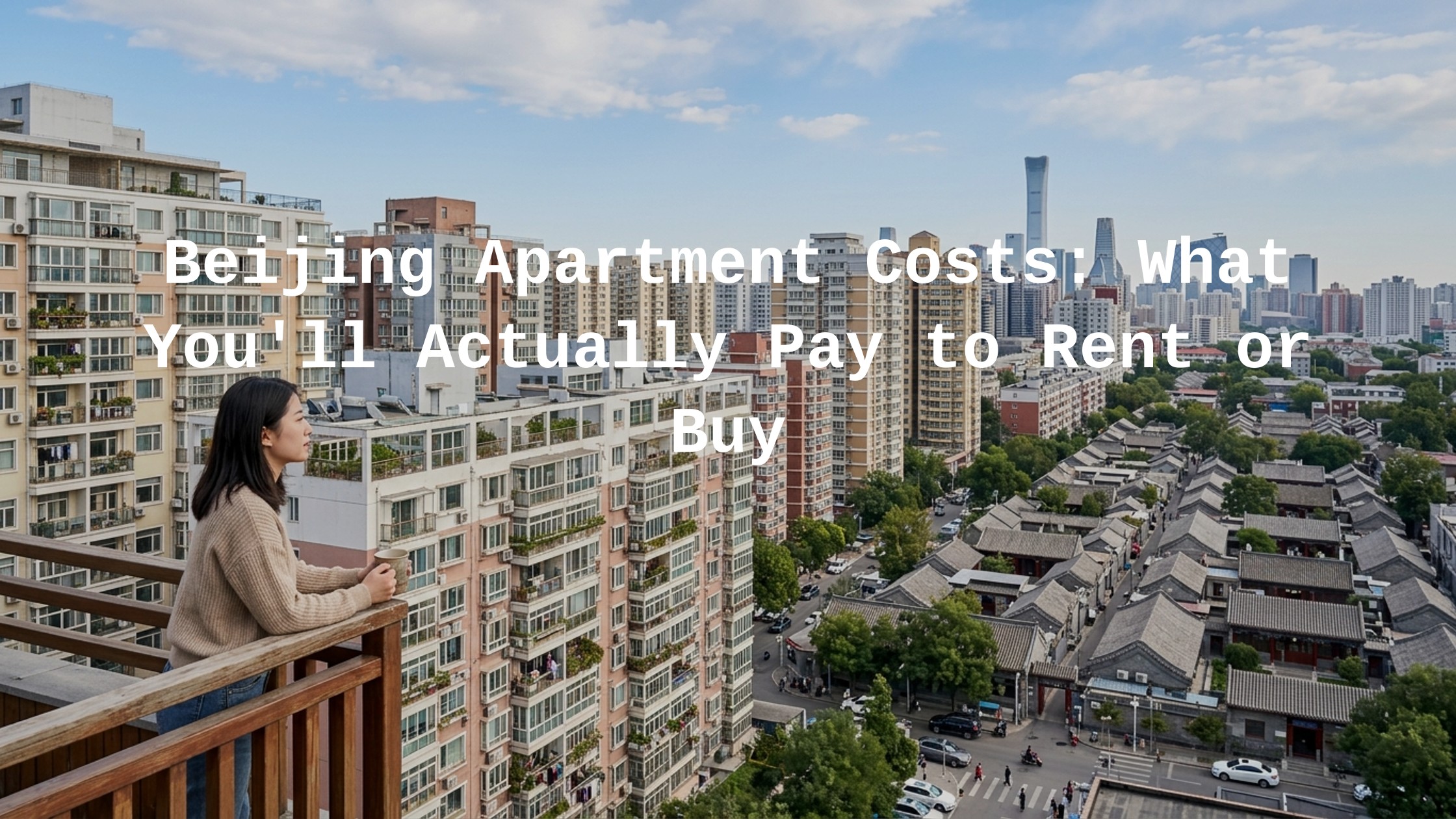
Beijing is one of the most expensive cities in Asia, and its housing market reflects that status in full. Whether you’re planning a short-term stay or a permanent move, understanding what apartments actually cost here can save you from serious financial surprises.
In this guide, you’ll find up-to-date rent and purchase price ranges by apartment size, a breakdown of the cheapest and most expensive neighborhoods, a comparison with other major global cities, and practical tips for finding a place to live — including the rules foreigners must follow if they want to buy.
Average Rent in Beijing by Apartment Size
Rent is one of the biggest living expenses in Beijing. Prices vary dramatically depending on location, building quality, and how close you are to the city center — but here’s a reliable baseline to work from.
The city-wide simple average across all unit types and districts runs roughly ¥6,000–¥8,500 per month (approximately USD $850–$1,200). However, that average masks a wide spread between central and suburban areas.
| Apartment Size | City Center (Monthly) | Outside City Center (Monthly) |
|---|---|---|
| Studio / Small 1-Bed | ¥5,000–¥8,000 (~$690–$1,100) | ¥2,500–¥4,500 (~$345–$620) |
| 1-Bedroom | ¥8,000–¥15,000 (~$1,100–$2,070) | ¥4,000–¥7,000 (~$550–$970) |
| 2-Bedroom | ¥10,000–¥20,000 (~$1,380–$2,760) | ¥6,000–¥10,000 (~$830–$1,380) |
| 3-Bedroom | ¥15,000–¥30,000 (~$2,070–$4,140) | ¥8,000–¥15,000 (~$1,100–$2,070) |
| Luxury / Villa | ¥30,000–¥80,000+ (~$4,140–$11,000+) | ¥20,000–¥40,000 (~$2,760–$5,520) |
Rent for a one-bedroom apartment in central areas like Chaoyang or Dongcheng is between 8,000 to 15,000 yuan per month. Further out of the central area, in areas like Tongzhou or Changping, rent can drop to 4,000 to 7,000 yuan.
For families, a 3-bedroom home in Beijing can range from 15,000 to 30,000 yuan, depending on the area. If you’re open to a suburban location with a subway commute, you can find comfortable options at the lower end of these ranges.
Pro Tip: Expats seeking furnished apartments in central districts should expect to pay toward the upper end of these ranges. Local-market unfurnished units are considerably cheaper — so if you’re staying long-term, going unfurnished can save you thousands per year.
On top of base rent, factor in monthly utility fees. For an 85 m² flat, monthly fees for electricity, trash, water, and heating typically run about RMB 200 to 520 (approximately USD $30–$75). Internet with unlimited data adds another RMB 90–300 per month (approximately USD $13–$44).
Average Apartment Purchase Price in Beijing
Property prices have been increasing steadily over the past decade, and foreigners will find that both buying and renting accommodation in Beijing can cost a huge amount of money. Purchasing an apartment outright is an entirely different financial undertaking from renting.
The price per square meter for a flat located in the center of Beijing or a short distance from the center is typically from RMB 100,000 to 180,000 (approximately USD $14,500–$26,100). By opting for a similar flat outside the city center, you can count on costs usually in the range of RMB 50,000–100,000 per m².
To put that in practical terms for a full apartment purchase:
| Apartment Type | Estimated Purchase Price (USD) | Estimated Purchase Price (RMB) |
|---|---|---|
| Studio / Small 1-Bed (central) | ~$290,000–$520,000 | ~¥2–3.7 million |
| 2-Bedroom (central) | ~$400,000–$700,000 | ~¥2.8–5 million |
| 3-Bedroom (central) | ~$600,000–$1 million+ | ~¥4.3–7 million+ |
| Simple apartment (any district) | ~$413,000–$551,000 | ~¥3–4 million |
For those looking to buy property, house prices in Beijing are sky-high. Depending on the district, a simple apartment can cost 3–4 million yuan, making home ownership out of reach for many people living in Beijing.
According to the China National Bureau of Statistics, the average property price in Beijing was reported at 25,204 RMB per square meter as of early 2026. That figure represents a significant correction from the peak — the all-time high was 42,343 RMB/m² in June 2021.
Key Insight: In China, residential property ownership comes with a 70-year land use right — not permanent freehold ownership. This is a critical distinction to understand before committing to a purchase.
Cost of Renting vs. Buying in Beijing
Beijing’s price-to-rent ratio is notoriously high, meaning you pay a huge premium to own versus rent. According to Numbeo data, the price-to-rent ratio in Beijing’s city center is 49.39, and the price-to-income ratio sits at 29.73. These numbers indicate that renting is typically the more financially rational short-to-medium-term choice for most people.
There is a widely observed reason why rent is so much cheaper in China compared to purchase price: units in Beijing can sell for a few million yuan while monthly rent is only a few thousand yuan. This disconnect makes buying primarily an investment decision rather than a housing cost decision.
- Renting advantages: Lower upfront cost, flexibility, no maintenance liability, and no exposure to property market risk
- Buying advantages: Long-term asset, protection against rent inflation, potential appreciation, and stability for families
- Buying disadvantages: Enormous upfront capital required, limited to 70-year land use rights, complex rules for foreigners, and a currently soft market
According to the People’s Bank of China (PBOC), annual rental inflation in China exceeded 1.2% in the pre-pandemic decade but has slowed significantly in recent years and has been negative since early 2024. This means renters are actually in a favorable position right now, with prices softening in many districts.
For most expats and newcomers, renting for at least the first year makes strong financial sense. You get to learn the city, identify the neighborhoods that suit your lifestyle, and avoid a rushed purchase in an unfamiliar market. If you want to explore the different types of apartments available before committing, that research pays off in Beijing’s highly varied housing stock.
Cheapest and Most Expensive Neighborhoods in Beijing
Beijing is structured around a series of ring roads radiating outward from the historic center. The closer a property is to the city center, the pricier it will be. Beijing is organized according to ring roads, with the first ring road closest to the city center. If housing in a particular area is proving too expensive, house hunters should move their search toward the periphery — distance equals savings.
Most Expensive Neighborhoods
Dongcheng District tops all districts in the city, with rent for a one-room apartment averaging around ¥6,000 ($849), followed by Xicheng District at an average of ¥5,800 ($820) for a one-room apartment. Both districts sit within the Second Ring Road, where many of Beijing’s long-established residents live.
Most expat professionals live in Chaoyang District, the center of international dining, expat community, and nightlife. Modern apartments and luxury residences are common here, with more English-speaking services available, attracting young professionals, diplomats, and couples. The CBD area within Chaoyang is particularly pricey, with serviced luxury apartments near China World and Beijing SKP malls commanding premium rates.
In tech-heavy areas like Wangjing, you can expect to pay about RMB 17,000 for a two-bedroom apartment, as high-tech workers who earn well are willing to pay more for housing nearby.
Most Affordable Neighborhoods
Compared to Dongcheng District, which has some of the most expensive housing, you can get a place twice as big in Tongzhou for the same amount of money. Suburban areas offer more affordable options with rents averaging around ¥3,500/month, and popular suburban areas like Tongzhou or Changping are connected to the city center via Beijing’s extensive subway system.
Haidian District, where parents flock to buy or rent near some of the best schools in the city, offers a middle ground — stretching from the Second Ring Road to the Fifth Ring Road with average rent for a one-room apartment around ¥5,600 ($792).
Important Note: The difference in rent isn’t just about distance and size — it’s also about nearby facilities and the environment. Proximity to international schools, hospitals, and metro lines all push prices up significantly within the same district.
What Affects Apartment Prices in Beijing
Several factors drive the wide price variation you’ll see when browsing listings in Beijing. Understanding these levers helps you make smarter trade-offs when searching.
- Location and ring road proximity: Proximity to subway lines and the CBD raises rent significantly. Each ring road outward generally means lower prices.
- Unit size and layout: Two-bedroom and larger units have higher per-unit cost but sometimes a lower per-square-meter cost — making bigger apartments better value per square foot in some cases.
- Building class and amenities: New gated communities, serviced apartments, and properties with gyms or concierge services command higher prices.
- Furnishing status: Furnished apartments, especially those targeting expats, carry a premium of 20–40% over comparable unfurnished units.
- School catchment areas: Properties near top-rated schools in Haidian and Chaoyang attract significant demand premiums from families.
- Market conditions: Beijing, Shenzhen, Shanghai, Hangzhou, and Guangzhou remain the most expensive urban centers, though all five cities recorded a drop in average rents over the last twelve months.
Broader market forces also play a role. According to Savills, over 200 housing leasing-related policies were introduced at the local level in 2024, focusing on enhancing industry regulation and strengthening policy support to improve the rental housing environment from both supply and demand sides. These policy shifts are gradually reshaping what renters and buyers can expect.
If you’re working with a tight budget, it’s worth reading up on ways to cut your overall living costs to offset Beijing’s high housing prices.
How Beijing Compares to Other Major Cities
Beijing sits firmly among the world’s most expensive cities for housing — but how does it stack up against other major metros?
| City | Avg. 1-Bed Rent (City Center) | Avg. Price per m² (Buy) | Notes |
|---|---|---|---|
| Beijing | ¥8,000–¥15,000 (~$1,100–$2,070) | ~¥100,000–¥180,000/m² | Capital city premium; high price-to-rent ratio |
| Shanghai | Slightly higher than Beijing | Comparable to Beijing | Living in Beijing is about 9% cheaper than Shanghai overall |
| Tokyo | Comparable to Beijing | Lower than Beijing | Cost of living in Beijing is about 27% cheaper than in Tokyo |
| Berlin | Higher than Beijing | Lower than Beijing | Rent in Beijing is on average 31.7% lower than in Berlin |
| Kathmandu | Significantly lower | Significantly lower | Much more affordable regional alternative |
Beijing is the capital city of China, so the cost of living may be higher than in other Chinese cities — however, it is comparable to living in cities like Warsaw. For context, second- and third-tier Chinese cities like Chengdu, Xi’an, or Chongqing offer dramatically lower rents — often 40–60% less than Beijing for comparable units.
If you’re curious how Beijing’s costs compare to another Asian capital, check out this breakdown of apartment costs in Kathmandu for a contrasting perspective.
Key Insight: Major cities like Beijing and Shanghai are known as “super first-tier” cities with competitive and fast-paced rental markets, offering a wide variety of housing types and services. If you want lower costs, tier-2 cities offer a very different experience.
Can Foreigners Buy an Apartment in Beijing?
Yes — but with significant restrictions. China allows foreigners to purchase residential property, but the rules are strict and the process is more complex than for Chinese nationals.
Here are the key requirements and rules you need to know:
- Residency requirement: You must have lived and worked (or studied) in China for at least one year before you are eligible to purchase residential property.
- One property limit: Foreigners are generally limited to purchasing one residential property for personal use — not for investment or rental income purposes.
- No land ownership: By law, property buyers in China only have 70 years of ownership rights on the land. You own the structure, not the land beneath it.
- Financing challenges: Getting a mortgage as a foreigner is difficult. Most foreign buyers are expected to pay in cash or arrange financing through international banks.
- Tax obligations: Property purchase taxes, deed taxes (typically 1–3%), and stamp duties apply to all buyers.
- Hukou restrictions: Some districts have additional restrictions tied to the local household registration system (hukou), which can affect which properties you’re eligible to buy.
Some expats or locals with higher incomes choose to buy instead of rent, but they need to plan carefully. Given the complexity, working with a bilingual real estate lawyer is strongly recommended before signing any purchase agreement.
Real estate prices in China have recently increased, and places such as Beijing and Shanghai are considered very expensive places to live, mainly due to the prices of flats and houses. That said, the current market softness may present a window of opportunity for well-positioned buyers.
Before committing to a purchase, make sure you’ve also thought through the essential features every big-city apartment should have — especially in a market as competitive as Beijing’s.
Tips for Finding an Apartment in Beijing
Finding the right apartment in Beijing requires a mix of online research, local expertise, and networking. Here’s how to approach the search strategically, whether you’re renting or buying.
Use the Right Platforms
Ziroom offers professionally managed apartments, while Beike is another reliable platform for rentals. For expat-focused listings, platforms like The Beijinger and Expatistan provide both listings and community insights. Joining WeChat groups, Reddit’s r/chinalife, or The Beijinger community can also yield valuable advice and recommendations from people already living there.
Work With a Local Agent — Carefully
People who don’t know the area and the language are advised to hire a real estate agent who will help in choosing the best apartment. There are many real estate agencies in Beijing, so it is best to ask your friends for recommendations. However, watch the fees: a real estate agent charges a commission that sometimes reaches 100% of the monthly rent, and Beijing agencies charge some of the largest commissions.
Understand the Upfront Payment Structure
One thing always catches newcomers off guard: the upfront payment. Landlords want three months’ rent plus a month’s deposit before you get the keys. Budget for this before you start viewing apartments — it’s a significant cash outlay before you’ve even moved in.
Inspect Carefully Before Signing
When visiting potential apartments, check proximity to work, schools, and public transportation; look for signs of damage, mold, or needed repairs; ensure the apartment has essentials like heating, air conditioning, and internet; and visit at different times of the day to assess noise levels.
Negotiate Your Lease Terms
Landlords often expect negotiation. Offering to pay several months upfront or signing a longer lease can help you lower the monthly rent. This is especially true in the current softer market, where landlords have more vacancies to fill.
Watch Out for Red Flags
- Beware of fake listings — if a deal seems too good to be true, it probably is.
- Verify that the person you’re dealing with is the actual owner or an authorized agent.
- Ask about management fees, utility deposits, or other additional costs upfront.
Pro Tip: Compare per-square-meter prices (¥/m²) within a defined district to detect bargains and verify listing legitimacy. This is one of the most reliable ways to spot overpriced listings or confirm you’re getting a fair deal.
Beijing’s housing market rewards patience and preparation. Whether you’re renting a compact studio in Tongzhou or considering a purchase in Chaoyang, the more time you invest in understanding the market before committing, the better your outcome will be. For more inspiration on making the most of urban apartment living, check out these apartment-friendly lifestyle ideas and urban living essentials to help you settle in comfortably.