8 Dishes That Make Up a Traditional Mediterranean Breakfast Table

November 22, 2026
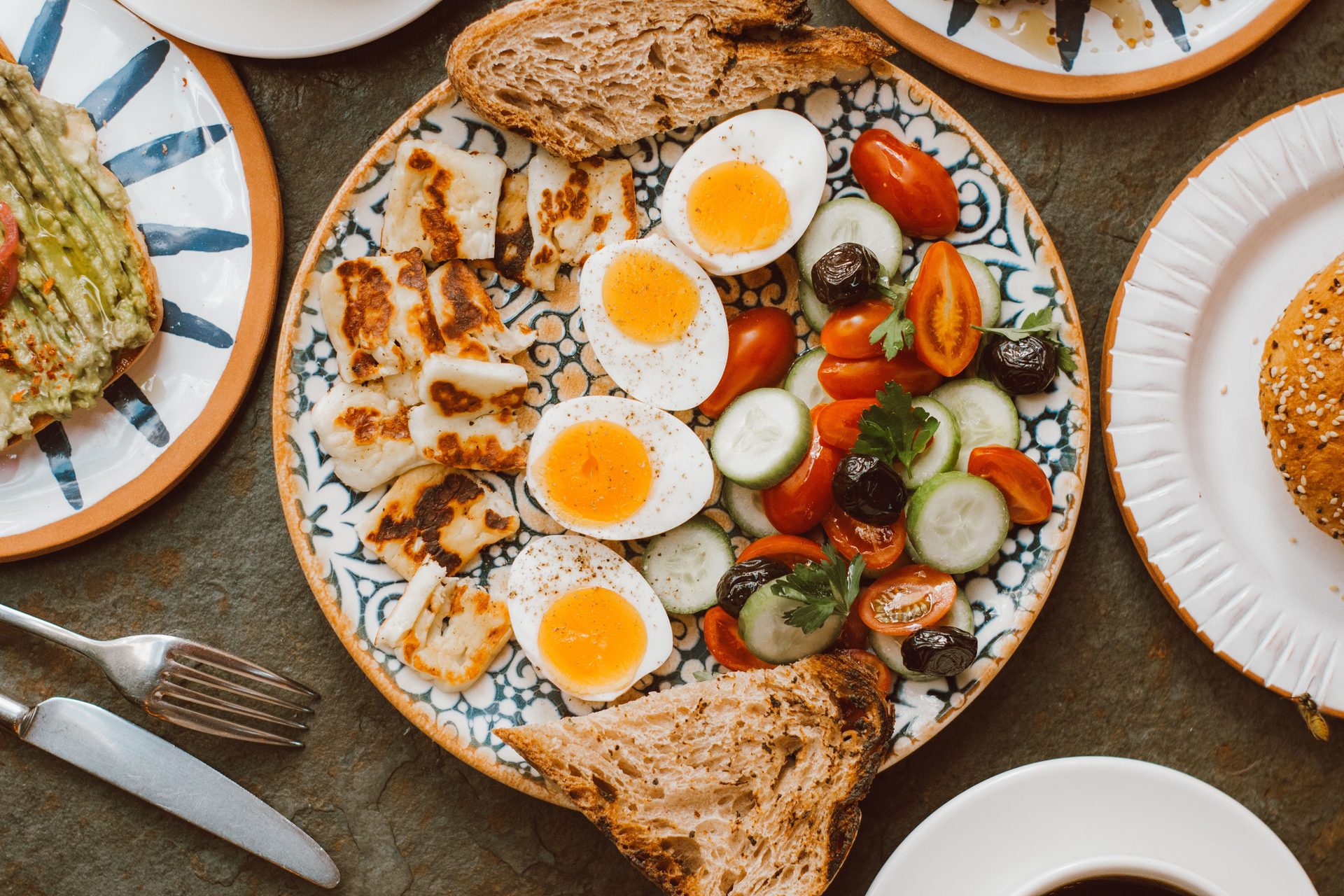
A traditional Mediterranean breakfast rarely looks the same twice. One morning it might be a single slice of bread rubbed with ripe tomato in a Barcelona kitchen; the next, it’s a low table crowded with a dozen small plates in an Istanbul apartment. What ties these meals together isn’t a shared recipe but a shared logic: fresh produce, good bread, salty cheese, and time set aside to actually sit and eat it.
This spread of habits stretches well past the Mediterranean coastline too. Walk into a Balkan kitchen in Albania or Kosovo and you’ll spot the same instincts at work: olives, white cheese, warm bread, and glasses of tea shared slowly around a table. The eight dishes below trace that thread from Italy and Spain through Turkey and the Levant, showing how one region’s morning meal became a loose, flavorful tradition spanning several cultures. For a broader look at how other cultures start their day, this roundup of breakfast traditions is worth a look too.
1. Pane E Pomodoro
In Italy, the simplest breakfast often beats the elaborate one. Pane e pomodoro, literally “bread and tomato,” pairs toasted or day-old bread with ripe tomato, a drizzle of olive oil, and a pinch of salt. It’s the Italian cousin of the Spanish tomato toast found a little further south, built on the same two ingredients: good bread made from wheat (Triticum aestivum) and a ripe tomato (Solanum lycopersicum), rubbed or chopped directly onto the crust.
The dish leans on quality rather than technique. A stale loaf, a sun-warmed tomato, and a good olive oil can turn a few scraps into something satisfying, which is exactly why Italian home cooks have relied on it for generations rather than letting bread go to waste. Basil or a scrape of garlic sometimes joins the mix, but the core stays fixed: bread, tomato, oil, salt. Bread cultures across southern Europe share this same instinct for stretching simple ingredients into something worth eating, a tendency also visible in traditional French breakfast staples built around little more than bread, butter, and fruit preserves.
Pro Tip: Use bread that’s a day or two old for pane e pomodoro. Fresh bread turns mushy fast, while slightly dried bread soaks up the tomato juice without falling apart.
2. Pan Con Tomate
Spain’s version of bread and tomato carries its own backstory, one rooted specifically in Catalonia. Historians trace its origins back to the late 19th century, when farmers faced with stale bread found a clever way to soften it, rubbing the crust with garlic and overripe tomato before finishing it with olive oil and salt, according to The Spanish Eye . The earliest written trace of the dish goes back further than most people assume. A food writer who has lived in Spain for over fifteen years notes that the first written reference to pa amb tomàquet appears in 1884, in a text by a Catalan writer named Pompeu Gener.
Regional habits shape how it’s served. In Catalonia, a halved tomato gets rubbed straight onto toasted bread; head south to Andalusia and you’re more likely to get a bowl of grated tomato pulp spooned over the top instead. Either way, the olive oil matters as much as the tomato. Andalusia alone accounts for nearly half of the world’s olive oil supply, which helps explain why the region treats the drizzle on top as non-negotiable.
| Dish | Region | Core Ingredients | Typical Serving Style |
|---|---|---|---|
| Pane e pomodoro | Italy | Bread, tomato, olive oil, salt | Toasted, informal |
| Pan con tomate | Spain (Catalonia/Andalusia) | Bread, tomato, garlic, olive oil | Build-your-own at the table |
| Kahvaltı | Turkey | Cheese, olives, eggs, bread, tea | Shared spread of small plates |
| Shakshuka | North Africa / Levant / Israel | Eggs, tomato, peppers, spices | Served hot in the pan |
| Manakish | Lebanon | Flatbread, za’atar, olive oil | Folded or rolled |
3. Kahvaltı
Turkish breakfast is not a dish at all, but a philosophy of eating. Kahvaltı, literally “before coffee,” refers to the traditional breakfast of Turkey, characterized by a wide variety of small dishes served together, typically blending a multitude of flavors, textures, and food categories, according to Wikipedia’s entry on Turkish breakfast .
What lands on the table varies by household and region, but certain staples show up again and again. A classic spread generally includes the following, according to Go Türkiye’s guide to Istanbul’s breakfast culture :
- Cheese, pastries, dips, and sauces
- Olives in at least two colors
- Eggs, often fried or cooked into menemen
- Fresh tomatoes and cucumbers
- Bread, including simit (sesame-crusted rings)
- Honey and jam, plus kaymak (clotted cream)
The style of eating matters as much as the food itself. Known as serpme kahvaltı when served restaurant-style, the meal is meant to stretch across an hour or more, with guests picking at whichever small plate catches their eye rather than finishing one course before moving to the next.
4. Shakshuka
Few egg dishes have traveled as widely as shakshuka. Eggs are poached directly in a simmering sauce of tomatoes, peppers, onion, and warm spices like cumin and paprika, then served straight from the pan with bread for scooping. The dish is generally traced to North Africa, particularly Tunisia, though it has become closely associated with Israeli breakfast tables and appears across the wider Levant and Maghreb under slightly different names and spice blends.
What makes shakshuka a genuine breakfast dish rather than just a brunch trend is its practicality: one pan, a handful of pantry vegetables, and eggs that cook directly in the sauce rather than needing a separate pot. The tomato-and-pepper base shares DNA with other regional egg dishes further east, including Egypt’s own tomato-and-egg skillets. Readers curious about that side of the table can look at these traditional Egyptian breakfast dishes, often finished with a glass from this list of traditional Egyptian drinks.
Pro Tip: Keep the sauce slightly looser than you think it needs to be before adding the eggs. It thickens fast once the eggs go in, and a too-thick base turns gluey.
5. Manakish
Lebanon’s answer to the breakfast flatbread is manakish, a round of dough topped before baking rather than filled after. The most common version is manakish bi za’atar, spread with a mix of dried thyme, sesame seeds, sumac, and olive oil before it goes into the oven. The thyme used in traditional za’atar blends is often wild thyme (Origanum syriacum), a plant native to the eastern Mediterranean and prized for its sharp, slightly citrusy flavor.
Bakeries across Lebanon, Syria, and Jordan turn out manakish fresh every morning, and the bread is typically eaten folded in half, like a sandwich, rather than cut into slices. Cheese versions topped with akkawi or halloumi are just as common as the za’atar style, and some bakers finish the dough with a layer of ground meat and tomato known as lahm bi ajeen. Either way, the dough itself stays thin and chewy, built to crisp slightly at the edges while staying soft in the center.
6. Turkish Tea
No kahvaltı spread is complete without çay, the strong black tea brewed from leaves of the tea plant (Camellia sinensis) and served in small, tulip-shaped glasses. Turkey takes its tea seriously enough that the drink functions almost as a social ritual. Drinking tea is a social experience and a sign of hospitality across Turkish households, according to Go Türkiye , which also notes that Turks tend to save strong coffee for after the meal rather than drinking it alongside breakfast.
The brewing method matters here. Tea is typically made in a double teapot, called a çaydanlık, where concentrated tea brews in a smaller pot stacked on top of a larger pot of boiling water. Diners dilute their own glass to taste, which keeps the tea flowing hot for hours without anyone needing to leave the table. That same emphasis on shared, lingering tea rituals shows up far outside Turkey too, including in the traditional Chinese drinks built around communal tea service.
7. Greek Yogurt
Thick, tangy, and strained until most of the whey drains away, Greek yogurt has become one of the most recognizable breakfast staples to come out of the Mediterranean. The straining process is what sets it apart from standard yogurt, concentrating the protein and giving it a dense, almost spreadable texture. Most yogurt, Greek-style or otherwise, relies on a fermentation culture built around two bacteria strains, Lactobacillus delbrueckii subsp. bulgaricus and Streptococcus thermophilus, which convert milk sugars into the lactic acid responsible for yogurt’s characteristic tang.
On a Greek breakfast table, it rarely stands alone. A drizzle of honey, a scatter of walnuts, or a spoonful of fresh fruit is the usual finish, turning a simple dairy product into something closer to dessert. Readers who want the fuller picture of how yogurt fits into the country’s wider food culture can find more detail in this guide to traditional Greek foods.
8. Feta Cheese
Feta closes out the Mediterranean breakfast table the way it closes out most Greek meals: salty, crumbly, and often drizzled with a little extra olive oil (Olea europaea) straight from the bottle. Traditional feta is made from sheep’s milk (Ovis aries), sometimes blended with a smaller portion of goat’s milk (Capra hircus), then brined to develop its sharp flavor. Within the European Union, feta holds protected designation of origin status, meaning only cheese produced using traditional methods in specific regions of Greece can legally carry the name.
The habit of starting the day with salty white cheese, olives, and warm bread doesn’t stop at Greece’s borders. Across much of the Balkans, including Albania, mornings follow a similar logic: a block of white brined cheese, a handful of olives, flatbread or byrek pastry, and strong tea or coffee shared around the table. Albanian food culture draws on many of the same Ottoman and Mediterranean influences that shaped Turkish kahvaltı and Greek breakfast tables, which is part of why regional breakfast traditions across this stretch of Europe and the eastern Mediterranean tend to rhyme with one another even when the exact dishes change names at each border.
That overlap is really the point of a traditional Mediterranean breakfast: it was never one fixed menu, but a shared set of ingredients and habits adapted by whoever happened to be at the table that morning. Whether it’s a slice of pane e pomodoro in Rome, a kahvaltı spread in Istanbul, or a plate of feta and olives somewhere in the Balkans, the thread connecting all of it is bread, cheese, and time spent eating slowly rather than rushing out the door. Anyone building their own version at home can borrow freely, the same way a special-occasion breakfast spread or a traditional Japanese breakfast proves that no single country holds the only right way to start the day.