17 Traditional Chinese Breakfast Dishes From Doujiang to Zongzi

November 21, 2026
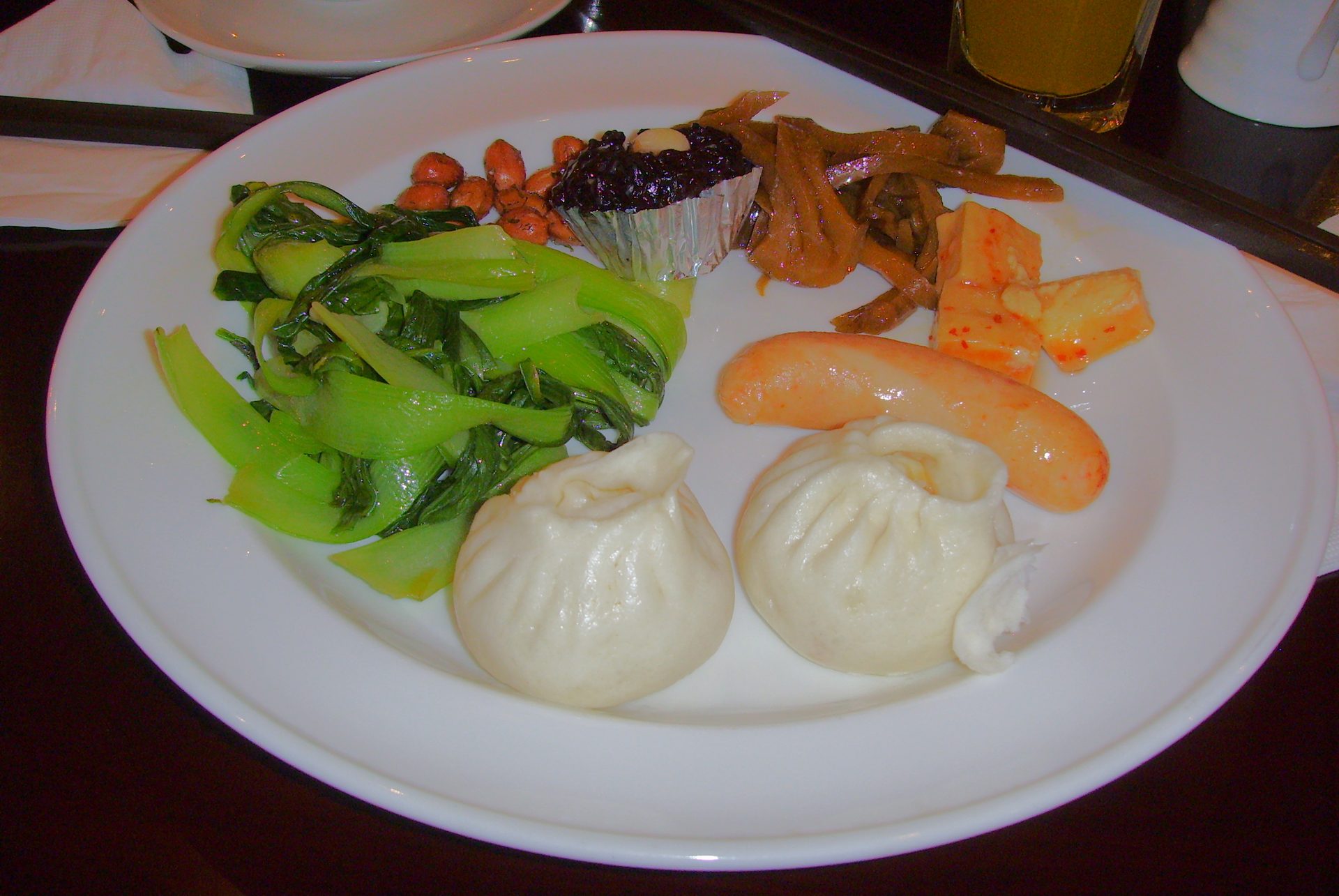
Breakfast in China rarely looks like a bowl of cereal eaten alone at a kitchen counter. A traditional Chinese breakfast is a street-level institution built on hot soy milk, pan-fried dough, steamed buns, and rice in every form imaginable, bought fresh from a stall on the walk to work or school. What ends up on the table changes sharply depending on which city or province you wake up in.
This guide walks through 17 dishes that define Chinese mornings, from soy milk stalls in the north to dim sum carts in Guangzhou and noodle shops in Wuhan. Each one explains what the dish actually is, where it comes from, and how it’s traditionally eaten.
1. Doujiang
Doujiang is fresh soy milk in Chinese cuisine, served hot or cool and in sweet or savory versions. Most mornings it’s ladled straight from a cauldron at a street stall into a disposable cup, still steaming. It’s a common breakfast item served with youtiao, and the two together form one of the most recognizable pairings in Chinese food culture.
The drink’s history runs deep. The earliest known reference to soy milk appears in the Lun Heng , written by Wang Ch’ung in approximately 82 AD. By the time it became a breakfast staple, it was served in two forms: savory xian doujiang, garnished with pickles, dried shrimp, and spring onions, and sweet tian doujiang, simply sweetened with sugar. Both versions still sit side by side at breakfast counters today.
Taiwan’s best-known soy milk chain traces back to a single breakfast stall. In 1955, Li Yun-tseng, a KMT veteran from Shandong, organized his veteran friends to sell soy milk and youtiao at the foot of a bridge for a living. The name “Yong-he Dou-jiang” has since become shorthand for this entire breakfast style. Anyone curious how soy milk fits among other morning drinks can look through this site’s roundup of traditional Chinese drinks.
2. Youtiao
Youtiao is a long, golden strip of deep-fried wheat dough, airy inside with a crisp shell outside — the natural dunking partner for a bowl of doujiang. Youtiao are conventionally lightly salted and easily separated by hand, which is why vendors sell them as joined pairs that pull apart cleanly when torn.
The dish carries one of the more dramatic origin stories in Chinese food. Legend ties it to the Southern Song Dynasty, when a respected general named Yue Fei was betrayed and executed after being falsely accused of treason. Outraged by the betrayal, a fried pastry hawker in Hangzhou pressed two dough sticks together and fried them in boiling oil as a symbolic punishment of the officials blamed for his death. To this day, youtiao are often made as two rolls of dough joined along the middle, one representing the husband and one the wife — a detail covered in more depth on the history of the dish .
The dish traveled well beyond mainland China. In Indonesia, the fried dough is known as cakwe and is commonly chopped and eaten with bubur ayam, or chicken congee. Wherever it lands, the frying method and the dunking habit stay remarkably consistent.
Pro Tip: Youtiao turns soft within an hour of frying, so it’s best bought fresh rather than reheated from the fridge. A quick turn in a dry pan or air fryer brings back more crunch than a microwave ever will.
3. Baozi
Baozi are steamed buns with a filling tucked inside pleated dough, sold hot from bamboo steamers at nearly every breakfast stall. Fillings range from barbecue pork and minced pork with scallion to mushroom, cabbage, or sweet red bean paste. The pleats on top aren’t decorative — they’re how the dough gets sealed before steaming, and a skilled vendor can pinch a dozen tiny folds into one bun.
Shanghai’s pan-fried version, sheng jian bao, swaps the steamer for a flat pan, producing a crisp, browned bottom around a juicy pork filling with a spoonful of broth inside. Paired with a bowl of zhou or a cup of doujiang, baozi forms the backbone of Chinese breakfast culture in cities from Beijing to Guangzhou.
4. Mantou
Mantou is the plain cousin of baozi — a steamed bun with no filling at all, valued for its soft, slightly sweet dough rather than anything tucked inside. Northern Chinese households often treat it the way other cuisines treat bread, tearing off pieces to eat alongside stir-fried dishes, dip into condensed milk, or pair with a bowl of congee.
Regional versions vary in texture: some cities favor a dense, chewy mantou, while others use a longer proof for a pillowy, almost cake-like bun. A deep-fried version, golden and slightly crisp outside, shows up more as a treat than a daily habit. Either way, mantou’s appeal is its simplicity — a blank canvas for whatever sauce or broth happens to be on the table.
5. Xiaolongbao
Xiaolongbao are small steamed soup dumplings associated with Shanghai and the surrounding Jiangnan region, known for the broth hidden inside the wrapper alongside the meat filling. The trick is a gelatin-rich aspic mixed into the pork before steaming; as the dumpling cooks, the aspic melts into liquid broth, so each bite delivers a burst of soup along with the meat.
Eating xiaolongbao properly takes a bit of technique. Most diners lift the dumpling by its pleated top with chopsticks, rest it on a spoon, nip a small hole in the skin to release steam, and sip the broth before eating the rest.
Common Mistake: Biting straight into a hot xiaolongbao without venting it first is the fastest way to burn your mouth on scalding broth. Always let the steam escape through a small bite before eating the whole dumpling.
6. Zhou
Zhou, often translated as congee or rice porridge, is rice simmered in a large volume of water or stock until it breaks down into a thick, smooth gruel. It’s one of the gentlest dishes in Chinese cuisine, which is part of why it’s historically been fed to the very young, the elderly, and anyone recovering from illness, alongside its everyday role as a breakfast food.
What goes on top of the rice varies by region and household:
| Region/Style | Common Toppings | Texture |
|---|---|---|
| Cantonese congee | Century egg, shredded chicken, peanuts | Very smooth, almost silky |
| Chaoshan-style | Fresh seafood, minced pork, grains intact | Looser, less broken down |
| Northern-style | Pickled vegetables, salted duck egg, youtiao pieces | Thicker, hearty |
Whatever the regional style, zhou is almost always eaten with something salty or crunchy on the side — pickles, peanuts, or a torn piece of youtiao dropped straight into the bowl.
7. Wontons
Wontons are thin-skinned dumplings filled with seasoned pork, shrimp, or a combination of both, then boiled and served in a clear broth rather than fried. The wrapper is thinner and more delicate than a dumpling skin, which lets it cook almost instantly and gives the dish a lighter feel than a bowl of noodles.
Cantonese-style wonton soup usually includes a handful of thin egg noodles alongside the dumplings, turning it into a combination dish. Hong Kong’s version leans toward smaller, shrimp-heavy wontons in a broth built from dried flounder and pork bones, while other regions favor a plainer, pork-forward filling in a simpler stock.
8. Miantiao
Miantiao simply means noodles, and as a breakfast dish it usually takes the form of a quick noodle soup — wheat noodles in a light broth with a few vegetables, a soft-boiled egg, or a spoonful of minced pork sauce stirred through. It’s less elaborate than a lunch or dinner noodle dish, built for speed rather than spectacle.
Dry-tossed versions skip the broth entirely, coating the noodles in soy sauce, sesame paste, or chili oil instead, a style especially common in central and southern China. Because wheat noodles cook in minutes, miantiao suits anyone eating breakfast on the way out the door rather than sitting down for a longer meal.
9. Mifen
Mifen are rice noodles, thinner and more translucent than wheat miantiao, and a breakfast staple in rice-growing regions of southern China. They’re typically served in a hot broth with toppings like sliced beef, pickled vegetables, peanuts, or fresh herbs, giving the bowl a lighter texture than a wheat-noodle soup.
Guilin and Yunnan both have well-known regional mifen traditions built around distinct broths — Guilin’s leans savory and slightly sour, while Yunnan’s crossing-the-bridge noodles arrive with broth and raw ingredients served separately so diners assemble the bowl themselves at the table. Either way, mifen tends to disappear fast once the broth meets the noodles, since the strands soften quickly.
10. Re Gan Mian
Re gan mian, or hot dry noodles, is Wuhan’s defining breakfast dish and one of the few Chinese noodle dishes served without broth at all. The noodles are parboiled, oiled, and air-dried in advance, then quickly reheated and tossed with sesame paste, chili oil, pickled vegetables, and scallions right before serving.
The result is rich and slightly sticky from the sesame paste rather than soupy, eaten fast and often standing up at a street-side counter. Wuhan residents treat it as a point of local pride, and it’s a clear example of how one city’s breakfast habit can become recognized nationwide.
11. Jianbing
Jianbing is a savory crepe made from a thin batter — often a mix of wheat and mung bean flour — cooked on a hot griddle, brushed with egg, and folded around a crisp cracker or fried dough stick with sauce and chili. The fuller version, jianbing guozi, is a popular Chinese street food that originated in Tianjin , where it remains a defining breakfast dish.
The dish has a surprisingly long backstory. Its history traces back roughly 2,000 years to Shandong during the Three Kingdoms period, with legend crediting Chancellor Zhuge Liang, said to have invented it to feed his soldiers after they lost their cooking woks. Modern street versions are built to order in under a minute, folded into a paper sleeve and eaten on the move.
12. Jidan Bing
Jidan bing is the simpler, egg-centered relative of jianbing — a thin batter or egg poured straight onto a flat griddle, cooked until just set, and folded around a light filling. Where jianbing often layers mung bean batter, cracker, and sauce into one elaborate wrap, jidan bing keeps things closer to a plain egg pancake, sometimes with a sprinkle of scallion or a smear of chili sauce.
It’s common home-kitchen fare as well as a street-stall item, since it needs little more than eggs, flour, and a hot pan. Families short on time often make jidan bing as a five-minute alternative that still feels like a proper cooked breakfast rather than something grabbed from a box.
13. Douhua
Douhua is soft tofu pudding, coagulated just enough to hold a silky, custard-like texture, served either sweet or savory depending on the region. Southern China and Taiwan tend to favor it sweet, topped with ginger syrup, brown sugar, or peanuts, while northern versions lean savory, dressed with soy sauce, chili oil, dried shrimp, and scallions.
The texture is the whole point — a properly made douhua should tremble when the bowl is tapped and practically dissolve on the tongue. It’s often sold from the same stalls that make fresh doujiang, since both come from the same soybean base, just coagulated to different degrees. Readers drawn to this style of soft, soy-based cooking might also enjoy browsing traditional Chinese desserts, many of which share the same gentle textures.
14. Tea Eggs
Tea eggs are hard-boiled eggs with cracked shells, simmered in a mixture of black tea, soy sauce, and spices like star anise and cinnamon so the marinade seeps through the cracks into a marbled pattern. The eggs typically soak well beyond the initial cooking time, often overnight, so the flavor works its way to the yolk.
Key Insight: The longer a tea egg sits in its marinade, the more pronounced the marbling and the deeper the flavor. Many vendors keep a pot simmering all day, selling eggs that have steeped for different lengths of time depending on when they were added.
They’re sold everywhere from convenience stores to street carts, usually grabbed as a quick, portable protein to eat alongside a bun or noodle soup. The combination of tea, soy sauce, and spice gives tea eggs a savory depth that plain boiled eggs lack, which is part of why they’ve stayed a fixture of Chinese breakfast counters for generations.
15. Cheong Fun
Cheong fun is a Cantonese rice noodle roll, made by steaming a thin layer of rice batter until it sets into a silky sheet, then rolling it around a filling — often shrimp, barbecue pork, or beef — before slicing it into segments. The rolls are finished with a drizzle of sweet soy sauce and sometimes a scatter of sesame seeds.
Plain versions with no filling at all, sometimes called chee cheong fun, are just as common and are typically dressed with the same sweet soy sauce, hoisin, or chili sauce. The texture is the main draw: a good cheong fun should be smooth and slightly slippery, which is why it remains a signature item on any dim sum breakfast cart.
16. Siu Mai
Siu mai are open-topped steamed dumplings, typically filled with a mix of ground pork and shrimp, pinched into a small cup shape so the filling is visible at the top rather than fully sealed inside. A dot of crab roe or a sprinkle of diced carrot on top is a common finishing touch.
Served in bamboo steamer baskets, usually three or four to a basket, siu mai is a dim sum staple that fits comfortably into a Cantonese breakfast or brunch spread alongside cheong fun and tea. The thin wonton-style wrapper keeps the dumpling light, letting the pork and shrimp filling stay the main focus of each bite.
17. Zongzi
Zongzi are sticky rice dumplings wrapped in bamboo or reed leaves, traditionally tied into a pyramid or tetrahedron shape before steaming or boiling. Though most closely associated with the Dragon Boat Festival, zongzi are sold year-round in many cities and often eaten as a filling, portable breakfast.
Fillings split broadly along regional lines: southern-style zongzi tend toward savory combinations like pork belly, salted egg yolk, mushroom, and peanuts, while northern versions often go sweet, filled with red bean paste or jujube dates. Unwrapping one is part of the appeal — the leaves perfume the rice as it cooks, leaving a faint herbal note that plain steamed rice doesn’t have.
From a steaming bowl of zhou to a leaf-wrapped zongzi, what ties these 17 dishes together isn’t one specific ingredient but a shared rhythm: fast, hot, bought fresh, and often eaten standing at a counter rather than sitting down to a plated meal. That rhythm looks different elsewhere in Asia — readers curious how it compares might enjoy a look at traditional Japanese breakfast, built around rice, fish, and pickles rather than fried dough and soy milk, or how traditional Indian foods handle the same morning rush with entirely different spices and staples. Whichever dish comes first, the simplest way to understand a traditional Chinese breakfast is still the original one: find a stall with a line, and order what the regulars are having.