Traditional Turkish Clothing Explained: 20 Garments from Entari to Kuşak

November 20, 2026
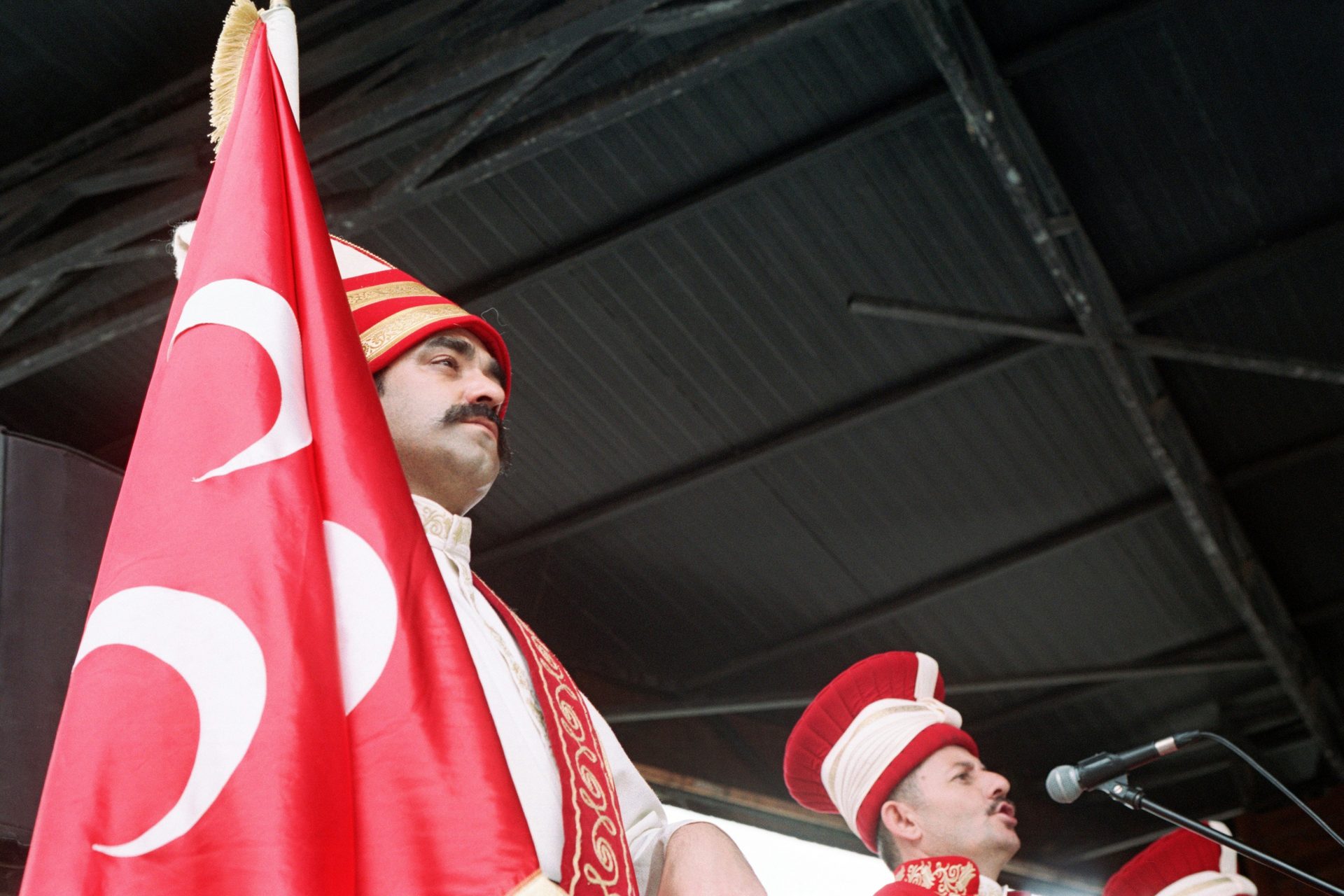
Long before national borders settled across Anatolia and the Balkans, a shared wardrobe logic held Ottoman society together. Regardless of ethnicity or region, people living within the borders of the Ottoman Empire consistently dressed in various layers of clothing, which was the most characteristic feature of Turkish dressing culture. That layered system is the backbone of traditional Turkish clothing, a wardrobe built from underlayers, outer robes, sashes, and headwear that each carried its own name, fabric, and social meaning.
This piece walks through twenty of the garments that defined that system, piece by piece. The same Ottoman court that shaped Turkish dress also left its mark on neighboring wardrobes, including other European folk dress traditions and the regional costumes of the Balkans, where Albanian national dress absorbed many of the same silhouettes and fabrics described below.
1. Entari
The entari functioned as the main event of a woman’s wardrobe inside Ottoman homes. The entari, or robe, was the primary garment of indoor dress for women in the Ottoman Empire for several centuries, worn over an undershirt (gömlek) and baggy trousers (şalvar), open down the front and held closed by a belt or sash. The garment’s construction was almost mathematically efficient: long triangular pieces of fabric, called peş in Turkish, were sewn to each side and the front openings to add width to the garment without wasting loom-width cloth. Among the surviving variations, the three-skirt style stands out as the most studied. The ucetek entari, or long robe, is the most widely recognized and distinctive piece of traditional Turkish clothing passed down from its Eurasian cultural roots. Museum pieces from the late Ottoman period show high side slits and a small standing collar, details that made the robe practical for sitting on floor cushions while still signaling status through the quality of silk used.
2. Şalvar
If the entari was the showpiece, the şalvar was the workhorse underneath it. Turkish şalvar, also called dimiye, are traditional baggy trousers gathered in tightly at the ankle, a cut that gave freedom of movement while still looking modest under a long robe. The style crossed gender lines freely, since both men and women traditionally wore a style of the şalvar. The garment also survived a political storm that many other Ottoman staples did not. Mustafa Kemal Atatürk westernized the dress code in Turkey in the 1920s as part of his reforms, yet men and women still wear the şalvar in many areas of Turkey, indifferent to social status. Readers who know the baggy-trouser traditions of South Asia will spot an obvious cousin in traditional Pakistani clothing, where the shalwar follows a strikingly similar silhouette and name.
Pro Tip: If you are shopping for a şalvar-style garment today, look for the ankle gather rather than a drawstring waist alone — that detail is what separates an authentic cut from a generic harem-pant import.
3. Gömlek
Underneath everything sat the gömlek, a simple chemise that most people never saw but everyone wore. The entari, or robe, was the main element of women’s dress in the Ottoman Empire, worn together with a chemise, or gömlek, and baggy trousers, or şalvar. For daily wear rather than formal visits, the garment stayed close to the body and did the real work of comfort. Women’s everyday wear was şalvar, a gömlek that came down to mid-calf or ankle, a short fitted jacket called a zıbın, and a sash or belt tied at or just below the waist. The same base-layer logic shows up in traditional Indian clothing, where an underlayer garment performs a nearly identical structural role beneath outer draped pieces.
4. Yelek
The yelek is best understood as the entari’s shorter, more practical sibling. The yelek is a short version of the anteri, and the word yelek means a vest or waistcoat in modern Turkish. Its versatility was part of the appeal: it could sit under a robe for warmth, over one for style, or stand alone in summer heat. Economics shaped who wore what quality of yelek. The yelek was a jacket popular among the lower classes, often a short waistcoat worn by both men and women, though wealthier versions were traditionally made from silk or velvet and featured highly decorative embroidery contrasting the main textile. The waistcoat concept itself isn’t uniquely Turkish — readers familiar with traditional American clothing history will recognize the same layering idea in frontier-era vests.
5. Mintan
The mintan sat at the practical end of men’s wardrobes, a working garment rather than a ceremonial one. Lists of Ottoman-era dress consistently group it with daily essentials: men wore outer clothing like the mintan, a vest or short jacket, alongside zıbın, şalvar trousers, kuşak sash, and entari or kaftan robes. The garment stayed relevant long after the empire’s classical period ended. During the Tanzimat and Meşrutiyet period in the 19th century, administrators and the wealthy wore redingot, jacket, waistcoat, a tie called boyunbağı, and the mintan, showing how a humble vest-jacket survived the empire’s shift toward European tailoring by simply adapting its fabric and fit.
6. Cepken
The cepken occupied a curious middle ground — sometimes a standalone jacket, sometimes a near-twin of another garment depending on how it was worn. Worn over the anteri, the yelek becomes a garment called a hırka or cepken; cepken means “cloak” in modern Turkish, while hırka is the word for a cardigan. That naming overlap tells you how fluid Ottoman garment categories really were. Socially, the cepken sat lower on the status ladder than the fur-lined caftans of the court. The poor wore collarless cepken or yelek vests, cut from sturdier, undecorated cloth that prioritized durability. For a comparison of how other cultures layer short jackets over robes, traditional Japanese clothing offers a useful parallel in garments like the haori.
7. Hırka
The hırka is essentially the cepken’s close relative, distinguished mostly by cut and class association rather than function. The middle class wore cübbe, a mid-length robe, or hırka, a short robe or tunic, placing it a notch above the collarless garments worn by the poor but well below the fur-trimmed caftans of the elite. Historical illustrations from the Tanzimat era show how layering worked in practice. For formal occasions such as visiting friends, a woman added an entari, a long robe cut like the hırka apart from length, and both garments were buttoned to the waist, leaving the skirts open in front. The construction detail matters because it shows the hırka wasn’t a separate design philosophy — it was the entari’s pattern, simply shortened.
8. Cübbe
The cübbe marked a clear step up the social ladder from the cepken and hırka. Upper-class or royal people in the Ottoman Empire wore fur-lined, embroidered kaftans, while the middle class wore cübbe and hırka, a specific style of jacket. This three-tier system — caftan for royalty, cübbe and hırka for the middle class, cepken and yelek for the poor — ran through nearly every category of Ottoman outerwear. Merchants and professionals relied on the cübbe to signal respectability without the expense of court dress. Merchants dressed in cübbe and hırka, specific jacket styles that set them apart from other social classes, and their outfits had multiple layers that revealed their social and economic standing. The same status-through-layering concept appears in traditional German clothing, where regional coats and jackets historically marked guild membership and trade.
9. Kaftan
No garment carries more weight in Ottoman fashion history than the kaftan. Ottoman nobility proudly wore the kaftan to display their regal status, with detailed embroidery and bold patterns that revealed the wearer’s social position and financial status. Sultans in particular used the garment as a canvas for the empire’s finest textile work. In the 16th century, as the Ottoman Empire entered its Golden Age and textiles reached a peak with metallic-thread weaving, sultans took the utmost pride in their fashion, wearing robes or kaftans of the finest, most expensive materials. Surviving court kaftans, many preserved in Istanbul’s palace collections, remain some of the most studied textiles in Ottoman history. Ceremonial court robes of this scale aren’t unique to Turkey — traditional Chinese clothing includes imperial robes built on a similarly status-driven logic.
| Garment | Primary Wearer | Social Tier | Typical Fabric |
|---|---|---|---|
| Kaftan | Sultans, nobility | Elite | Silk, fur-lined |
| Cübbe | Merchants, professionals | Middle class | Wool, cotton blends |
| Hırka | Middle-class men and women | Middle class | Cotton, light wool |
| Cepken / Yelek | Laborers, rural poor | Lower class | Plain wool, undecorated cotton |
10. Ferace
Stepping outside the home required a completely different garment logic, and the ferace was the answer. When a woman left the house, she covered her clothes with a ferace, a dark, modestly cut robe that buttoned all the way to the throat, and also covered her hair and face with a pair of veils. Whatever bright silk entari she wore indoors disappeared under this single, deliberately plain layer. By the 18th century the accompanying veil had evolved into something more elaborate. Outside the house, women wore a ferace with veils, and by the 18th century, yashmaks grew wider and more transparent and sometimes featured silver embroidery. The ferace stayed a fixture of street dress for roughly two centuries before a newer garment began to replace it.
11. Çarşaf
The çarşaf arrived as the ferace’s eventual successor rather than a separate invention. In the 19th century many switched the ferace for the çarşaf; by World War I headscarves tied under the chin became common. The shift reflected both practicality and changing tastes, as the çarşaf offered a simpler, single-piece alternative to the structured ferace-and-veil combination.
Important Note: Sources describe the çarşaf transition with slightly different timelines, and regional adoption varied — some areas kept the ferace well into the early 20th century even as the çarşaf became standard elsewhere. Outerwear built for modesty and street travel remains a recurring theme across Ottoman-influenced wardrobes, a theme also visible in the broader coverage found on this clothing resource hub.
12. Yemeni
The name “Yemeni” attaches to more than one Ottoman-era item, which makes it one of the trickier terms to pin down. On the footwear side, period sources place it among common foot coverings: çarık, çizme boots, çedik, or Yemeni were worn on the feet alongside the era’s more structured boots. The same word also described a textile. People wore külahs covered with abani or Yemeni — in this sense, Yemeni referred to a dyed cotton wrap or kerchief, often block-printed, used to cover a cap rather than the feet. Both uses point to the same origin story: a fabric or craft style associated with trade routes running through Yemen, adapted into everyday Ottoman dress.
13. Peçe
The peçe was the face veil that completed a woman’s street ensemble alongside the ferace or çarşaf. Leaving the house meant covering the hair and face with a pair of veils, and the peçe specifically covered the lower face, often made from a sheer fabric that allowed the wearer to see and breathe comfortably while maintaining modesty. As with the yashmak, the thickness and transparency of the peçe tended to track fashion trends and regional custom rather than a single fixed design. Wealthier women often wore finer, more transparent versions, while rural peçe styles stayed heavier and more practical for daily outdoor work.
14. Sarık
Among Ottoman headwear, the sarık carried the most ceremonial weight. The sarık was a large, wrapped headpiece that functioned almost like a uniform for scholars, clergy, and officials, with wrapping style and color signaling rank and profession. The size and fabric of a man’s sarık could instantly communicate his standing in Ottoman society. That dominance ended abruptly in the 19th century. While the sarık was replaced by the fez, people employed at the Sublime Porte began to wear trousers, setre, and potin as part of Sultan Mahmud II’s sweeping modernization program. The reform effectively erased centuries of turban-based status signaling in a single generation.
15. Külah
The külah was a conical cap that served as a base layer for more elaborate headwear rather than a finished look on its own. People wore külahs covered with abani or Yemeni, meaning the cap itself was often wrapped in printed or dyed fabric to create the final appearance. Social rank showed up clearly in how that wrapping was styled. Bashlyks were the most prominent accessories of social status, and while common people wore külahs covered with abani or Yemeni, the elite wore bashlyks such as yusufi, örfi, katibi, and kavaze. The system worked almost like a visual directory of profession and class, readable at a glance across a crowded market.
16. Fes
Few garments symbolize the end of Ottoman traditional dress as clearly as the fez. Its rise was a direct consequence of state policy: one of the most significant reforms in Ottoman fashion took place during the reign of Mahmud II, from 1808 to 1839, when the sarık was replaced by the fez as part of a broader modernization push.
Key Insight: The fez was originally introduced as a modernizing, Western-leaning alternative to the turban — a reminder that today’s “traditional” garments were often yesterday’s reform symbols. The felt cap, typically finished with a silk tassel, spread quickly through the civil service before becoming a broader cultural symbol across the empire and, later, a visual shorthand for Ottoman identity abroad.
17. Kalpak
The kalpak offered a warmer, fur-based alternative to the wrapped turban styles favored elsewhere in Ottoman society. It appears consistently in lists of period headwear alongside the sarık and külah: men wore kalpak and sarık on the head as part of the broader outfit that included mintan, şalvar, and kuşak. Made from felt or animal pelt depending on region and climate, the kalpak tended to show up more often in colder, mountainous parts of Anatolia and the Caucasus-adjacent regions than in warmer coastal cities, where lighter headwear made more practical sense. The style’s silhouette — tall, rounded, often brimless — also traveled well beyond Ottoman borders into Central Asian and Caucasian dress traditions.
18. Çarık
Çarık were the rural workhorse of Ottoman footwear, built for durability rather than display. Folk dress research describes them specifically as a regional variant of a much older shoe style: poulaines, known locally as çarık, appear as a similar feature across most folk dress styles throughout Turkey, alongside colorful stripes, baggy floral clothing, and multiple layers. The footwear also makes an appearance in formal lists of Ottoman dress, placed firmly among everyday essentials: çarık, çizme boots, çedik, or Yemeni were worn on the feet. Made from raw or lightly tanned leather and tied with cord around the ankle, çarık remained common in rural Turkey well into the 20th century, long after urban fashion had moved toward manufactured shoes.
19. Çizme
Çizme were the sturdier, more structured counterpart to the simple çarık, and they appear in the same period inventories of footwear. Çarık, çizme boots, çedik, or Yemeni were worn on the feet, with çizme generally reserved for travel, military use, or colder climates where ankle and calf protection mattered more than flexibility. Quality varied sharply by class, following the same pattern seen in Ottoman outerwear. Finer çizme were made from dyed, tooled leather for officials and wealthy travelers, while working versions stayed plain and heavy-duty. The boot style shares a structural logic with riding and work boots found in traditional Australian clothing, where function-first footwear also became a cultural marker over time.
20. Kuşak
The kuşak tied the entire Ottoman outfit together, literally. Men wore a mintan, şalvar trousers, and a kuşak sash as the core components of a standard daily outfit, with the sash doing double duty as both a fastening device and a status display. Women relied on the same principle in their own wardrobes. Women’s clothes of the Ottoman period in the mansions and palace courts included entari, kuşak, şalvar, and başörtü, confirming how central the sash was across gender lines. A finely woven or metallic-threaded kuşak could cost as much as the robe it cinched, making it one of the more understated but expensive pieces in an Ottoman wardrobe.
Taken together, these twenty garments show a wardrobe built on logic rather than decoration alone: layers for the body, robes for status, sashes for structure, and headwear for rank. The same Ottoman influence that shaped this system also reached deep into the Balkans, where traditional Albanian costumes and other regional Albanian garments developed their own silhouettes while borrowing fabric traditions and layering concepts from the same imperial wardrobe. Readers curious about how other cultures solved similar clothing problems — layering, modesty, status display — may find equally rich comparisons in other regional dress traditions shaped by centuries of trade and empire.