Traditional Cambodian Clothing: Krama, Sampot, and Khmer Royal Garments

November 20, 2026
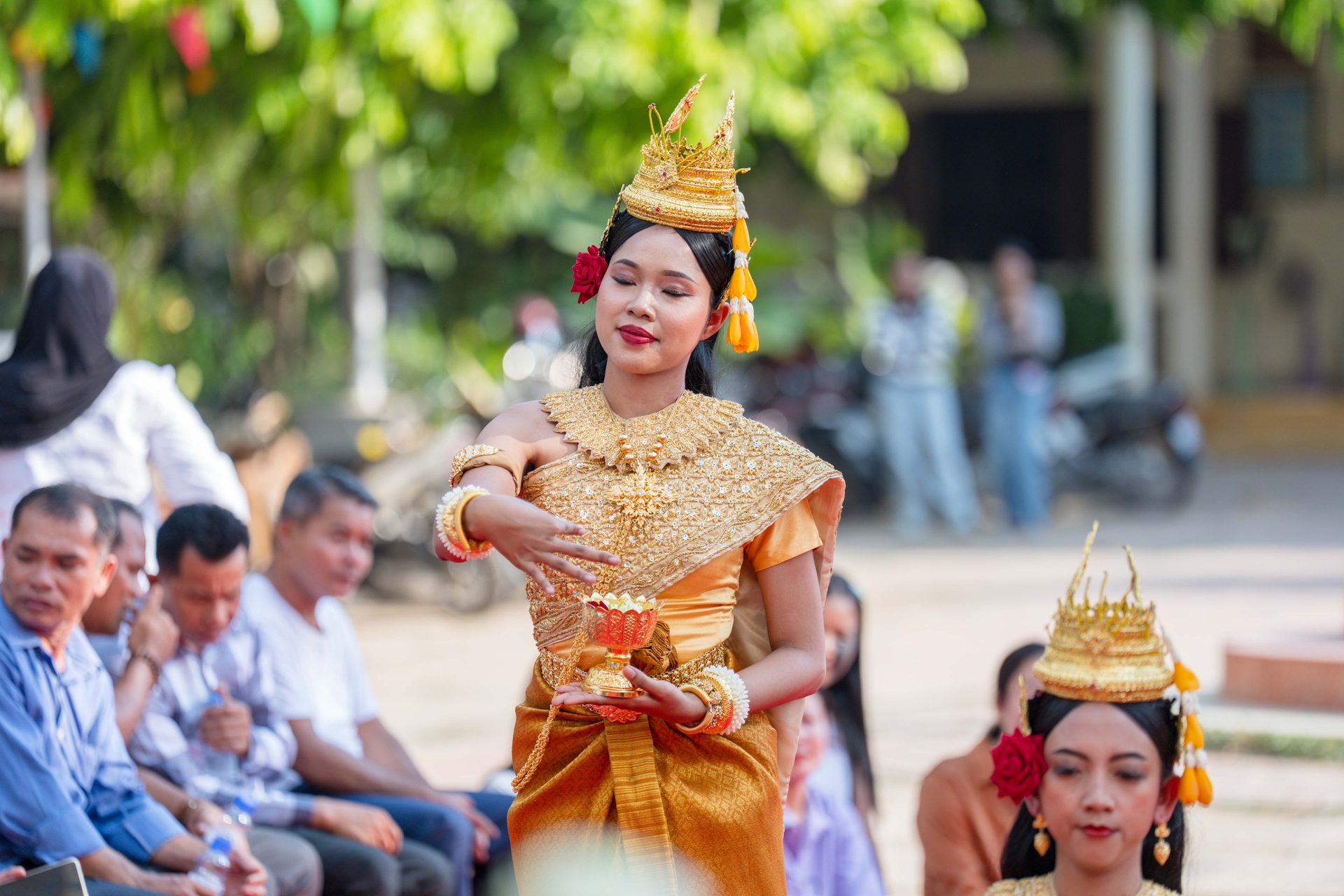
A single piece of checkered cloth can wrap a baby, shade a farmer from the sun, and dress a bride for her wedding photos, sometimes all within the same week. That versatility sits at the heart of traditional Cambodian clothing, a wardrobe built less around a single “national costume” and more around a family of garments that shift meaning depending on who wears them and when.
This guide works through sixteen of those garments, starting with the everyday krama and moving through the many forms of the sampot, the fitted Khmer blouses known as av, and the ceremonial sash and crown reserved for weddings and royal occasions. Readers interested in how other cultures built their own traditional clothing around a few core garments will recognize a similar pattern of practical pieces that took on deeper cultural weight over centuries.
1. Krama
The krama is the garment most visitors notice first, a long rectangular scarf woven in checked cotton or silk that Cambodians sling over a shoulder, wrap around the head, or knot into a makeshift bag. According to the Wikipedia entry on the krama , it is not just a textile but a symbol of life’s journey, from birth to death, holding great socio-cultural significance in expressing greetings, respect, and marking important life events.
Its everyday uses stretch far beyond fashion. Cambodian families commonly use it as a head covering against the sun, a towel, a baby sling, or a dust mask on dusty roads, and it remains a practical companion for farmers, fishermen, and market vendors alike. In 2024, the krama’s cultural weight was formally recognized when, it was inscribed on the Representative List of the Intangible Cultural Heritage of Humanity by UNESCO, according to Tevoa’s history of the Cambodian krama .
Pro Tip: Cotton kramas are the most breathable choice for hot, humid weather, while silk versions are reserved more for dressier occasions and gift-giving.
2. Sampot
The sampot is the broad term for Cambodia’s traditional lower-body wrap, and it functions as an umbrella category rather than one fixed style. Per the Cambodia travel guide, it is the traditional garment created, developed and preserved by Khmer people in Cambodia, with a long history dated back to the Funan Era when a Cambodian king ordered his people to wear it at the request of Chinese envoys.
In practice, a sampot is a large rectangle of cloth, usually five to six feet long, wrapped around the lower body and tied at the belly with various colors and patterns. Silk is the main material used to weave it, often dyed in red, yellow, green, blue, and black, with Khmer weavers applying complex methods such as the hol technique, which dyes patterns onto silk before weaving. The same drape-and-dye logic shows up in other silk-weaving cultures, including the techniques covered in our look at traditional Indian clothing.
3. Sampot Chong Kben
Sampot chong kben is the pant-like variation of the sampot, and unlike most sampot styles, it is worn by both men and women. It is a unisex lower-body wraparound garment that originated in ancient Cambodia and was later adopted in neighbouring countries including Laos and Thailand, where locals know it as pha hang or chong kraben.
The wearing method is distinct from a simple wrap skirt. The cloth is wound around the waist, then one end is rolled and pulled between the legs to the back, a piece of clothing string used to snap it up to the waist, with a golden or silver belt worn over the string for women. Khmer royal portraits from the 1800s show this garment paired with another item covered later in this guide: Khmer royal ladies wearing sompot chong kben and sbai in the mid-1800s.
4. Sampot Sarabap
Sampot sarabap (also spelled sarabab or charobab) is the luxury end of the sampot family, woven from silk shot through with metallic thread. According to Wikipedia’s entry on the samluy style, this fashion involves the textile sarabap, a brocaded silk with gold and silver thread worn by Khmer ballerinas, royalty, and for formal occasions.
Brides and classical dancers wear a particular draped version of this fabric known for its folded presentation. Female roles in Khmer ballet, as well as brides on their wedding day, may wear sampot sarabap folded like the head of a naga, referring to how the draped bundle of pleats resembles a naga’s head. The result is one of the most photographed garments in Cambodian wedding ceremonies, comparable in formality to the richly woven silks found in traditional Japanese clothing.
5. Sampot Rbauk
Sampot rbauk sits among the quieter, more regional members of the sampot family, and English-language documentation of it is noticeably thinner than for the sarabap or chong kben styles. It is generally described as a softer, more subdued sampot favored for daily or semi-formal wear rather than royal ceremony, often woven in cotton or a lighter silk blend with understated stripes or checks rather than the elaborate gold-thread patterning of sarabap cloth.
Important Note: Compared with sampot sarabap or chong kben, sampot rbauk has far less English-language source material, so details on its exact weaving technique and regional origin should be treated as general background rather than settled fact.
Weavers working in this tradition often draw from the same hand-loom skills used for other everyday textiles, a craft base shared with the hand-woven cotton goods found in parts of traditional Pakistani clothing. As with many regional Khmer textiles, the exact patterning can vary village to village based on locally available dyes and thread.
6. Sampot Soeng
Sampot soeng has an unusual origin story within the Khmer wardrobe because it did not start out as a Cambodian textile at all. Originally a more popular tradition in Laos, sampot soeng became popular in the 1980s when Cambodians, having emerged from war, purchased the affordable soeng from Laos, according to Wikipedia’s entry on Khmer traditional clothing.
Over time, the garment was absorbed fully into Khmer textile culture. Cambodian weavers eventually began producing their own versions for personal use and for sale, turning an imported, budget-friendly fabric into a staple that many households now treat as a local tradition rather than a Laotian import. That history makes sampot soeng a useful reminder that Southeast Asian textile traditions have long crossed borders through trade and necessity rather than staying fixed within one country.
7. Sampot Sup
Sampot sup takes a more tailored approach than most other sampot styles, borrowing construction details usually associated with Western garment-making. Per Wikipedia, sampot sup refers to a samloy-style sampot fabricated with darts and a waistband, rather than relying purely on wrapping and tucking to hold its shape.
Those darts and the fitted waistband give sampot sup a cleaner silhouette around the hips, which makes it a practical choice for women who want the look of a traditional sampot without re-tying a wrap skirt throughout the day. It bridges the line between heritage dress and modern tailoring, a combination that shows up in many national costumes as they adapt for daily wear outside of festivals.
8. Sampot Bot
Sampot bot translates loosely to “folded skirt,” and it describes a specific way of securing a samloy-style sampot rather than a distinct fabric. Wikipedia notes that sampot bot refers to a sampot samloy secured via a long, flat fold along the side, a method said to have emerged from western influence.
The folded-side closure gives the skirt a cleaner, flatter front than the knotted chong kben style, which is likely why it became associated with more Western-influenced fashion moments in twentieth-century Cambodia. Period photographs show the style paired with a lace av pak, a blouse covered later in this guide. That blending of Western tailoring cues with Khmer drape mirrors shifts seen in other colonial-era wardrobes, including the adaptations documented in traditional Australian clothing.
9. Av Nay
Av simply means “blouse” or “shirt” in Khmer, and it covers a whole family of fitted tops worn over or tucked into a sampot. Av nay sits toward the simpler, more everyday end of that family: a close-cut bodice, a round or low stand collar, and sleeves that taper toward the wrist for a neat, tailored look.
Buttons typically run down the front, and the blouse is usually cut from a plain or lightly patterned silk or cotton so that a more elaborately woven sampot can stand out as the visual centerpiece of the outfit. Because the cut is relatively simple, av nay works for both ordinary daily wear and modest formal occasions, making it one of the more adaptable pieces in the traditional Khmer wardrobe.
10. Av Pak
Av pak is distinguished from other av styles by its fabric rather than its cut: a light, long-sleeved blouse finished in lace. A caption from Wikipedia’s entry on sampot chang samluy describes a woman in sampot bot, a style of samluy, paired with a lace av pak, placing the two garments together as a matched formal outfit.
The lace detailing gives av pak a softer, more delicate finish than plainer blouses in the same family, and it traditionally pairs well with folded sampot styles rather than the bulkier, pant-like chong kben. Similar lace-and-embroidery trims show up in formalwear traditions well outside Southeast Asia, including some regional variants within traditional German clothing.
11. Av Phnat Kbach
The name of this blouse borrows from kbach, the term used for the ornamental motifs that also appear in Khmer temple carving and traditional silverwork. Av phnat kbach carries that decorative sensibility onto cloth, typically finished with patterned trim, embroidered edges, or brocade detailing around the collar and cuffs.
Because of its ornamental finish, this blouse is a common choice for classical dance performances and cultural festivals rather than plain daily errands. The patterning gives performers a garment that reads clearly from a distance on stage, which matters for Apsara-style dance shows where costume detail communicates character and status to the audience.
12. Av Tronum
Av tronum follows the same general silhouette as other traditional Khmer blouses, fitted through the torso and closed with buttons down the front, but it is usually cut from a heavier woven fabric than av nay or av pak. That extra structure makes it a practical choice for cooler weather or for more formal settings where a thin cotton blouse would look too casual.
The heavier weave also holds its shape better over time, which is part of why older examples of av tronum tend to survive in family collections as hand-me-down formalwear rather than everyday clothing. As with many traditional garments, the fabric choice says as much about the occasion as the cut does.
13. Av Pay
Av pay is another variation within the av family, generally distinguished by sleeve length and neckline rather than by fabric weight. Shorter, three-quarter sleeves and a modest round neckline are common features of this style, making it a practical choice for warm weather while still presenting a tidy, buttoned silhouette.
Because the sleeves end above the wrist, av pay allows for more freedom of movement than longer-sleeved styles like av nay, which made it a sensible choice historically for women doing physical work while still dressed in a recognizably Khmer blouse. It remains a comfortable, practical option for warm-climate daily wear today.
14. Av Ko Trung
The name av ko trung points to its most distinctive feature: kor is the Khmer word for neck, and this blouse is generally recognized by a raised, structured collar that stands away from the throat rather than lying flat. That collar detail adds a formal touch that plainer round-collar blouses lack.
Paired with a silk sampot for temple visits, family ceremonies, or cultural events, av ko trung’s upright collar gives the whole outfit a slightly more formal, polished finish. As with several other av styles covered here, detailed English-language documentation on its exact regional origin is limited, so treat the collar-focused description as the most reliably documented feature of the garment.
15. Sbai
The sbai is a long sash or shawl, traditionally woven in silk, that drapes diagonally across the chest and over one shoulder. It is most often worn over a sampot chong kben for weddings, royal ceremonies, and classical dance performances, where its loose drape contrasts with the more structured lower garment underneath.
Historical photographs confirm how far back this pairing goes in Khmer court dress. Wikipedia’s entry on sompot chong kben includes an image described as Khmer royal ladies wearing sompot chong kben and sbai in the mid-1800s, showing that the sash has been part of formal Khmer dress for well over a century. The diagonal drape style has rough parallels in other South and Southeast Asian wardrobes, including the sari traditions discussed in traditional Indian clothing.
16. Mokot
Mokot refers to the ornate crown worn during Khmer wedding ceremonies and by royalty, typically gold-toned with tiered, pointed peaks modeled loosely on the regalia seen in Angkorian-era temple carvings. Grooms and brides both wear a version of the mokot during the formal portions of a traditional Khmer wedding, alongside the sampot sarabap and sbai already covered in this guide.
Outside of weddings, a similar crown style appears in Khmer classical dance costuming and in ceremonial portraits of the Cambodian monarchy, reinforcing the mokot’s association with status and ritual rather than everyday dress. Among all the garments in this guide, it is the piece most clearly reserved for a single category of formal occasion rather than adapted for daily wear.
Pro Tip: If you are attending a Khmer wedding as a guest, the mokot, sampot sarabap, and sbai are reserved for the couple and their immediate wedding party rather than general attendees, so guests typically dress in simpler formal wear.
Together, these sixteen garments show that traditional Cambodian clothing is less a single costume than a flexible system built around a handful of core shapes: a wrapped lower cloth, a fitted blouse, a draped sash, and a few ceremonial pieces reserved for the most formal occasions. The krama’s 2024 UNESCO recognition and the continued use of sampot and av styles at weddings, temple visits, and dance performances suggest this system is still very much a living part of Khmer daily life rather than a museum piece.