Traditional Orthodox Jewish Clothing: 19 Garments and Their Meaning

November 20, 2026
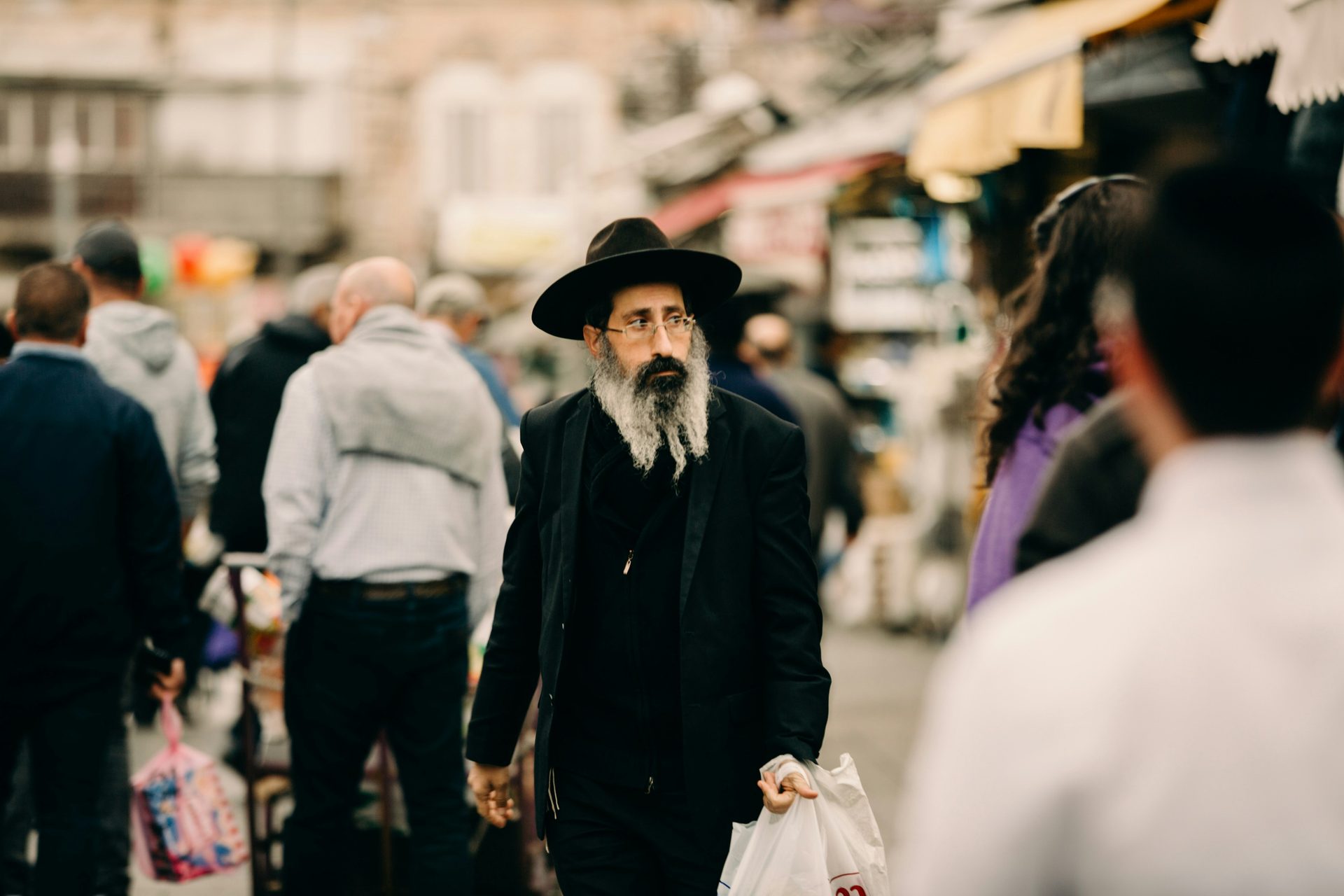
A Hasidic man’s coat, hat, and even the way his socks are folded can tell an observer which Hasidic court he belongs to, down to the specific town in Eastern Europe his community traces its roots to. Traditional Orthodox Jewish clothing works this way across the board: every garment, from a simple skullcap to an elaborate fur hat, carries centuries of religious law, regional history, and communal identity woven into its fabric.
This piece walks through 19 garments that make up traditional Orthodox Jewish clothing for men and women, explaining where each one comes from, what it signifies, and how it differs between Hasidic, Haredi, and other Orthodox communities. Many of these pieces have close cousins in other cultures’ heritage dress. Just as traditional German clothing or the Albanian national dress preserve regional identity through fabric and silhouette, Orthodox Jewish dress uses cut, color, and fur to mark belonging. Albanian folk attire alone varies so much by valley and village that the history of Albanian clothing reads almost like a map of regional Albanian garments, a parallel worth keeping in mind while reading about Jewish dress traditions that work in much the same way.
1. Kippah
The kippah, also called a yarmulke in Yiddish, is the small, slightly rounded skullcap worn by Orthodox Jewish men and boys. It is typically made of cloth, suede, or knitted yarn, and its color and fabric often signal religious affiliation: black velvet kippot are common among Haredi and Hasidic men, while knitted, colorful kippot are more associated with religious Zionist communities.
Orthodox custom holds that a man’s head should be covered at essentially all waking hours as a sign of humility before God, which is why the kippah is worn continuously rather than only during prayer. Many families choose a child’s first kippah around the time he begins speaking in full sentences, a milestone sometimes marked alongside the naming traditions that accompany a boy’s early years.
Key Insight: A kippah’s size and fabric are often more about communal custom than religious law itself. Jewish law requires head covering, but the specific style is shaped by centuries of regional tradition rather than scripture.
2. Tallit
The tallit is the fringed prayer shawl worn by Orthodox Jewish men, typically during morning prayers and specifically at the synagogue. It is usually made of wool, silk, or a wool-silk blend, striped in black, blue, or white, with knotted fringes called tzitzit attached at each of its four corners.
Many Orthodox men receive their first full-size tallit at their wedding, though customs vary: some Ashkenazi communities wait until marriage, while others introduce boys to a tallit earlier, around bar mitzvah age. The garment is folded carefully after use and stored in a dedicated bag, often embroidered with the owner’s name or a family design passed down through generations.
3. Tzitzit
Tzitzit are the knotted fringes attached to the four corners of a four-cornered garment, commanded in the Torah as a visual reminder of religious obligations. While the tallit worn during prayer carries large tzitzit, the term also refers to the fringes themselves, tied in a specific pattern of windings and knots that varies slightly between Ashkenazi and Sephardi custom.
The fringes typically include a thread dyed with tekhelet, a blue dye historically derived from a sea creature, though most tzitzit today are tied entirely in white following centuries in which the source of authentic tekhelet was lost. Some communities have revived blue-threaded tzitzit in recent decades based on renewed research into the dye’s original source.
- Windings and knots: traditional tzitzit are tied with a sequence of double knots separated by windings, often totaling 39 to reflect numerical values tied to Hebrew words for God’s name.
- Daily wear: observant men wear tzitzit-bearing garments under their shirts throughout the day, not only during formal prayer.
- Inspection custom: many men check their tzitzit each morning before dressing, a small ritual built into the daily routine.
4. Tallit Katan
The tallit katan is a smaller, four-cornered garment worn under the shirt throughout the day so that its tzitzit can be visible at all times, fulfilling the commandment continuously rather than only during set prayer times. It resembles a poncho with an opening for the head and is typically made of cotton or a cotton blend, white or off-white in color.
Boys are often introduced to the tallit katan from a young age, sometimes as early as three years old in Hasidic communities, well before they would wear a full prayer tallit. The garment’s fringes are frequently left hanging visibly over the waistband of trousers, a common sight among Orthodox men in religious neighborhoods worldwide.
5. Kittel
The kittel is a simple white robe worn by Orthodox Jewish men on solemn and joyous occasions alike, including Yom Kippur, Passover seders, and weddings. Its plain white fabric is meant to evoke purity and, on Yom Kippur specifically, to recall burial shrouds as a reminder of mortality during the Day of Atonement.
A groom traditionally wears a kittel under his wedding canopy in many Ashkenazi communities, and the same garment is later used as part of his burial clothing, linking the most celebratory day of his life to its most solemn. The kittel is typically unadorned, though some families pass down an heirloom version embroidered with simple trim.
Important Note: Customs around who wears a kittel and when vary by community. Some Sephardi and other non-Ashkenazi traditions do not use the garment at all, so its presence is not universal across all of Orthodox Judaism.
6. Rekel
The rekel is a long, double-breasted coat worn mainly by Hasidic men during the workweek, cut to resemble a conventional suit jacket but extending well past the waist. According to Wikipedia , the rekel is a type of frock coat worn mainly by Hasidic Jewish men during the Jewish workweek, Sunday through Friday. Though designed for daily wear, some Hasidim wear it on Shabbat as well, though a more formal coat, the bekishe, is considered by many the more proper Shabbat garment. The rekel is usually sewn from wool or polyester, giving it a sturdier, more durable finish suited to everyday use.
7. Bekishe
The bekishe, sometimes spelled beketshe, is the long black coat Hasidic men wear on Shabbat, Jewish holidays, and at celebrations such as weddings. Wikipedia’s entry on the garment notes that a bekishe is a type of kaftan, usually made of black silk or polyester, worn mainly on Shabbos and other Jewish holidays or at weddings and similar events. The coat traces its roots to Eastern Europe: the bekishe derives from the Polish bekiesza, a sort of fur-lined coat that was often richly decorated, sometimes with galloon. Some Hasidic rabbis wear a bekishe daily and switch to an even more ornate version for Shabbat, often lined with velvet or a color other than or in addition to black.
| Garment | Typical Fabric | When Worn | Who Wears It |
|---|---|---|---|
| Rekel | Wool or polyester | Weekdays | Hasidic lay men |
| Bekishe | Black silk or polyester | Shabbat, holidays, weddings | Hasidic men, some Haredi men |
| Zaydene Kapote | Satin or silk | Shabbat | Various Hasidic groups |
| Radzivulke | Satin | Over the bekishe, special occasions | Hungarian and Galitzianer Hasidim |
8. Zaydene Kapote
The zaydene kapote, literally “satin caftan” in Yiddish, is the long black Shabbat robe worn across many Hasidic communities as an alternative name for, or close relative of, the bekishe. One overview of Hasidic dress describes how on the Jewish Sabbath, Hasidic men wear a long black satin robe called a zaydene kapote or bekishe, with a silk garment sometimes worn on Jewish holy days. Within this family of garments, the related kapoteh is cut slightly differently. The kapoteh is an extra-long black frock coat that extends to the ankles, typically featuring four buttons down the front and a slit in the back to facilitate walking, and serves as a signature garment for Chabad Hasidim during Shabbat observance.
9. Radzivulke
The radzivulke, also transliterated as rezhvolke, is a satin overcoat worn over the bekishe by some Hasidic men, particularly those of Hungarian and Galitzianer descent, as an extra layer of formal dress. Some Hasidim wear a satin overcoat, known amongst Hungarian and Galitsyaner chasidim as a rezhvolke, over the regular bekishe; some Hasidic literature refers to this garment as an Or Makif, referring to the Kabbalistic concept of surrounding light, and a rebbe’s rezhvolke might be trimmed with velvet. This layering illustrates how Hasidic dress often builds outward, with each additional garment marking a step up in formality, much like how traditional Chinese clothing layers robes for ceremonial occasions.
10. Gartel
The gartel is a long, woven sash or belt tied around the waist during prayer, separating the heart and upper body from the lower body in accordance with Jewish mystical tradition. It is most closely associated with Hasidic practice, where many men tie a gartel over their regular clothing before morning prayers and again before reciting evening prayers.
Gartels are typically black and made of silk, wool, or a woven synthetic material, and some are tied in an intricate braided pattern passed down within specific Hasidic courts. A broader look at how this sash fits into the rest of Hasidic dress appears in this overview of Hasidic clothing , which situates the gartel alongside the bekishe and kapote as part of a complete prayer wardrobe.
Pro Tip: If you are trying to identify a Hasidic man’s affiliation from his dress, the gartel’s weave pattern and the way it is knotted can be just as telling as his coat or hat style.
11. Hoyznzokn
Hoyznzokn, literally “trouser socks” in Yiddish, are the long white knee socks worn with knee-length breeches by men in certain Hasidic and Old Yishuv communities, particularly on Shabbat and holidays. The style echoes 18th-century Eastern European court dress, where knee breeches paired with tall socks were standard formal wear among the nobility that surrounding Jewish communities later adapted into their own Shabbat attire.
Today, this combination of breeches and hoyznzokn is far less common than it once was, surviving mainly within specific Hasidic groups based in Jerusalem and a handful of communities elsewhere who have preserved the practice as a marker of their particular lineage. Most Orthodox men today wear ordinary trousers, reserving the breeches-and-socks combination for the most tradition-bound circles.
12. Shtreimel
The shtreimel is the wide, round fur hat most closely associated with Hasidic Jewish men, worn on Shabbat, holidays, and other festive occasions after marriage. Wikipedia’s entry on Jewish headgear lists it among the modern distinctive or characteristic Jewish forms of male headgear, alongside the kippah, spodik, and kolpik. The hat’s structure follows a specific pattern: the shtreimel comprises a large circular piece of velvet surrounded by fur, with the fur traditionally coming from the tails of sable or marten. The shtreimel was adopted by Eastern European Jewish communities in the 18th century, coinciding with the rise of Hasidic Judaism, and according to the POLIN Museum’s collection notes , it probably originated from Old Polish noblemen’s costume. Research published in Segula Magazine adds an important nuance: though synonymous with Hasidic Jewry, the shtreimel was originally more of a status symbol than a religious one. Distinctions in fur, height, and shape still signal which Hasidic court a wearer belongs to, a quiet code worn openly in plain sight variations.
13. Spodik
The spodik is a tall, cylindrical fur hat worn instead of a shtreimel by Hasidic groups tracing their roots to 19th-century Congress Poland, most notably the Gur, Amshinov, and Aleksander dynasties. One reference summary explains that a spodik is a tall, black fur hat worn by some Hasidic Jews, particularly members of sects in 19th-century Congress Poland. The distinction between the two hat styles is fairly simple once pointed out. Hasidic groups that trace their roots to Poland wear the taller, narrower, and darker spodik, while groups that originate in Galicia, Hungary, or Romania wear the shorter, wider, and browner shtreimel. One explainer on the tradition notes that the spodik is taller and more cylindrical than a shtreimel, and is the style generally favored by Hasidic sects of Polish descent.
| Hat | Shape | Fur Color | Associated Groups |
|---|---|---|---|
| Shtreimel | Short, wide, disc-shaped | Brown/tan | Galician, Hungarian, Romanian Hasidim |
| Spodik | Tall, narrow, cylindrical | Black | Polish-descended Hasidim (Gur, Amshinov) |
| Kolpik | Tall, thin, cylindrical | Brown | Unmarried sons of certain rebbes; special occasions |
14. Kolpik
The kolpik is a tall fur hat that sits between the shtreimel and spodik in both appearance and status, worn mainly within families of Hasidic rebbes. Wikipedia describes it as a type of traditional headgear worn in families of some Chassidic rebbes of Galician or Hungarian dynastic descent, by their unmarried children on Shabbat, and by some rebbes on special occasions other than Shabbat or major holidays. Its shape sets it apart from its more famous cousins: a shtreimel is shorter in height, wider, and disc-shaped, while a kolpik is taller, thinner in bulk, and of cylindrical shape, and it is seen as an intermediate level garment between Shabbat and weekday dress. Further detail from Pardes Institute confirms the simple rule separating these fur hats by lineage: groups tracing their roots to Poland wear the spodik, while those from Galicia, Hungary, or Romania wear the shtreimel, with the kolpik occupying its own smaller niche within rebbe households.
15. Homburg
The homburg is a stiff felt hat with a curled brim and a lengthwise crease down the crown, worn as a dignified alternative to fur hats by some Orthodox men, particularly on weekdays or by communities that do not wear a shtreimel at all. Unlike the shtreimel or spodik, the homburg is not specific to Hasidic Judaism; it entered general fashion in the late 19th century and was adopted by various Jewish communities as formal headwear for synagogue attendance, weddings, and business dress. Some Hasidic groups favor felt hats resembling a homburg or fedora in place of a fur hat entirely. One account of Hasidic dress diversity notes that there are Hasidim who do not wear a shtreimel at all, such as the Lubavitchers, whose felt fedoras resemble those of the non-Hasidic ultra-Orthodox, illustrating how headwear choice can mark a group’s identity just as clearly as a fur hat does.
16. Tichel
A tichel is a headscarf worn by married Orthodox Jewish women as a form of hair covering, tied in countless styles that range from simple wraps to elaborate, sculpted arrangements. The practice stems from the concept of tzniut, or modesty, which many Orthodox communities interpret as requiring married women to cover their hair in public. Tichel styles vary enormously by community and personal preference, from plain cotton scarves favored for everyday errands to richly patterned silk versions reserved for Shabbat and celebrations. Some women combine a tichel with a wig underneath for added coverage, while others wear it as their sole head covering, a distinction that often reflects the specific customs of their community.
17. Sheitel
A sheitel is a wig worn by married Orthodox Jewish women, used in many communities as the primary or exclusive method of hair covering after marriage. High-quality sheitels are often made from human hair and styled to look natural, sometimes to the point that outsiders cannot distinguish a sheitel from a woman’s own hair. The custom of covering hair with a wig rather than a scarf is especially common in Hasidic and many Haredi communities, where a well-made sheitel is considered appropriate even for formal and professional settings. Because of the expense and craftsmanship involved, a good sheitel is often treated as a significant financial investment within a household, maintained and restyled by specialized wig stylists over years of use.
Important Note: Practices around hair covering vary widely even within Orthodox Judaism, and the choice between a sheitel, tichel, or other covering often reflects community custom rather than a single universal requirement.
18. Shpitzl
A shpitzl is a small, stiffened headpiece, often resembling a partial wig or fabric form, worn by some Hasidic women, notably within Satmar and related communities, either on its own or combined with a scarf for extra hair coverage. The piece typically covers only the front hairline, giving the impression of hair peeking out from under a scarf while keeping a woman’s actual hair fully hidden beneath it. This layered approach to head covering reflects a stricter interpretation of modesty customs than a simple tichel or sheitel alone, and the specific style of shpitzl worn can, like so much else in Hasidic dress, signal which community a woman belongs to.
19. Beret
Within certain Hasidic communities, married women wear a beret as either their main head covering or as an outer layer worn over a sheitel for additional modesty. The style gained particular association with Satmar and related Hungarian-descended Hasidic circles, where a beret in a dark, solid color is considered appropriate everyday wear. Head coverings for women, much like the fur hats and coats worn by men, function as a visible marker of communal belonging across the Orthodox Jewish world. The same holds true well beyond this tradition: distinctive headwear and dress mark identity in traditional Pakistani clothing, in traditional Japanese clothing, and in the regional variety of Albanian folk attire, where a village’s traditional costume can be read almost as precisely as a Hasidic court’s shtreimel or bekishe. Traditional Orthodox Jewish clothing, taken as a whole, works the same way: each garment is a small, deliberate statement about history, community, and belief, stitched into daily life one coat, cap, and sash at a time.