Traditional Rwandan Clothing: 10 Garments That Shaped Rwanda’s Culture

November 17, 2026
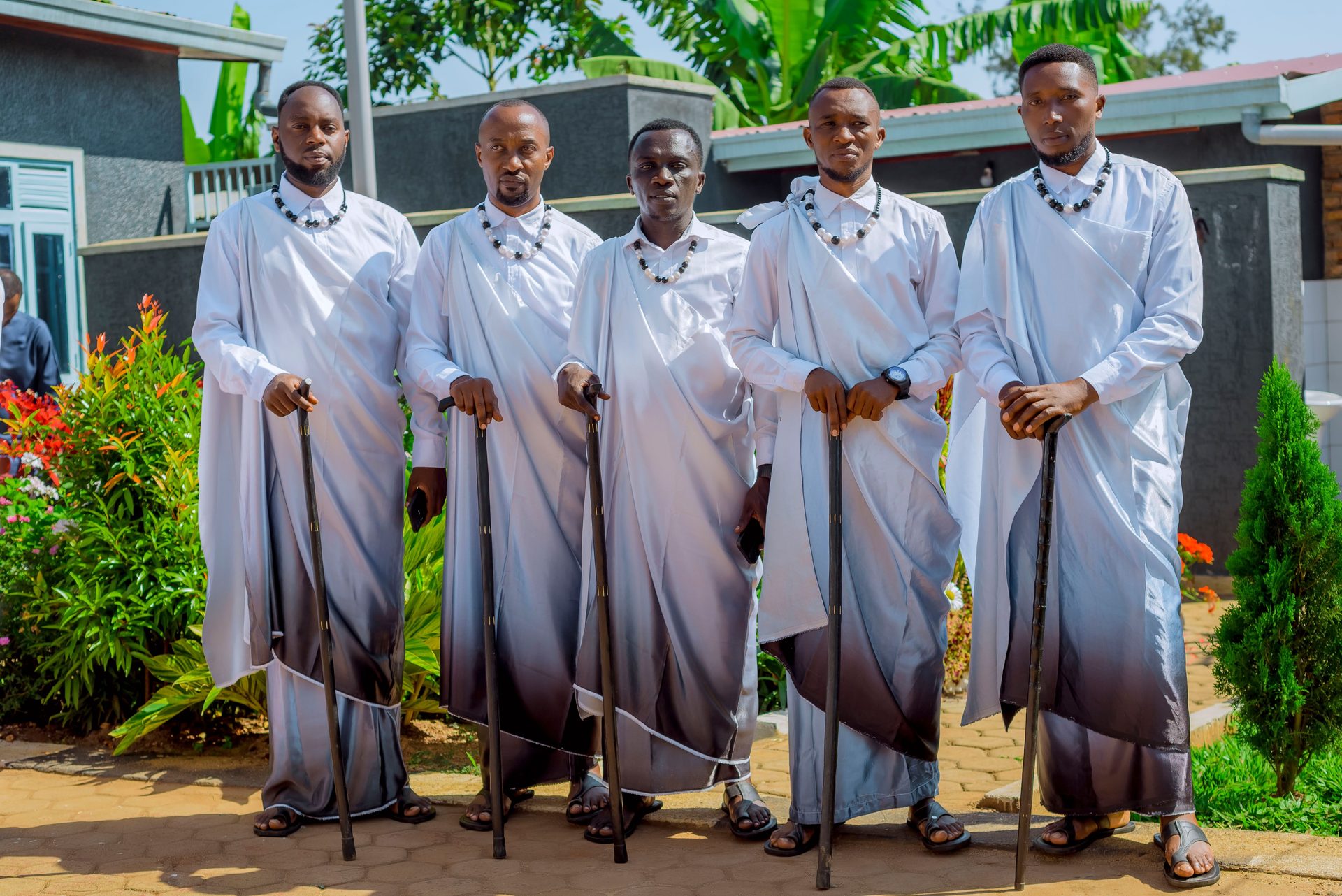
Long before cotton and silk entered Rwanda through trade and colonial contact, Rwandan people wore clothing made of vegetable fibers or animal skins, and these clothes not only decorated the body but also carried symbolic functions tied to Rwandan culture. Traditional Rwandan clothing was never simply about covering the body. The cut, material, and decoration of a garment could reveal a wearer’s age, marital status, or standing within the community.
From the flowing umushanana still worn at weddings today to the beaded regalia of royal Intore dancers, Rwanda’s clothing history spans calfskin loincloths, pounded barkcloth, and woven plant fiber. Rwandan men also had their own traditional clothing, including wrapped, skirt-like garments sometimes paired with a shirt, sandals, or beads, as described in an overview of Rwandan folk dress . The ten garments below trace this history, from everyday wear in the pre-colonial kingdom to the ceremonial dress still seen at Rwandan celebrations today.
1. Umushanana
The umushanana (plural: imishanana) is the best-known piece of traditional Rwandan clothing worn today, and it remains the country’s defining women’s dress. It consists of a long skirt gathered at the hips, a bustier, and a stole draped over one shoulder. The fabric, which can be of any color, is generally lightweight to accentuate the draping effect. The umushanana’s Wikipedia entry traces its use across both Rwanda and Burundi.
The garment’s name points to an older practice. It is crafted from barkcloth, a natural fabric made from the inner bark of the ficus natalensis tree, and the pounded barkcloth is known as impuzu. Gukenyera can be translated as wrapping oneself with or to dress in, which is why older Rwandans still use umukenyero and umushanana interchangeably.
Mushanana is now worn mainly for formal and ceremonial occasions such as weddings, church services, or funerals, and by traditional dancers in both Rwanda and Burundi. Styling has shifted with each generation. Many modern umushanana now come in one piece, resembling the sari, the traditional Indian dress worn by women, a change that echoes how traditional Indian clothing has also been reinterpreted for easier everyday wear.
Pro Tip: If you attend a Rwandan wedding, note that the sash of the umushanana is draped rather than pinned. Ask a tailor or a local friend to show you the wrap so the pleats fall correctly.
2. Inkanda
Inkanda belonged to married women in pre-colonial Rwanda and marked a clear life stage within traditional Rwandan clothing. Made from the cow’s hide, inkanda was worn as a long cloth by women after they married, and women fastened the cloth to their body using a beaded belt.
Clothing made from hide was common across genders in this period. The imyenda y’inkanda, clothing made from animal skins, was common among both men and women, and these garments were carefully crafted and adorned with beads and cowrie shells, signifying wealth and status, according to an overview of Rwandan dress history . A similar link between material and status appears in traditional German clothing, where regional embroidery once signaled a family’s standing within a village.
Separate research from the Heinrich Böll Foundation corroborates the garment’s material: the clothes ancient Rwandans wore include inkanda, made from cow skin, a type of women’s clothing.
Important Note: Sources differ slightly on inkanda’s exact material. Most describe it as cowhide worn by married women, though a few general overviews group it loosely with barkcloth garments. This likely reflects how regional practices and terminology varied across the old Rwandan kingdom.
3. Ishabure
Of all pre-colonial garments, ishabure stood out as the most refined example of traditional Rwandan clothing. The ishabure, made from the hide of a young calf, was the most sophisticated item of clothing of ancient Rwanda. It was worn by both men and young girls, and the size and elaborate stitching are evidence of a true aesthetic elegance. The central design could be star-like, made of four or six inlaid branches, with a z-shape stitched across the length.
According to the Rwanda Cultural Heritage Academy , garments like ishabure show how pre-colonial tailors worked almost entirely with hide and natural fiber long before woven cloth became common. This attention to pattern and stitch count parallels the regional motif traditions found in traditional Chinese clothing, where placement of embroidery also once signaled status.
4. Ikinyita
Ikinyita was a children’s and young people’s garment that sat alongside ishabure in the wardrobe of pre-colonial Rwanda. Made out of calf or goat skin, ikinyita was either wrapped around the hips or worn fixed on the shoulder, and it was mainly for young girls, though styles also existed for men and young boys.
Writers covering Rwandan heritage often group ikinyita with other childhood garments. Children wore uruyonga and ikinyita, while mothers and women wore inkanda, notes an account of the umushanana’s history . The arrangement mirrors how many cultures reserve distinct garments for different life stages. Traditional Pakistani clothing likewise includes pieces worn only by children or unmarried women.
5. Impuzu
Impuzu refers to barkcloth, one of the oldest fabrics in traditional Rwandan clothing. Impuzu were clothes made out of the pounded bark of a ficus tree and worn by adults until the mid-20th century. Impuzu items were relatively inexpensive compared to other materials, which made barkcloth accessible across social classes rather than limited to the elite.
The use of bark cloth for clothing drastically diminished over time with the introduction of cotton material to Rwanda, through trade with neighboring kingdoms and the arrival of European missionaries, explorers, and colonial administrators. A similar shift away from handmade natural fiber toward imported cloth shaped clothing traditions elsewhere too. Colonial-era trade routes introduced new textiles to many regions, much as they eventually reshaped traditional Australian clothing among Indigenous communities.
6. Uruyonga
Uruyonga was a children’s garment woven rather than cut from hide, marking a distinct category within traditional Rwandan clothing. Uruyonga were clothing made of woven plant fibers. Children between the ages of 6 and 10 wore this garment, which had a waistline belt called ikibanga and a lower part filled with cord called inshunda.
Woven garments were lighter and easier to produce than hide for a growing child’s changing size, which likely explains why plant fiber rather than skin was chosen for this age group. Age-specific traditional dress for children appears in many cultures; traditional Japanese clothing also includes garments worn only during specific childhood milestones.
7. Inkindi
Inkindi belonged to the ceremonial world of the royal court rather than everyday wear. It was a dance cloth worn for parade by troops of warrior dancers known as intore, and inkindi was also clothing worn by elite groups. Dancers adorned skirts known as inkindi during performances, a practice still echoed in Rwanda’s cultural dance troupes today.
Historical accounts of the royal court place this garment inside a larger performance costume. During ceremonies at the king’s palace known as Imbwami, male dancers known as Intore wore outfits called inkindi made from animal skin or barkcloth, according to a history of fashion and music in Rwanda . The pairing of costume with performance recalls how ceremonial dress functions in ritual dance traditions worldwide, including the regalia associated with traditional American clothing.
8. Umugara
Umugara is the headdress component of the Intore warrior-dancer costume, worn by performers rather than everyday Rwandans. Mirroring the king’s crown, the Intore’s headdress, umugara, features a band adorned with flowing fibers from the banana heart or combed sisal, creating a dramatic wave during performances.
Accounts of royal dance troupes describe the headdress alongside the rest of the costume. Dancers held a spear in one hand and a shield in the other, covering their heads with umugara made from fibers. The Rwanda Cultural Heritage Academy’s breakdown of the Intore costume notes that the headdress was designed to echo royal symbolism, tying each dancer’s performance directly to the monarchy it once served.
9. Igikubwe
Igikubwe is a beaded band worn as part of the same Intore headdress tradition as umugara. The Intore headdress features a band of tightly bound beads, originally signifying elite origins. Today, all dancers wear it during the Umuhamirizo warrior dance, regardless of family background, a shift that reflects how the dance has opened to wider participation over time.
| Garment | Worn By | Primary Material |
|---|---|---|
| Ishabure | Men and young girls | Calf hide |
| Ikinyita | Young girls, boys, men | Calf or goat skin |
| Impuzu | Adults | Pounded ficus bark |
| Uruyonga | Children aged 6-10 | Woven plant fiber |
| Igikubwe | Intore dancers | Tightly bound beads |
Beadwork of this kind required skilled handwork, since each band needed many tightly packed beads to hold its shape during vigorous dancing. Comparable beaded ceremonial headpieces appear in traditional clothing collections from cultures worldwide, where beadwork similarly marks rank or ceremonial role.
10. Ibitako
Ibitako rounds out the Intore costume as its jewelry component. Intore dancers wear beaded ornaments called ibitako across their shoulders and backs. These symbolize respect and proper attire through beads and, according to tradition, offer magical protection.
The combination of ibitako, igikubwe, and umugara shows how thoroughly the Intore costume layered symbolism onto a single performer. Headdress, jewelry, and skirt each carried its own meaning within the larger display of traditional Rwandan clothing, and dancers still wear versions of this full costume at cultural festivals and heritage events across Rwanda.
Most of these ten garments have faded from daily wear, replaced over the twentieth century by cotton, denim, and imported fashion. Designers are returning to them for inspiration rather than letting them disappear into museum displays. One recent fashion house used the umushanana as the primary inspiration for its suit collection, reimagining the traditional garment for the modern era, part of a broader movement among Rwandan designers to reinterpret heritage pieces like the BIGWI collection for contemporary runways.
Whether seen at a wedding, a cultural festival, or an Intore performance, each of these garments still carries the meaning it held centuries ago: age, status, and belonging stitched directly into the cloth.