Traditional Venezuelan Clothing: 11 Garments That Define a Nation’s Heritage

November 17, 2026
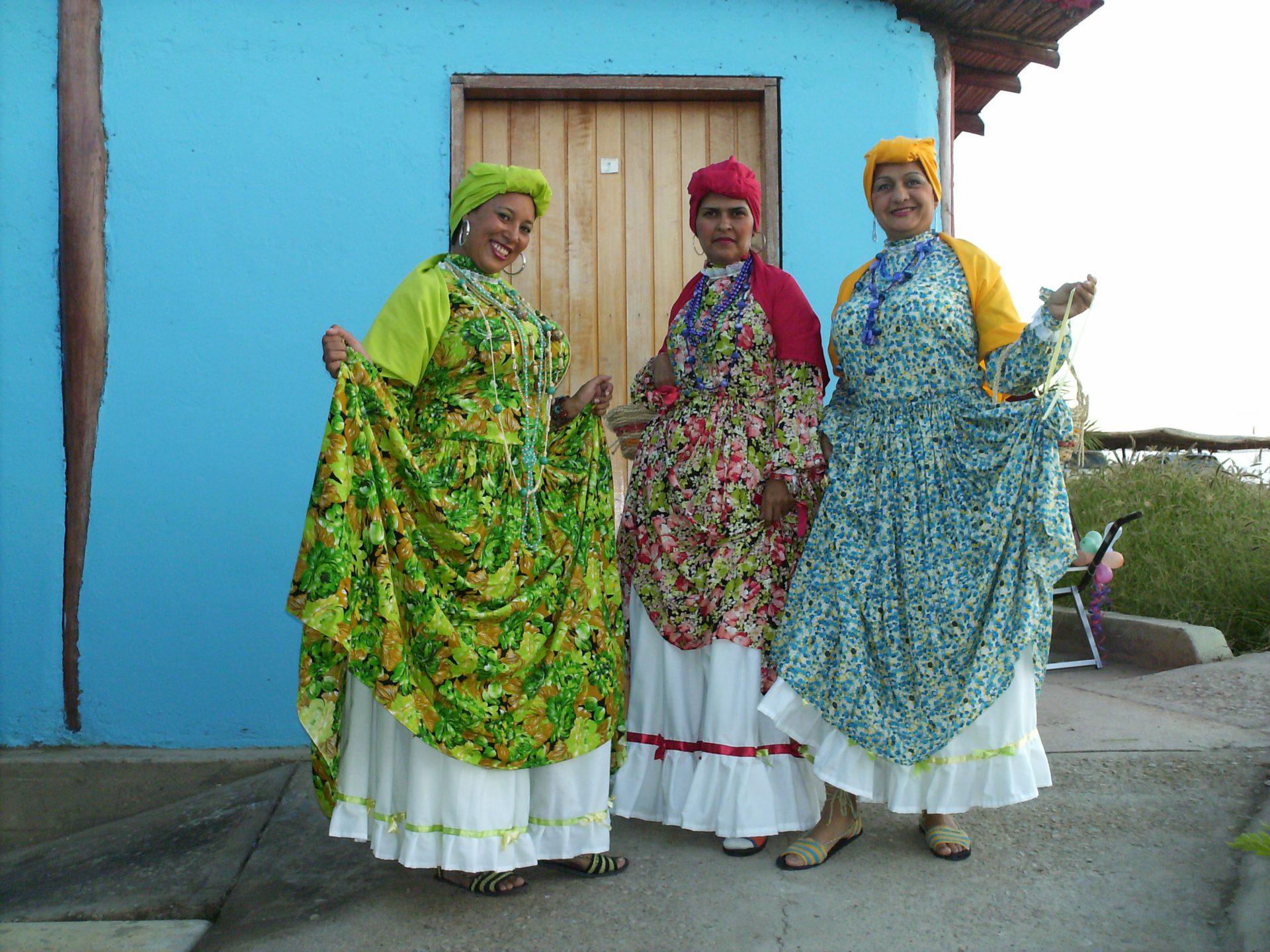
Traditional Venezuelan clothing tells a story that starts on the open plains of Los Llanos and stretches to the Caribbean coast and the Andean highlands. Each garment on this list grew out of a specific landscape, climate, or community, which is why a cowboy’s hat from the grasslands looks nothing like the woven dress of a Wayuu grandmother from the Guajira peninsula.
Many of these pieces are still worn today, whether at a joropo dance, a wedding, or a regional festival tied to Venezuela’s agricultural calendar. The sections below walk through eleven of the country’s most recognizable traditional garments, covering where each one came from, what it is made of, and why it still matters.
1. Liquiliqui
The liquiliqui is the closest thing Venezuela has to a national uniform for men. It originates from the territory known as Los Llanos, a large open plain, and the design of the outfit suits the local climate and weather conditions, with plenty of direct sun, high temperatures, and strong winds. The garment needed to be light, breathable, and pale in color to survive a day on horseback under the tropical sun.
The trousers are full-length and straight-cut, the jacket has long sleeves and a rounded Nehru-style collar, and this collar is the distinctive feature of the Venezuelan traditional jacket, with the jacket carrying five or six buttons and up to four pockets or none at all. The liqui liqui is traditionally made of linen or cotton cloth, although gabardine and wool can be used, and the outfit is made up of a pair of full-length trousers and a jacket.
The liqui liqui is so popular in Venezuela that it is officially recognized as the national dress, and it remains the standard outfit for joropo dancers and formal traditional dress at folkloric events across the country. It shares a visual language with other regional formal suits, much like the tailored silhouettes found in traditional American clothing from earlier centuries.
Pro Tip: A well-fitted liquiliqui is cut close to the body with a straight, boxy jacket rather than a tapered Western blazer. If you are shopping for one, look for the rounded stand-up collar and the metal clasp at the throat, since those two details separate an authentic liquiliqui from a generic linen suit.
You can read more about the suit’s origins and regional variations at the Wikipedia entry on the liqui liqui and at Nationalclothing.org’s profile of Venezuela’s male national attire .
2. Alpargatas
No liquiliqui outfit is complete without alpargatas. The suit is usually complemented with a cowboy hat called llanero and traditional footwear called alpargata, an open-toed sandal. These flat, rope-soled sandals keep feet cool on the plains while still offering enough coverage for farm work and dancing alike.
Alpargatas belong to a broader family of woven sandals found across Latin America, related to the espadrille tradition that spread through the Spanish-speaking world. Traditional espadrilles have a canvas upper with the toe and vamp cut in one piece and seamed to the rope sole at the sides, a construction method that Venezuelan artisans adapted using local materials.
Venezuelan alpargatas are traditionally woven from cotton or cocuiza, a fiber drawn from the agave plant that grows wild across the dry plains and Andean foothills. Leather versions, sturdier and better suited to farm labor, are also common, and artisans in rural markets still hand-stitch both styles the same way their grandparents did. For context on how other cultures reimagine simple woven footwear, see the broader category page on traditional clothing and style.
3. Llanero Hat
The third piece of the classic llanero outfit sits on the head rather than the feet. The Venezuelan traditional hat is also called the llanero hat, since llanero means cowboy, and it is a starched cowboy hat built to hold its shape through long hours of sun and wind on the open range.
The llanero hat usually matches the pale tones of the liquiliqui jacket, with a stiff, wide brim that shades the face and neck during cattle work. It functions much like other iconic working hats found around the world, including the broad-brimmed bush hats that define traditional Australian clothing in similarly sun-exposed grazing regions.
For formal events, the full llanero look pairs the liqui liqui made of linen with attractive buttons, black leather boots, and the hair-style hat alongside a riding hood, showing how the hat, jacket, and footwear were always meant to be worn as a complete set rather than separate items.
4. Pelo E’ Guama
Pelo e’ guama refers to a finely woven straw hat associated with Venezuela’s Andean foothills, where artisans split palm fiber into thread-thin strands before weaving them into a tight, almost hair-like texture that gives the hat its name, loosely translating to “guama hair.” The weave is noticeably finer than that of everyday work hats, which is why pelo e’ guama pieces have historically been reserved for dressier occasions rather than daily labor.
Producing one of these hats by hand can take days rather than hours, since the fiber has to be prepared, dried, and braided before the weaver even begins shaping the crown. That level of handcraft places pelo e’ guama alongside other prestige hand-woven textiles found in artisan traditions worldwide, including the detailed handloom work behind much of traditional Indian clothing.
Key Insight: Venezuela has more than one traditional straw hat, and they are not interchangeable. Pelo e’ guama is the fine, dress-occasion weave, while the sombrero de cogollo below is the everyday, farm-ready version made from a coarser palm fiber.
5. Sombrero De Cogollo
The sombrero de cogollo takes its name from the cogollo, the tender inner shoot or heart of certain palms that grow across the Llanos. Weavers strip and dry this shoot before braiding it into a lightweight hat that breathes well in the heat, making it the practical, everyday counterpart to the finer pelo e’ guama.
In Venezuela’s regional dress, men commonly wear wide pants and straw hats, with the attire in some areas placing a special emphasis on the liquiliqui and the straw hats that accompany it, a pattern that holds especially true in rural Llanos communities. Local markets in Barinas, Apure, and Guárico still sell handwoven cogollo hats alongside alpargatas and other llanero gear, according to regional costume overviews from Maestrovirtuale’s guide to Venezuela’s regional costumes .
Because the fiber is coarser and faster to prepare than the thread used for pelo e’ guama, a sombrero de cogollo is generally more affordable and more disposable, meant to be worn hard during fieldwork rather than preserved for special occasions.
6. Cotizas
Cotizas are sturdy leather sandals worn mainly in Venezuela’s Andean states, where rougher terrain and cooler temperatures call for more durable footwear than the woven alpargata can provide. Unlike the rope-soled alpargata, cotizas typically use a single piece of tanned leather folded and stitched into a simple strap sandal, sometimes reinforced with a rubber sole for working outdoors.
| Feature | Alpargatas | Cotizas |
|---|---|---|
| Primary region | Los Llanos plains | Andean highlands |
| Main material | Cotton, cocuiza fiber, or leather | Leather, often with rubber soling |
| Typical wearer | Llaneros, dancers, farm workers | Andean campesinos, mountain laborers |
| Construction | Woven rope sole, open toe | Folded leather strap, closed or open design |
Local artisans in towns across Mérida and Táchira continue to hand-cut and stitch cotizas using techniques passed down through generations, a craft tradition comparable to the regional handmade footwear still produced in parts of traditional Pakistani clothing culture.
7. Ruana
Once travelers leave the hot plains behind and climb into the Andes, the lightweight liquiliqui gives way to the ruana. The ruana is a woolen poncho-like garment worn in colder rural areas, and it solves a problem the Llanos never has: genuine cold at altitude in states like Mérida and Táchira.
A ruana is typically a rectangular piece of thick wool fabric with a slit cut for the head, worn open at the front like a cape rather than closed like a true poncho. Shepherds and farmers in the highlands have relied on this design for generations because it allows free movement of the arms while still trapping body heat, a practical solution shared with other cold-climate wool garments such as the wool coats found in traditional German clothing from alpine regions.
The ruana is not unique to Venezuela; it is worn across the Andean borderlands shared with Colombia, and the two countries’ highland communities have exchanged weaving techniques for centuries. You can find more detail on how the garment fits into Venezuela’s broader clothing traditions at Civilisable’s overview of traditional Venezuelan clothing .
8. Manta Guajira
The manta guajira belongs to the Wayuu people, an Indigenous nation whose territory spans the Guajira peninsula across both Venezuela’s Zulia state and neighboring Colombia. It is a loose, flowing dress that falls to the ankles, cut wide enough to move easily in the desert heat of the peninsula while still covering the body from sun and wind.
What sets the manta guajira apart visually is its color and pattern work. Wayuu women traditionally choose bold, saturated colors and bands of contrasting trim, and many wearers pair the dress with the equally famous Wayuu mochila, a hand-woven shoulder bag that has become a recognizable export item well beyond Venezuela’s borders.
Important Note: The manta guajira is a living Indigenous garment tied to Wayuu identity, not a generic folk costume. Outside of Wayuu communities, it is best appreciated as cultural heritage rather than copied as a casual fashion item.
9. Guayuco
Further south and east, in the forested interior along the Orinoco basin and the Amazonas region, Indigenous communities such as the Yanomami, Warao, and Pemón have long relied on the guayuco. This simple loincloth, made from plant fiber or woven cotton and tied at the waist, was the primary garment for many Amazonian groups long before European contact reshaped clothing across the rest of the country.
The guayuco’s simplicity reflects the practical needs of a hot, humid rainforest environment where heavy fabric offers little benefit and plenty of discomfort. Today, it survives mainly in ceremonial contexts and within Indigenous communities that maintain traditional dress alongside modern clothing, a pattern seen in Indigenous garment preservation efforts documented in traditional American clothing history as well.
10. Falda De Siete Varas
On Margarita Island and in parts of eastern Venezuela, the falda de siete varas is the showpiece of traditional women’s dance costume. The name translates to “skirt of seven varas,” referencing the old Spanish unit of length once used to measure the sheer volume of fabric gathered into the skirt’s waistband.
That extra fabric is not decorative excess; it is functional for performance. The wide, gathered cut allows the skirt to swirl dramatically during folk dances such as the polo margariteño, turning simple footwork into a visual spectacle of color and movement. Dancers typically pair the skirt with:
- A fitted, embroidered blouse in a contrasting bright color
- Layered petticoats underneath to add volume and structure
- Ribbon or lace trim along the hem to accentuate the swirl
- Flowers or a simple headpiece rather than heavy jewelry
The garment shares its love of volume and movement with other festival skirts found in folk traditions worldwide, including some of the layered silhouettes seen in traditional Chinese clothing used for regional dance performances.
11. Junta
The junta is small, but it is the detail that makes a liquiliqui recognizable at a glance. The collar of the jacket is fastened by a chain link similar to a cufflink called a junta, and it is this closure, rather than buttons or hooks, that holds the distinctive Nehru-style collar shut at the throat.
Juntas are usually made of silver, gold-tone metal, or sometimes mother-of-pearl, and families often keep a well-made junta as an heirloom, passing it down for weddings and formal occasions rather than buying a new one with every suit. Since the jacket has long sleeves and a rounded Nehru-style collar, and this collar is the distinctive feature of the Venezuelan traditional jacket, the junta effectively becomes the one piece of jewelry a liquiliqui actually requires.
You can see detailed breakdowns of how the junta and collar work together in the full costume description from Worldkings’ profile of the liqui liqui , which also covers the hat and footwear that complete the traditional look.
Taken together, these eleven garments map out a country shaped by three very different environments: the hot grasslands of Los Llanos, the cool Andean highlands, and the Caribbean and Amazonian edges where Indigenous communities kept their own dress traditions alive. Whether it is a liquiliqui tailored for a wedding or a manta guajira woven by hand on the Guajira peninsula, Venezuelan traditional clothing remains a working record of who wore what, where, and why. For a taste of the food traditions that often accompany these festival costumes, see this guide to traditional Venezuelan food, and for comparisons with how other cultures preserve their own dress heritage, explore traditional Japanese clothing.