Why Is My Fiddle Leaf Fig Not Growing? Causes and Fixes

August 26, 2026
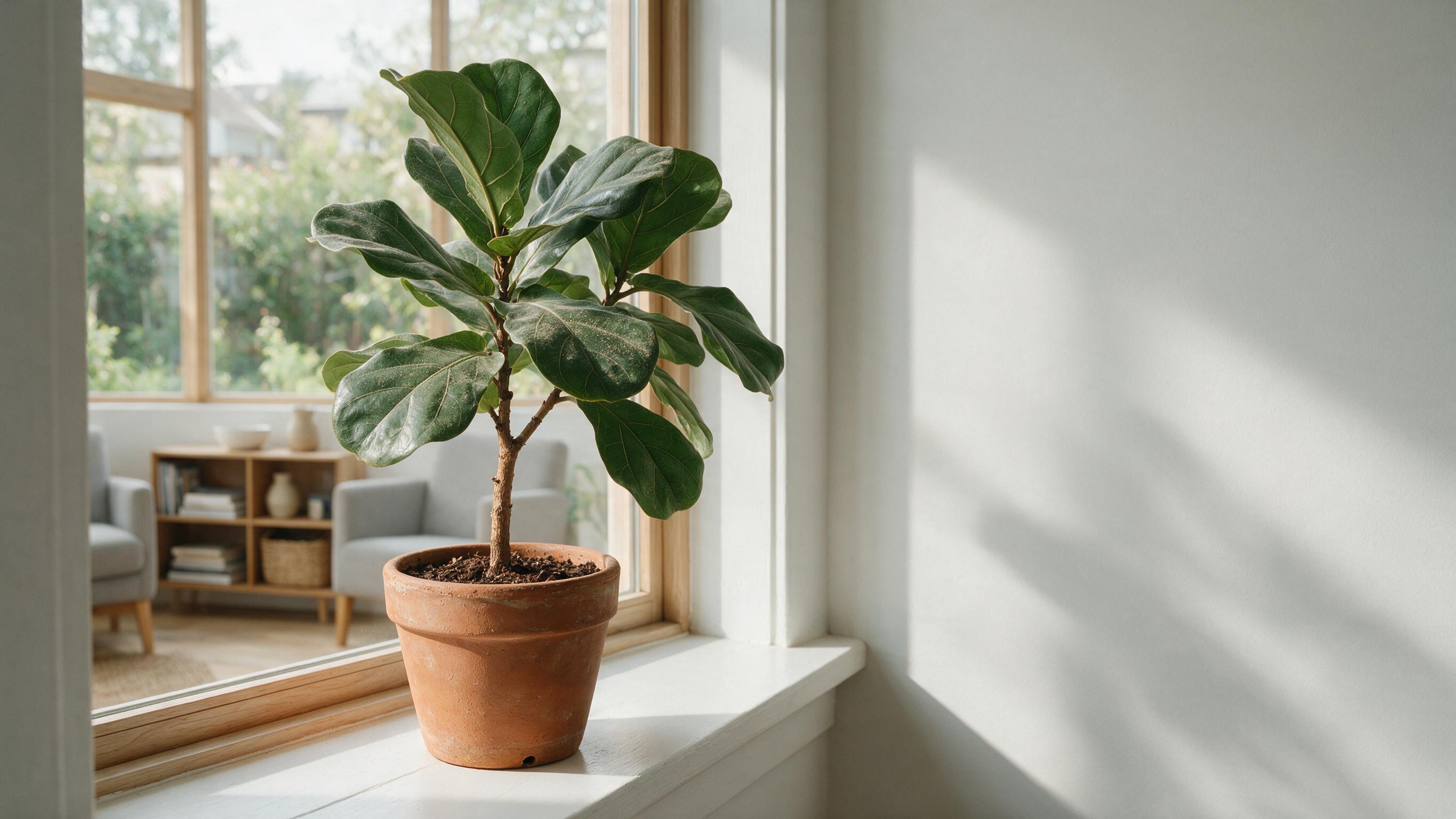
Few houseplants inspire as much devotion — or as much frustration — as the fiddle leaf fig. You bring one home, find it the perfect spot, and then watch it sit completely still for weeks or months. No new leaves. No upward push. Nothing.
The good news is that a stalled fiddle leaf fig is almost always a solvable problem. When fiddle leaf figs refuse to grow new leaves, it is usually related to their growing conditions and overall environment. Poorly draining soil, irregular watering, under-fertilization, pests and diseases, insufficient light, a lack of humidity, and stress can all affect a fiddle leaf’s growth. Once you identify the root cause, recovery is well within reach.
This guide walks you through every major reason your fiddle leaf fig may have stopped growing, how to diagnose the specific problem in your plant, and the practical steps to get it thriving again. If you enjoy big, dramatic foliage plants, you might also want to browse this list of big-leaf indoor plants for more inspiration.
What Does It Mean When Your Fiddle Leaf Fig Is Not Growing?
A fiddle leaf fig that has stopped putting out new leaves is telling you something about its environment or health — but it is not automatically a crisis. If your fiddle leaf fig is healthy, you will notice it producing new leaves regularly during its growing season, which typically runs from spring through early fall. Outside that window, a pause in growth is expected.
Healthy fiddle leaf figs usually grow new leaves every four to six weeks during spring and summer. Growth tends to be in spurts, and it is possible to see your plant grow several new leaves in a matter of just a few days or weeks. In the winter, it is normal not to have any new growth.
The fiddle leaf fig — known botanically as Ficus lyrata — is native to the tropical rainforests of West Africa, where it grows in warm, bright, humid conditions year-round. It is normal that when plants are in an environment that is different from their natural habitat, like our homes, their growth will be somewhat inhibited by the conditions. Because fiddle leaf figs are naturally tropical plants, they grow best in bright, warm, and humid conditions.
A healthy fiddle leaf fig has glossy, deep-green leaves, steady new growth in season, a firm trunk, and white, firm roots, with no brown spots, yellowing, or mushiness. If your plant checks most of those boxes but still is not pushing new leaves, the issue is almost certainly an environmental or care factor — not a dying plant.
Is Not Growing in a Fiddle Leaf Fig Always a Sign of a Problem?
Not always. Timing matters enormously with this plant. Between growth bursts, you may not see individual leaves coming through. Because fiddle leaf figs have such large leaves, they need this time between spurts for their new leaves to strengthen and mature — and to stock the energy required to grow more of these large and lush leaves.
Seasonal dormancy is also completely normal. In the winter, it is normal not to have any new growth. If you bought your plant in fall or moved it recently, giving it four to eight weeks to settle before expecting new leaves is reasonable.
Pro Tip: Before assuming something is wrong, note when you last saw growth and what season it is. A fiddle leaf fig that has been still for two months in January is behaving normally. The same plant sitting still in June likely needs attention.
If you are struggling with a fiddle leaf fig that is not growing, first ask if it is in a natural period of little growth due to winter or recent changes. Only after ruling out those factors should you dig into the care-related causes below.
Watering Issues Causing Fiddle Leaf Fig Stunted Growth
Water is one of the most common culprits when a fiddle leaf fig stops growing — and the tricky part is that both too much and too little can produce similar results: a plant that simply refuses to push new leaves.
Plants need water to support their metabolic functions, including growth. A dry plant will not have the resources to grow. If your soil feels dry an inch or two below the surface and has been for a while, watering might be your issue. On the other end, one of the biggest risks fiddle leaf fig owners face is root rot, and it is often one of the main reasons why your fiddle leaf fig may not be growing new leaves.
Watering every seven to ten days should suffice. If the fiddle leaf fig’s leaves start curling up and feel dry, your plant is thirsty. Leaves that soften and turn brown at the edges indicate too much water.
The location of leaf drop can also tell you which watering problem you have. If the older leaves toward the bottom are going first, it is likely overwatering. However, if the leaves are falling off from all over the plant, it is likely underwatering.
- Overwatering signs: yellowing leaves, soft stems, soggy soil, musty smell, leaf drop from the bottom up
- Underwatering signs: curling leaves, dry crisp edges, soil pulling away from the pot, leaf drop throughout the plant
- Fix: Water when the top one to two inches of soil are dry. Avoid leaving it in standing water to prevent root rot.
A soil moisture meter takes the guesswork out of this entirely and is one of the most useful tools any fiddle leaf fig owner can have.
Light Conditions Behind Fiddle Leaf Fig Stunted Growth
One of the most common reasons a fiddle leaf fig might not be growing is insufficient light. These plants love bright, indirect sunlight, much like what they would receive in their native habitat under the rainforest canopy.
Light is the key requirement for plants to create energy through photosynthesis, so it makes sense that if they are not getting enough light, they cannot produce the energy required to grow. Fiddle leaf figs grow best when positioned directly in front of a window or door. What you may not realize is that the light level dramatically decreases as soon as a plant is more than a couple of feet from a window.
Bright, indirect light is ideal. Too little light can cause leaf drop, while direct sun may scorch the leaves. In most US homes, a south- or east-facing window is the best placement. West-facing windows work well too, especially in northern states where afternoon sun is less intense.
Pro Tip: Rotate your plant every few weeks to ensure all sides receive equal light, promoting even growth. If natural light is limited, especially in winter months, consider using a grow light to provide the necessary illumination.
If you live in an apartment with limited natural light, you are not out of options. Check out this guide to the best houseplants for low-light areas for plants that may be better suited to dimmer rooms, or explore grow light options to supplement your fiddle leaf fig’s needs.
Soil, Nutrients, and Root Health Causing Fiddle Leaf Fig Stunted Growth
Even with perfect watering and light, a fiddle leaf fig will stall if its soil is depleted or its roots are compromised. These two issues are closely linked.
Nutrient Deficiency
Healthy fiddle leaf figs grow fast, usually in spurts, and for this reason they require plenty of nutrition in the form of nitrogen-rich fertilizer. They cannot form and produce their big, dark green leaves without it. Under-fertilization causes existing fiddle leaf fig leaves to yellow and will noticeably slow the growth of a Ficus lyrata. Fertilize your fiddle leaf fig every few weeks during the spring and summer and taper off from feeding during the cooler months.
Plants get their energy from sunlight, but they also require certain nutrients in their soil in order to grow and thrive. These nutrients occur naturally in the plant’s native outdoor habitat, but for indoor plants, they need to get their nutrients from the soil they are potted in. Most potting soils come enriched with nutrients, but it does not take long before the plant has used all those nutrients up and needs to be supplemented.
Look for a fertilizer with an NPK ratio of approximately 3:1:2 — this means having an NPK ratio of 9:3:6, also expressed as 3:1:2. Apply it during the growing season (spring through early fall) and stop feeding in winter.
Root Bound or Root Rot
Another common reason for stunted growth in fiddle leaf figs is outgrowing their pot, or getting root bound. This is when the roots wrap so tightly around themselves that they cannot branch out or absorb the water or nutrients necessary to support growth. If you notice lots of roots popping out the top of your soil or coming out the bottom of your pot, it is probably time to repot. Most fiddle leaf figs need to be repotted every two to three years.
However, be careful not to repot unnecessarily. These plants prefer to be snug in pots. Unless your plant is extremely root bound or the soil is so old that it is nutrient deficient, repotting will not always have a big impact on growth rate.
Root growth always precedes top growth in plants, which means your plant might be devoting all its resources to replacing roots that are dying from over- or under-watering. If root rot is present, healthy roots are firm and light-colored. Mushy, brown, or foul-smelling roots may indicate rot. Trim affected roots with clean tools and repot the plant in a well-draining soil mix.
Use a well-draining potting mix designed for indoor plants. A mix with peat, perlite, or coco coir is great for avoiding soggy roots.
Environmental Stress Triggering Fiddle Leaf Fig Stunted Growth
Fiddle leaf figs are famously sensitive to environmental change — perhaps more than any other common houseplant. A move across the room, a nearby heating vent turning on, or a cold draft from a window can all put the brakes on growth.
Fiddle leaf figs prefer stable conditions with temperatures ranging between 60–75°F (15–24°C). They are also sensitive to drafts and temperature fluctuations, so placing them away from air vents, doors, or drafty windows is essential.
Fiddle leaf figs prefer warm, stable indoor conditions. Sudden temperature changes, cold drafts, heating vents, air conditioners, and dry air can shock the plant and trigger leaf drop. Keep your plant away from drafty windows, exterior doors, radiators, and AC vents.
Humidity is equally important. The ideal humidity for a fiddle leaf fig is between 30–65%. The humidity in an average household is usually sufficient for these plants. Still, if you live in an arid climate, you can increase the humidity by misting the plant or placing a humidity tray.
Pro Tip: Avoid misting your fiddle leaf fig because it interferes with respiration, photosynthesis, and can encourage powdery mildew. Instead, consider setting up a humidifier in the room — but do not aim it directly at the plant.
Moving stress is also real. People often try keeping the plant in new locations. Fiddle leaf figs do not like to be moved around, so once you find a suitable bright location for it, the best thing to do is leave it be. This allows it to settle in and get into a routine.
Pests and Disease Leading to Fiddle Leaf Fig Stunted Growth
The good news about fiddle leaf figs is that they are not prone to pests. On occasions, spider mites or scale may infect your plant, but these are easy to treat. If left unattended, however, pest infestations will stunt a Ficus lyrata‘s growth, including potentially causing your fiddle leaf fig to stop growing new leaves.
Pests can also cause a fiddle leaf fig to drop leaves. Spider mites, scale, mealybugs, and thrips can weaken the plant by feeding on leaves and stems. Check the undersides of leaves, the base of stems, and new growth for webbing, sticky residue, small bumps, cottony white patches, or tiny moving insects.
On the disease side, irregular, spreading brown patches on leaves can indicate bacterial leaf spot disease, often introduced from nurseries or other infected plants. Root rot from overwatering is the most common fungal-related problem. Prune all affected leaves using sterilized scissors. Disinfect tools between cuts to prevent spreading the disease. Improve air circulation around the plant. Use a copper-based fungicide if necessary.
| Pest / Disease | What to Look For | Treatment |
|---|---|---|
| Spider Mites | Fine webbing, tiny dots on leaves | Neem oil or insecticidal soap |
| Mealybugs | Cottony white patches at stem joints | Rubbing alcohol on a cotton swab, then neem oil |
| Scale | Small brown bumps on stems and leaves | Scrape off, then treat with insecticidal soap |
| Bacterial Leaf Spot | Irregular spreading brown patches | Remove affected leaves, copper-based fungicide |
| Root Rot | Mushy brown roots, musty smell, yellowing leaves | Trim roots, repot in fresh well-draining soil |
If you want a reliable way to identify what is on your plant, a plant identification app can help you diagnose issues quickly. Check out the best iPhone apps for identifying plants or the best Android apps for identifying plants for some solid options.
How to Diagnose Why Your Fiddle Leaf Fig Is Not Growing
Instead of changing everything at once and hoping something works, take a systematic approach. Leaf drop usually follows stress from moving, low light, overwatering, underwatering, cold drafts, or sudden temperature changes. Match the pattern before changing everything at once.
Work through this checklist one factor at a time:
- Check the season. If it is fall or winter, slow or no growth is normal. Resume assessment in spring.
- Assess the light. Is the plant within two feet of a bright window? If not, move it closer before making any other changes.
- Test the soil moisture. Push your finger two inches into the soil. Is it bone dry or soaking wet? Both are problems. Aim for slightly moist.
- Inspect the roots. If your fiddle leaf fig’s soil stays wet for too long, gently inspect the roots. Healthy roots are firm and light-colored. Mushy, brown, or foul-smelling roots may indicate rot.
- Look for pests. Regularly inspect your plant for signs of pests, including webbing, sticky residue, or visible bugs. Check both the tops and undersides of leaves.
- Review your fertilizing history. If you have not fertilized in over three months during the growing season, nutrient depletion is likely contributing to the stall.
- Consider recent changes. Like us, plants can get stressed too. Stress can be caused by a recent move, repotting, or a dramatic change in environment. A stressed plant is less likely to grow as it focuses its energy on survival rather than expansion.
Brown spots are easier to fix when you look at the pattern. Soft dark patches with yellowing often point toward wet roots. Dry tan edges often point toward dryness, hot light, or dry air. Small speckles, webbing, sticky residue, or moving dots suggest pests.
How to Fix a Fiddle Leaf Fig That Is Not Growing
Once you have identified the cause, here is how to take action. Address one issue at a time so you can tell what is actually working.
Fix Light First
To encourage growth, increase light levels either by moving the plant in front of a window or using a grow light. A fiddle leaf fig needs very bright indoor light. A bright east window, filtered south or west window, or a strong grow light setup is usually better than a dim corner. This is the single most impactful change you can make.
Correct Your Watering Routine
Give it bright indirect light, water only when the top two inches of soil are dry, use fast-draining soil and a pot with drainage, feed in the growing season, and rotate it. If you suspect root rot, remove the plant from its pot, trim any mushy roots with clean scissors, let the roots air out briefly, and repot into fresh, well-draining mix.
Start Fertilizing
Fiddle leaf figs need nutrients to support large, healthy leaves. If your plant has not been fertilized or repotted in a long time, depleted soil may contribute to weak growth and leaf drop. During the active growing season, use a balanced houseplant fertilizer according to the product instructions. Avoid overfertilizing, which can burn roots and make stress worse.
Repot If Necessary
If your fiddle leaf fig is too big to repot, you can top-dress it by removing the top four inches of soil and replacing it with fresh soil. This refreshes nutrients without the disruption of a full repot. If the plant is genuinely root bound, move it to a pot that is only one to two inches larger in diameter — going too big can lead to overwatering problems.
Stabilize the Environment
If you need to move your plant, do it gradually. Introduce it to the new spot by placing it there for a few hours each day, gradually increasing the time over a week or two. This gradual acclimation can help minimize stress and leaf drop.
Treat Pests Promptly
If you find pests, isolate the plant and treat it promptly with an appropriate houseplant-safe pest control product. Treat with neem oil or insecticidal soap, applying as directed on the product label. Repeat every seven days for three weeks to break the pest life cycle.
You may also find it helpful to explore types of plants that share similar care requirements to better understand tropical houseplant needs as a whole.
How to Prevent Fiddle Leaf Fig Stunted Growth Going Forward
Prevention is far easier than recovery. Once your plant is growing again, keeping it that way comes down to consistency and a few key habits.
- Establish a watering schedule. To maintain a good watering regime, practice consistency. Watering every seven to ten days should suffice — but always check the soil first rather than watering on autopilot.
- Keep it in one bright spot. Fiddle leaf figs do not like frequent changes in location. Find the brightest window in your home and commit to it.
- Rotate regularly. Give the pot a quarter turn every two weeks so all sides get even light exposure and the trunk grows straight.
- Fertilize seasonally. During the growing season — spring and summer — fertilize every four to six weeks with a diluted, balanced fertilizer. Stop feeding in fall and winter.
- Clean the leaves. Plants not only absorb sunlight through their leaves, but they also breathe through them. If your plant has a layer of dust on its large leaves, it will not be able to perform either of these functions as well. Wipe leaves with a damp cloth every few months.
- Maintain stable temperatures. Avoid placing your plant near drafts, heaters, or air conditioning vents, as sudden temperature changes can stress the plant.
- Check for pests monthly. Keep the leaves clean by wiping them with a damp cloth periodically, as dust can attract pests. A monthly inspection of leaf undersides catches infestations early.
Pro Tip: Healthy fiddle leaf figs usually grow new leaves every four to six weeks during spring and summer. Growth tends to be in spurts, and it is possible to see your plant grow several new leaves in a matter of just a few days or weeks. Use this as your benchmark — if you go more than eight weeks in the growing season with no new growth, revisit your care routine.
If you are building out your indoor plant collection alongside your fiddle leaf fig, there are some great companions to consider. Plants like rubber trees share similar tropical care needs — see the different types of rubber plants for options that thrive in similar conditions.
Frequently Asked Questions
How Long Does It Take for a Fiddle Leaf Fig to Start Growing Again?
Once you correct the underlying issue — usually light, water, or nutrients — most fiddle leaf figs begin pushing new growth within four to eight weeks. Be patient and avoid making multiple changes at once, which makes it harder to identify what actually helped.
Should I Repot My Fiddle Leaf Fig to Encourage Growth?
People will often repot their plants as a solution for not seeing any growth. Fiddle leaf figs are unique in that they are quite okay being snug in their pot. Only repot if it has been years since the soil has changed, or if it is very root bound. Changing the soil otherwise will not necessarily impact the growth of the plant.
Can a Fiddle Leaf Fig Recover from Root Rot?
Yes, if caught early enough. One of the biggest risks fiddle leaf fig owners face is root rot, and it is often one of the main reasons why your fiddle leaf fig may not be growing new leaves. One way to avoid root rot is to ensure it is planted in well-draining potting mix. If rot is present, trim the damaged roots, let them dry briefly, and repot into fresh, well-aerated soil.
Why Are My Fiddle Leaf Fig’s New Leaves Coming in Small?
Growing new leaves requires a lot of energy and resources from the plant. Smaller leaves indicate a lack of resources like water, light, or fertilizer. If the new leaves grow in small and stunted, it could be a sign that your plant is lacking in nutrients. If it has been years since you repotted, consider repotting to give your plant fresh soil, or simply fertilize your plant in the spring and summer to give it the extra nutrients it needs.
Is My Fiddle Leaf Fig Dead If It Has Stopped Growing?
Not at all. Either you have had your fiddle leaf fig for a while and it has not grown, or it did grow at one point but now growth has stopped. A plant that looks green, has firm leaves, and shows no signs of rot or severe pest damage is almost certainly alive — it just needs better conditions. Work through the diagnostic checklist in this article and give it time.
How Do I Know If My Fiddle Leaf Fig Is Getting Enough Light?
Fiddle leaf figs grow best when positioned directly in front of a window or door. The light level dramatically decreases as soon as a plant is more than a couple of feet from a window. If your plant is more than two to three feet from its nearest window, that is your first problem to solve. A south- or east-facing window is ideal in most US homes.