Different Types of Fruits Explained (With Categories and Examples)

Updated April 18, 2026
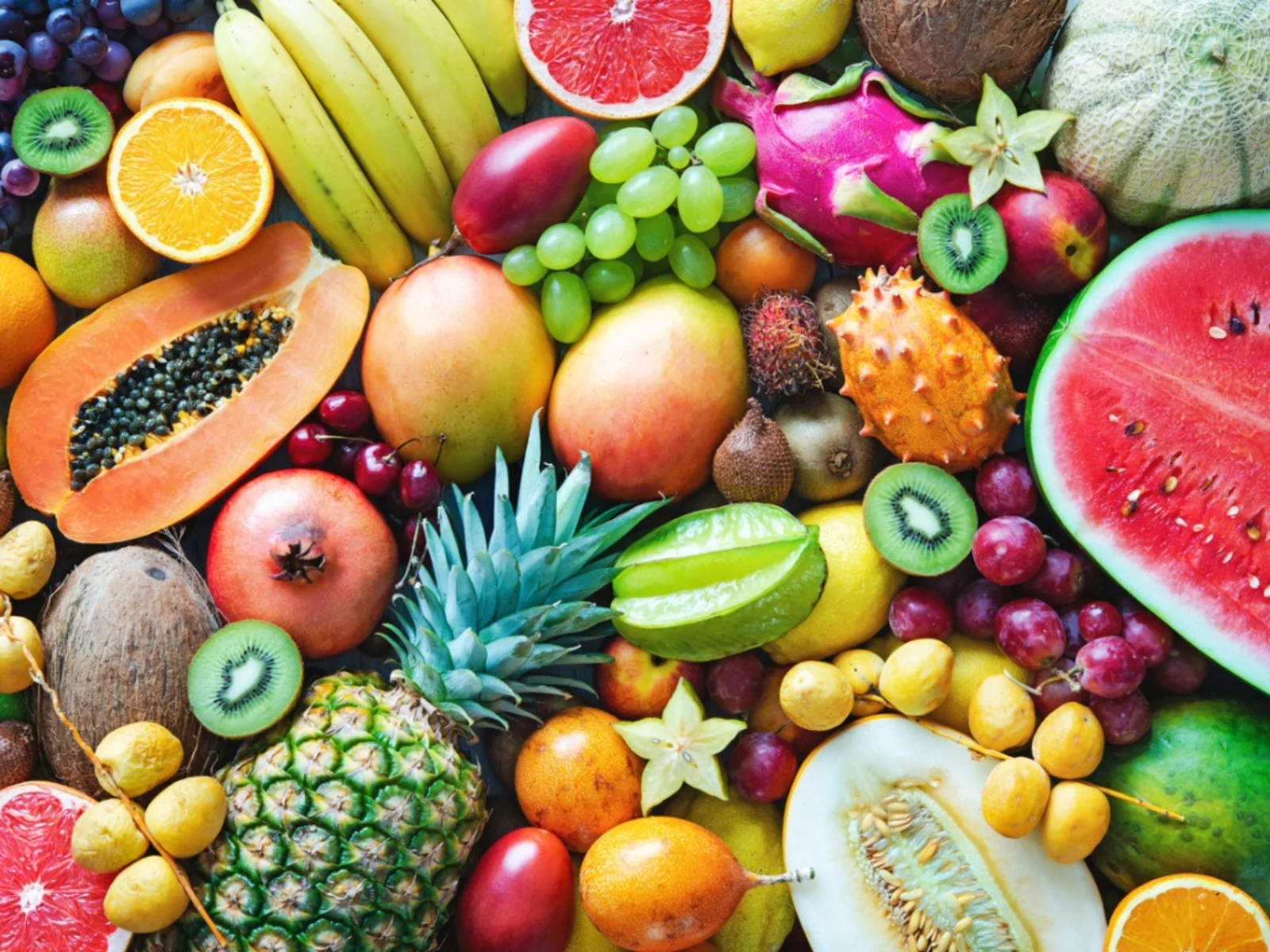
Fruits are among the most diverse, colorful, and nutritionally rich foods on the planet — yet most people only scratch the surface of how many types actually exist. From the sharp tang of a grapefruit to the velvety sweetness of a ripe mango, the world of fruit spans thousands of species, dozens of botanical classes, and an enormous range of flavors, textures, and uses.
What makes fruit classification especially fascinating is that the culinary world and the botanical world rarely agree. A tomato sits on a salad but belongs to the same scientific category as a blueberry. A strawberry delights dessert lovers worldwide, yet botanists argue it isn’t technically a berry at all. Understanding the different types of fruits — both how we eat them and how science defines them — opens up a richer appreciation for the food that fills every kitchen, market, and orchard on earth.
This guide walks through every major fruit category, from familiar culinary groupings like citrus and stone fruits to the botanical classes that define how fruits actually form. Along the way, it highlights exotic varieties, surprising facts, and the nutritional value packed into each type.
What Is a Fruit?
In botanical terms, a fruit is the mature ovary of a flowering plant, typically containing seeds. It develops after fertilization and serves one primary biological purpose: to protect and disperse seeds so the plant can reproduce. This definition is broad enough to include tomatoes, cucumbers, and even acorns — foods that most people would never place in a fruit bowl.
The culinary definition is far more intuitive. In cooking and everyday language, a fruit is any sweet or tart plant product that is eaten as a snack, dessert, or fresh food. This is the definition most people use at the grocery store, and it forms the basis for the culinary categories explored in this guide.
Key Insight: The word “fruit” comes from the Latin fructus, meaning “enjoyment” or “use.” Botanically, it refers to the seed-bearing structure of a plant — which is why vegetables like peppers and squash are technically fruits in scientific classification.
Both definitions matter. Culinary categories help people cook, shop, and eat. Botanical categories explain how fruits grow, reproduce, and relate to one another scientifically. Together, they paint a complete picture of one of nature’s most extraordinary food groups. Exploring the different types of food more broadly reveals just how central fruit is to global cuisines and nutritional traditions.
Culinary Types of Fruits
Culinary fruit categories are organized by flavor profile, texture, growing conditions, and how fruits are commonly used in the kitchen. These groupings are practical and widely recognized by chefs, nutritionists, grocers, and home cooks around the world. The seven major culinary categories below cover the vast majority of fruits found in markets globally.
Citrus Fruits
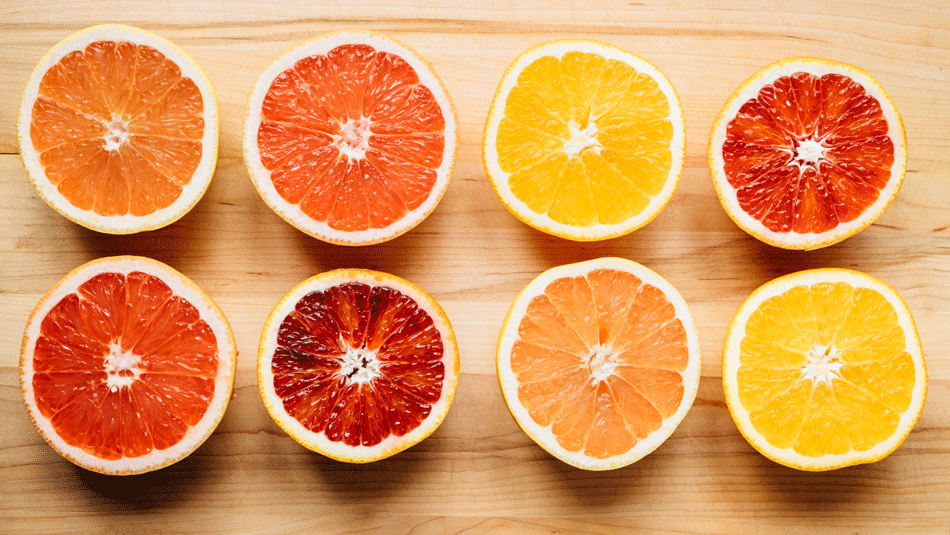
Citrus fruits are instantly recognizable by their bright colors, fragrant peels, and the balance of sweet and acidic juice inside. They belong to the genus Citrus in the family Rutaceae and are native to Southeast Asia, though they are now grown across tropical and subtropical regions worldwide. Their high vitamin C content has made them nutritional staples for centuries.
Common examples include oranges, lemons, limes, grapefruits, tangerines, clementines, pomelos, and kumquats. Each variety offers a distinct flavor intensity and level of acidity. Lemons and limes lean sharp and tart, making them essential for cooking and cocktails. Mandarins and clementines are sweeter and easier to peel, making them popular snacks. Blood oranges deliver a raspberry-like undertone alongside their citrus punch.
- Oranges: High in vitamin C, folate, and potassium; widely consumed as juice
- Lemons: Rich in citric acid; used extensively in cooking, baking, and beverages
- Grapefruits: Known for their bitter edge; associated with heart health benefits
- Pomelos: The largest citrus fruit; milder and less acidic than grapefruit
- Kumquats: Eaten whole, skin included; uniquely sweet peel with tart flesh
The diversity within this family is remarkable. For a deeper look at the full spectrum of varieties, the different types of citrus fruits span far beyond the familiar grocery store staples. Citrus fruits are also among the most versatile in culinary applications — used in everything from savory marinades to dessert glazes and aromatic zest.
Pro Tip: When buying citrus, choose fruits that feel heavy for their size — this indicates high juice content. A thin, smooth skin typically signals a juicier fruit than a thick, bumpy rind.
Stone Fruits
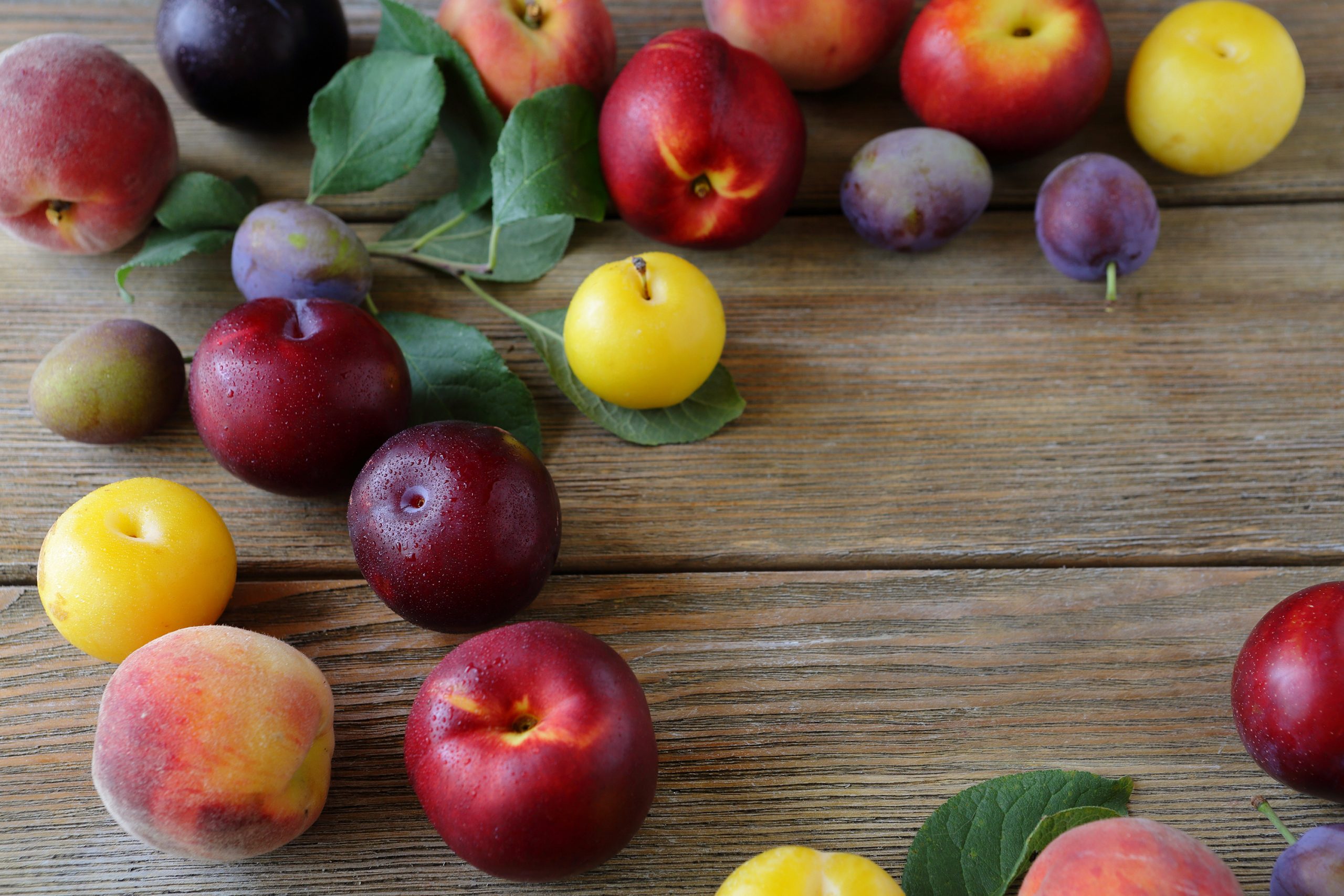
Stone fruits, also called drupes, are defined by their fleshy outer layer surrounding a hard inner pit — or “stone” — that contains the seed. They belong primarily to the genus Prunus and thrive in temperate climates with cold winters and warm summers. Their season is relatively short, which makes them highly anticipated each year.
Peaches, plums, cherries, apricots, and nectarines are the most familiar stone fruits examples in North American and European markets. Mangoes are also botanically classified as drupes, though they are more commonly grouped with tropical fruits in culinary contexts. Lychees and olives round out the broader drupe family in ways that might surprise casual fruit eaters.
Stone fruits are nutritional powerhouses. Cherries contain anthocyanins linked to reduced inflammation. Apricots are rich in beta-carotene, a precursor to vitamin A. Peaches deliver vitamins C and E alongside a satisfying natural sweetness. Most stone fruits peak in flavor during summer months, and their relatively short shelf life makes fresh, in-season consumption the gold standard.
Common Mistake: Many people discard stone fruit pits without knowing that some — like apricot and cherry pits — contain compounds used in traditional medicine. However, raw pits should never be eaten, as they contain amygdalin, which can convert to cyanide in the body.
Pome Fruits
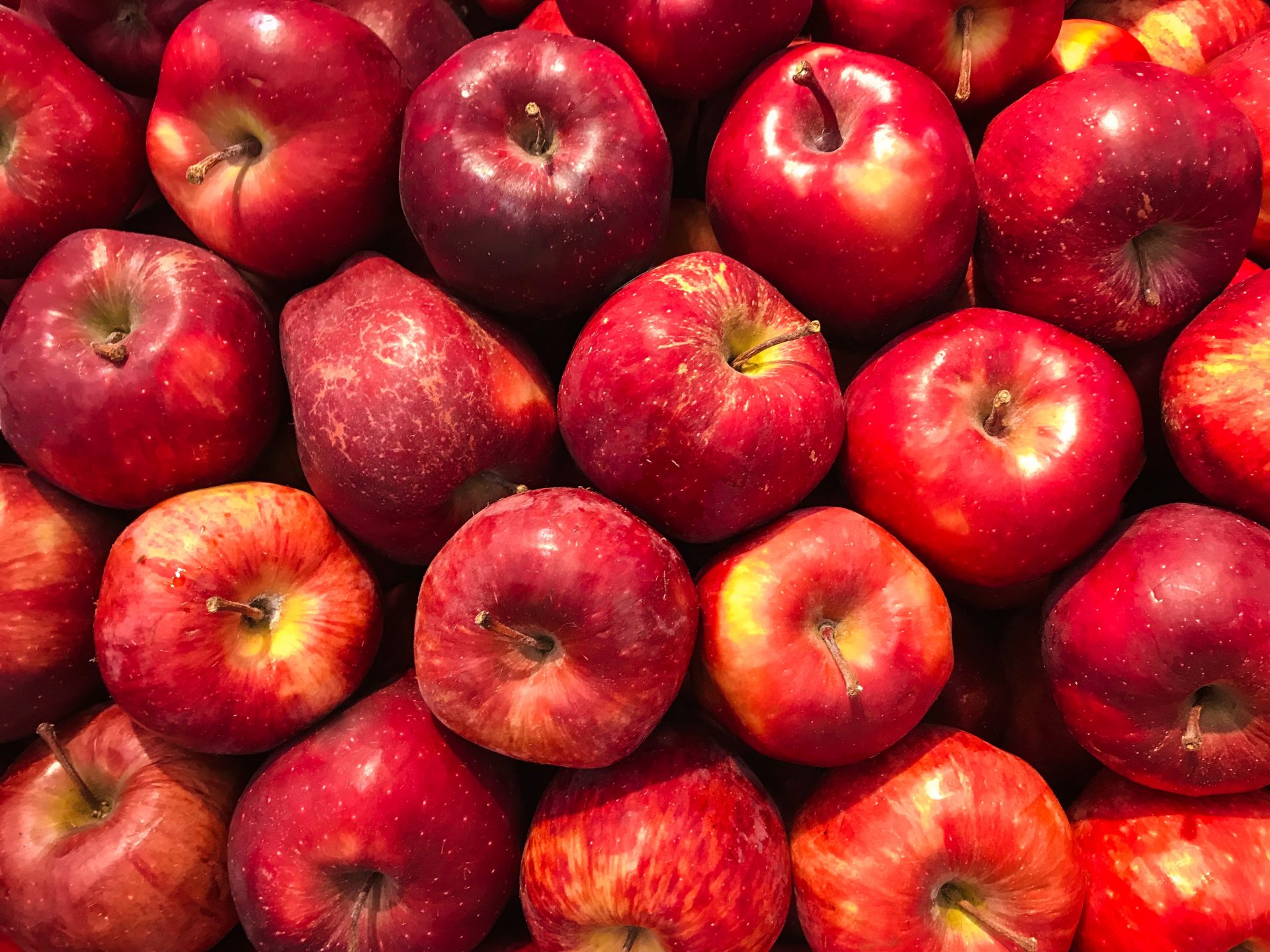
Pome fruits are characterized by a core structure surrounding seeds, encased in thick, firm flesh. The word “pome” comes from the Latin pomum, meaning apple — and apples are indeed the defining member of this group. Pears, quinces, loquats, and medlars also fall into this culinary and botanical category.
Apples alone account for thousands of cultivated varieties worldwide, ranging from the tart Granny Smith to the honeyed sweetness of Fuji and Honeycrisp. Each variety has distinct culinary applications: Granny Smiths hold their shape well for baking, while McIntosh apples break down quickly into sauces. Pears similarly range from the grainy, mellow Bosc to the buttery, juicy Bartlett.
Pome fruits are excellent sources of dietary fiber, particularly pectin — a soluble fiber found in the flesh and skin that supports digestive health and has been studied for its role in cholesterol management. They store well in cool conditions, making them available year-round in most markets despite being harvested primarily in fall.
Berries
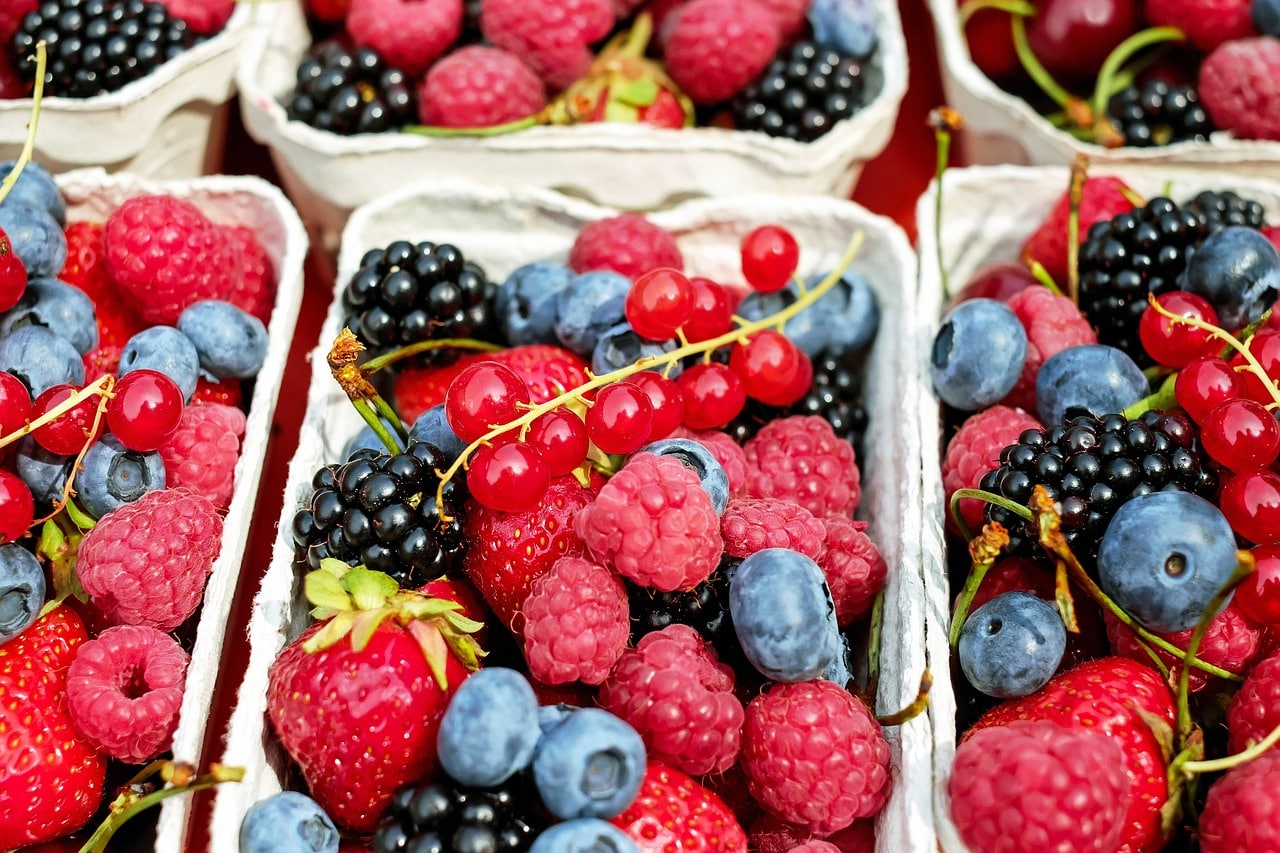
In culinary terms, berries are small, pulpy, and often brightly colored fruits with a sweet or tart flavor. This group includes strawberries, raspberries, blackberries, blueberries, cranberries, and gooseberries. In everyday usage, the term is applied loosely based on size and texture rather than strict botanical criteria.
Botanically speaking — as explored in the next section — many of these “berries” are not true berries at all. But from a culinary standpoint, they share enough characteristics to be grouped together: small size, high antioxidant content, vibrant color, and versatility in both sweet and savory applications.
Blueberries are among the most studied fruits for their antioxidant properties, particularly anthocyanins linked to cognitive health. Strawberries rank among the top dietary sources of vitamin C per serving. Cranberries have a long history of use in urinary tract health. The different types of strawberries alone reveal how much variation exists within a single berry species, from wild woodland varieties to large commercial cultivars.
Key Insight: Berries are among the most antioxidant-dense foods available. Their deep pigments — blues, reds, and purples — come from flavonoid compounds that protect both the plant from UV damage and the human body from oxidative stress.
Melons
Melons belong to the Cucurbitaceae family — the same family as cucumbers and squash — and are technically botanical berries, though no one orders a melon berry smoothie. They are characterized by high water content, thick rinds, and sweet, aromatic flesh. Melons thrive in warm, dry climates and are synonymous with summer eating in many cultures.
The two main categories are muskmelons and watermelons. Muskmelons include cantaloupes, honeydews, Canary melons, and Galia melons. Watermelons (Citrullus lanatus) stand apart with their dramatically different rind pattern, deep red or yellow flesh, and exceptionally high water content — approximately 92% water by weight.
Cantaloupes are rich in beta-carotene and vitamin A, giving their orange flesh its characteristic color. Honeydew melons are high in vitamin C and potassium. Watermelon contains lycopene, an antioxidant also found in tomatoes that has been associated with heart health. All melons are naturally low in calories, making them excellent hydrating snacks during warm months.
Tropical Fruits
Tropical fruits grow in warm, humid climates near the equator and are celebrated for their bold flavors, striking appearances, and remarkable nutritional profiles. This category includes mangoes, pineapples, papayas, guavas, passion fruits, dragon fruits, durians, jackfruits, and many more exotic fruits around the world that remain unfamiliar to shoppers in temperate regions.
The mango (Mangifera indica) is the most consumed tropical fruit globally and is considered the national fruit of India, Pakistan, and the Philippines. Its rich, fibrous flesh delivers vitamins A, C, and B6, along with a concentrated sweetness that has earned it the nickname “king of fruits.” Pineapples contain bromelain, a unique enzyme with anti-inflammatory properties. Papayas are rich in papain, another digestive enzyme, as well as folate and vitamin C.
Dragon fruit (Selenicereus undatus), with its vivid magenta skin and speckled white or red flesh, has become increasingly popular in Western markets. Jackfruit (Artocarpus heterophyllus) — the world’s largest tree fruit — has gained global attention as a plant-based meat substitute due to its fibrous, pulled-pork-like texture when unripe. For those curious about types of tropical fruits beyond the familiar, varieties like rambutan, longan, sapodilla, and feijoa offer extraordinary flavor experiences.
The different types of kiwi fruits exemplify how even a single tropical species branches into multiple distinct varieties — from the familiar green Hayward kiwi to the sweeter, smaller golden kiwi and the rare red-fleshed varieties grown in specialty markets.
| Tropical Fruit | Key Nutrients | Flavor Profile | Notable Use |
|---|---|---|---|
| Mango | Vitamins A, C, B6 | Sweet, rich, fragrant | Smoothies, chutneys, fresh eating |
| Pineapple | Bromelain, Vitamin C, Manganese | Sweet-tart, tangy | Grilling, juicing, savory dishes |
| Papaya | Papain, Folate, Vitamin C | Mild, musky, sweet | Salads, smoothies, digestive aid |
| Dragon Fruit | Fiber, Iron, Magnesium | Mild, slightly sweet | Smoothie bowls, fresh eating |
| Jackfruit | Fiber, Potassium, Vitamin B6 | Sweet (ripe); neutral (unripe) | Meat substitute, curries, desserts |
| Durian | Fiber, Potassium, Vitamin C | Custard-like, pungent | Desserts, fresh eating in Southeast Asia |
Exploring tropical fruits through a botanical lens reveals how climate, soil, and geography shape flavor in ways that temperate fruits simply cannot replicate. Many of these fruits have deep cultural significance in their regions of origin, appearing in religious ceremonies, traditional medicine, and national cuisines.
Dried Fruits
Dried fruits are not a separate botanical category but a distinct culinary form — fruits that have had most of their water content removed through sun-drying, air-drying, or mechanical dehydration. The result is a concentrated, shelf-stable product with intensified sweetness and a dramatically higher sugar and calorie density than fresh fruit.
Common dried fruits include raisins (dried grapes), prunes (dried plums), apricots, figs, dates, cranberries, and mangoes. Dates deserve special mention: while often consumed in dried form, they are technically fresh fruits in their ripe state and have been a dietary staple in the Middle East and North Africa for thousands of years.
Dried fruits retain most of the fiber, iron, potassium, and antioxidants of their fresh counterparts, but the concentration effect means portion sizes matter more. A small handful of raisins contains roughly the same sugar as a full bunch of grapes. For baking, trail mixes, and long-term food storage, dried fruits offer unmatched versatility. They pair naturally with different types of spices — cinnamon, cardamom, and cloves are classic companions in fruit-forward dishes across Middle Eastern, South Asian, and European culinary traditions.
Important Note: Many commercially dried fruits — especially cranberries, cherries, and mangoes — contain added sugars to compensate for natural tartness lost during drying. Checking ingredient labels helps identify unsweetened options with cleaner nutritional profiles.
Botanical Classification of Fruits
While culinary categories are organized around flavor and use, botanical classification is organized around structure — specifically, how the fruit develops from the flower and what plant parts contribute to the final structure. Botanists recognize three primary fruit types: simple fruits, aggregate fruits, and multiple fruits. Understanding these categories changes how one looks at every piece of fruit on a plate.
Simple Fruits
Simple fruits develop from a single flower with a single pistil (the female reproductive part). They are the most common type of fruit and can be further divided into fleshy simple fruits and dry simple fruits.
Fleshy simple fruits include berries, drupes, and pomes — categories that overlap significantly with culinary groupings. In botanical terminology, a true berry is a fleshy fruit developed from a single ovary, with seeds embedded in the flesh. By this definition, tomatoes, grapes, bananas, kiwis, and even avocados are true berries. Drupes (stone fruits) and pomes (apples and pears) are also fleshy simple fruits with distinct structural characteristics.
Dry simple fruits include legumes (peas and beans), nuts (acorns and chestnuts), and grains — categories that blur the everyday boundary between fruits, vegetables, and seeds. When a botanist calls a walnut a fruit, they are referring to the entire structure that develops from the flower, even if the edible portion is the seed inside.
- True Botanical Berries: Tomatoes, grapes, bananas, kiwis, avocados, eggplants, peppers
- Drupes (Stone Fruits): Peaches, plums, cherries, mangoes, olives, coconuts
- Pomes: Apples, pears, quinces, loquats
- Hesperidia (Modified Berries): Oranges, lemons, limes — citrus fruits with leathery rinds
- Pepos (Modified Berries): Cucumbers, melons, squash — hard-rinded berries
Aggregate Fruits
Aggregate fruits develop from a single flower that has multiple pistils, each of which develops into a small fruitlet. These fruitlets cluster together on a single receptacle to form what appears to be one unified fruit. The result is a fruit with a complex, segmented surface — a structure that reflects its multi-pistil origin.
Raspberries and blackberries are the most familiar aggregate fruits. Each of the small, round segments visible on a raspberry — called a drupelet — is an individual fruitlet that developed from a separate pistil within the same flower. Strawberries are also often grouped here, though they are technically accessory fruits because the fleshy part develops from the receptacle rather than the ovary.
Aggregate fruits tend to be delicate and highly perishable because of their complex surface structure, which makes them prone to bruising and moisture loss. This same structure, however, makes them exceptional for jams, preserves, and baked goods, where their concentrated flavor shines. North America has a rich native tradition of aggregate fruits — many are covered in detail among the fruits native to North America that shaped Indigenous foodways for thousands of years.
Pro Tip: When washing raspberries or blackberries, use cold water and handle them gently — their aggregate structure makes them far more fragile than they appear. Store unwashed and refrigerate immediately; they typically last only 2–3 days at peak quality.
Multiple Fruits
Multiple fruits develop from an inflorescence — a cluster of many flowers — rather than from a single flower. Each flower in the cluster contributes its ovary to the final fruit, and the individual ovaries fuse together as they mature, forming a single mass that appears to be one fruit.
The pineapple is the most recognizable multiple fruit. What looks like a single fruit is actually the fused result of dozens of individual flowers, each contributing a segment visible on the pineapple’s surface. The fig (Ficus carica) is another multiple fruit, though its structure is even more unusual — the flowers are actually enclosed inside the fig itself, making it technically a syconium, a type of inverted inflorescence.
Mulberries and breadfruit are also classified as multiple fruits. The mulberry (Morus species) looks remarkably like a blackberry but develops from a catkin — a cluster of tiny flowers — rather than a single multi-pistil flower. This structural difference is invisible to the casual observer but botanically significant. Breadfruit (Artocarpus altilis), a staple crop across the Pacific Islands, is another multiple fruit whose starchy flesh has fed populations for centuries and is increasingly recognized as a climate-resilient food crop.
| Botanical Type | Origin | Examples | Key Characteristic |
|---|---|---|---|
| Simple Fruit | Single flower, single pistil | Apple, cherry, grape, tomato | Most common fruit type; fleshy or dry |
| Aggregate Fruit | Single flower, multiple pistils | Raspberry, blackberry, strawberry | Cluster of fruitlets from one flower |
| Multiple Fruit | Many flowers (inflorescence) | Pineapple, fig, mulberry, breadfruit | Fused ovaries from multiple flowers |
Common Fruits That Surprise People Botanically
Some of the most surprising facts in all of food science come from the gap between culinary intuition and botanical reality. Fruits that everyone “knows” turn out to be something entirely different under scientific scrutiny — and the revelations are consistently fascinating.
Strawberries are not berries. Despite the name and the culinary grouping, strawberries are classified as accessory fruits or false fruits. The red, fleshy part that people eat is not the ovary of the flower — it is the enlarged receptacle. The true fruits of the strawberry plant are the tiny, seed-like achenes dotting the surface. Each of those small yellow specks is a botanical fruit.
Bananas are true berries. By botanical definition, a berry is a fleshy fruit that develops from a single ovary and contains seeds embedded in the flesh. Bananas check every box. The seeds are the tiny, undeveloped dots visible in the center of a cross-section. Commercial bananas have been selectively bred to be seedless and sterile, but wild bananas contain large, hard seeds that make them nearly inedible by modern standards.
Avocados are also berries — specifically, single-seeded berries with a large pit. The entire avocado, from its green skin to its creamy flesh to its oversized seed, develops from a single ovary. By botanical definition, it fits the berry classification perfectly, despite being savory, fatty, and nothing like a blueberry in flavor or texture.
Coconuts are drupes, not nuts. The coconut (Cocos nucifera) is one of the world’s most misnamed fruits. Like a peach or plum, it is a drupe — a stone fruit with three distinct layers: the exocarp (outer skin), the mesocarp (fibrous husk), and the endocarp (the hard shell encasing the seed). The white flesh and coconut water are part of the seed, not the fruit wall. What people call a “coconut” at the grocery store is actually just the endocarp — the outermost layers have already been removed.
Tomatoes, peppers, and cucumbers are botanical fruits. All three develop from the fertilized ovary of a flower and contain seeds — which is the botanical definition of a fruit. The U.S. Supreme Court famously ruled in Nix v. Hedden (1893) that tomatoes were vegetables for tariff purposes, based on culinary use rather than botanical classification. The science, however, has always been clear: tomatoes are fruits. So are eggplants, zucchini, and even corn kernels.
Key Insight: The botanical definition of a fruit is so broad that it includes many foods commonly called vegetables, nuts, or grains. The key criterion is simple: if it developed from the ovary of a flower and contains seeds, it is a fruit — regardless of how it tastes or how it is used in the kitchen.
Peanuts are not nuts — but they are legumes with fruit characteristics. Peanuts (Arachis hypogaea) develop underground from a fertilized flower that pushes into the soil after pollination. The peanut pod is technically a legume fruit — a dry, dehiscent simple fruit. This places peanuts closer botanically to peas and beans than to almonds or walnuts, despite their culinary identity as a nut.
These botanical surprises are not merely academic trivia. They reflect the extraordinary diversity of plant reproductive strategies and the lengths to which flowering plants have evolved to protect and disperse their seeds. Understanding which foods are technically fruits — and why — deepens appreciation for the complexity hidden inside every bite. For those curious about the full scope of what nature produces, exploring the most poisonous fruits in the world reveals just how far plant chemistry can go in defending seeds from the wrong consumers.
The different types of mushrooms offer an interesting contrast: mushrooms are fungi, not plants, and produce spores rather than seeds — making them neither fruits nor vegetables in any botanical sense, yet they appear alongside fruits and vegetables in virtually every culinary tradition worldwide.
Frequently Asked Questions
Botanically, a fruit is the mature ovary of a flowering plant that contains seeds. A vegetable is any other edible part of a plant — roots, stems, leaves, or flowers. Culinarily, the distinction is based on taste and use: sweet or tart plant products are called fruits, while savory ones are called vegetables. This is why tomatoes, peppers, and cucumbers are botanical fruits but culinary vegetables.
No. Many botanical fruits are toxic or inedible to humans, even if they are consumed by wildlife. Fruits like the manchineel apple (Hippomane mancinella) are dangerously toxic. Others, like holly berries, are harmful to humans but serve as important food sources for birds. Edibility varies widely across the plant kingdom, and “fruit” as a botanical term carries no implication of safety for human consumption.
Nutritional value varies by fruit type, but berries consistently rank among the most nutrient-dense options due to their high antioxidant content relative to calorie load. Citrus fruits lead in vitamin C. Tropical fruits like papaya and mango are rich in vitamins A and C. Stone fruits provide iron and beta-carotene. A varied diet that includes fruits from multiple categories delivers the broadest range of vitamins, minerals, fiber, and phytonutrients.
Winter is peak season for many citrus fruits, including oranges, grapefruits, clementines, and blood oranges. Pomegranates, persimmons, and certain apple and pear varieties also peak in late fall and early winter. Tropical fruits like pineapples and papayas are available year-round due to global supply chains. Fruits by season vary significantly by region, but citrus is the most reliably fresh and flavorful winter option in most temperate markets.
The term “exotic fruits” typically refers to fruits that are unfamiliar in a given market — usually tropical or subtropical species not commonly grown in temperate regions. Dragon fruit, rambutan, durian, lychee, and jackfruit are considered exotic in North American and European markets, though they are everyday staples in Southeast Asia, South Asia, and Latin America. Globalization and improved cold-chain logistics have made many formerly exotic fruits increasingly accessible worldwide.
Yes — and many common foods fall into exactly this category. Tomatoes, cucumbers, zucchini, peppers, eggplants, and avocados are all botanical fruits (they develop from flowers and contain seeds) but are used as culinary vegetables in savory cooking. The distinction is entirely context-dependent: botanical classification follows plant biology, while culinary classification follows flavor, texture, and kitchen tradition.
Conclusion
The world of fruit is far larger, stranger, and more scientifically rich than a quick trip to the grocery store would suggest. From the sharp brightness of a fresh-squeezed lemon to the custard-like depth of a ripe durian, from the structural elegance of a raspberry’s aggregate drupelets to the surprising botanical identity of a banana as a true berry — every fruit tells a story about the plant that produced it and the evolutionary pressures that shaped it.
Culinary categories make fruits approachable and practical. They organize the fruit bowl by flavor, season, and use — helping cooks, shoppers, and eaters navigate a genuinely vast landscape of options. Botanical categories add depth and precision, revealing the hidden architecture beneath every peel, rind, and skin. Together, they offer a complete framework for understanding one of the most important food groups in human history.
Whether the goal is eating more variety, understanding nutritional differences, exploring exotic species, or simply satisfying curiosity about why a tomato is technically a berry, knowing the different types of fruits transforms how one engages with food. The different types of fruits available across the globe represent thousands of years of agricultural selection, ecological adaptation, and culinary tradition — and every variety is worth exploring.
Start with what’s familiar, then branch outward. Try a pomelo instead of a grapefruit. Swap blueberries for mulberries. Pick up a dragon fruit at the next opportunity. The full spectrum of fruit — in all its color, complexity, and nutritional power — is one of the most rewarding areas of the food world to explore.