Can You Freeze Whole Eggs in the Shell? What You Need to Know

October 26, 2026
If you’ve ever stocked up on eggs at a great price — or found yourself with more than you can use before the carton expires — freezing sounds like the obvious solution. But before you toss a dozen eggs into the freezer shell and all, there’s an important rule you need to know.
Freezing eggs is absolutely possible and a smart way to cut food waste, but the method matters enormously. This guide walks you through exactly what happens when eggs freeze, how to do it safely, how long frozen eggs last, and the best ways to use them once thawed. Whether you buy in bulk, raise backyard chickens, or just hate throwing food away, you’ll find everything you need here.
Can You Freeze Whole Eggs in the Shell?
No, you cannot freeze an egg while it’s still in its shell. The contents will expand, cracking the shell. That expansion is only the first problem. Because eggs are liquid, they expand when they freeze and crack their shells, exposing the interiors to freezer burn and turning into a gloopy shell-studded mess when thawed.
Whole egg yolks also don’t freeze well on their own — they thicken into an unappealing gelatinous mass. So even if the shell somehow stayed intact, the texture of the yolk would be compromised. Under no circumstance should eggs be frozen in their shells.
The good news is that you can still freeze eggs — you just need to remove them from the shell first and follow a few simple steps. Types of eggs you can freeze include whisked whole raw eggs, raw egg whites, raw egg yolks, and cooked egg dishes. Each method produces results that work well in everyday cooking and baking.
Pro Tip: If you raise backyard chickens, freezing is a great way to bank eggs during peak laying season so you have a steady supply through winter when hens naturally slow down production.
Does Freezing Change the Texture or Taste of Whole Eggs?
Eggs consist of two parts — the yolk and the white — both of which react differently to freezing. Freezing and thawing raw egg whites, which comprise mostly water and protein, does not cause noticeable texture changes after cooking. In fact, there may even be a small benefit: freezing may improve an egg white’s foaming ability — an important characteristic used to create light and airy baked goods like angel food cake. One study found that freezing egg whites caused some of their proteins to denature, and as a result, egg whites that were frozen and then thawed had greater foaming properties.
In contrast, when raw egg yolks are frozen, they develop a thick, gel-like consistency. The gelation property of egg yolk causes it to thicken or gel when frozen, so you need to give yolks special treatment. If you freeze them as they are, egg yolks will eventually become so gelatinous that they will be almost impossible to use in a recipe.
When yolks and whites are whisked together before freezing, the texture change is much less dramatic. The combined mixture thaws into a usable consistency that works well for scrambled eggs, baking, and casseroles. Flavor-wise, properly frozen and thawed eggs taste very close to fresh — most people notice no difference in cooked dishes.
It’s best not to freeze hard-boiled whole eggs and hard-boiled whites because they become tough and watery when frozen. You can, however, freeze hard-boiled egg yolks to use later for toppings or garnishes.
How to Freeze Whole Eggs the Right Way
There are three main approaches depending on how you plan to use the eggs later. Choose the method that fits your cooking habits best.
Method 1: Freeze Whole Eggs (Yolks and Whites Combined)
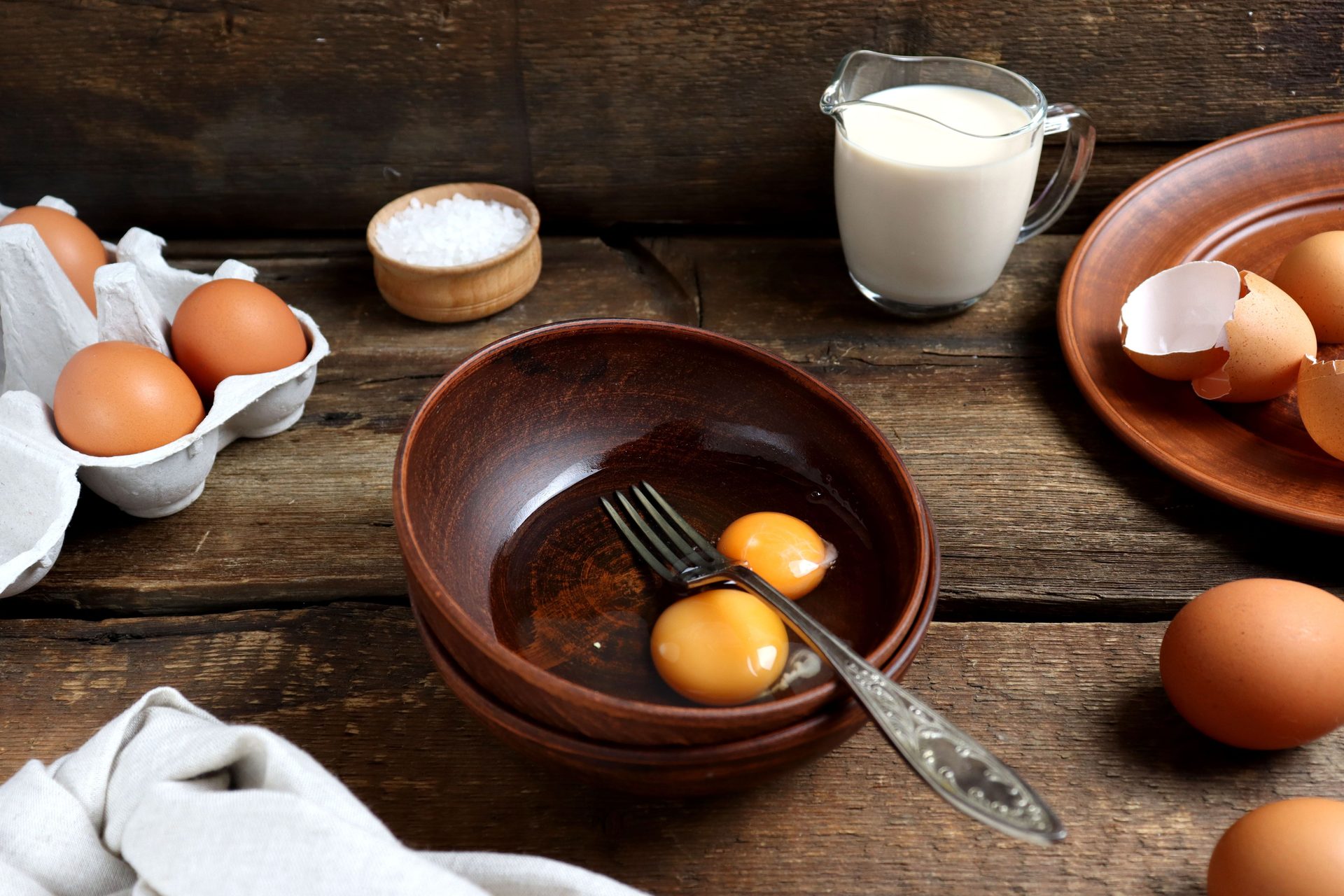
This is the most flexible option and the easiest to measure when cooking. To freeze whole eggs, crack them into a bowl and whisk until the yolks are broken up and fully combined with the whites. Thoroughly mix yolks and whites, but do not whip in air. To prevent graininess of the yolks, add 1½ tablespoons sugar, 1½ tablespoons corn syrup, or ½ teaspoon salt per cup of whole eggs, depending on intended use.
Once the yolks and whites are fully combined, pour the mixture into a reusable container, zip-top freezer bag, or portion out in ice cube trays — for reference, ¼ cup or 50g equals about one whole large egg. Label and date the bag and freeze it flat. You might want to write this formula on the outside of the bag: 3 tablespoons egg mixture = 1 large whole egg.
Method 2: Freeze Egg Whites Separately
Egg whites freeze remarkably well. If you’re baking with egg yolks, save those leftover whites in the freezer. Pour the whites into freezer containers, seal tightly, label with the number of egg whites and the date, and freeze. For faster thawing and easier measuring, first freeze each white in a standard ice cube tray, then transfer to a freezer container.
Method 3: Freeze Egg Yolks Separately
Yolks need a little extra prep to freeze well. To avoid the gel-like texture problem, simply combine the egg yolks with a little bit of sugar or salt, depending on your intended use for the yolks — sweet or savory. Add 1/8 teaspoon salt or 1½ teaspoons sugar for every four yolks you plan on freezing. Immediately after adding, use a whisk or electric mixer to beat well. Don’t let the sugar or salt sit on the yolks without stirring, as it will “burn” them and yield a clumpy texture.
Pour the egg yolk mixture into a reusable container, zip-top freezer bag, or portion out in ice cube trays — for reference, 1½ tablespoons or 20g equals one large yolk.
Pro Tip: Always leave about ½ inch of headspace in any rigid container before freezing. Egg mixtures expand slightly as they freeze, and a sealed container with no room can crack or pop open.
For more on the nutritional value of whole eggs and how they fit into a balanced diet, see this overview of whole eggs.
How Long Can You Freeze Whole Eggs?
According to the USDA Food Safety and Inspection Service (FSIS), you can freeze eggs for up to one year. That said, quality degrades over time, and most egg experts recommend shorter windows for the best results.
| Egg Type | Maximum Freeze Time | Best Quality Window |
|---|---|---|
| Whole eggs (whisked) | Up to 4 months | 2 months or less |
| Egg whites only | Up to 12 months | 2 months or less |
| Egg yolks only | Up to 4 months | 2 months or less |
| Cooked egg dishes | 2–3 months | 1–2 months |
In most cases, whole eggs can be frozen for up to 4 months, but keeping them in the freezer for 2 months or less yields the best results. The biggest drawback to precooking eggs is that they start to lose flavor after about three months in a freezer, so consider cooked egg dishes a short-term storage method.
Always label every container with the date and the number of eggs inside. Adding dates to the containers that you freeze your eggs in will help you keep track of what’s what, and portioning your eggs out before freezing allows you to thaw only what you need for any given meal or recipe.
How to Thaw Frozen Whole Eggs
Thawing eggs safely is just as important as freezing them correctly. The refrigerator is always the safest method. When you’re ready to use frozen eggs, thaw them overnight in the refrigerator or under running cold water. Use egg yolks or whole eggs as soon as they’re thawed.
When you are ready to use the frozen eggs, thaw by placing the frozen egg product in the refrigerator. Do not thaw in the microwave. Use immediately after thawing. Microwaving can partially cook the egg mixture unevenly, leading to rubbery spots and food safety concerns.
Thawed egg whites will beat to better volume if you allow them to sit at room temperature for about 30 minutes before using them in recipes that require whipping, such as meringues or soufflés.
For a quicker thaw of egg whites only, submerge sealed bags of frozen egg whites in a bowl of cold water, changing the water every 30 minutes until thawed.
Important Note: Never thaw frozen eggs at room temperature on the counter. Bacteria multiply rapidly in the temperature danger zone between 40°F and 140°F. Always thaw in the refrigerator or under cold running water.
Can You Refreeze Whole Eggs After Thawing?
No — refreezing thawed eggs is not recommended. Always use thawed eggs immediately and never refreeze them. Once an egg mixture thaws, bacteria that were dormant in the freezer can begin to multiply quickly. Refreezing doesn’t kill those bacteria; it just slows them down again temporarily while further degrading the texture.
This is exactly why portioning eggs before freezing is so valuable. For thawing and cooking, it’s easiest to freeze each egg individually. When eggs are frozen in single-serving portions — using an ice cube tray or small containers — you only thaw exactly what you need, eliminating the temptation to refreeze any leftovers.
Frozen whole eggs should be used within 24 hours of thawing in the refrigerator. Plan your meals around your thawed eggs rather than letting them sit in the fridge after thawing.
How to Use Frozen Whole Eggs (Best Uses After Freezing)
Given that yolks need to be whisked prior to freezing, frozen eggs are best used in dishes like scrambled eggs, quiches, or baked goods. Because the yolk and white are already combined, you won’t be able to fry a sunny-side-up egg or make a poached egg from a frozen whole-egg mixture — but there are plenty of great options.
Here are the best ways to put frozen eggs to work:
- Scrambled eggs and omelets — Quick and easy breakfast options that work perfectly with pre-whisked frozen eggs. Just thaw and cook as usual.
- Baking — Ideal for cakes, muffins, and cookies. Frozen whole eggs substitute 1:1 for fresh eggs in virtually any baked good recipe.
- Casseroles and quiches — Whole eggs can also be frozen in the form of a frittata, strata, quiche, casserole, or egg cups. These dishes hold up beautifully in the freezer.
- Egg muffins and frittatas — Packed with veggies and cheese, these freeze well and reheat easily in the microwave or oven.
- Fried rice and stir-fries — The whisked mixture drops right into a hot pan and cooks up just like fresh egg.
- Breakfast sandwiches — Slightly undercooking scrambled eggs prior to freezing keeps them moister when reheated. You can also bake whole eggs in a lightly greased muffin tin at 325°F for about 13 minutes; they’ll reheat nicely.
Frozen egg whites (thawed) work especially well in recipes that call for whipped whites, such as angel food cake, macarons, or meringue cookies. For recipes where eggs play a structural role in cooking — like skin-supporting nutrient-rich meals or protein-forward dishes — frozen eggs deliver the same nutritional value as fresh ones.
If you’re exploring how eggs fit into a broader healthy eating pattern, you might also find value in this guide to superfoods for a healthy heart or this overview of powerful nutrients found in everyday foods.
Signs That Frozen Whole Eggs Have Gone Bad
Even in the freezer, eggs can deteriorate in quality or safety over time. Knowing what to look for before you cook with them protects you and your family.
- Off smell after thawing — A sulfur-like or sour odor is the clearest sign something is wrong. Fresh thawed eggs should smell neutral or very mildly eggy.
- Unusual color — A grayish, greenish, or deeply discolored tint in the thawed mixture indicates spoilage. Fresh frozen eggs thaw to a pale yellow color.
- Freezer burn — Eggs exposed to freezer burn develop a dry, crystallized surface and a noticeably off flavor. This happens when containers aren’t sealed airtight.
- Watery or separated texture that won’t mix — Some separation is normal and can be fixed with a gentle stir, but an extremely watery or curdled texture after thawing suggests the eggs are past their prime.
- Exceeded storage time — If your label shows the eggs have been frozen longer than 4 months (for whole eggs) or 12 months (for whites), discard them even if they look fine.
A simple way to check if a raw egg is still fresh before freezing is to submerge it in a bowl of cold water. If the egg sinks and lies flat on the bottom, it is fresh. If it stands upright and tilts slightly, it should be used soon. If the egg floats, it is old and should not be consumed. Run this float test before you freeze eggs to make sure you’re starting with fresh ones.
Important Note: If you have any doubt about whether a thawed egg is safe to eat, discard it. The cost of wasting an egg is far lower than the risk of foodborne illness.
Frequently Asked Questions
Can You Freeze Eggs in the Carton?
No. Don’t ever freeze shelled eggs; the egg whites expand as they freeze, ultimately rupturing the shell and leaving you with a messy freezer and an egg with an undesirable texture. You must crack eggs out of their shells before freezing, regardless of the container you use.
Can You Freeze Hard-Boiled Eggs?
It’s best not to freeze hard-boiled whole eggs and hard-boiled whites because they become tough and watery when frozen. You can freeze hard-boiled egg yolks to use later for toppings or garnishes, but the whites don’t survive the process well.
How Do You Know How Many Eggs Are in a Frozen Portion?
A helpful formula: 3 tablespoons of egg mixture equals 1 large whole egg. For egg whites, 2 tablespoons or 30g equals 1 large egg white. One tablespoon of yolk mixture equals one egg yolk. Write these conversions on your freezer bags so you always know what you’re working with.
Can You Freeze Eggs That Are About to Expire?
Yes, as long as the eggs are still fresh when you freeze them. Freeze only clean, fresh eggs. Run the float test described above — if an egg floats, skip it. Freezing doesn’t improve the quality of a questionable egg; it only preserves the quality you start with.
Do Frozen Eggs Taste Different?
When properly frozen and thawed, eggs used in cooked dishes taste very close to fresh. The biggest quality difference shows up in texture-sensitive applications like fried or poached eggs, which is why frozen eggs work best in mixed or baked preparations. Scrambled eggs, lemon curd, and meringue can all be made successfully with frozen eggs.
Is Freezing Eggs Worth It?
Freezing eggs can safely extend their shelf life for 2–4 months. It’s a great option when you find yourself with a carton of eggs nearing its expiration date, just purchased more dozens than you know what to do with, or simply want to plan ahead for future meals. For most American households, the answer is yes — especially when egg prices fluctuate or you buy in bulk at warehouse stores like Costco or Sam’s Club.
If you’re interested in other smart food storage strategies, explore this guide to whole plant-based foods or check out tips on foods that support liver function. For more on building a nutritious kitchen, the fibroid healing foods guide and this resource on foods that promote healthy eyesight are worth a read.