Traditional Serbian Breakfast: 5 Dishes That Define Serbia’s Morning Table

November 21, 2026
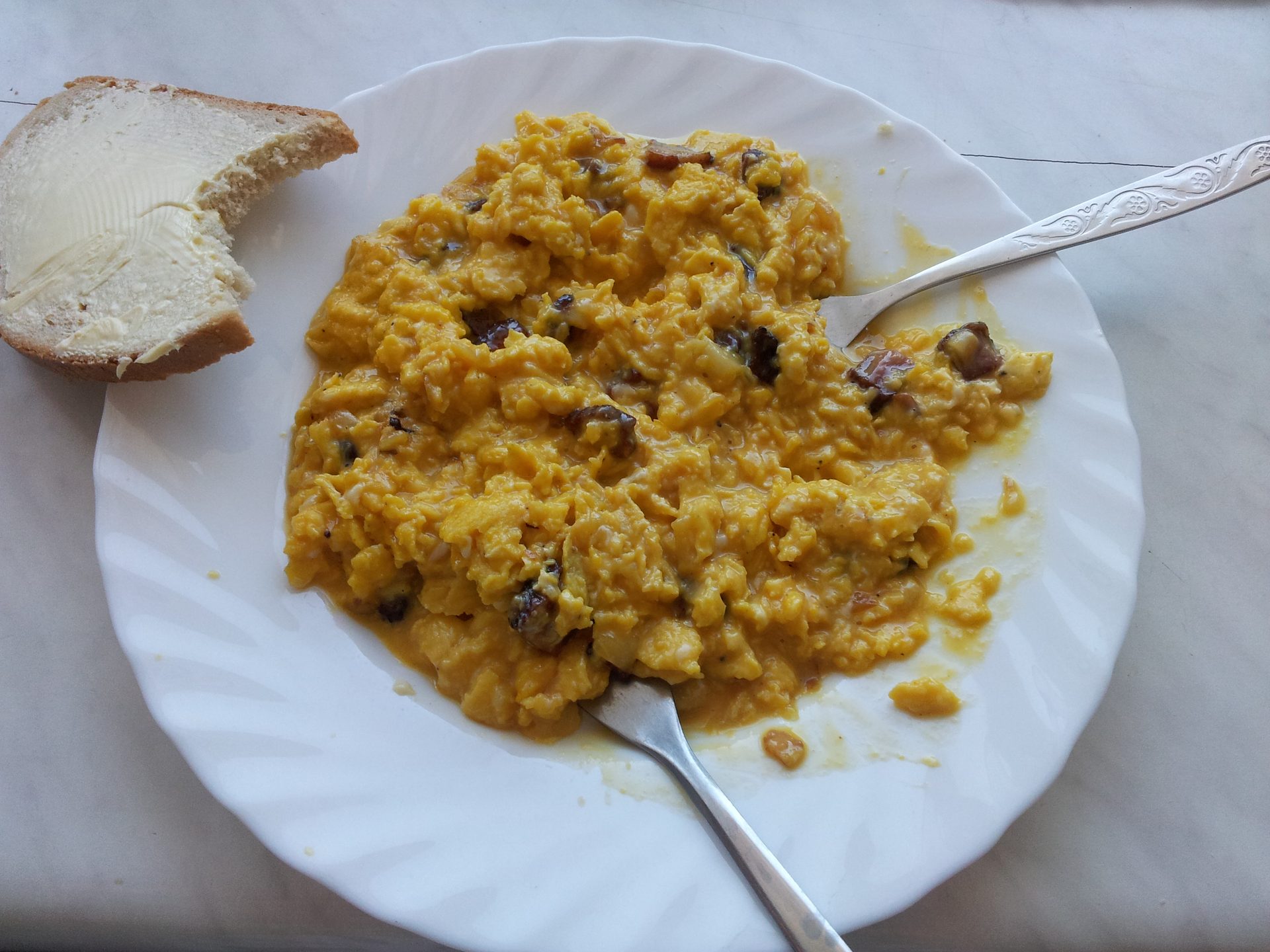
A traditional Serbian breakfast rarely looks like a bowl of cereal or a quick piece of toast. Instead, it is a slow, savory spread built around cornbread, cured dairy, roasted pepper relish, and often a small glass of homemade brandy before the eggs even hit the pan. For visitors used to lighter morning meals, the first encounter with a Serbian table can feel like stepping into lunch.
This same rhythm — bread, dairy, something pickled or roasted, and a strong drink to start the day — echoes across the wider region. You can see it in breakfast traditions from other cultures that treat the morning meal as a communal, unhurried event rather than something eaten on the run. Below are five dishes that show up again and again on Serbian breakfast tables, each with its own history and its own reason for being there.
1. Proja
Proja is the cornbread that anchors a huge number of Serbian breakfasts, and it carries more history on its plate than its humble appearance suggests. Wikipedia notes that it is a type of cornbread usually eaten for breakfast with ajvar and kajmak, and it has been popular in times of widespread poverty, mostly in Serbia during World War 1, among soldiers of the Royal Serbian Army, remaining a popular everyday meal to this day. What started as food for lean times has become a fixture of the morning table regardless of income.
The dish itself is simple: cornmeal, eggs, yogurt or milk, and often crumbled white cheese, baked until golden in a greased pan. One Belgrade-based food writer describes her own version as a dish that takes about 5 minutes to prepare and 30 minutes to bake, making it one of the easiest traditional Balkan dishes you can try at home. That speed is part of why it survives as a weekday staple rather than a special-occasion dish.
Texture and recipe vary from household to household, but the peasant-food roots are consistent across sources. My Balkan Kitchen explains that proja has a long history and attachment to the Balkan people, and during tough times of poverty, war, and lack, this bread was a staple for many families. It is usually served warm, cut into squares, and topped with whatever dairy is on hand that morning.
Pro Tip: If your proja comes out dense rather than light, check your leavening. Several Serbian home cooks rely on carbonated water alongside baking powder to keep the crumb airy without adding sugar.
2. Kajmak
No discussion of proja is complete without kajmak, the thick, cultured cream that Serbians spread on almost everything in the morning. According to the Wikipedia entry on kaymak , the product appears across several Serbian dishes beyond breakfast, including pljeskavica s kajmakom, the Balkan hamburger patty topped with melted kajmak, as well as ribić u kajmaku, beef shank simmered with kajmak. Its reach into both breakfast and dinner menus says a lot about how central it is to the cuisine.
What makes kajmak distinct from butter or clotted cream is both its fat content and its method. Research published in the Journal of Food Quality describes it as a traditional Serbian dairy product, a top, crust layer of milk containing a high amount of aggregated milk fat and proteins, formed during long cooling of boiled milk. A separate overview of the product puts a number on that richness, noting that kajmak is a fresh dairy product, rich in milk fat, around 60 percent, with distinctive flavor and consistency.
Quality, however, is famously inconsistent, which is part of why Serbians are so particular about whose kajmak they buy. The same food-quality study found that kajmak produced in households had a better total quality index, which leads to the conclusion that the traditional production method is still superior to the industrial one. That home-versus-factory gap is one reason village markets remain the preferred source for serious kajmak eaters.
On the plate, it functions almost like a spread. A Belgrade-based food guide sums up the pairing plainly: kajmak is often spread on fresh bread, baguette, or lepinja, a type of Serbian flatbread, and this simple two-ingredient combination makes for a wonderful Serbian-style breakfast. For readers curious how other dairy-heavy morning traditions compare, the clotted cream and soft-cheese spreads found in traditional French breakfast dishes offer an interesting parallel, though the fermentation process behind kajmak gives it a sharper, tangier profile.
3. Ajvar
Where kajmak brings richness, ajvar brings the acidity and smoke that balance a Serbian breakfast plate. Made from roasted red peppers, often blended with eggplant, garlic, and oil, it is traditionally prepared in large batches each autumn when peppers are at their peak and jarred for the entire year ahead. Families roast dozens of kilograms at a time, a yearly ritual that turns balconies and courtyards into informal processing lines during pepper season.
At breakfast, ajvar is spread on bread alongside proja and kajmak, or spooned onto the plate next to fried eggs. Its sweet-smoky depth comes from slow-roasting the peppers until the skins blister, then peeling and cooking them down with oil until the mixture thickens into a spreadable relish. The flavor sits somewhere between a roasted pepper dip and a mild chutney, savory rather than sweet, with just enough heat to wake up the palate before coffee.
Because it keeps well once jarred and sealed, ajvar travels easily between households as a gift, which is part of why so many families have strong opinions about whose recipe is best. Readers who enjoy condiment-driven breakfast spreads may find a similar logic in the pickled and roasted vegetable sides common across traditional Indian breakfast dishes, where a single relish or chutney can define the whole plate.
4. Rakija
Rakija, the strong fruit brandy distilled most often from plums (šljivovica) or grapes, has a reputation that precedes it well beyond Serbia’s borders. What surprises many first-time visitors is that it sometimes appears before the meal itself, treated less like a dessert drink and more like a ritual that opens the morning and settles the stomach ahead of heavier food.
Production is almost entirely homemade in rural areas, with fruit harvested, fermented, and double-distilled in small household stills passed down through generations. Plum rakija tends to be the most common, though apricot, quince, and grape versions are also widely made depending on the region and what grows locally. The resulting spirit is strong, usually well above standard wine or beer strength, and is traditionally sipped rather than shot.
Important Note: Rakija is a high-proof spirit, and drinking it on an empty stomach or in quantity carries real health and safety risks. This article describes a cultural practice for informational purposes only and is not a recommendation to consume alcohol; readers should follow local guidance on responsible drinking.
Beyond breakfast, rakija shows up at celebrations, as a welcome drink for guests, and as an ingredient in folk remedies for everything from sore throats to insect bites. For a sense of how other cultures use strong spirits and infused drinks as part of daily ritual rather than purely social occasions, the brewed and fermented traditions covered in traditional Russian drinks and the spiced preparations found in traditional Egyptian drinks offer useful points of comparison.
5. Ribizla
Ribizla, the Serbian word borrowed from Hungarian for redcurrant, shows up on breakfast tables mostly in preserved form rather than as fresh fruit. In Vojvodina, the northern Serbian region with strong Hungarian culinary influence, redcurrant jam, syrup, and juice are common accompaniments to bread, pancakes, or a glass of water diluted with the tart syrup.
The berry itself is small, deep red, and sharply tart, which is why it rarely gets eaten plain. Cooked down with sugar into a thick preserve, it takes on a jewel-toned color and a flavor that is less sweet than typical strawberry or raspberry jam, with a tang that cuts nicely through heavier breakfast items like proja or cured meats. Some households also make a lighter ribizla syrup, stirred into water or tea as a refreshing, slightly sour drink alongside the meal.
Because redcurrant bushes are easy to grow in home gardens across the region, ribizla preserves are often homemade rather than store-bought, much like ajvar. This do-it-yourself approach to breakfast condiments is a theme that runs through the wider Balkans and into neighboring food cultures. Across the border, Albanian breakfast dishes lean on a similarly home-preserved pantry, pairing byrek and petulla with homemade jams, olives, and cheese rather than packaged spreads, a shared regional habit of stretching a single harvest across the whole year.
Bringing It All Together
A traditional Serbian breakfast works because every element balances another. Proja supplies the base, kajmak adds richness, ajvar brings acid and smoke, rakija opens the appetite, and ribizla closes things out with a bright, fruity contrast. None of these dishes is complicated on its own, but served together they form a morning meal built for slow mornings and shared tables rather than rushed weekdays.
This same pattern of savory staples anchoring a shared morning table appears across the wider Balkan breakfast tradition and beyond. Readers interested in how other regional cuisines build their own version of a hearty, communal breakfast might enjoy comparing notes with traditional Greek dishes or the spread-based mornings found in traditional South African food, both of which share Serbia’s instinct for treating breakfast as an occasion rather than an afterthought.