Traditional Kikuyu Clothing: 6 Garments That Shaped Gikuyu Identity

November 20, 2026
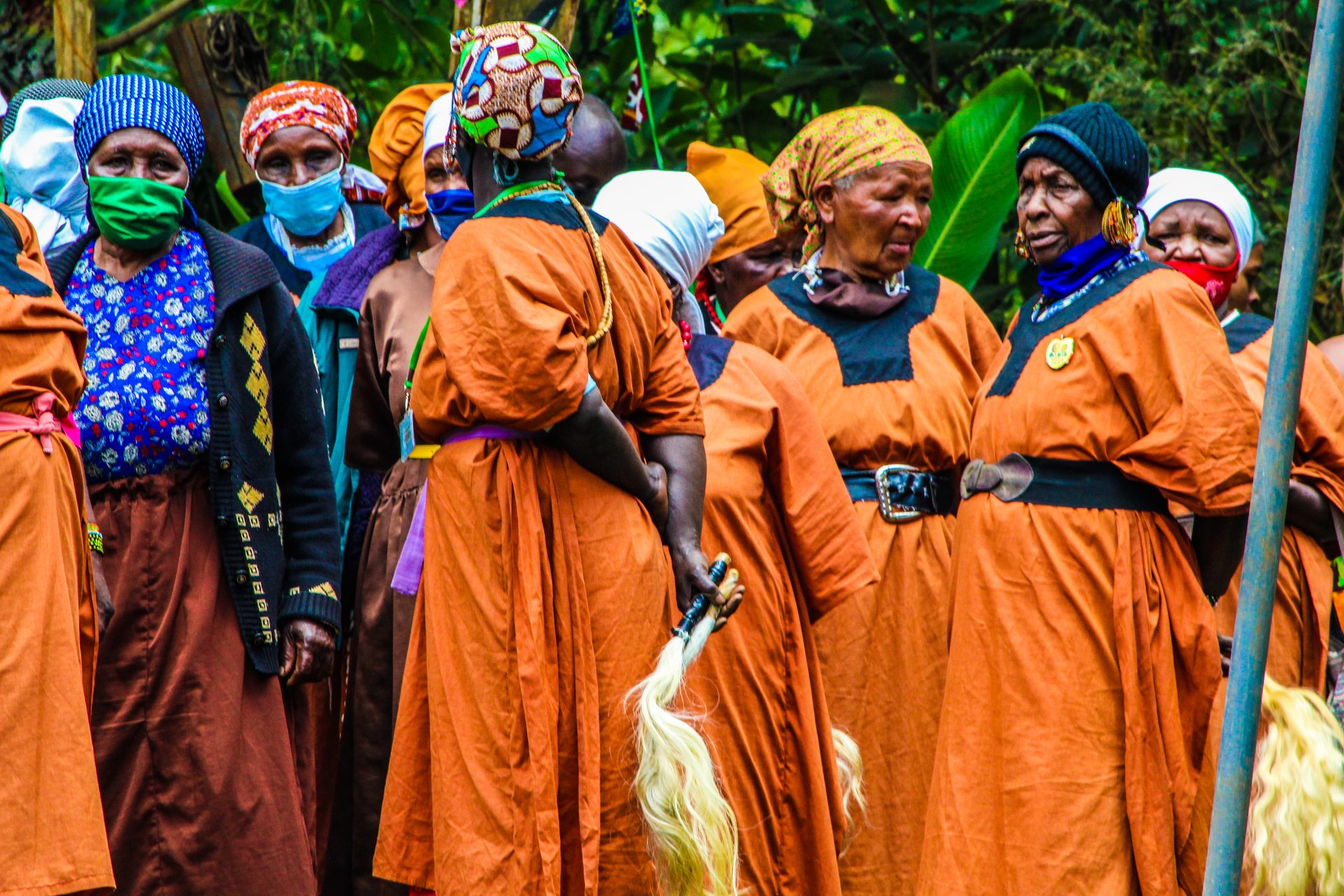
Long before cotton and tailoring reached central Kenya, traditional Kikuyu clothing already carried its own grammar of status, age, and belonging. The Kikuyu, or Agĩkũyũ, are Kenya’s largest ethnic community, numbering roughly 8.1 million people, with 8,148,668 living in Kenya today. Every skin, apron, and bead on a Gikuyu man or woman once answered a practical question about the weather and a social one about who that person was.
This piece walks through six garments and accessories that made up that wardrobe: the mūthuru skirt, the mwengū apron, the nguo ya ngoro cloak, the beaded gīcoco, and the ornamental categories known as mūniūrū and ndohi. Readers interested in how other cultures solved the same problems of climate and status through clothing may also want to compare this with traditional Indian clothing or traditional Japanese clothing, both of which built equally detailed systems of dress around status and occasion.
| Garment | Kikuyu Name | Material | Worn By |
|---|---|---|---|
| Skirt | Mūthuru | Two sheepskins | Women |
| Apron | Mwengū | Soft leather | Women |
| Cloak | Nguo ya ngoro | Three to four goatskins | Women |
| Beaded apron | Gīcoco | Leather, cowrie shells | Uninitiated girls |
| Ornament category | Mūniūrū | Beads, metal | Men and women |
| Ornament category | Ndohi | Beads, shell, metal | Men and women |
1. Mūthuru
The mūthuru was the foundation of a Gikuyu woman’s wardrobe, a leather wrap-around skirt that gave her the freedom to work the land without restriction. According to the Gĩkũyũ Centre for Cultural Studies , the Gīkūyū traditional woman’s skirt was called the mūthuru, a simple leather wrap-around that was accompanied by a soft leather pubic apron worn under the skirt opening.
Builders of the garment were specific about materials. The skirt was made from two sheep skins, never goat’s, and it was designed to taper behind the legs so that it protected the lady even when she bent over. That tapered cut mattered for daily life, since the skirt was an appropriate working garment that gave the knees and legs a lot of freedom, and during cultivation the upper cloak was removed or tucked around the waist, held in place by the skirt.
Pro Tip: When researching Gikuyu dress online, look for sources that distinguish the mūthuru skirt from the Maasai cloak styles it is sometimes confused with, since the two communities traded goods and influenced each other’s adornment.
Readers comparing wrap garments across cultures may find it useful to look at how other regional dress systems, such as traditional Pakistani clothing, also built entire outfits around a single foundational wrapped piece rather than tailored seams.
2. Mwengū
Underneath the mūthuru sat the mwengū, a soft leather apron that served as the only undergarment a Gikuyu woman wore. The pubic apron is called the same as the gap it deals with, mwengū, a naming choice that reflects how directly Gikuyu vocabulary described function.
The term carried weight beyond clothing. One cultural writer notes that in Gikuyu, this gap concept is called the Mwengū, “the Great Gap”, linking the garment’s name to a broader idea of a void or opening in Gikuyu thought. The apron’s placement under the skirt made it effectively invisible in daily life, but its condition still mattered socially.
Every girl’s skirt and apron were carefully inspected in the morning by the matron or other girls, a custom that shows how closely clothing was tied to community oversight of a young woman’s conduct and standing. This kind of garment-as-social-record function appears in many traditional dress systems, including the layered symbolism found in traditional Chinese clothing.
3. Nguo Ya Ngoro
Above the skirt and apron, the upper body was covered by a cloak the Gikuyu called nguo ya ngoro, sometimes referred to by the alternate name nyathiba. Per the Gĩkũyũ Centre, the upper part of the body was protected by this cloak, which could vary in length from just below the waist to the ankles.
Making one was a slow, deliberate craft. The cloak was made from three to four goat skins whose hair had been scraped with a knife and then treated with ochre and castor oil until it was soft. Once finished, the hide carried visible signs of its construction: the sewing lines and repair lines for patches that would appear later were oftentimes decorated with beadwork.
Key Insight: The way a cloak was fastened separated Gikuyu style from neighboring communities. The cloak was knotted on the right shoulder and dropped free, unlike the Maasai women’s cloak, which was always held by a waist belt in addition to the shoulder knot.
The cloak also doubled as bedding. Only the cloak was removed at night and used as a covering together with other old decommissioned garments, which meant a single hide served both as daywear and as part of household bedding, a practical overlap common in many subsistence-based wardrobes. Readers curious about how climate shaped similar multipurpose outerwear elsewhere can see parallels in traditional German clothing, where wool cloaks served comparable dual roles.
4. Gīcoco
The gīcoco marked a specific life stage rather than an age group as a whole. A leather beaded apron, sometimes decorated with cowrie shells and worn over the skirt if there was one, indicated the girl was uninitiated, a karīgū or kīrīgū, making the garment a visible social label as much as a piece of clothing.
For younger children, clothing was far simpler across the board. The little leather apron worn under the skirt provided all the undergarment there was, and for young boys and girls it constituted all the clothing they had. This matches broader accounts of Kikuyu childhood dress, where children in the traditional Kikuyu community wore skins around their waist and normally wore no cloth on their upper body.
The gīcoco’s beadwork and cowrie-shell trim connect it to the wider tradition of decorative leatherwork across the region, where tanned leather was used for belts, bead works, wallets, traditional skirts, and covering material for traditional housing. Readers interested in how other cultures use specific garments to mark a life stage might compare this with the ceremonial pieces discussed in traditional Australian clothing.
5. Mūniūrū
Mūniūrū belongs to the broader category of personal ornamentation that completed a Gikuyu outfit rather than to a single standardized garment. Ear ornamentation carried real social information in Gikuyu dress; a woman’s ear decoration could signal that she had an initiated son or daughter, showing how adornment tracked family milestones as closely as age or marital status did.
Beadwork and metal ornament were not limited to any one body part. Across accounts of Kikuyu dress, people wore earrings, necklaces, bracelets, and anklets made from multi-coloured beads and cowrie shells, and these pieces often signaled wealth as much as style.
Important Note: Written documentation of precise, standardized definitions for every Gikuyu ornament term, including mūniūrū, is limited in available English-language sources. Readers seeking exact etymological or regional detail should consult Gikuyu-speaking elders or cultural centers directly, since terminology and usage varied between Kiambu, Murang’a, and Nyeri communities.
Wealth display through dress was not unique to women. One account of an elder’s outfit observes that an old Kikuyu man’s clothing was styled specifically to symbolize his wealth, reinforcing how ornament categories like mūniūrū functioned as a visible record of a person’s standing within the community.
6. Ndohi
Ndohi, like mūniūrū, falls under the wider Gikuyu practice of using accessories to finish an outfit and communicate identity beyond what the core garments alone could show. Regional variation in ornament style was common across central Kenya, and even within Kikuyu-adjacent communities there were notable differences in how beadwork, cowrie shells, and metal pieces were combined.
Leatherwork underpinned much of this accessory tradition. Tanned leather went into belts, bead works, and wallets alongside the skirts and cloaks already covered, which means many ornamental pieces shared the same raw material and tanning process as the clothing they accompanied.
As with mūniūrū, specific written detail on ndohi as a standalone term is thin in accessible English sources, so this entry should be read as part of the general Gikuyu ornament tradition of beads, shells, and metalwork rather than as a fully documented standalone garment. This gap mirrors a broader pattern seen in many oral-tradition clothing systems, including some regional variations within traditional American clothing, where localized terms are often undocumented outside the communities that use them.
By the colonial period, the wider Gikuyu wardrobe was already shifting. Many Gikuyu women eventually abandoned the skirt and took up trousers, and today, most Kikuyu people, like most of Kenya, dress in Western jeans, t-shirts, trousers, and shirts, reserving the mūthuru, nguo ya ngoro, and beaded accessories for ceremonies, weddings, and cultural events. Anyone comparing how global dress has shifted from functional traditional pieces toward everyday Western wear might also enjoy a look at traditional Pakistani clothing or browse general style coverage on the clothing section for related comparisons.
Traditional Kikuyu clothing survives today mostly in ceremonial contexts, from weddings to cultural festivals, where the mūthuru, nguo ya ngoro, and beaded gīcoco reappear as markers of heritage rather than daily necessity. Understanding these six garments gives a clearer picture of how the Gikuyu people used leather, ochre, and beadwork to communicate age, status, and belonging long before imported cloth reshaped the wardrobe. For readers building out a broader picture of how dress varies across cultures and continents, the traditional Indian clothing and traditional Chinese clothing guides offer useful points of comparison.