Traditional Bosnian Clothing: 8 Garments That Define Bosnian Folk Dress

November 17, 2026
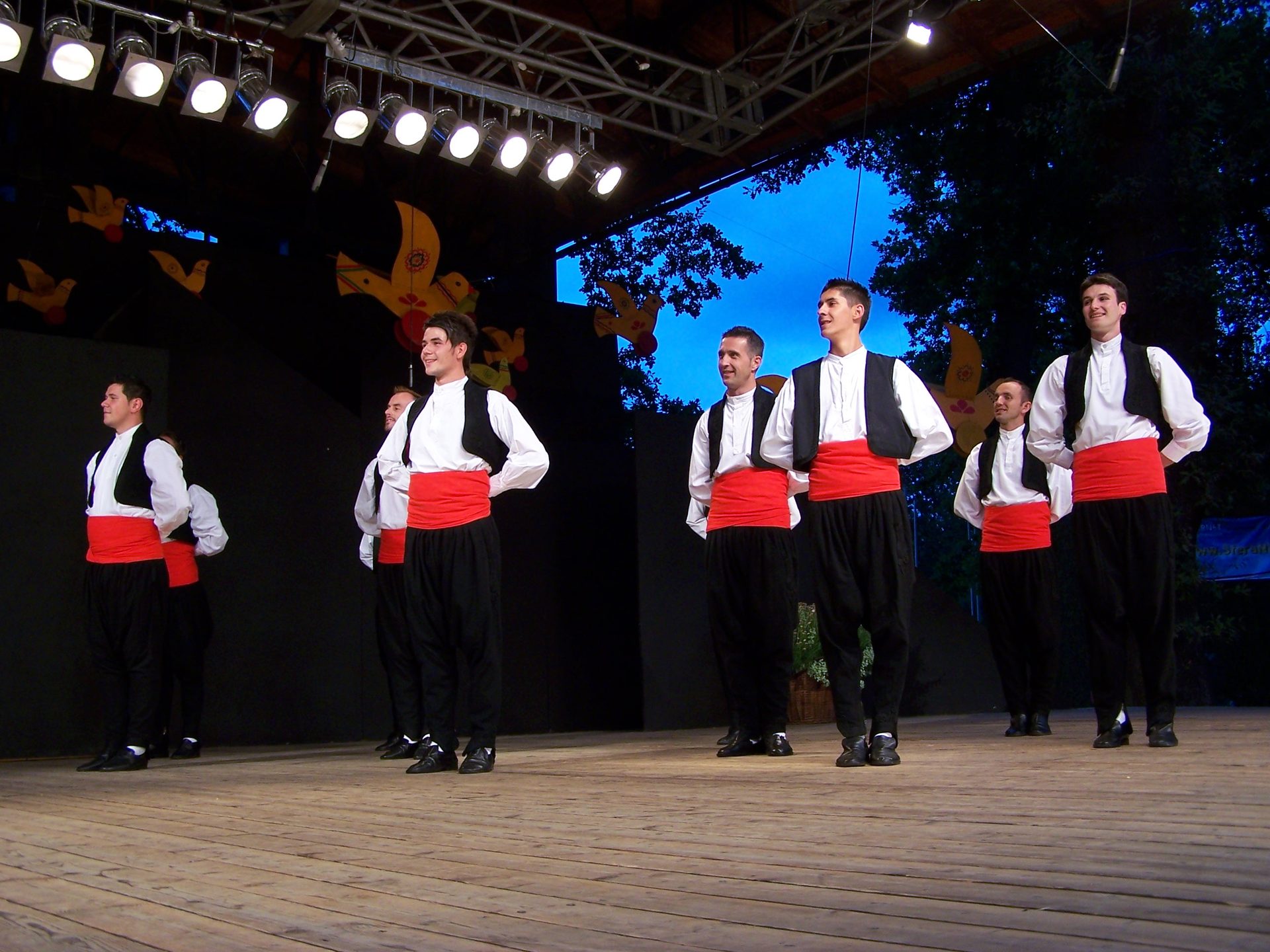
Long before factory-made fabric reached the Balkans, Bosnian villagers were already stitching their own identity into every seam. Traditional Bosnian clothing tells a layered story of Ottoman rule, Slavic heritage, and Mediterranean trade, all woven into garments still pulled out for weddings, folklore festivals, and national holidays. Bosnian folk dress is charming, and historically it took some features from Ottoman, Balkan, and Mediterranean cultures and combined them into something new, typically Bosnian.
This piece walks through eight garments that anchor that wardrobe, from the felt fez and baggy dimije trousers to lesser-known pieces like the žerma and curdija vest. Readers curious about how neighboring cultures shaped their own dress can also compare notes with other traditional clothing styles from around the world.
1. Fez
The fez is probably the single most recognizable piece of Bosniak traditional dress: a brimless, flat-topped felt cap, usually red, often finished with a dark silk tassel. Men wore it bare or wrapped with a small turban cloth depending on status and region, while women’s versions were typically smaller and partly covered by a headscarf. The cap’s roots trace directly to Ottoman administrative reform rather than folk custom alone.
One of the most significant reforms in Ottoman fashion took place during the reign of Mahmud II, whose modernization efforts first affected the state sector, replacing the sarık turban with the fez while officials at the Sublime Porte began adopting Western-style trousers. That shift rippled outward from Istanbul into provincial Bosnia, where the fez became everyday headwear for Bosniak men well into the 20th century, long after it had faded elsewhere.
Pro Tip: When shopping for an authentic fez rather than a costume-shop version, look for hand-felted wool and a hand-sewn tassel. Machine-pressed synthetic caps rarely hold their shape the way traditional felt does.
Headwear carrying this much cultural weight is not unique to Bosnia. Readers interested in how formal headpieces signal status elsewhere might enjoy comparing the fez to traditional Japanese clothing, where hats and hair ornaments carry similarly precise social meaning.
2. Opanci
Opanci are the leather peasant shoes that once covered nearly every foot in rural Bosnia, and they remain the most widely shared footwear across the wider Balkan Peninsula. They are traditional peasant shoes worn throughout Southeastern Europe, including Bosnia and Herzegovina, Bulgaria, Croatia, Montenegro, North Macedonia, Serbia, Romania, and Albania, built from leather with no laces and distinctive curled or pointed toe endings. The design is ancient. According to historian J.J. Wilkes, opanci originated as a leather moccasin worn by paleo-Balkan peoples such as the Illyrians, Dacians, and Thracians, and were later adopted by Slavic settlers.
In Bosnian villages, opanci were handmade from cured calf or swine hide and tied around the ankle with leather thongs, with wealthier families sometimes using game skin instead. Across the region, opanci remained the only available footwear until the mid-20th century, when factory shoes finally replaced them for daily wear. Today they survive mainly in folklore ensembles and souvenir shops rather than daily life.
Because the shoe crossed so many borders, regional names and details shifted while the basic form stayed recognizable. The table below compares a few neighboring traditions, including the Albanian version that shares both construction and etymology.
| Region | Local Name | Distinguishing Detail |
|---|---|---|
| Bosnia and Herzegovina | Opanci | Simple curled toe, worn with thick wool čarape |
| Albania, Kosovo, North Macedonia | Opinga | Single leather skin shaped with wool strips |
| Croatia (coastal regions) | Opanci | Paired with cotton stockings under the shoe |
| Bulgaria | Tsarvuli | Flatter sole, minimal toe curl |
The Albanian version, called opinga in Gheg Albanian, is worn by Albanians across Albania, Kosovo, North Macedonia, Montenegro, Greece, and even Arbëresh villages in Italy, which makes this one of the clearest threads connecting traditional Albanian costumes to Bosnian folk dress despite the countries’ distance. For a closer look at how another European culture treats handmade leatherwork as a badge of regional identity, see this overview of traditional German clothing, where leather lederhosen play a comparable role.
3. Dimije
Dimije are the wide, baggy trousers that defined everyday wear for Bosniak women for generations, gathered loosely at the waist and tied snugly at the ankle. They belong to the same family as the Turkish şalvar, traditional baggy trousers gathered tightly at the ankle that form part of Turkish folk dress. The style entered Bosnia directly through Ottoman administration and stayed in rural wardrobes long after the empire itself departed.
In Bosnia, both men and women traditionally wore baggy pants as a result of Ottoman influence, and the female version, called dimije, could be worn alone or paired with an overskirt; the wide trousers were tied at the ankle, and in the past, how high a woman tied them could reveal her region of origin. That small detail mattered socially in a way outsiders rarely notice today.
Across Bosnia and Herzegovina, Montenegro, and Serbia, this garment is known specifically as the dimija, which developed its own local cut distinct from the broader şalvar family. Fabric choice signaled status too: plain cotton or linen for daily wear, and silk with gold embroidery for a bride’s wedding dimije.
Common Mistake: Don’t confuse dimije with the Western “harem pants” fashion trend. The term harem pants became popular in the West as a generic label for baggy, ankle-cinched trousers inspired by several distinct traditions, the Bosnian dimije among them — but the original garment carries regional meaning the fashion-trend version strips away.
Shoppers who find the silhouette familiar aren’t imagining it. The same loose-cut, ankle-tied trouser logic shows up in traditional Pakistani clothing, where shalwar kameez follows a nearly parallel construction despite centuries of separate development.
4. Zobun
The zobun is a sleeveless or short-sleeved outer vest worn over a long shirt or dress, typically cut from dark wool broadcloth and finished with cord trim or modest embroidery along the edges. Unlike the heavily gilded festival pieces found elsewhere in the wardrobe, the zobun leaned practical: it layered warmth without restricting arm movement during farm work or household chores.
Regional versions varied in small but telling ways:
- Village zobuns were cut from coarse homespun wool, dyed with natural pigments available locally.
- Town versions, especially among wealthier Bosniak families, used finer broadcloth and added subtle braid trim.
- Some older styles extended past the hip, while shorter waist-length cuts became more common later.
- Color often marked marital status or community, with darker tones reserved for married women in many villages.
The vest sat as a middle layer in a women’s outfit, worn over a chemise and under heavier outerwear in colder months. Readers who enjoy tracing how a simple vest can carry layered social meaning may also find value in this breakdown of traditional Indian clothing, where regional jackets and cholis follow a similarly layered logic.
5. Čarape
Čarape are the thick, hand-knitted wool socks and stockings worn with opanci, and they did more visual work than their humble function suggests. Knitters used multiple colors and geometric motifs on the same pair, turning a practical layer into a small canvas of regional pattern language. This pairing wasn’t unique to Bosnia — across the wider region, cotton socks worn over the footwear under opanci (strapped, soft-soled sandals) appear as a standard accessory piece.
Making a traditional pair generally followed a few consistent steps across Bosnian villages:
- Wool was sheared, washed, and hand-spun into yarn, often during winter months when fieldwork slowed.
- Natural dyes from plants, bark, or minerals colored the yarn before knitting began.
- Socks were knitted on fine double-pointed needles, with colorwork patterns passed down within families rather than written out.
- Finished čarape were worn folded over the ankle strap of the opanak, both for warmth and to show off the patterning.
Key Insight: Many Bosnian knitting patterns carried local names tied to specific villages, meaning a trained eye could identify where a person was from simply by reading the sock pattern, much like the ankle-tie height on dimije.
6. Posavina Scarf
The Posavina scarf, known locally as the Posavska marama, comes from the Posavina region along the Sava River in northern Bosnia and is one of the most technically demanding textile pieces in the entire traditional wardrobe. Made from fine cotton or silk and worked with dense, raised gold-thread embroidery, the scarf typically features floral and geometric borders stitched so tightly that the design stands slightly off the fabric surface.
Married women wore the Posavina scarf over the head, often layered with or over a fez, with the embroidered edge framing the face. The craft behind it is considered one of the more labor-intensive folk art forms in Bosnian textile tradition, sometimes taking weeks of close needlework to complete a single piece. Families frequently passed finished scarves down as heirlooms rather than replacing them each generation.
This kind of dense, raised metallic embroidery has close cousins across Asia and the Balkans alike. Readers drawn to intricate needlework traditions might also appreciate the embroidery techniques covered in this guide to traditional Chinese clothing, where silk-thread work follows a comparably exacting standard.
7. Ćurdija
The ćurdija is a richly embroidered vest or short jacket worn over a shirt, typically made from wool or velvet and decorated with gold or silver thread along the collar, front edges, and cuffs. It belonged to the more formal end of the Bosnian wardrobe, pulled out for weddings, holidays, and significant family occasions rather than everyday farm work.
Because the ćurdija, zobun, and žerma occupy similar space in the wardrobe, they’re easy to mix up at a glance. The table below lays out how they differ:
| Garment | Typical Material | Occasion | Distinguishing Detail |
|---|---|---|---|
| Zobun | Dark wool broadcloth | Daily wear, layering | Minimal trim, practical cut |
| Ćurdija | Velvet or fine wool | Festive, formal | Dense gold or silver thread embroidery |
| Žerma | Red wool or velvet | Festive, bridal | Short, bolero-style cut with heavy metallic cording |
Craftsmanship like this tends to signal family wealth and occasion in traditional dress worldwide. A useful parallel appears in traditional American clothing, where heritage communities still reserve the most heavily decorated pieces for weddings and festival days rather than routine wear.
8. Džečerma
The džečerma, sometimes written žerma, is a short, sleeveless or cap-sleeved bolero-style jacket worn by Bosniak women over a blouse, typically cut from deep red wool or velvet and covered almost entirely in gold cord embroidery and metallic trim. Where the zobun stayed understated and the ćurdija leaned formal, the džečerma pushed further into ceremonial territory, often reserved for brides or the most important festival appearances.
The jacket’s short, fitted cut left the embroidered blouse sleeves and waistline visible underneath, which was intentional: the layering was designed to display as many decorated textile layers at once as possible. This kind of deliberate layering for visual richness, rather than warmth, shows up across many folk traditions that prize visible craftsmanship on special occasions.
Readers curious how other cultures balance ceremonial display against everyday simplicity may find it interesting to compare this against traditional Australian clothing, where the contrast between everyday and formal dress works on a very different cultural logic.
Looking at Bosnian Dress as a Whole
Taken together, these eight pieces map a wardrobe built in layers, practical wool underneath, ceremonial gold thread on top, with each garment carrying a small piece of regional or social information for anyone who knew how to read it. The fez signaled Ottoman administrative reach; the opanak connected Bosnian villages to a shoe style worn from the Adriatic to Albania; and pieces like the Posavina scarf and žerma turned needlework into a family heirloom.
None of this is frozen in a museum case. Bosniak families and diaspora communities still bring these garments out for weddings, folklore festivals, and national celebrations, keeping the wardrobe active rather than ceremonial-only. Anyone building a broader picture of how dress carries identity across borders can continue that comparison through traditional German clothing or the regional variety found in traditional Indian clothing, both of which show the same pattern of practical daily wear sitting alongside heavily decorated festival pieces.