Traditional Korean Clothing for Men: 14 Garments of the Hanbok Explained

November 17, 2026
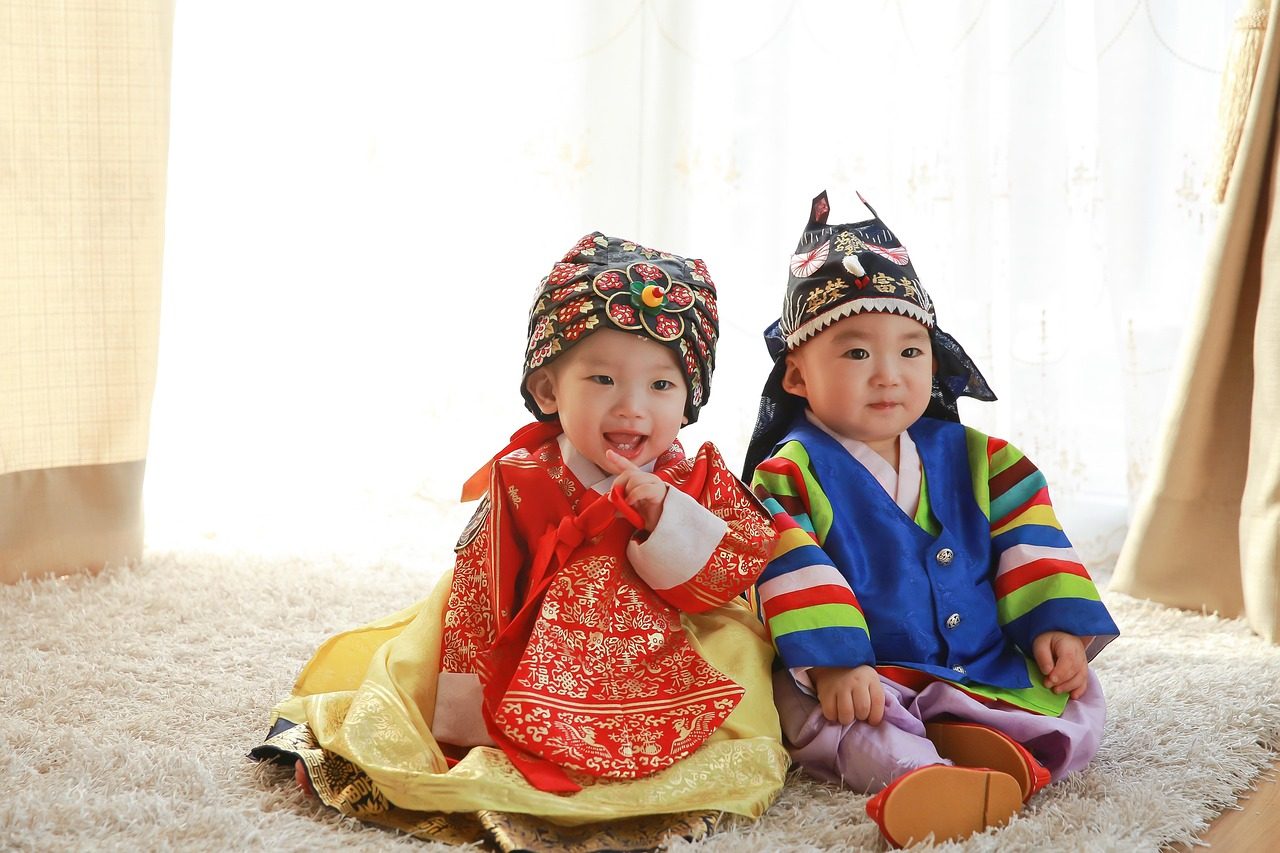
Traditional Korean clothing for men was rarely a single outfit. Depending on rank, season, and occasion, a Joseon-era gentleman might layer anywhere from two to seven separate garments before stepping outside, each piece signaling something about his status, profession, or the formality of the moment. The hanbok that most people picture today, a jacket and trousers, is only the starting point of a much larger wardrobe system.
This piece walks through 14 garments that made up men’s traditional dress in Korea, from everyday trousers to the ceremonial caps reserved for weddings and court. For readers curious about how other cultures built similarly layered dress codes, the Korean culture archive on this site covers related customs beyond clothing.
1. Baji
Baji are the trousers at the foundation of men’s hanbok, and they still give their name to “pants” in everyday Korean speech today. According to Wikipedia, baji is a kind of traditional Korean pant that is part of the hanbok, worn alongside a jacket called jeogori.
The cut is deliberately loose rather than fitted. A baji is baggy and loose, so it is tied around the waist, with the roomy design aimed at making the clothing ideal for sitting on the floor, an ethnic style that dates back to the Three Kingdoms period. That floor-sitting lifestyle, common in homes with low tables and heated ondol flooring, shaped the trousers’ shape for centuries.
2. Jeogori
The jeogori is the jacket half of the hanbok equation, and it is worn by both sexes, though men’s and women’s versions diverged sharply over time. As one guide to Korean dress notes, the men’s hanbok consists of jeogori paired with a baji, and the jeogori is a unisex garment worn by both men and women.
What makes the men’s jacket distinct is how little it changed. Though similar, women’s jeogori shortened over the course of time, while the men’s jeogori remained unchanged, staying around hip length or waist length. Men’s jeogori typically closed with a long tie called goreum rather than buttons, a detail that also shows up on related garments covered in this site’s broader clothing and style coverage.
3. Durumagi
Durumagi is the overcoat most people associate with a finished hanbok look, worn over the jeogori and baji for warmth, formality, or both. Durumagi is an overcoat worn by men, including scholars, officials, and upper-class men, over their hanbok. Construction varied by season: during winter a po made of wool, calico, cotton, or silk was worn for protection against cold, while summer durumagi was made of ramie or ramie and silk gauze.
Pro Tip: The term “po” is a catch-all for Korean overcoats. Durumagi, dopo, and jungchimak are all types of po, distinguished mainly by sleeve width, slits, and who was permitted to wear them.
Durumagi also outlasted its competitors by royal decree. During the 1894 reform, all varieties of po, including dopo, were prohibited by King Gojong, and only durumagi was allowed to be worn. That single ruling is a large part of why durumagi, rather than dopo or jungchimak, remains the overcoat still seen at weddings and holidays.
4. Magoja
Magoja is a short, collarless jacket that looks simple but carries an unusually specific origin story tied to one man’s exile. Magoja was originally Manchu-style clothing, introduced to Korea after Heungseon Daewongun, the father of King Gojong, returned from his political exile in Manchuria in 1887, with the design derived from the magwae he wore there to protect against the region’s cold weather.
Its construction sets it apart from older Korean jackets. Magoja does not have git, the band of fabric that trims the collar, or goreum, the tying strings, unlike jeogori and durumagi. Buttons replaced ties, a Manchu-influenced detail that, alongside Korea’s own layered dress, invites comparison with other regional traditions documented in this site’s guide to traditional Japanese clothing. Magoja was originally a male garment but later became unisex clothing.
5. Jokki
Jokki is a vest, and like magoja, it is a relative newcomer to the hanbok wardrobe rather than an ancient staple. Jokki is a type of vest, and although jokki and magoja were created at the end of the Chosŏn dynasty, a period when Western culture began to influence Korea, both garments have been considered parts of traditional clothing.
Men wore jokki over the jeogori for an extra layer of warmth and a sharper silhouette, often pairing it with magoja for a two-layer look that borrowed structural ideas from Western waistcoats while keeping Korean fabrics and proportions. Its late arrival is a useful reminder that “traditional” dress was never frozen in one era; it kept absorbing new influences well into the 19th century.
6. Baeja
Baeja is a sleeveless vest closely related to jokki, though the two differ in how the front closes. Descriptions of related garments note that some outer pieces had neckbands with ends overlapping in the front like baeja, a short sleeveless vest, distinguishing it from vests that fastened with a center button or tie.
Men typically wore baeja over the jeogori as a lightweight mid-season layer, useful for the transitional weeks when a full durumagi felt too warm but a bare jacket wasn’t quite enough. Because it required less fabric than a sleeved jacket, it was also a practical choice for working men who needed freedom of movement in the arms.
7. Jungchimak
Jungchimak was a long coat worn over the jeogori and baji, often under a jungdan layer, and it reads as one of the more formal members of the po family. Jungchimak was a white coat worn on top of the jeogori and baji under jungdan, and it was a type of long coat or po.
Structurally, it is defined by its sleeves and slits. Korean costume references describe how jungchimak was modified with the introduction of the middle part of the Ming Dynasty, with wide sleeves and long side slits on both sides, giving it a fuller, more dramatic drape than the plainer durumagi worn by commoners.
8. Dapho
Dapho began as scholarly dress before drifting toward military use, and its sleeve length changed with the times. Dapho refers to a half-sleeved robe worn by scholars from the late Goryeo to late Joseon periods, worn over an outer garment or under the official attire at a government office.
War reshaped the garment literally. The shape of dapho changed through the centuries, as the type with a straight collar and short sleeves gave way to a sleeveless style, with the collar also changing. Eventually the sleeveless version merged into military dress: by the late Joseon period, a robe without collars and sleeves called jeonbok was commonly worn, and dapho eventually became a part of military attire called jeonbok.
9. Gwanbok
Gwanbok is not one garment but a category: the official attire issued to government officers, complete with rank markers. Gwanbok is a Korean general term referring to all business attire of government officers issued by the government, with rank badges on them to distinguish hierarchies. The system itself was borrowed rather than invented locally, since the term gwanbok is a collective term referring to historical official attire bestowed by the government court, including Chinese courts of various dynasties.
Color told you exactly where a wearer stood. Historical sources describe a strict color order for court attire:
| Rank Order | Color |
|---|---|
| 1 (highest) | Yellow |
| 2 | Red / Blue |
| 3 | Black |
| 4 | Green |
| 5 (lowest) | White |
Yellow carried extra restrictions for most of Korean history, reserved for Chinese emperors rather than Korean kings, until the declaration of the Korean Empire late in the Joseon period allowed Gojong to wear it. The same bestowal system shaped formal dress elsewhere in East Asia, a connection explored further in this site’s overview of traditional Chinese clothing.
10. Simui
Simui is a plain white robe trimmed in black, worn by Confucian scholars for ancestral rites, academic ceremonies, and sometimes as funeral attire. Unlike the brightly dyed court robes of gwanbok, simui deliberately avoided color and ornament, reflecting Confucian ideals of modesty and moral seriousness rather than rank or wealth.
The garment traces back to ritual dress described in classical Chinese Confucian texts, which Korean scholars adapted during the Joseon dynasty as Confucianism became the state philosophy. Because it was tied so closely to scholarly identity rather than court service, simui sat outside the gwanbok ranking system entirely. Readers interested in how ceremonial robes signal status across cultures may also find parallels in this site’s look at traditional Indian clothing, where color and drape carry similar ritual weight.
11. Dopo
Dopo was the signature overcoat of the Confucian scholar class, distinct enough that it gets its own entry separate from durumagi and jungchimak. Dopo is a variety of po, an overcoat, mostly worn by male Confucian scholars called seonbi since the mid-Joseon period. Men heading outdoors in that era had several po styles to choose from, since when men went outside, they wore outerwear called po, with different types of po including dopo, jungchimak, and durumagi.
Dopo’s wide sleeves and flowing silhouette made it a visual shorthand for scholarly status, right up until the 1894 reform swept it aside in favor of the simpler durumagi. The scholar’s wardrobe, built around modest overcoats rather than official rank, offers an interesting contrast to layered outerwear traditions documented in this site’s guide to traditional Pakistani clothing.
12. Gat
Gat is the wide-brimmed horsehair hat most people picture when they imagine a Joseon-era gentleman, and it was not optional outerwear for adult men. According to the National Folk Museum of Korea, gat, also known as heuklip, was a hat that men wore when going outside in the Joseon era, and only grown-ups were allowed to wear one.
The hat’s restriction to adults made it a marker of coming-of-age as much as a practical accessory. Gat is a male horsehair hat that was part of the hanbok during the Joseon period. It was almost always paired with a durumagi, and seeing a gat without an overcoat beneath it would have looked as incomplete to Joseon-era eyes as a suit jacket without trousers would today.
13. Bokgeon
Bokgeon is a peaked cloth hat best known today from New Year celebrations, where young boys wore it alongside colorful children’s overcoats. Wikipedia’s entry on children’s holiday dress notes that such outfits were worn along with headgear such as bokgeon, a peaked cloth hat, hogeon, a peaked cloth hat with a tiger pattern, for young boys, or gulle for young girls.
Beyond holiday wear, bokgeon also had ceremonial associations with young Confucian scholars and boys approaching their coming-of-age rite, reinforcing its role as a marker of youth rather than adult status. For readers exploring naming and cultural traditions tied to childhood in Korea, this site’s list of Korean boy names covers a related cultural thread.
14. Bokdu
Bokdu is a black, winged ceremonial cap most commonly seen on grooms during traditional Korean weddings, paired with a borrowed version of official gwanbok robes for the day. Its stiffened, angular shape traces back to court headgear styles that spread across East Asia, and in Korea it became specifically associated with life’s major rites of passage rather than daily official dress.
Because grooms were briefly permitted to wear official-style robes and a bokdu on their wedding day regardless of their actual rank, the custom gave ordinary men a rare chance to dress as a government official for a single ceremony. That tradition survives in modern Korea mainly through traditional-style wedding ceremonies and cultural festivals, where the gat, durumagi, and bokdu still appear together as a complete, recognizable silhouette of Korean men’s formal dress. Readers curious how other nations preserve similar ceremonial dress codes for weddings and official occasions can compare notes with this site’s overview of traditional German clothing, where regional costume plays a comparable ceremonial role.