Why Are My Orchid Leaves Wrinkled? Causes, Fixes, and Prevention Tips

September 8, 2026
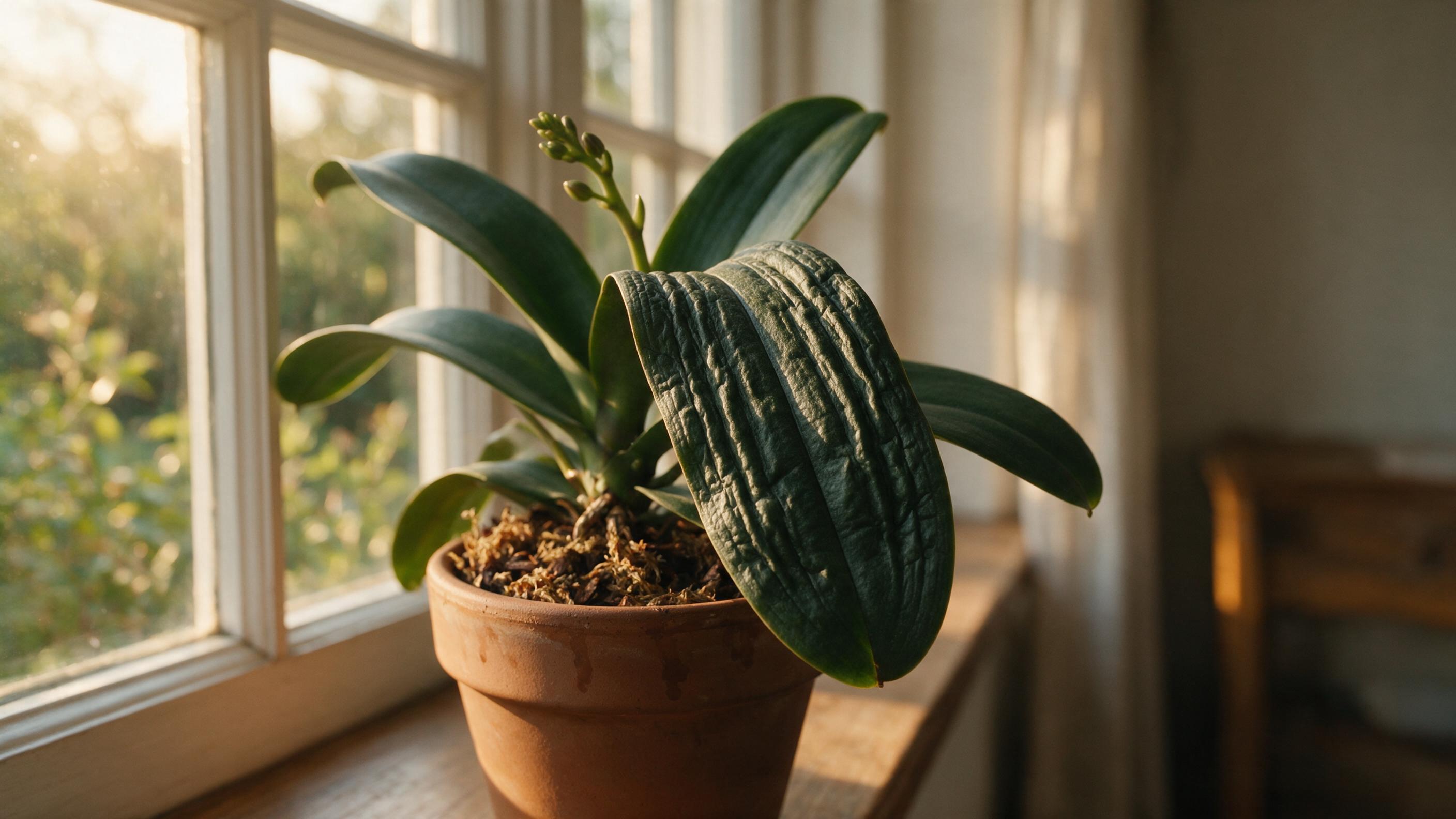
You walk past your orchid, and something looks off — the leaves that were once smooth and firm now look puckered, soft, or leathery. It’s one of the more alarming things a houseplant owner can notice, especially when you feel like you’ve been doing everything right.
The good news? Wrinkled leaves are usually only temporary and are seldom the result of orchid diseases. In most cases, your plant is sending you a clear message about its care routine — and once you understand what it’s saying, the fix is often straightforward. This guide walks you through every possible cause of wrinkled orchid leaves, how to diagnose your specific situation, and exactly what to do to bring your plant back to health.
What Does It Mean When Your Orchid Leaves Are Wrinkled?
Wrinkled orchid leaves signal distress, indicating the plant struggles to maintain turgidity — its internal water pressure. Think of each leaf cell like a tiny water balloon: when those cells are full, leaves look plump and smooth. When they lose pressure, the surface puckers and folds.
Strong, healthy leaves should be plump, taking on a slightly rubber-like texture. Foliage of this type will stand erect, with leaves held well above the container. All parts of the plant should be uniform in color, ranging in shade between light and medium green.
Think of your orchid’s leaves as its own health monitoring system. Just like how we might look tired when we’re in the early stages of getting sick, orchids show early signs of distress via their leaves, long before serious problems develop. Wrinkling is one of the earliest and most readable of those signals.
The appearance of the wrinkles also gives you clues. If you have a Phalaenopsis or moth orchid, those orchids have thick, leathery leaves. You may have had leaves wrinkle on that orchid, but the wrinkles run lengthwise along the leaf or may look like your fingers after being in the bathtub too long. On thin-leaved varieties, the wrinkling tends to be more pronounced and accordion-like.
Is Wrinkling in Orchids Always a Sign of a Problem?
Not always — and knowing the difference can save you from overreacting and accidentally making things worse. There are a few situations where some degree of leaf change is completely normal.
Older leaves, especially at the plant’s base, may naturally wrinkle and yellow as they age and resources reallocate to new growth. This is a normal part of the life cycle, typically affecting only a few older leaves. If the new growth at the top of the plant looks healthy and the wrinkling is limited to the oldest, lowest leaves, you probably don’t need to intervene.
However, foliage showing stress will have a definitive look, with each leaf showing notable striations across its surface. Such plants will often droop, taking on a leathery feel as the condition persists. In more severe instances, wrinkled foliage may begin to yellow, browning and dying back over time. When wrinkling spreads to multiple leaves — especially newer ones — that’s when you need to investigate.
Pro Tip: If only the bottom one or two leaves are slightly wrinkled and the rest of the plant looks healthy with firm new growth, it’s likely just normal aging. Start troubleshooting only when wrinkling appears on two or more mid- to upper-level leaves.
Watering Issues Causing Orchid Wrinkled Leaves
Watering issues are the most common cause of wrinkled orchid leaves, with both underwatering and overwatering as potential culprits. The tricky part is that both problems look almost identical from the outside — which is why so many growers make the mistake of adding more water when their plant actually needs less.
Underwatering
Inadequate water supply is a common reason for wrinkled orchid leaves. Without enough water, cells lose turgor pressure as moisture evaporates faster than roots can replenish it. This dehydration causes leaves to appear shriveled, limp, or leathery.
Phalaenopsis orchids don’t have water storage organs called pseudobulbs that many other orchids (like Cattleya) have, so they are not drought tolerant at all, and they prefer to never completely dry out, particularly for long periods of time. As a result, Phalaenopsis are easily prone to wrinkled orchid leaves.
To confirm underwatering, check the roots. If they appear a healthy white or green and are plump, and the medium is in good shape, suspect underwatering, especially if the roots are white and the pot is very light.
Overwatering and Root Rot
This is the cause that catches most growers off guard. Wrinkled leaves can mean too much water, not too little. When the roots are left to sit in wet bark, they can’t get oxygen. They rot, turn to mush, and stop working. The plant then has enough water around it, but the roots can’t absorb any of it. So the leaves become dehydrated and wrinkle, just like an underwatered plant.
Healthy orchid roots depend on a balance of moisture and airflow. If the potting mix remains wet for too long, airflow is lost and the roots begin to suffocate. Over time, rot sets in and damages the root system. Once this happens, the roots cannot absorb water effectively, even when the potting mix is very wet.
Signs pointing to overwatering include bark that stays wet for days, a musty smell from the pot, and roots that appear brown, black, or mushy when you inspect them.
Shallow or Inconsistent Watering
While underwatering is less common than overwatering, it can still occur, particularly when orchids receive small, frequent amounts of water instead of a deep soak. When only the surface of the bark gets wet, the deeper roots stay dry and can’t deliver moisture to the leaves. Bottom watering for 15 to 20 minutes works best to ensure the entire root zone gets thoroughly hydrated.
Light Conditions Behind Orchid Wrinkled Leaves
Orchid foliage may become dehydrated and burned when positioned too near direct sunlight. Orchid light requirements differ by variety, but most prefer bright but indirect sunlight.
Too much direct sun causes the plant to lose water faster than its roots can replace it, essentially creating a drought condition at the leaf level even when watering is adequate. Bright direct sunlight will cause the plant to lose too much water and droop. Excessive sunlight is also known to bleach the chlorophyll in the leaves of orchids, leading to reduced photosynthesis. The plant will then become weak and stunted.
Too little light creates a different problem. A common sign of an underlit orchid plant is the yellowing of the leaves after wrinkling. When an orchid can’t photosynthesize efficiently, its overall metabolism slows, and leaf health declines. You can fix light problems by placing your orchid in a spot that receives bright indirect light in your house, preferably an east-facing window.
For growers using artificial lighting, the New York Botanical Garden recommends keeping artificial lights on with a timer — 12 to 16 hours in summer and 10 to 14 hours in winter — since they’re not as strong as natural light. You can also check light levels at home using a simple shadow test: place your hand 6 to 12 inches away from your orchid, between the orchid and the light source. A well-defined shadow on your orchid leaves means there is enough light to grow a sun-loving orchid such as Cattleya.
Pro Tip: A north-facing window in most US homes provides too little light for most orchid varieties. An east- or sheer-curtained south-facing window is usually the sweet spot for Phalaenopsis grown indoors.
Soil, Nutrients, and Root Health Causing Orchid Wrinkled Leaves
Even with perfect watering and lighting, your orchid’s leaves can wrinkle if the growing medium or root system is compromised. This section covers the less-obvious culprits that often get overlooked.
Depleted or Compacted Potting Mix
If the potting mix is old, depleted, or the plant is not fertilized, it may lack elements for robust growth. This can lead to a decline in plant vigor, with leaves showing weakness and poor turgor. Orchid bark breaks down over time, becoming dense and waterlogged — which both suffocates roots and holds excess moisture that leads to rot. Repotting your orchids into new orchid potting mix is recommended at least every two years.
Fertilizer Salt Buildup
Fertilizer salts can burn the roots, and burnt roots can’t absorb water, so the leaves wrinkle. Signs include a white film on the bark, the pot rim, or the roots, as well as tips of the roots that look burnt or shriveled — especially if the plant has been fertilized often or watered only with hard tap water.
To address this, flush the bark once a month by sending a lot of water through the pot to rinse the salts out. Use an orchid fertilizer at quarter to half strength and only during active growth. If your tap water is hard, switch to rainwater you’ve collected yourself or use filtered or distilled water. The Iowa State University Extension also recommends preventing fertilizer burn by watering with plain water first, then fertilizing after the media has been thoroughly wetted.
Nutrient Deficiency
Lack of essential nutrients can contribute to leaf wrinkling by impairing healthy tissue structure. Lack of essential nutrients can cause your plant’s leaves to wrinkle, curl, and lose quality eventually. Some soils are of poor quality and lack the required zinc, potassium, and boron levels to sustain the plant’s growth. These nutrients are especially useful in maintaining strong and healthy leaves.
According to BB Orchids , during growing season, using a balanced 20-20-20 fertilizer at quarter strength with every other watering is a reliable approach. To address nutrient deficiencies, begin a regular fertilization schedule using a balanced, water-soluble orchid fertilizer. During the active growing season, fertilize once or twice monthly at a diluted strength, like quarter strength, to provide essential nutrients. Repotting into fresh potting mix every one to two years also replenishes depleted nutrients.
Root-Bound Conditions
When the roots completely fill the pot and start growing in circles, are pushing the plant out of the bark, or there’s barely any of the medium left to hold on to water, it will cause the roots to dry out fast and the leaves to wrinkle. If you can see roots circling the inside of the pot or pushing up out of the medium, it’s time to size up.
Environmental Stress Triggering Orchid Wrinkled Leaves
Orchid leaves can wrinkle due to environmental stressors or natural aging. Extreme temperature fluctuations, direct drafts, or intense sunlight can inhibit water uptake or increase moisture loss. In US homes, several common situations create exactly these conditions.
Low Humidity
Orchids thrive in high-humidity environments. When air is too dry, leaves lose moisture rapidly through transpiration. This leads to dehydration of leaf tissues, causing them to wrinkle and become flaccid. Low humidity can stress the plant and impair its health.
Most orchids wrinkle in dry, hot air. Try to get the humidity at 50 to 70% and keep them out of direct sun and away from radiators. Central heating and air conditioning — both common in American homes — are two of the biggest humidity drains for indoor orchids. If your home has dry air, use a small humidifier to boost humidity. A pebble tray filled with water placed beneath the pot is a low-cost alternative that works well.
Temperature Extremes and Cold Drafts
The American Orchid Society notes that cold shock can happen when plants are exposed to excessively cold temperatures — potentially any temperature under 50°F (10°C). This is especially relevant in winter when orchids sit near drafty windows or exterior doors in colder US climates. Move the plant into a space where the temperature stays between 65 and 80°F (18 and 26°C).
On the opposite end, the process of water balance between what’s lost and absorbed is carefully regulated, but increasing the heat levels affects the balance negatively, causing wrinkles on the plant’s leaves. Placing orchids near heating vents or on sun-baked windowsills in summer creates the same effect.
Pests and Disease Leading to Orchid Wrinkled Leaves
While environmental and watering issues cause the majority of wrinkling cases, pests and disease are worth ruling out — particularly if you’ve already corrected your care routine and the leaves aren’t improving.
Sap-Sucking Insects
Sap-sucking insects like aphids, scale, and thrips can cause leaves to wrinkle, although other symptoms should be present, such as debris, damage to leaves, yellowing, and the bugs themselves. Routine monitoring for pests is vital so they can be tackled at the first sign of issues.
Pests like aphids infest plants, and as they feed on the foliage, they cause leaf curl, wrinkling, and general ill health. Check the undersides of leaves carefully — that’s where most pests hide. Pests such as mealybugs and scale respond well to an application of rubbing alcohol (70% isopropyl alcohol), which can be applied with a cotton swab or a soft toothbrush. Spray aphids with soapy water — a few drops of dish soap in a spray bottle of water. For all insect problems, re-treat the plants every 7 to 10 days for 3 to 4 weeks.
Fungal Disease: Fusarium Wilt
According to the St. Augustine Orchid Society , Fusarium blocks the flow of moisture through the plant’s vascular system. Infected leaves are yellow, thin, shriveled, wrinkled, or wilted and eventually die. Severely infected plants may die in 3–9 weeks, while mildly infected plants gradually decline over a year or so.
Fusarium can infect a plant through orchid roots or by invading the rhizome of recently divided plants. The pathogen is often spread through improper hygiene, generally as a result of using nonsterile cutting tools, which transfers the fungus from plant to plant. Always sterilize pruning tools between plants with a 10% bleach solution to prevent spread.
Viral Infections
Iowa State University Extension notes that more than 25 viruses have been reported to infect orchids. The two most common orchid viruses are cymbidium mosaic virus and odontoglossum ringspot virus. Viruses spread between orchids through contaminated tools during division or harvest, via tissue culture, and by insect vectors such as aphids and thrips. There is no cure for viral infection — infected plants should be isolated and removed to protect your other orchids.
How to Diagnose Why Your Orchid Leaves Are Wrinkled
Before you treat anything, you need to identify the actual cause. Many growers assume it’s just a watering issue, yet wrinkled orchid leaves can signal root problems, low humidity, temperature stress, or even hidden rot. Misreading the symptom often leads to overwatering, which makes the problem worse.
Use this step-by-step approach to narrow it down:
- Check the potting medium. Is it bone dry, or has it been wet for several days? Dry bark points toward underwatering; persistently wet bark with a musty smell points toward root rot.
- Inspect the roots. If they appear a healthy white or green and are plump, suspect underwatering. If, on the other hand, the roots are in poor condition, suspect root loss. Healthy roots are plump, firm, and green or silver-gray, while rotted roots appear dark brown or black, feel mushy or hollow, may look stringy or slimy, and often smell musty.
- Assess the environment. Is the plant near a heating vent, air conditioner, or drafty window? Has the humidity dropped significantly? Has it been moved to a sunnier or darker spot recently?
- Look for pests. Use a magnifying glass and check leaf undersides, crevices, and the base of leaves for insects, webbing, or sticky residue.
- Check the potting medium age. If the bark is more than two years old, it may be breaking down and contributing to root problems regardless of your watering habits.
Key Insight: The single most reliable diagnostic step is unpotting the plant and looking at the roots directly. You can also use a plant identification app to help cross-reference symptoms if you’re unsure what you’re seeing.
How to Fix an Orchid That Has Wrinkled Leaves
The fix depends entirely on the cause you identified above. Here’s what to do for each scenario.
Fix for Underwatering
Phalaenopsis wrinkling from too little or inconsistent watering can often be fixed by watering the plant, if caught in time. Give the plant a thorough soak — place the pot in a basin of room-temperature water for 15–20 minutes so the bark absorbs moisture fully. Always water your orchids in the morning as opposed to the evening. Watering in the evening hours gives little room for evaporation and promotes bacterial and fungal growth.
Fix for Root Rot (Overwatering)
Simply reducing water is not enough when rot has already set in. Emergency repotting is required, starting with gently removing the orchid from its pot and clearing away all old, wet potting mix. Aggressively cut away every single dead, mushy, or hollow root. You only want to keep the firm, plump ones. If you are left with very few roots, that is okay — it’s better to have two healthy roots than ten rotting ones spreading bacteria.
After trimming away any damaged or rotting roots, lightly spray the exposed roots with 3% hydrogen peroxide. As it fizzes on contact, it helps eliminate bacteria and sanitize the fresh cuts. Once this treatment is complete, move the orchid into a clean pot filled with fresh, coarse orchid bark. Before watering again, wait about 24 hours so the cut areas can dry and callus over properly.
Be patient after repotting. Wrinkled leaves will not firm up right away. Visible improvement usually takes 3–6 weeks and occurs only after new, healthy roots begin to grow.
Fix for Environmental Stress
The immediate solution is to raise humidity in the plant’s vicinity to reduce stress on whatever roots there may be, and then deal with whether to repot or to simply wait until the plant establishes in the fresh medium. Move the plant away from heating vents, air conditioners, and cold drafts. A pebble tray with water or a small humidifier nearby will help maintain the 50–70% humidity range most orchids prefer.
Fix for Nutrient and Salt Issues
Flush the potting medium thoroughly with clean water to remove accumulated salts, then switch to a diluted balanced orchid fertilizer applied no more than once or twice per month during active growth. If the bark is older than two years, repot into fresh medium entirely. You can find guidance on choosing the right growing setup by browsing our overview of types of plants and their care requirements.
Fix for Pests
Isolate the affected plant immediately to prevent spread to other houseplants. Treat with 70% isopropyl alcohol on a cotton swab for scale and mealybugs, soapy water spray for aphids, or neem oil for a broader range of pests. Use neem oil or insecticidal soap to eliminate pests without harming your orchids. Repeat treatments every 7–10 days for at least three to four weeks to break the pest life cycle.
How to Prevent Orchid Wrinkled Leaves Going Forward
Preventing future leaf wrinkling involves consistent care that supports the orchid’s health. Establishing a stable environment and adhering to best practices ensures firm, healthy leaves. The following habits will keep your orchid thriving long-term.
- Water on a consistent schedule. Most indoor orchids do well with a thorough watering once every 7–10 days, allowing the bark to approach dryness (but not bone dry) between sessions. Always check the medium and pot weight before watering rather than going by the calendar alone.
- Use the right potting medium. Making sure the potting medium is not compacted is a good idea. Repotting your orchids into new orchid potting mix is recommended at least every two years.
- Maintain humidity between 50–70%. Place your orchid on a pebble tray to be sure the humidity is elevated. Keep plants away from heating vents and air conditioning units, which are common in US homes and significantly dry out indoor air.
- Provide bright, indirect light. An east-facing window or a spot a few feet back from a south-facing window works well for most varieties. Check out our guide to the best houseplants for low-light areas if your home doesn’t get much natural light, as some orchid varieties tolerate lower light better than others.
- Fertilize lightly and regularly. Feed with a diluted balanced orchid fertilizer during the growing season and flush the medium monthly to prevent salt buildup. In hard-water areas, pots should be flushed at least monthly to prevent root damage by watering heavily to solubilize the salts and then watering heavily an hour later to flush the salts from the pot.
- Inspect for pests regularly. Routine monitoring for pests is vital so they can be tackled at the first sign of issues. Check leaf undersides and root crowns every time you water.
- Sterilize your tools. Always use clean, sterilized scissors or pruning shears when trimming roots or leaves to prevent the spread of fungal pathogens like Fusarium.
- Avoid cold water. The ideal water temperature for orchids is lukewarm — between warm and cold water, similar to how tropical rain is cool but not cold.
If you grow other houseplants alongside your orchids, keeping them healthy as a group matters too. Pests and disease can spread quickly between plants. Our roundup of low-light houseplants and tips on keeping cats out of houseplants can help you maintain a healthier growing environment overall.
Important Note: When your orchid is recovering from root rot or severe dehydration, resist the urge to fertilize right away. Fertilizing a stressed plant with damaged roots can burn the remaining healthy roots and slow recovery. Wait until you see new root growth before resuming any fertilizer routine.
FAQ
Can Wrinkled Orchid Leaves Go Back to Normal?
Yes, in many cases. If the wrinkling hasn’t gone too far, you can revive your orchid with a little time and patience. Leaves wrinkled from underwatering or mild humidity stress often firm back up within a few days of correcting the issue. Leaves wrinkled due to root rot take longer — wrinkled leaves will not firm up right away, and visible improvement usually takes 3–6 weeks, occurring only after new, healthy roots begin to grow. Leaves that have been wrinkled for a long time on thin-leaved orchid varieties may not fully recover their original smoothness.
Why Are My Orchid Leaves Wrinkled Even Though I Water Regularly?
Regular watering doesn’t guarantee the plant is actually absorbing water. Wrinkled and shriveled orchid leaves are mainly just the plant telling you it can’t get enough water to its leaves. Most times the answer is in the roots, not from watering. Root rot, a root-bound pot, salt-damaged roots, or a collapsed potting medium can all prevent water absorption even when you’re watering on schedule. Unpot the plant and inspect the roots directly.
Should I Remove Wrinkled Orchid Leaves?
Only remove a leaf if it has turned completely yellow or brown and is clearly dead. Wrinkled but still-green leaves are still photosynthesizing and helping the plant recover. Removing healthy (if stressed) leaves reduces the plant’s energy reserves and slows recovery. Wait to see if the leaf firms up after you address the underlying cause.
How Often Should I Water My Orchid to Prevent Wrinkling?
There’s no single universal answer, since it depends on your pot size, potting medium, and home environment. A practical rule: water thoroughly when the bark feels nearly dry and the pot feels noticeably light. For most US homes, that works out to roughly once every 7–10 days in normal conditions. Water once a week only when the top 1–2 inches of the medium is dry, and ensure thorough drainage after each watering.
Can Low Humidity Alone Cause Wrinkled Orchid Leaves?
Yes. If the plant is too dry from either underwatering or low humidity, wrinkles and limpness will occur in the leaves. Homes in dry climates — or any US home running central heat in winter — can drop to 20–30% relative humidity, well below the 50–70% range orchids prefer. A hygrometer (humidity meter) placed near your orchids is a worthwhile investment to monitor conditions year-round.
What Orchid Varieties Are Most Prone to Wrinkled Leaves?
In types of orchids with thin leaves, like Dendrobium, Miltonia, and Cymbidium, underwatering is usually the cause of wrinkling. These varieties lack the water-storage capacity of thicker-leaved types and will show stress more quickly. This condition is particularly noticeable in thinner-leaved varieties like Dendrobium or Miltonia. Phalaenopsis orchids, the most common variety sold in US grocery stores and garden centers, wrinkle differently — with lengthwise creases rather than accordion-style folds — but are equally susceptible to the same underlying causes.