
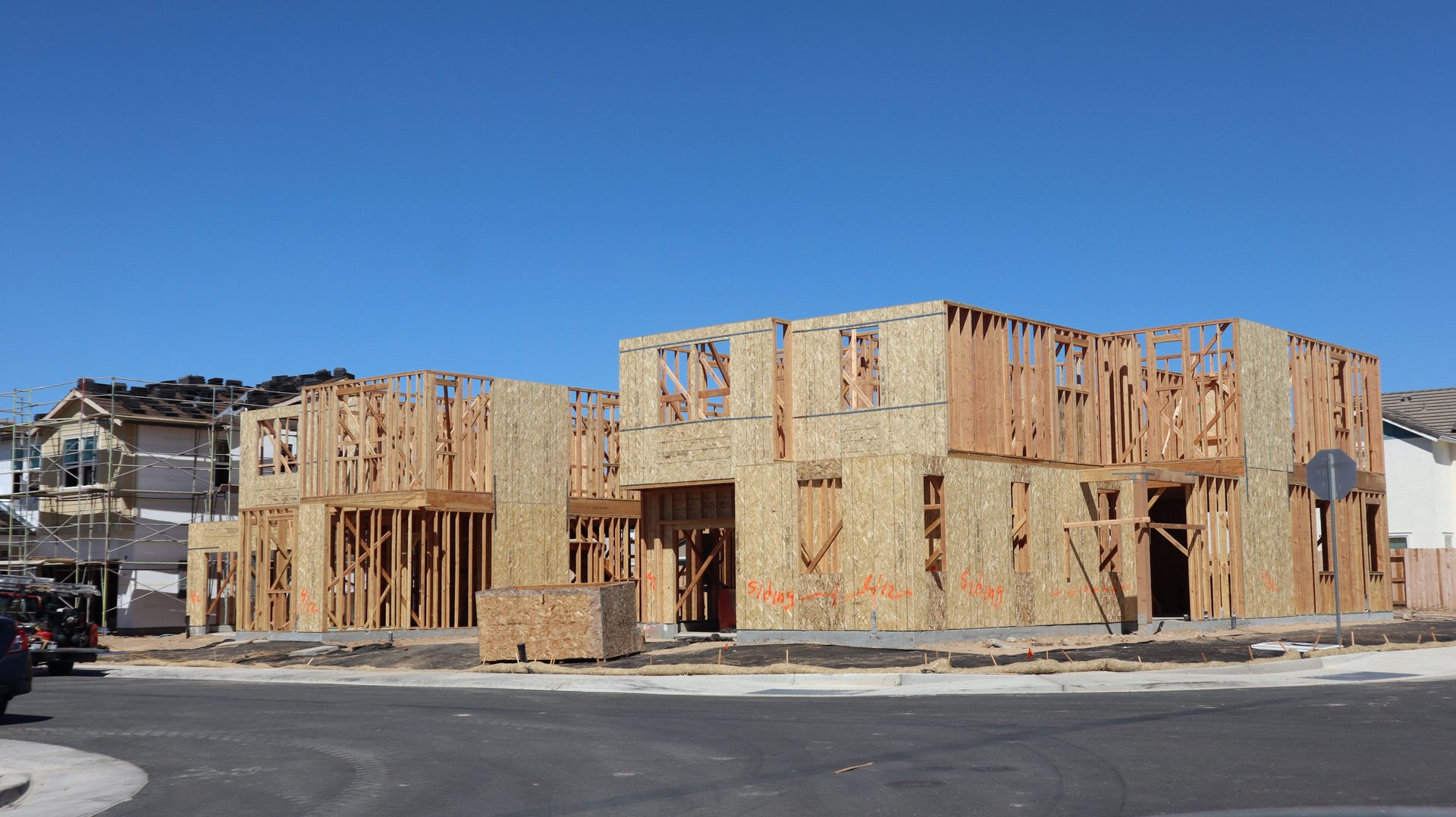
The Bay Area is one of the most expensive places in the country to build a home — and the gap between national construction averages and local reality is staggering. While national figures suggest $150 to $300 per square foot for new construction, those numbers have almost no relevance if you’re planning a build in San Francisco, San Jose, or anywhere across Silicon Valley.
If you’re seriously considering building in the Bay Area, you need accurate, regionally grounded numbers before you commit to land, a design, or a contractor. This guide breaks down every major cost category — from site prep and permits to land acquisition and finish selections — so you can build a realistic budget from the ground up.
Average Cost to Build a House in the Bay Area
New home construction in the Bay Area costs between $450 and $950+ per square foot in 2026, with most custom homes in Silicon Valley landing between $550 and $750 per square foot once you factor in design, permitting, sitework, and finishes. That range is wide for a reason — lot conditions, architectural complexity, finish level, permitting jurisdiction, and current material costs all push the final number in different directions.
One of the most costly areas in the US for residential building is the Bay Area, which includes cities like San Francisco. A 2,000-square-foot home can cost anywhere from $1,000,000 to $1,600,000 or more, excluding the cost of land. For larger custom builds, the totals climb even higher.
For a typical 2,500-square-foot custom home in Los Gatos or Saratoga, that translates to a total project cost of roughly $1.4 million to $2.4 million — and that’s before land acquisition.
Important Note: These figures represent construction costs only. Land purchase, demolition of existing structures, and significant site remediation are separate line items that can add hundreds of thousands of dollars to your total investment.
Location within the Bay Area also matters significantly. Building in San Francisco or Palo Alto is far more expensive than in Contra Costa or Solano County. If your budget is tight, exploring outer Bay Area counties can bring costs down meaningfully without requiring you to leave the region entirely.
Cost to Build a House Per Square Foot in the Bay Area
As of 2025, the average cost to build a new home in the Bay Area ranges between $400 to $1,200 per square foot, depending on location, design complexity, and materials. Standard homes fall in the $400–$600 per sq. ft. range, mid-range custom homes run $600–$900 per sq. ft., and luxury custom homes reach $900–$1,200+ per sq. ft.
For San Francisco specifically, mid-range custom projects typically range between $700 to $800 per square foot, and the majority of projects fall into this category. The most distinctive projects can range upwards of $800 per square foot. These unique designs are generally structurally complex and often include large expanses of glass, structural steel, architectural concrete, or other technically advanced systems, along with artisan finishes and the highest quality fixtures.
| Build Type | Cost Per Sq Ft | 2,000 Sq Ft Estimate | 2,500 Sq Ft Estimate |
|---|---|---|---|
| Standard / Production | $400 – $600 | $800,000 – $1,200,000 | $1,000,000 – $1,500,000 |
| Mid-Range Custom | $600 – $900 | $1,200,000 – $1,800,000 | $1,500,000 – $2,250,000 |
| Luxury Custom | $900 – $1,200+ | $1,800,000 – $2,400,000+ | $2,250,000 – $3,000,000+ |
One critical caveat: square footage pricing can be misleading if you don’t understand what’s being counted. A 2,500-square-foot home with a 600-square-foot garage, 400-square-foot covered patio, and extensive site walls is a very different project from a simple 2,500-square-foot box on a flat lot. Always confirm with your contractor exactly what square footage is included in any per-foot estimate you receive.
Pro Tip: The single biggest mistake homeowners make is budgeting based on national construction cost averages. National data suggests $150–$300 per square foot for new construction — that number is essentially meaningless here. Bay Area labor rates, seismic engineering requirements, energy code compliance (2022 California Energy Code, Title 24), and permitting timelines push costs 2–3x higher than the national median.
Cost Breakdown: What You’re Actually Paying For in the Bay Area
Understanding where your construction dollars go helps you make smarter decisions about where to invest and where to pull back. Here is a look at the major cost categories you’ll encounter on a Bay Area build.
Labor
Skilled construction labor in Silicon Valley is among the most expensive in the nation. Based on 2026 project data, framing crews run $12–$18 per square foot, licensed electricians charge $130–$175 per hour, and licensed plumbers charge $140–$185 per hour. The Bay Area’s housing shortage, prevailing wage requirements on certain project types, and competition from commercial tech campus construction all keep residential labor rates elevated. Labor typically accounts for 30% to 40% of your total construction budget.
Materials
Material choices create the widest cost swings. For example, engineered quartz countertops run $75–$120 per square foot installed, while book-matched Calacatta Viola marble slabs can reach $250–$400+ per square foot installed. Similarly, standard porcelain tile costs $15–$25 per square foot, while hand-made zellige tile runs $35–$65 per square foot before installation.
Architectural Design and Engineering
Architectural design and structural engineering typically account for 10–15% of your total cost. Soft costs include architectural design, engineering, surveying, permit applications, Title 24 compliance documents, insurance, and elective certifications such as LEED certification. Architecture, engineering, and other design-related professional services are typically around 15% of the project hard cost, and it’s recommended to set aside an additional 5% for permits and other governmental compliance costs.
Site Preparation
Site preparation expenses, including grading, water and sewer inspections, and utility connections, can range from $15,000 to $60,000. Hillside lots, challenging terrain, and older properties requiring infrastructure upgrades push this figure toward the higher end.
Permits and Fees
Due to rigorous building codes and environmental regulations, you can expect to pay between $2,500 and $25,000 for permits, which may be higher in coastal cities. Permitting and soft costs — including planning, engineering, design, and permitting — typically add 15–40% above hard construction costs in California projects.
General Contractor Overhead
General contractors typically have a cost-plus fixed fee arrangement, which accounts for the cost of the labor and materials plus a negotiated fee for the general contractor. This usually comes out to 10% to 20% of the final cost of the build.
Key Insight: Common hidden costs include financing costs such as construction loans, unexpected site conditions, permit delays, and design changes during construction. It’s important to plan for a contingency of at least 10%–15% of your total cost to cover unforeseen expenses.
Cost of Land in the Bay Area
Land is often the single largest line item in a Bay Area build — and in some sub-markets, it rivals or exceeds the construction cost itself. Land can cost anywhere from $500,000 to more than $1 million per acre, especially in a desirable or centrally located neighborhood.
County-level data illustrates just how extreme the variation can be. Silicon Valley leads the nation: Santa Clara County has the highest median price in the state at an incredible $1,750,000 per acre for small parcels, followed by San Mateo County at $1,500,000. For context, other major urban centers also see exceptionally high values — Alameda County comes in at $850,000 per acre for small parcels.
In San Francisco proper, land scarcity drives prices even higher. There are currently around 104 properties for sale near San Francisco, with an average listing price of $1,354,000 and an average cost to buy of approximately $3,415,495 per acre.
If you’re looking for more affordable land within the broader Bay Area region, the outer counties — Contra Costa, Solano, and parts of Sonoma — offer significantly lower entry points. Marin County comes in at a median of $300,000 per acre for mid-sized parcels, while Napa County sits around $175,000 per acre. Those numbers still aren’t cheap by national standards, but they represent a meaningful difference compared to Silicon Valley pricing.
For reference on how the Bay Area compares to other California housing markets, you might also explore apartment costs in San Francisco to understand the broader regional housing cost picture, or review Seattle apartment costs as a comparable West Coast market.
Factors That Affect Building Costs in the Bay Area
No two Bay Area builds are priced the same. Several region-specific factors push costs higher here than almost anywhere else in the country.
- Seismic Engineering Requirements: Earthquake standards can significantly increase the cost of framing a home. If you’re building an open-concept plan with a wide open space, you may need to add a metal frame to help support the home in a quake, and that adds a considerable amount to the cost of the building.
- Lot Conditions: Steep hillsides often call for extra engineering and retaining walls. A flat lot in Campbell will cost dramatically less to build on than a hillside lot in the Oakland Hills or Los Gatos Hills.
- Permitting Jurisdiction: In many Bay Area jurisdictions, the pre-construction phase is substantial. Permit fees and city requirements can vary widely by municipality. San Francisco, for instance, is known for lengthy approval timelines that add both cost and delay.
- Energy Code Compliance: California’s Title 24 energy code is among the most demanding in the nation. Compliance adds cost to insulation, windows, HVAC systems, and solar requirements on new builds.
- Design Complexity: A rectangular two-story home with standard rooflines and practical spans is usually more cost-effective than a custom layout with large cantilevers, extensive glass, vaulted ceilings, steel framing, or intricate roof geometry.
- Materials Price Volatility: Lumber, steel, drywall, and other core materials fluctuated significantly due to global supply forces and transport costs in recent years; this remains a key cost driver.
- Labor Market Competition: Prevailing wage rules, competitive labor markets, and contractor shortages contribute upward pressure on project budgets locally.
Common Mistake: Underestimating the impact of your lot. A steeply sloped or irregularly shaped parcel can add $50,000 to $150,000 or more in site work, retaining walls, and foundation engineering before a single framing nail is driven.
If you’re weighing the Bay Area against other high-cost markets, it’s useful to compare against cities like Honolulu or Washington D.C. to understand how regional cost-of-living differences translate into construction budgets.
Building vs. Buying a House in the Bay Area
For most buyers, the instinct is to compare the cost of building against what they’d pay for an existing home. In the Bay Area, that comparison is more nuanced than in most markets.
As of 2025, the average cost of buying an existing home in California is around $800,000, while building a new home with the same characteristics and size would cost around $1.35 million, excluding the land. In the Bay Area specifically, that gap is even wider given the region’s premium labor and permitting costs.
Here’s how the two paths compare on the key decision factors:
| Factor | Buying an Existing Home | Building a New Home |
|---|---|---|
| Upfront Cost | Lower (land bundled in price) | Higher (land + construction separate) |
| Timeline | 1–2 months to close | 12–24+ months from design to move-in |
| Customization | Limited to renovations | Full control over design and layout |
| Energy Efficiency | Varies; older homes often inefficient | Built to current Title 24 standards |
| Permits Required | Minimal | Extensive; complex in Bay Area |
| Hidden Costs | Inspections, repairs, renovations | Contingency budget, change orders |
| Long-Term Value | Established neighborhood comps | New construction premium at resale |
While the average cost to build a house is often higher than purchasing an existing home, building a custom home offers long-term value, energy-efficient systems, personalized layouts, and fewer renovations. The cost difference is typically offset by the benefits of customization and efficiency.
The cost of building a new home can be 30% higher than buying an existing one. You need to obtain additional mandatory permits, and you may encounter unforeseen issues during construction. That said, buying an existing home in the Bay Area carries its own costs — especially if the property needs seismic retrofitting, electrical updates, or kitchen and bath renovations to meet modern standards.
Even though Bay Area prices are higher, property values and resale potential make it one of the most secure real estate investments in California. Whether you build or buy, you’re entering one of the most competitive and historically appreciating real estate markets in the world.
For perspective on how housing costs compare across major metro areas, see what apartments cost in Miami, Manhattan, or New Jersey — all high-cost markets where the build-vs-buy calculus looks different than in lower-cost regions.
How to Save Money When Building a House in the Bay Area
Saving money on a Bay Area build doesn’t mean cutting corners — it means making smarter decisions before and during construction. Here are the most impactful strategies.
1. Choose Your Lot Carefully
Selecting a lot with existing utility connections and minimal grading needs can reduce site preparation expenses by thousands. Avoid steep hillsides or flood-prone zones unless the design justifies the extra cost. A flat, already-serviced lot in a less premium zip code can save you $50,000 to $200,000 before construction even begins.
2. Simplify Your Floor Plan
Efficient floor plans reduce material waste and simplify mechanical systems. A well-designed single-family home with a compact footprint may cost less per square foot than a sprawling layout with lots of hallways or awkward transitions. Simple rectangular footprints with standard rooflines are consistently among the most cost-efficient designs to execute.
3. Separate Needs from Upgrades
It helps to separate needs from upgrades. Square footage, room count, structural requirements, and core systems should be treated differently from cosmetic preferences that can sometimes be phased. Not every choice needs to be premium to create a home that feels custom and well built.
4. Lock In Material Prices Early
Material prices can shift dramatically during your build. Smart builders lock in lumber prices early or include price escalation clauses in contracts. You don’t want to be halfway through framing when lumber costs spike 20%. Discuss price protection strategies with your contractor before signing.
5. Use Locally Sourced Materials
Locally sourced materials reduce transport costs and support sustainable construction practices. For high-volume items like lumber, concrete, and roofing, sourcing regionally can shave meaningful dollars off your materials budget.
6. Keep a Realistic Contingency Budget
Keep 20% of your total budget flexible for changes or upgrades. In the Bay Area, where permitting delays, unexpected soil conditions, and supply chain disruptions are common, a well-funded contingency is not optional — it’s essential.
7. Consider a Construction-to-Permanent Loan
Explore construction-to-permanent loans to simplify financing. Secure pre-approval before purchasing your land. These loans roll your construction financing and permanent mortgage into a single product, reducing closing costs and simplifying the financing process.
8. Consider an ADU Instead of a Full Custom Build
If a full ground-up build is beyond your current budget, an ADU on an existing property may offer a more accessible path. ADU construction in the Bay Area costs between $350 and $550 per square foot in 2026, making it one of the highest-ROI investments available under current California ADU laws. In most Bay Area jurisdictions, you can now build a detached ADU up to 1,200 square feet on a single-family lot without a conditional use permit.
Pro Tip: The best way to control cost is not to cut corners during construction — it is to make strong decisions before construction starts. That means confirming your priorities early, understanding where your lot adds cost, and working from plans that are detailed enough to price accurately.
If you’re exploring other types of construction projects to understand how costs compare, our guide on how much it costs to build a greenhouse walks through a smaller-scale project with a similarly detailed cost breakdown.
Building a house in the Bay Area is one of the most financially complex projects you can undertake. The costs are real, the regulations are demanding, and the timelines are long — but for buyers who want full control over their home’s design, energy performance, and long-term value, it remains one of the most rewarding investments in one of the world’s most desirable real estate markets. Work with experienced local contractors, build in a strong contingency, and make your biggest decisions before the first shovel hits the ground.