How Much Does It Cost to Build a House in Illinois Per Square Foot

October 18, 2026
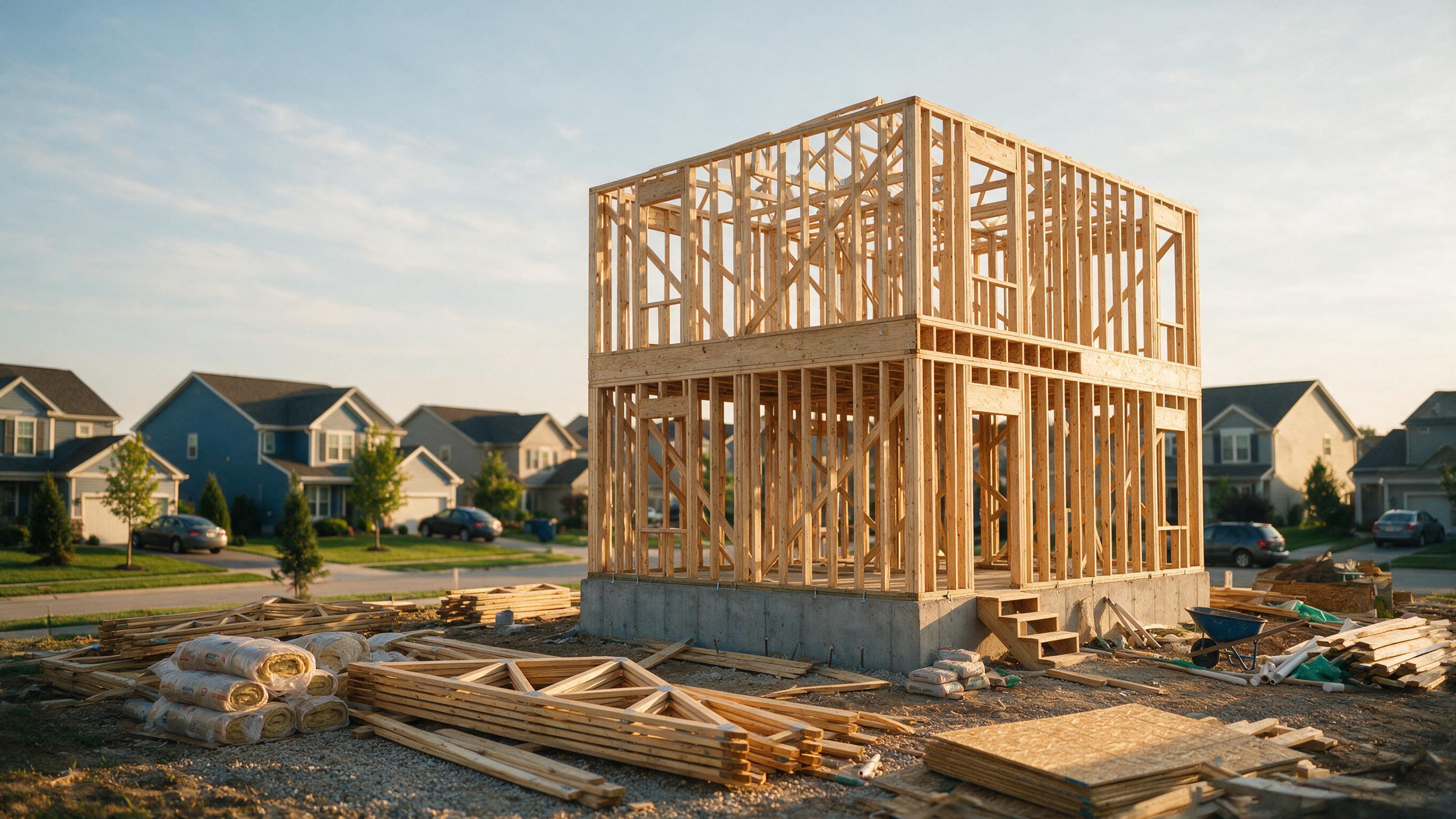
Illinois ranks among the most expensive states in the country to build a new home — and the gap between what you’ll pay to build versus buy can be eye-opening. Whether you’re drawn to a custom colonial in the Chicago suburbs or a modest wood-frame home in Springfield, understanding the real numbers before you break ground can save you tens of thousands of dollars.
This guide walks you through everything you need to know about building a house in Illinois, from average per-square-foot costs and land prices to what drives your final bill — and where you can realistically trim it.
Average Cost to Build a House in Illinois
The average cost to build a house in Illinois is $250 to $550+ per square foot, or $500,000 to $1,100,000 total, not including the cost of land or site prep. New home construction costs vary based on location, house size and design, material quality, and the amount of customization you choose.
Building a new home in Illinois typically costs between $285,000 and $865,000, depending on your location, design choices, and finish level — a range that covers everything from a modest Saltbox-style home in a small town to a luxury Colonial in the Chicago suburbs.
According to Today’s Homeowner, Illinois has the fourth-highest estimated cost to build at an average of $380,189 for a 2,100-square-foot spec home. By comparison, the national average is $332,397.
Key Insight: These totals typically exclude land and site preparation. Once you factor in those costs, your all-in budget can rise significantly — especially in the Chicago metro area.
Here is a quick snapshot of average build costs by home tier in Illinois:
| Build Tier | Cost Per Square Foot | Estimated Total (1,632 sq ft) |
|---|---|---|
| Basic / Saltbox-Style | $132 – $166 | $216,000 – $271,000 |
| Mid-Range | $166 – $365 | $270,000 – $595,000 |
| High-End / Luxury | $365 – $531+ | $595,000 – $865,000+ |
Saltbox-style homes are among the cheapest to build, using simple framing and lightweight materials, with costs typically between $216,000 and $271,000. High-end luxury homes with custom layouts, top-shelf materials, and upscale features push totals between $595,000 and $865,000.
If you’re also weighing the cost of renting while you plan your build, you can compare apartment costs in Illinois to get a sense of your housing alternatives during construction.
Cost to Build a House Per Square Foot in Illinois
Building a basic builder-grade house in Illinois costs $250 to $350 per square foot, not including land or site prep. These homes feature standard finishes and limited customization options. In comparison, the cost to build a custom home in Illinois ranges from $350 to $550+ per square foot, offering the highest level of personalization and often featuring high-end materials, premium finishes, and unique architectural designs.
The cost of building a custom home in the Chicago area can exceed $600 per square foot. Location within the state plays a major role here.
Here is how per-square-foot costs break down by city and region:
| Location | Cost Per Square Foot |
|---|---|
| Downtown Chicago | $300 – $500 |
| Chicago Suburbs / DuPage County | $350 – $450+ |
| Aurora | $135 – $200 |
| Springfield / Edwardsville | $132 – $250 |
| Outskirts / Rural Illinois | $150 – $225 |
Downtown Chicago sees costs of $300 to $500 per square foot due to high land and labor costs driven by dense zoning and premium locations. In outlying and rural areas, costs drop to $150 to $225 per square foot, making them ideal for modular or prefabricated homes with lower land acquisition costs.
A two-story house will average around $125 to $150 per square foot, whereas a ranch-style home would be significantly higher per square foot due to the larger footprint required for the same square footage.
Pro Tip: Always add a 20–30% contingency buffer to your initial cost estimate. Unexpected site conditions, material price shifts, and design changes are common on any new build.
Cost Breakdown: What You’re Actually Paying For in Illinois
Material costs account for 50% to 60% of the total construction budget, while labor makes up the rest. Understanding where your money goes helps you make smarter trade-offs when budgets get tight.
Materials
You can expect to spend about $50 per square foot on material costs. Framing materials — including foundation, lumber, and steel beams — will require about $20,000 to $50,000. Other key material line items include:
- Insulation (fiberglass, drywall, and foam): $0.84 to $2.47 per square foot
- Wood flooring installation: $6.52 to $9.15 per square foot
- Flooring (general): $5 to $12 per sq ft; drywall: $1.50 to $3.50 per sq ft; siding: $2 to $12 per sq ft; lumber: $5 to $11 per sq ft
Labor
Labor costs typically represent 35% to 50% of total project costs. Labor costs in Chicago vary by trade — on average, electricians charge $90 to $100/hr, plumbers $80 to $95/hr, and general contractors $40 to $55/hr. For a 2,500-square-foot home in Illinois, you should budget between $115,000 and $182,000 in labor alone.
Pre-Construction and Site Work
Site work — including land preparation, excavation, soil testing, architectural plans, and utility connections — typically costs between $35,000 and $75,000.
Site preparation costs in Illinois range from $8,000 to $25,000 or more, depending on terrain and existing site conditions. Illinois’s generally flat topography and prairie soils are favorable for construction, though building sites in areas with high clay content may require additional drainage considerations.
Getting utilities to a new home site costs $10,000 to $50,000+, depending on location and existing infrastructure. Most suburban and urban areas in Illinois have well-established utility networks, making connections relatively straightforward. Rural properties may require longer utility runs, particularly for electrical service and natural gas lines.
Foundation
Foundation costs range from $25,000 to $60,000+, with full basements being extremely popular in Illinois due to severe weather concerns. For larger or more complex custom homes, foundation costs can range from $75,000 to $200,000 for a full basement.
Interior Finishes
Interior work — flooring, cabinets, countertops, paint, and lighting — can take 25% to 35% of your total budget, depending on your style choices. For a 2,000 sq ft home, you should budget at least $20,000 for interior furnishings after construction wraps.
General Contractor Fees
A general contractor charges 10% to 20% of the construction budget, and most builders include this fee in their total estimate for the project. In DuPage County, contractor fees typically range from 10% to 15% of the total project cost, which could mean $100,000 to $150,000 on a $1 million build.
Important Note: Illinois does not have a statewide building code. Cities and counties each set their own codes and permit requirements, so costs and compliance standards vary significantly depending on where you build.
Cost of Land in Illinois
Land prices in Illinois vary dramatically based on proximity to metropolitan areas. Rural farmland costs $8,000 to $15,000+ per acre, while smaller suburban lots in established neighborhoods cost $50,000 to $200,000. Prices for building lots in premium locations in Chicago’s North Shore suburbs or other high-demand areas can exceed $300,000.
Per-acre sales values over $15,000 mark the norm around Cook County and closer-in collar counties benefiting from Chicago’s continued urban sprawl, while just 50 miles south, average per-acre sales dip to $5,500 for less-developed tracts in central Illinois.
Once you have your land, prepare for additional upfront costs:
- Land clearing and leveling before construction can cost between $1,500 and $3,000.
- Site preparation costs in Illinois range from $8,000 to $25,000 or more, depending on terrain and existing site conditions.
- Architectural and design fees typically range from 5% to 15% of the total project cost.
If you’re comparing housing markets across the Midwest, it can help to look at apartment costs in Ohio or apartment costs in Michigan as a baseline for regional housing expenses.
Factors That Affect Building Costs in Illinois
No two builds cost the same. Several variables can push your budget significantly higher — or lower — than the state average.
Location Within the State
Construction costs vary widely depending on where you build. In general, expect to pay more in metro areas like Chicago and Naperville, and less in smaller cities like Springfield or Edwardsville. Labor and material prices also shift depending on where you build — construction in Chicago or Naperville runs far higher than in Springfield or Rockford.
Home Size and Design Complexity
The square footage and complexity of your home’s design play a major role in determining the final price tag. Smaller homes have a higher cost per square foot than larger homes because fixed costs like permits and utility hookups are spread across fewer square feet.
Framing usually accounts for 10% to 20% of your project cost. Lightweight wood framing is the cheapest, while steel or complex rooflines raise prices.
Materials and Finish Level
The quality and type of materials you choose for your home will affect the total cost. Opting for high-end materials like stone, brick veneer, or impact-rated windows causes costs to rise quickly. For a sense of how material choices affect large structures, you can also explore how much it costs to build a greenhouse, where material selection similarly drives wide price ranges.
Labor Availability and Demand
With the current scarcity of labor, rapid growth in labor costs is becoming a bigger concern. Housing is still in strong demand and construction labor cannot keep up. Homebuilders are having to pay more money for workers and they have less choice in who is working on their site.
Permits, Codes, and Zoning
Some municipalities have more stringent building codes and permitting fees, adding to the overall cost. Local regulations and building codes may require specific permits and inspections, adding to the overall expense.
Site Conditions
Challenging terrain, difficult access, or the need for additional foundation work can increase construction costs. Challenging terrain, such as steep slopes or rocky soil, may require additional foundation work or specialized construction techniques, adding to the overall cost. Similarly, difficult access to the site can increase transportation and logistics expenses.
Common Mistake: Many first-time builders underestimate hidden costs like HOA fees, landscaping, driveway paving, and utility hookups. These finishing expenses can add $50,000 to $100,000 or more to your total.
Building vs. Buying a House in Illinois
For most buyers in Illinois, purchasing an existing home is the more affordable and faster path — but building offers advantages that money alone can’t capture.
The Cost Comparison
In most cases, it’s cheaper to buy an existing house than build a new one in Illinois, but it depends on the location, the home size, style, and features, and current housing market conditions. According to the most recent real estate market data, the median sale price for single-family homes in Illinois ranges from $285,000 to $315,000 depending on the region, with Chicago-area homes typically commanding higher prices.
Compare that to the cost to build: the total can go beyond $500,000 if you include land costs, excavations, permits, and other expenses, and new home construction can take up to 9 to 12 months.
| Factor | Building a Home | Buying an Existing Home |
|---|---|---|
| Typical Cost (Illinois) | $500,000–$1,100,000+ | $285,000–$315,000 (median) |
| Timeline | 9–12 months | 1.5–2 months to close |
| Customization | Full control | Limited without renovation |
| Energy Efficiency | Built to current codes | Varies; may need upgrades |
| Unexpected Costs | High (overruns common) | Moderate (inspection-dependent) |
A new construction home might have a higher upfront price, especially if it’s nearing $500 per square foot in a premium area. However, new builds offer better energy efficiency, fewer repairs, and often stronger resale value.
Where Building Makes Sense
Building is worth considering if you want a fully custom layout, need specific accessibility features, or are building in a rural area where existing inventory is thin. By building your own home, you have the freedom to customize it to your specific needs. You can also incorporate modern insulation, HVAC systems, and smart-home technology from the start.
When comparing the costs, it’s important to consider the long-term value of your investment. Building a new home allows you to incorporate the latest technology and energy-efficient features, potentially reducing utility costs and increasing the resale value of your property.
If you’re exploring housing costs in other high-cost metro areas to benchmark your decision, take a look at apartment costs in Washington D.C., Manhattan apartment costs, or San Francisco apartment costs to see how Illinois stacks up regionally.
How to Save Money When Building a House in Illinois
Building in Illinois doesn’t have to mean blowing your budget. With the right strategy, you can control costs without sacrificing quality.
Choose a Simpler Home Design
Complex rooflines, bump-outs, and non-standard floor plans all drive up framing and labor costs. A straightforward rectangular footprint with a simple roofline is one of the most effective ways to lower your per-square-foot cost. Saltbox homes are one of the most affordable home styles to construct in Illinois — because of the lightweight structure, they can be constructed fast and efficiently, allowing you to move in sooner than a brick or concrete home.
Build in a Less Expensive Market
Construction costs vary widely depending on where you build — expect to pay more in metro areas like Chicago and Naperville, and less in smaller cities like Springfield or Edwardsville. If your lifestyle allows flexibility on location, building just outside a major metro can save you significantly on both land and labor.
Consider Modular or Prefabricated Construction
Modular homes are factory-built and assembled onsite. This approach typically reduces both build time and labor costs compared to fully custom stick-built construction, and quality has improved substantially in recent years.
Get Multiple Contractor Bids
Never accept the first quote. Meet with at least three builders to discuss your preferred home size, architectural design, and features. Visit the builders’ recently completed projects or model homes to assess the work quality. Ask for references from recent clients and contact them yourself to ask about their experience.
Phase Your Finishes
You don’t have to finish everything at once. Build the structure and mechanicals to full quality, then phase in premium finishes — custom cabinetry, hardwood floors, high-end countertops — over time as your budget allows. This approach keeps your construction loan smaller and your interest costs lower.
Budget a Contingency Fund
Add at least 20% to 30% more than your original projection to account for changes in the process. Unforeseen expenses and construction delays can lead to cost overruns and disrupt your budget. It’s important to have a contingency plan and allocate extra funds to account for unexpected circumstances.
Explore State and Local Financing Programs
There are state and local homebuyer programs in Illinois for down payment assistance and financing. Some of these programs extend to new construction. Talk to a local lender early in the process to identify what you qualify for before finalizing your build budget.
Pro Tip: If you’re financing through a construction loan, ask your lender about construction-to-permanent loans. These convert to a standard mortgage after your home is complete, saving you from paying two sets of closing costs.
Building a house in Illinois is a major financial commitment, but it also gives you something an existing home rarely can: a home built exactly the way you want it. By understanding the real costs — per square foot, by region, and across every line item — you can plan a build that fits your budget and your vision. Get multiple quotes, pad your contingency, and work with builders who know your local market well.
If you’re still weighing your options and want to compare housing costs in other markets, explore Miami apartment costs, New Jersey apartment costs, or North Carolina apartment costs to see how Illinois compares across the country.