10 Hummingbirds You Might See in North Carolina: From Ruby-throats to Rare Vagrants

November 16, 2026
North Carolina is one of the best states in the eastern United States for hummingbird watching, and the numbers back that up. While most backyard birders know to expect the brilliant flash of a ruby-throated hummingbird at their feeder each summer, the state has recorded at least ten different hummingbird species over the years — a mix of reliable seasonal visitors and jaw-dropping rarities that send birders scrambling with their binoculars.
Whether you’re setting up your first feeder in the Piedmont, scanning mountain meadows in the Blue Ridge, or chasing a reported vagrant along the Outer Banks, knowing which species to look for — and when — makes all the difference. This guide walks you through every hummingbird documented in North Carolina, from the ones you’re almost certain to see to the ones that show up once in a blue moon and make the local birding news.
Pro Tip: Keep your hummingbird feeders clean and filled with fresh nectar (four parts water to one part plain white sugar) throughout the season. A well-maintained feeder is your single best tool for attracting hummingbirds in NC and observing them up close.
Ruby-throated Hummingbird
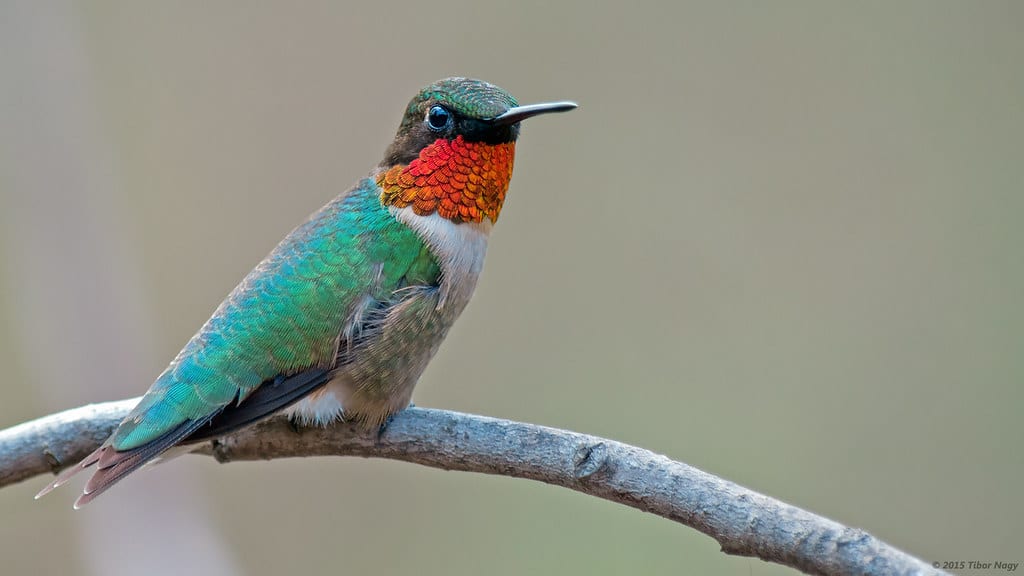
If you live in North Carolina and you’ve ever seen a hummingbird, there’s an excellent chance it was a ruby-throated hummingbird. The ruby-throated hummingbird (Archilochus colubris) is the only hummingbird species that breeds regularly in the eastern United States, and it is by far the most common hummingbird you’ll encounter across the state from spring through fall.
Males are unmistakable — iridescent green above with a brilliant ruby-red throat that can appear dark or black depending on the light. Females and immatures share the same green back but wear a white throat with faint streaking. Both sexes are small, quick, and surprisingly territorial around feeders and flowering plants.
When it comes to hummingbird migration in North Carolina, the ruby-throat sets the calendar. Adult males typically arrive first, appearing in the western mountains and Piedmont as early as mid-April. Most of the state sees peak numbers by May, and the population builds through summer as birds nest and raise young. By late September and into October, the majority have departed for their wintering grounds in Central America, though a few linger into November.
- Peak Season: Late April through September
- Habitat: Woodland edges, gardens, parks, and anywhere with tubular flowers or feeders
- Nest: A tiny, lichen-covered cup the size of a large thimble, typically placed on a downward-sloping branch
- Fun Fact: Ruby-throats can beat their wings up to 53 times per second during normal flight
To attract ruby-throated hummingbirds to your yard, plant native tubular flowers like trumpet vine, cardinal flower, and coral honeysuckle alongside your feeders. These plants are highly recommended by the National Audubon Society as proven attractants for this species. You can also explore more strategies for what attracts hummingbirds to make your yard irresistible all season long.
Rufous Hummingbird
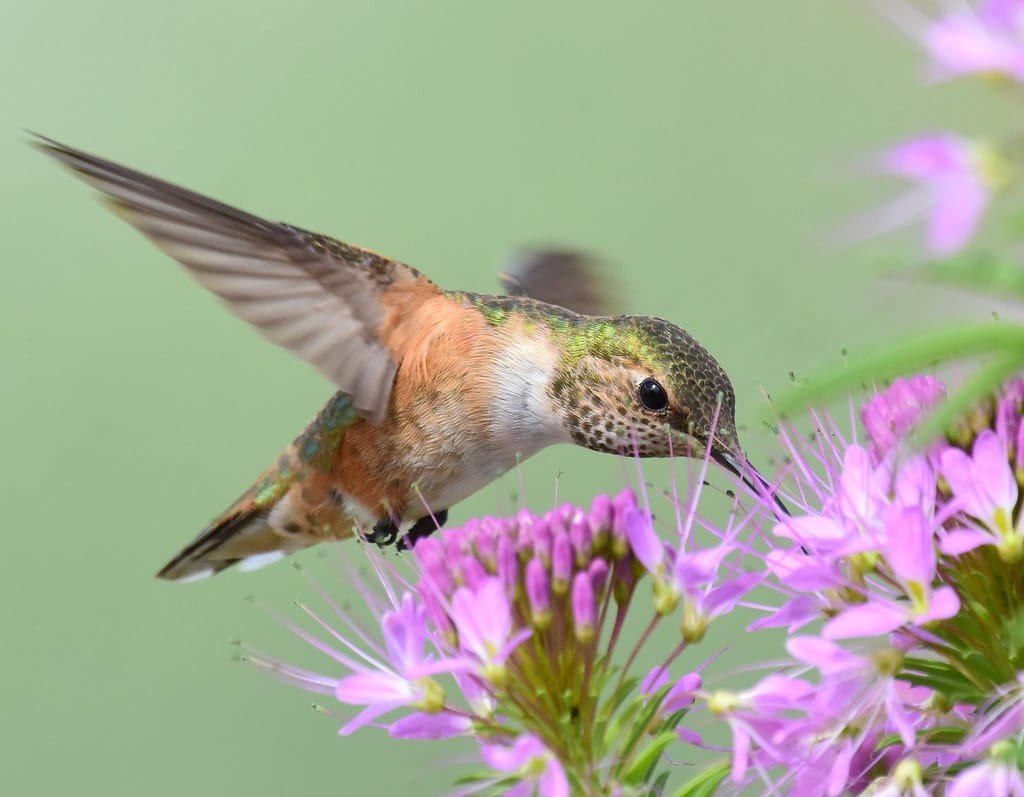
The rufous hummingbird is the second most frequently reported hummingbird in North Carolina and a genuine treat for any birder lucky enough to spot one. The rufous hummingbird (Selasphorus rufus) breeds in the Pacific Northwest and Alaska — farther north than any other hummingbird in the world — but it has a well-documented habit of wandering east during its fall migration, and North Carolina sits squarely in its irregular eastern range.
Adult males are a warm, glowing orange-rufous on the back, flanks, and tail, with a brilliant iridescent orange-red gorget. Females and immatures are green above with rufous-washed flanks and a spotted throat, and they can be tricky to separate from Allen’s hummingbird in the field without careful attention to tail feather shape.
In North Carolina, rufous hummingbirds are most often reported as late-season visitors, typically showing up at feeders between October and January. Many sightings come from the western mountains and Piedmont, though birds have been recorded across the state. If you keep your feeder up through the winter months, you give yourself a real chance at hosting one of these fiery wanderers.
Key Insight: Rufous hummingbirds are among the most aggressive hummingbirds in North America. Even at a feeder they’re sharing with larger birds, they’ll often dominate the space through sheer boldness and relentless dive-bombing.
- Peak Season in NC: October through January (rare fall and winter vagrant)
- Habitat: Gardens, feeders, flowering shrubs near woodland edges
- Key ID Feature: Warm rufous-orange tones on back and tail in adult males; rufous tail base in females
Black-chinned Hummingbird
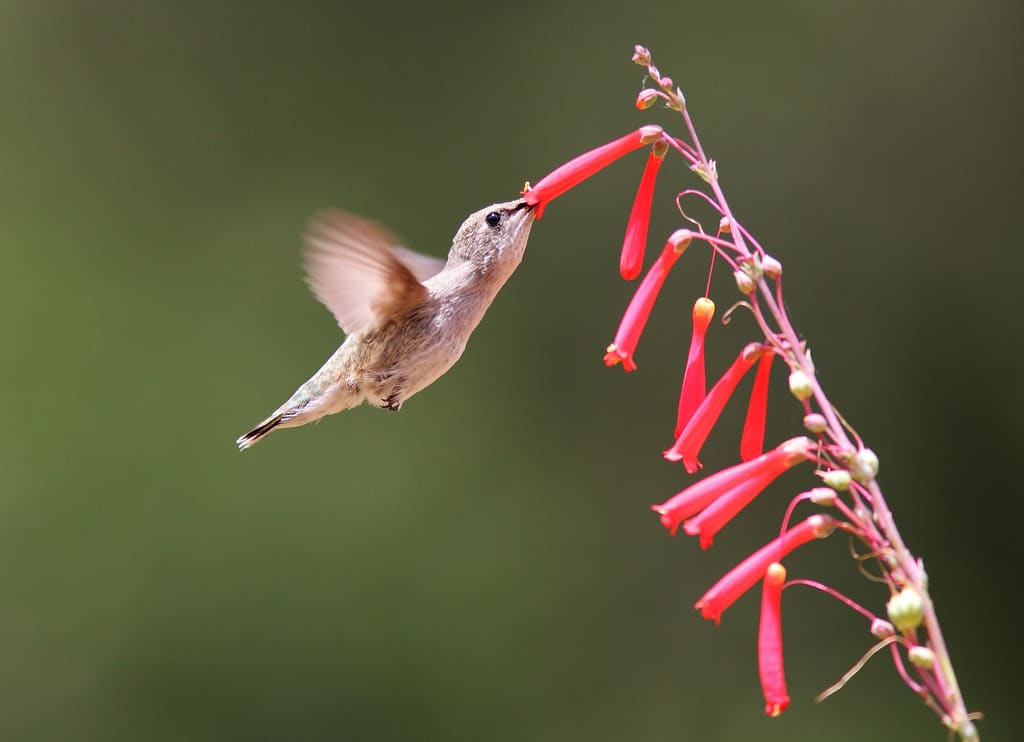
The black-chinned hummingbird is a western species that occasionally strays into the Carolinas, making it one of the more regularly documented rare hummingbirds in the state. The black-chinned hummingbird (Archilochus alexandri) is closely related to the ruby-throated hummingbird, and the two species are nearly identical in size and shape — which makes identification a genuine challenge, especially with females and immatures.
Adult males have a velvety black chin and throat with a narrow band of iridescent violet just below, which can be difficult to see in poor light. The back is metallic green, and the bird lacks the warm rufous tones that distinguish many western species. Females are virtually indistinguishable from female ruby-throats in the field, though black-chinned females tend to show a slightly longer bill and pump their tail more frequently while hovering.
In North Carolina, black-chinned hummingbirds are rare but not unheard of, with most records coming from late fall and winter. They tend to turn up at well-stocked feeders, particularly in the Piedmont and coastal plain regions. If you’re keeping your feeders up after the ruby-throats have departed, it’s worth taking a second look at any late-season visitor.
- Peak Season in NC: Rare; most records October through February
- Key ID Feature: Black chin with violet lower gorget band in adult males; tail-pumping behavior while hovering
- Confusion Species: Ruby-throated hummingbird (females nearly identical)
Calliope Hummingbird
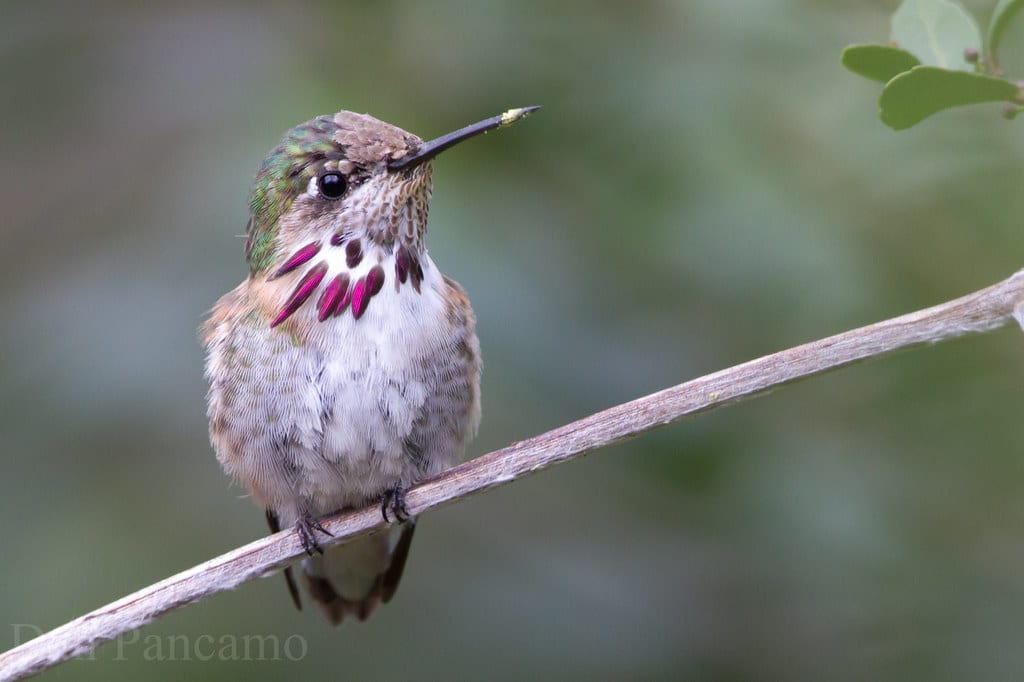
The calliope hummingbird holds a remarkable distinction: it is the smallest bird native to the United States and Canada, and yet it makes an extraordinary annual migration from its breeding grounds in the northern Rocky Mountains all the way to Mexico and back. The calliope hummingbird (Selasphorus calliope) is a rare but documented vagrant in North Carolina, with scattered records that keep hopeful birders watching their feeders carefully each winter.
Adult males are stunning up close — the gorget is a starburst of magenta-streaked feathers against a white background, unlike the solid-colored throat patches of most other hummingbirds. Females and immatures are green above with buffy-washed flanks and a lightly spotted throat, and they’re small enough that size alone can be a useful field mark when compared with other species at the same feeder.
Calliope hummingbirds in North Carolina are exceptional finds, typically reported by birders who keep feeders active through the fall and winter. Most records in the eastern United States come from October through February, and the species has been documented in the state on multiple occasions. If you want to learn more about the different types of hummingbirds found across North America, the calliope is one of the most fascinating on the list.
Important Note: Because the calliope is so small, it can easily be overlooked or mistaken for a juvenile of another species. If you think you’re seeing an unusually tiny hummingbird at your feeder, photograph it from multiple angles and report it to your local Audubon chapter or eBird.
- Peak Season in NC: Rare vagrant; most records October through February
- Key ID Feature: Streaked magenta gorget in males; exceptionally small size in both sexes
- Status: Rare but documented; multiple state records
Broad-tailed Hummingbird
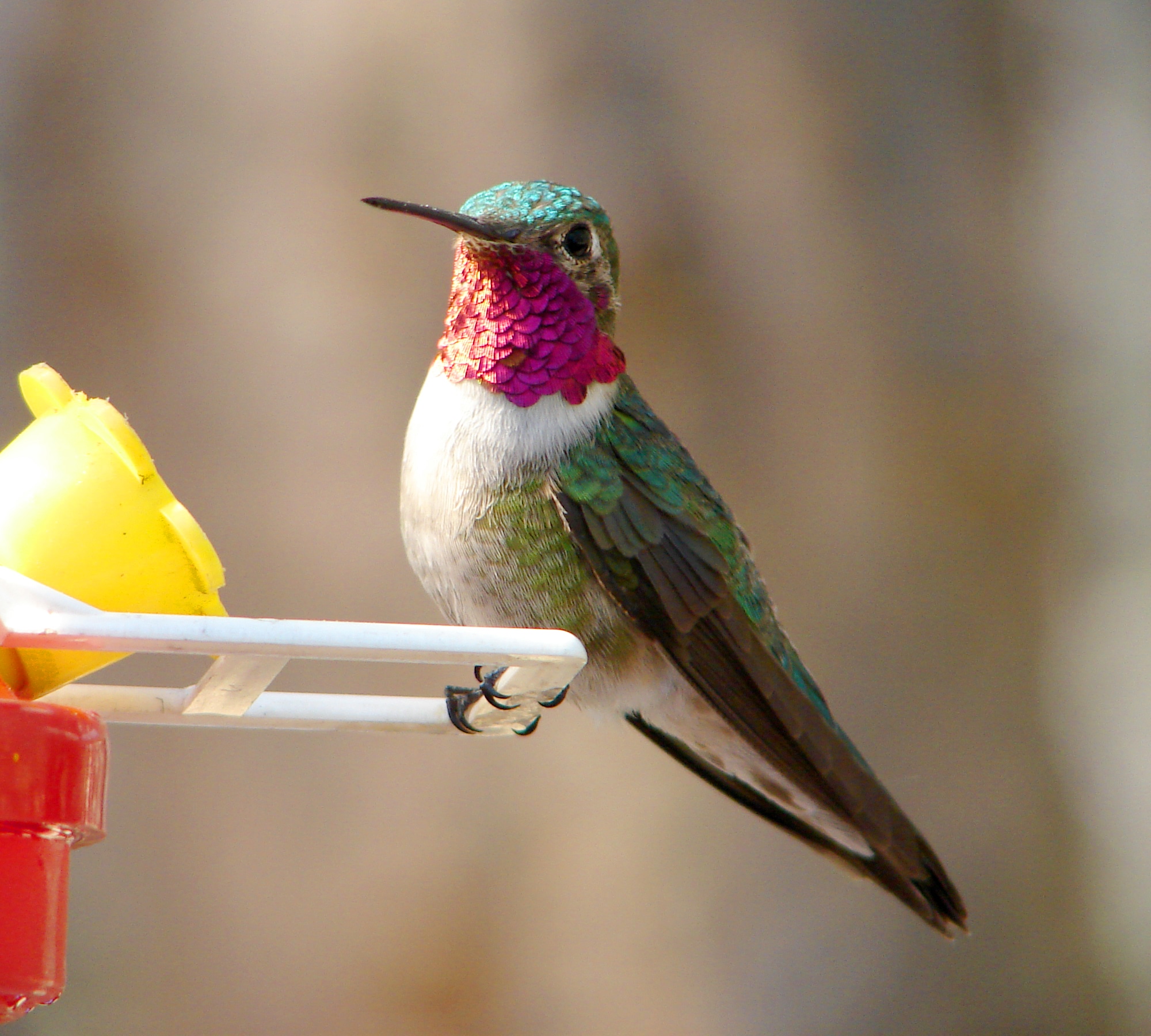
The broad-tailed hummingbird is a mountain species of the western United States that occasionally wanders east, and North Carolina has accumulated a small but notable number of records over the years. The broad-tailed hummingbird (Selasphorus platycercus) breeds in high-elevation meadows and forest edges from the Rocky Mountains to Mexico, and like the rufous and calliope, it sometimes appears along the Atlantic seaboard during fall and winter.
Adult males are iridescent green above with a rose-magenta gorget, and they produce a distinctive metallic wing trill in flight — a sound that experienced birders use as a reliable identification clue even before they get a visual. Females are green above with cinnamon-rufous flanks and a broad, rounded tail that gives the species its name. Females and immatures can be confused with rufous and Allen’s hummingbirds, so tail feather shape and extent of rufous coloration are important features to examine.
In North Carolina, broad-tailed hummingbirds are rare vagrants, most often reported at winter feeders in the Piedmont and mountain regions. Their occurrence in the state is irregular, but birders who maintain feeders year-round have the best chance of hosting one. Comparing notes with other NC birders through platforms like eBird is an excellent way to stay informed about any current sightings.
- Peak Season in NC: Rare vagrant; fall and winter records
- Key ID Feature: Rose-magenta gorget in males; metallic wing trill in flight; broad, rounded tail
- Confusion Species: Rufous hummingbird, Allen’s hummingbird (females and immatures)
Anna’s Hummingbird
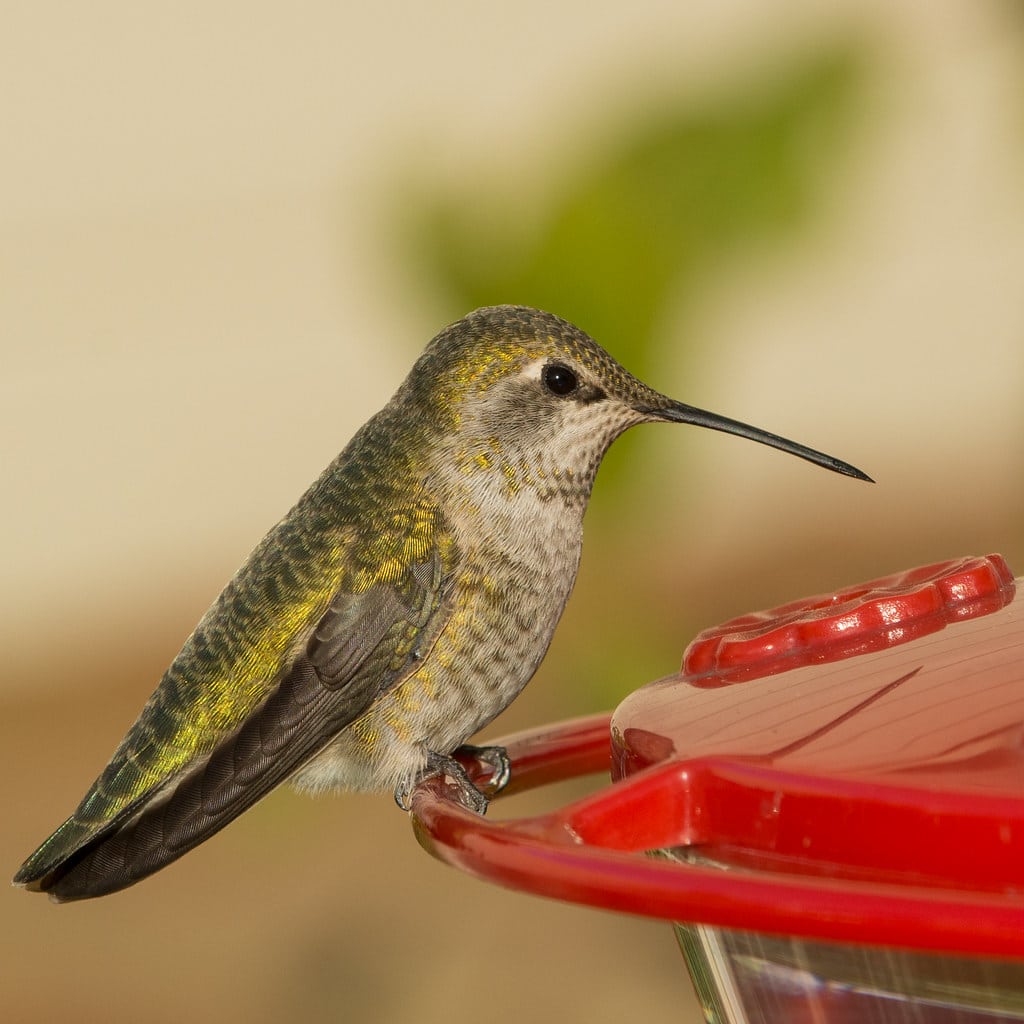
Anna’s hummingbird is one of the most striking hummingbirds in North America, and while it’s primarily a West Coast resident, it has expanded its range significantly in recent decades and now appears with some regularity as a rare visitor on the East Coast. The Anna’s hummingbird (Calypte anna) is larger and stockier than most eastern hummingbirds, and adult males are absolutely spectacular — the entire head and throat glow rose-pink to magenta-red in good light, making them unlike any other hummingbird you’re likely to encounter in North Carolina.
Females are less colorful, showing green above and grayish below with a small patch of iridescent pink-red feathers on the throat center. Anna’s hummingbirds are also notable for being one of the few hummingbird species that can overwinter in cold climates, partly because they enter a state of torpor at night to conserve energy — a trait that makes them surprisingly resilient for a bird so small.
In North Carolina, Anna’s hummingbirds are rare but increasingly reported, with most records coming from late fall through early spring. The species has been documented in both the Piedmont and coastal regions. If you’re curious about how Anna’s hummingbird sightings compare to other states, it’s worth checking out information on hummingbirds in northern California , where Anna’s is actually the dominant year-round species.
Pro Tip: Anna’s hummingbirds are more cold-tolerant than most species. If you live in coastal or Piedmont NC and want to attract winter hummingbirds, keep at least one feeder active from October through March — you might be surprised by what shows up.
- Peak Season in NC: Rare vagrant; late fall through early spring
- Key ID Feature: Full rose-red head and gorget in adult males; larger, stockier build than ruby-throat
- Status: Rare but increasing; range expansion documented on East Coast
Allen’s Hummingbird
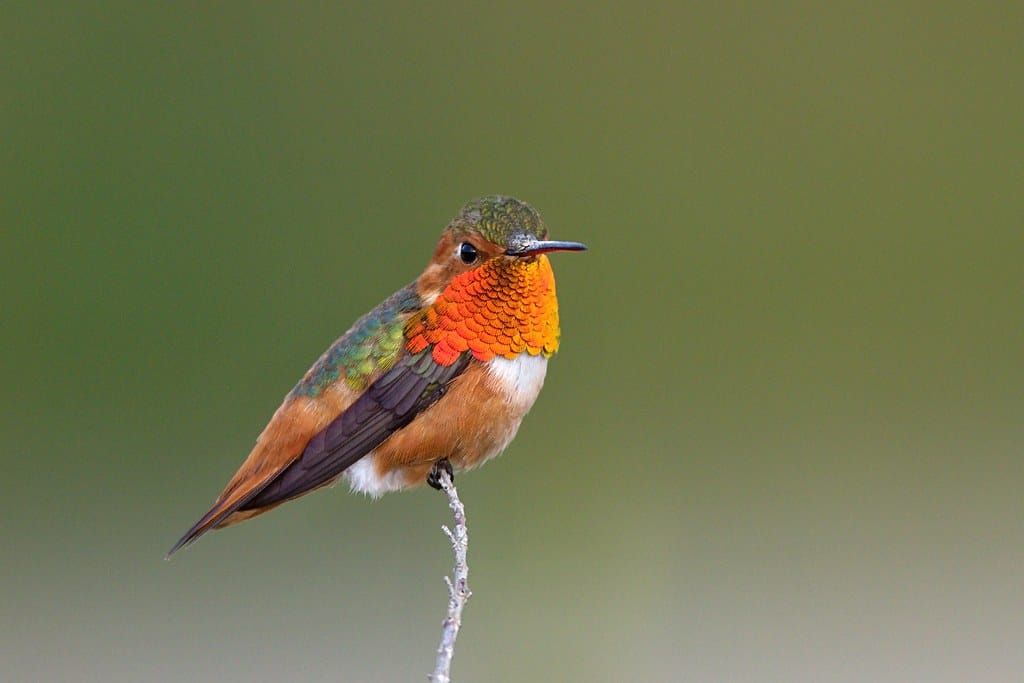
Allen’s hummingbird is one of the most challenging identification puzzles in North American birding, largely because it looks nearly identical to the rufous hummingbird in most plumages. The Allen’s hummingbird (Selasphorus sasin) breeds almost exclusively along a narrow coastal strip of California and southern Oregon, making any sighting in North Carolina a genuine rarity — and one that requires careful documentation to distinguish from the more frequently occurring rufous.
Adult male Allen’s hummingbirds have a green back and crown (unlike the fully rufous back of male rufous hummingbirds), combined with rufous flanks, rump, and tail and a brilliant orange-red gorget. Females and immatures of the two species are essentially identical in the field, and even in the hand, experts rely on the shape of the outer tail feathers to make a definitive call. For this reason, many Allen’s hummingbird records from eastern states are reported as “rufous/Allen’s” unless the bird can be thoroughly examined.
In North Carolina, Allen’s hummingbirds are exceptionally rare, with only a handful of confirmed records. Most reports come from late fall and winter, mirroring the pattern of other western vagrant hummingbirds in the state. If you believe you’ve found one, detailed photographs of the spread tail are essential for documentation.
| Feature | Allen’s Hummingbird | Rufous Hummingbird |
|---|---|---|
| Adult Male Back | Green | Rufous-orange |
| Gorget (Adult Male) | Orange-red | Orange-red |
| Flanks | Rufous | Rufous |
| Female/Immature ID | Nearly identical to rufous | Nearly identical to Allen’s |
| Tail Feather Shape | Narrower outer rectrices | Broader outer rectrices |
| NC Status | Exceptionally rare vagrant | Rare but regular vagrant |
Broad-billed Hummingbird
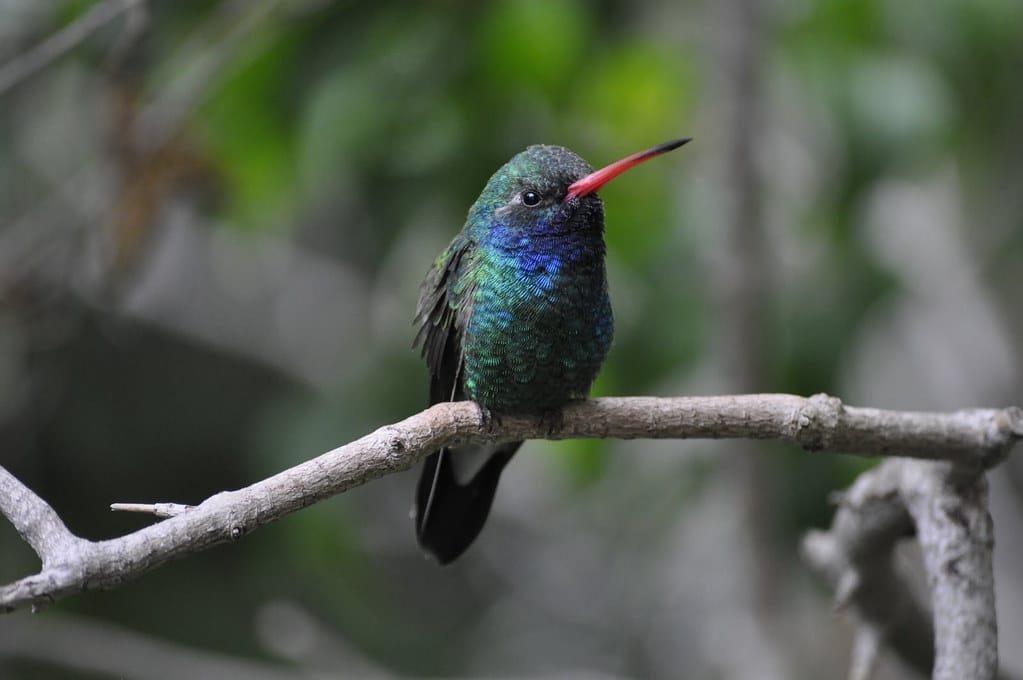
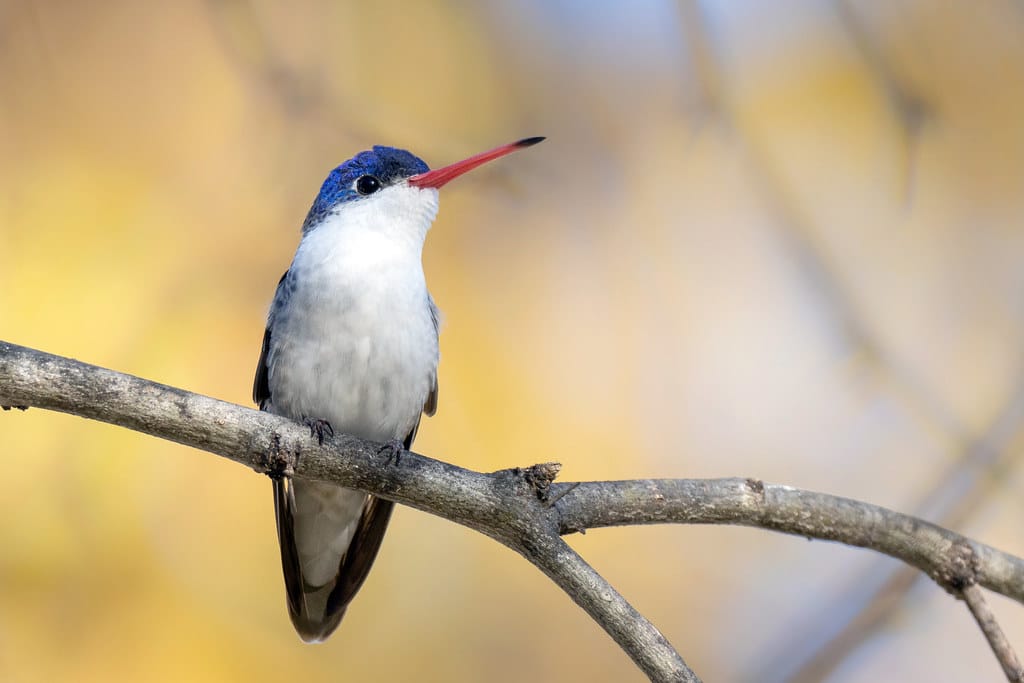
The broad-billed hummingbird is a stunning Mexican and southwestern species that occasionally strays far outside its normal range, and North Carolina has a small number of documented records that make it one of the more exciting rarities on the state list. The broad-billed hummingbird (Cynanthus latirostris) is immediately recognizable when seen well — adult males are a dazzling combination of iridescent blue-green on the body with a bright red bill tipped in black, a combination unlike any other hummingbird species you might encounter in the eastern United States.
Females are more subdued, showing green above and grayish below with a pale eyebrow stripe and the same distinctive red-based bill. That bill color is actually one of the most reliable field marks for this species in both sexes — even in poor light, the reddish bill base stands out compared to the dark bills of most eastern hummingbirds.
Broad-billed hummingbirds in North Carolina are extraordinary finds, typically reported by birders with active winter feeders. The species is more commonly seen in Arizona and New Mexico, so if you’re interested in comparing hummingbird diversity across different regions, exploring information on hummingbirds in Tucson gives you a sense of just how different the western hummingbird scene can be from what’s typical in NC.
- Peak Season in NC: Exceptional vagrant; fall and winter records
- Key ID Feature: Red bill base in both sexes; iridescent blue-green body in adult males
- Status: Very rare; among the most exciting hummingbird finds in the state
Key Insight: The broad-billed hummingbird’s colorful bill is visible even in low light or at a distance, making it one of the easier rare hummingbirds to identify confidently once you know what to look for. If you see a hummingbird with a noticeably reddish bill at your winter feeder in NC, document it immediately.
Green Violetear
The green violetear is a Central and South American species that has no business being in North Carolina — and yet it has appeared in the state, making it one of the most remarkable hummingbird records in eastern North America. The green violetear (Colibri thalassinus) is a medium-sized hummingbird with brilliant all-green plumage and distinctive violet-blue ear patches that flash brilliantly in sunlight. It’s a bird that would stop any experienced birder dead in their tracks.
Unlike most of the vagrant hummingbirds on this list, which wander east from western North America, the green violetear is a genuine Neotropical stray — a bird that has traveled far beyond the northern edge of its normal range in Mexico and Central America. Sightings in the United States are rare and scattered, and any confirmed record in North Carolina represents a truly exceptional event.
The species is most likely to be detected at hummingbird feeders during summer months, when northward overshoots from Central America are most plausible. If you ever encounter an unfamiliar all-green hummingbird with a blue-violet cheek patch at your feeder, report it to eBird immediately and photograph it from every angle. Records like this are significant contributions to our understanding of hummingbird vagrancy patterns in North America.
- Peak Season in NC: Exceptional vagrant; summer records most likely
- Key ID Feature: All-green plumage with bold violet-blue ear patches; medium size
- Status: Extremely rare; any confirmed record is a major state event
Green-breasted Mango
The green-breasted mango rounds out the list of hummingbirds documented in North Carolina, and it is perhaps the most unexpected species of all. The green-breasted mango (Anthracothorax prevostii) is a large, robust hummingbird native to Central America and northern South America, and its appearance in North Carolina — while documented — ranks among the most extraordinary avian records in the state’s history.
Adult males are spectacular: deep iridescent green overall with a dark purple-black central throat stripe bordered by turquoise-green. Females are similarly striking, showing bright white underparts with a bold dark central stripe running from chin to belly, flanked by green on the sides. Both sexes are noticeably larger than any of the other hummingbirds on this list, which makes them stand out immediately at a feeder.
The green-breasted mango has been documented in North Carolina on at least one notable occasion, drawing significant attention from the birding community. Like the green violetear, this species represents a true Neotropical vagrant — a bird that has wandered far beyond any expected range. Keeping your feeders active and your eyes open during late summer and fall is the best approach, since that’s when most extraordinary hummingbird vagrants tend to appear in the eastern United States.
Common Mistake: Many birders dismiss large or unusually colored hummingbirds as optical illusions or misidentified ruby-throats. If a hummingbird at your feeder looks significantly bigger than usual or shows colors you don’t recognize, trust your instincts, take photos, and report the sighting. Rare vagrant documentation depends on engaged observers like you.
- Peak Season in NC: Exceptional vagrant; late summer and fall records most plausible
- Key ID Feature: Large size; dark central throat stripe in males; bold dark belly stripe in females
- Status: Extremely rare; documented in NC but among the rarest hummingbird records in the eastern US
How to Attract and Spot Hummingbirds in North Carolina
Understanding which species you might encounter is only half the equation — knowing how to create the right conditions in your yard dramatically increases your chances of seeing them. Whether you’re hoping to host a reliable ruby-throat all summer or keep a feeder active in hopes of a rufous or calliope showing up in winter, a few consistent practices make all the difference.
The most important step is keeping feeders clean. Nectar ferments quickly in warm weather, and a dirty feeder can actually harm the birds you’re trying to help. During summer, clean your feeder every two to three days; in cooler months, once a week is usually sufficient. Always use plain white sugar and water — never honey, artificial sweeteners, or red dye, which can be harmful to hummingbirds.
Pro Tip: To prevent your feeder from freezing during cold winter nights when you’re hoping to attract vagrant hummingbirds, wrap it with hand warmers or bring it inside overnight and rehang it at first light. Western vagrant hummingbirds that appear in NC during winter are surprisingly cold-hardy, but they still need access to liquid nectar to survive.
Native plantings are equally important. The National Wildlife Federation’s native plant resources highlight that native flowering plants provide not just nectar but also the insects that hummingbirds depend on for protein. Trumpet vine, bee balm, salvia, and cardinal flower are all excellent choices for North Carolina gardens. You can also explore the types of bees in North Carolina and types of wasps in North Carolina to understand which other pollinators share your garden space with hummingbirds.
Timing matters too. For the ruby-throated hummingbird — the species you’re almost guaranteed to see — hang your feeders by mid-April to catch the first arrivals. Keep them up through October, or even into November, to support late-season migrants. For the chance at a western vagrant, leave at least one feeder active through the winter months.
Location and feeder placement also play a role. Hang feeders in a spot that’s visible from a window so you can monitor activity without disturbing the birds. Place them near flowering plants when possible, and consider having multiple feeders to reduce territorial conflicts — especially if you’re lucky enough to have more than one hummingbird visiting at once.
If you’re interested in comparing hummingbird activity across the region, it’s worth reading about hummingbirds in north Florida and hummingbirds in Michigan — two states that share some species with North Carolina but have quite different seasonal patterns. You might also find it useful to check eBird’s North Carolina hummingbird records to track real-time sightings reported by birders across the state.
When Do Hummingbirds Arrive in North Carolina?
Hummingbird season in North Carolina follows a fairly predictable rhythm for the ruby-throated hummingbird, though rare species can appear at almost any time of year. Here’s a seasonal breakdown to help you plan your watching and feeder management throughout the year.
| Season | What to Expect | Key Species |
|---|---|---|
| Early Spring (March–April) | First ruby-throats arrive; hang feeders by mid-April | Ruby-throated Hummingbird |
| Late Spring (May–June) | Peak arrival; nesting begins; males establish territories | Ruby-throated Hummingbird |
| Summer (July–August) | Juveniles fledge; feeder activity increases; possible Neotropical vagrants | Ruby-throated; rare vagrants possible |
| Early Fall (September–October) | Migration begins; ruby-throats depart; western vagrants start appearing | Ruby-throated, Rufous, Black-chinned |
| Late Fall–Winter (November–February) | Ruby-throats gone; western vagrants peak; keep feeders active | Rufous, Calliope, Anna’s, Black-chinned, others |
The window between late September and February is actually one of the most exciting times for hummingbird watching in North Carolina, precisely because you never know what western vagrant might turn up. Birders across the state have documented rufous, calliope, Anna’s, and black-chinned hummingbirds during this period — all of which are only possible to find if someone has a feeder out to attract them.
For broader context on how hummingbird timing works in other parts of the country, you might enjoy reading about hummingbirds in Illinois , where the ruby-throat is similarly the dominant species but the season is slightly shorter due to colder winters.
Reporting Your Sightings and Contributing to Citizen Science
One of the most valuable things you can do as a hummingbird watcher in North Carolina is report your sightings — especially if you encounter any species beyond the ruby-throat. Citizen science platforms like eBird , maintained by the Cornell Lab of Ornithology, rely on observations from birders like you to track population trends, migration timing, and the occurrence of rare species.
When you report a rare hummingbird, include as much detail as possible: date, location, behavior, feeder type if applicable, and — most importantly — photographs. Photos are often the only way to confirm the identity of a vagrant species, particularly in the case of look-alike pairs like rufous and Allen’s hummingbirds or female black-chinned and ruby-throated hummingbirds.
North Carolina’s birding community is active and welcoming. The North Carolina Birding Trail is an excellent resource for finding birding hotspots across the state where hummingbirds and other wildlife have been regularly documented. You can also connect with local Audubon chapters and birding clubs for real-time alerts about rare sightings in your area.
Beyond hummingbirds, North Carolina’s wildlife diversity is remarkable. If you enjoy exploring the state’s natural world, you might also be interested in the types of hawks in North Carolina , the types of owls in North Carolina , and the types of herons in North Carolina — all of which share habitat with hummingbirds and reward patient observation.
Key Insight: The Cornell Lab of Ornithology’s All About Birds guide to the ruby-throated hummingbird is one of the most detailed and reliable free resources available for learning more about NC’s most common hummingbird species, including range maps, sound recordings, and identification tips.
North Carolina’s hummingbird story is still being written. Every winter feeder that stays active, every photograph submitted to eBird, and every careful observation by a backyard birder adds to the collective knowledge of where these extraordinary birds travel and how their ranges are shifting. Whether you’re watching a ruby-throat hover at your cardinal flower in July or holding your breath over an unexpected winter visitor, you’re participating in something genuinely meaningful — and that’s one of the best things about being a hummingbird watcher in this state.