Fear of Pink (Rhodophobia): What It Is, Why It Happens, and How to Get Help

March 2, 2026
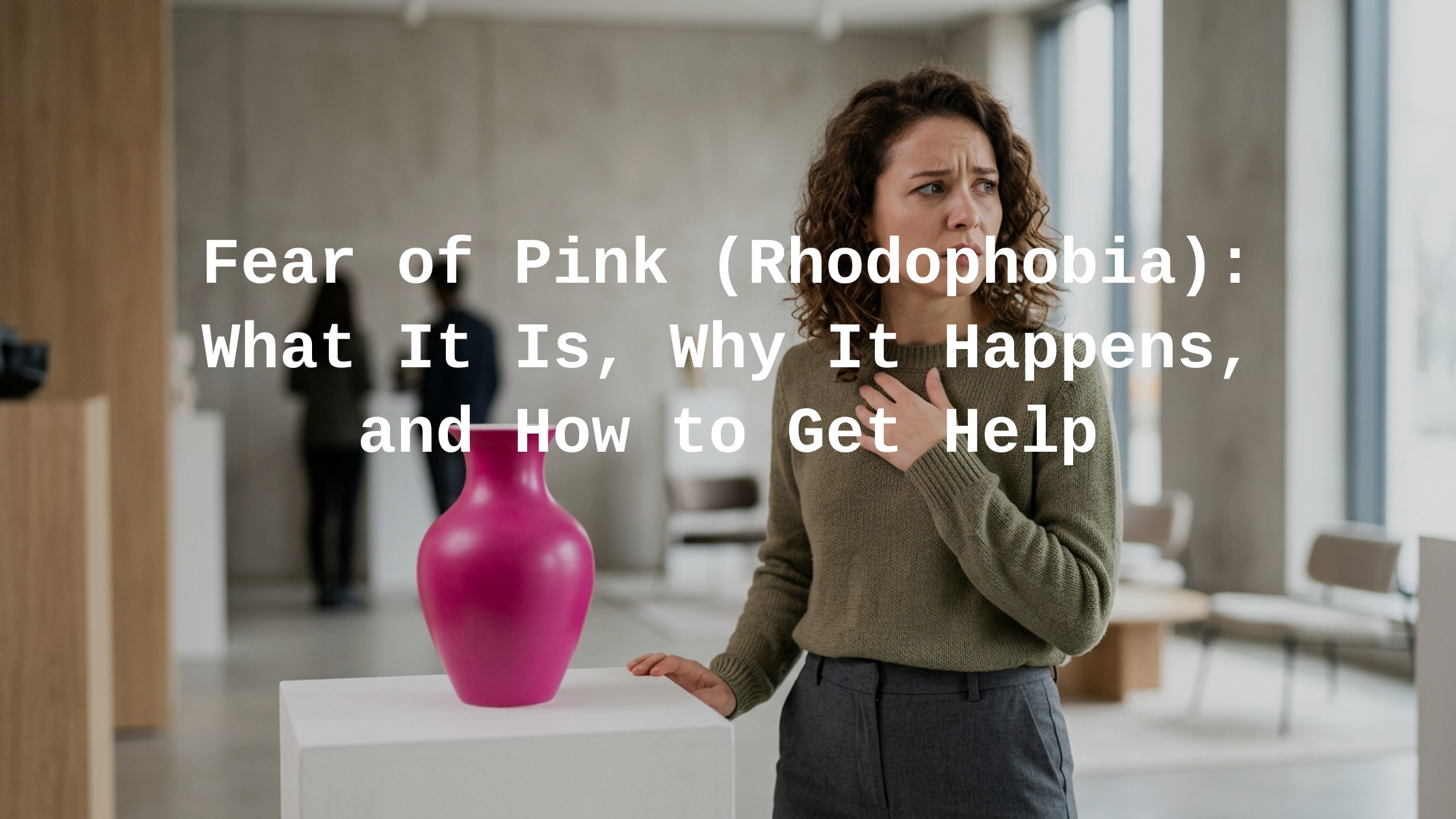
Have you ever walked into a room painted bright pink and felt your chest tighten, your pulse quicken, or an overwhelming urge to leave? For most people, pink is just a color — cheerful, soft, perhaps a little bold. But for those living with rhodophobia, encountering the color pink can trigger genuine fear and distress that disrupts everyday life.
Rhodophobia is a specific phobia centered on the color pink, and while it may sound unusual, it is a recognized psychological condition that deserves the same understanding and compassion as any other anxiety disorder. People who experience it are not overreacting — their fear responses are real, involuntary, and often deeply disruptive.
This article breaks down what rhodophobia actually is, what causes it, how it presents in daily life, and — most importantly — what effective help looks like for those who need it.
What Is Rhodophobia?
Rhodophobia is the persistent, irrational fear of the color pink. The name comes from the Greek word rhodon, meaning rose, combined with phobos, meaning fear. It falls under the broader category of chromophobia — the fear of colors — which is itself classified as a type of specific phobia within anxiety disorders.
Unlike a simple dislike or aesthetic preference against pink, rhodophobia involves a disproportionate fear response that the person experiencing it cannot easily control or rationalize away. Seeing the color pink — whether on clothing, in décor, in nature, or even in food — can be enough to set off significant psychological and physical distress.
Specific phobias like rhodophobia are formally recognized in the Diagnostic and Statistical Manual of Mental Disorders (DSM-5) published by the American Psychiatric Association. To meet diagnostic criteria, the fear must be persistent, excessive, and cause meaningful interference with a person’s daily functioning or quality of life.
Key Insight: Rhodophobia is not simply disliking pink. It is an anxiety-based condition in which the color pink becomes a genuine trigger for fear — one that feels uncontrollable to the person experiencing it.
It is worth noting that chromophobia as a broader category can encompass fears of many different colors, each with its own name. Rhodophobia is specific to pink and is distinct from, for example, erythrophobia (fear of red) or leukophobia (fear of white). The specificity of the trigger is one of the defining features of this type of phobia.
Symptoms
The symptoms of rhodophobia mirror those of other specific phobias and can range from mild unease to full panic attacks, depending on the individual and the intensity of their exposure to the color pink. Symptoms typically fall into three categories: psychological, physical, and behavioral.
On the psychological side, a person with rhodophobia may experience intense anxiety, dread, or a sense of impending doom when they encounter pink. They may feel a strong, irrational awareness that their fear is out of proportion — yet feel completely powerless to stop it. Intrusive thoughts about pink, nightmares, or persistent worry about encountering the color are also common.
Physical symptoms can include:
- Rapid heartbeat or palpitations
- Shortness of breath or hyperventilation
- Sweating, trembling, or shaking
- Nausea or stomach discomfort
- Dizziness or lightheadedness
- Chest tightness or pain
- A sensation of choking or suffocation
These physical reactions are driven by the body’s fight-or-flight response — the same survival mechanism that kicks in during genuine danger. The brain perceives pink as a threat and floods the body with adrenaline accordingly, even when there is no real risk present.
Important Note: Physical symptoms of rhodophobia can closely resemble those of a panic attack or cardiac event. Anyone experiencing chest pain or severe breathing difficulty for the first time should seek medical evaluation to rule out other causes.
Behaviorally, people with rhodophobia often go to significant lengths to avoid pink. This avoidance behavior is one of the most telling signs of the condition. A person might refuse to enter certain stores, avoid social events where pink decorations are likely (such as baby showers or breast cancer awareness events), decline certain foods, or alter their daily routes to avoid pink signage. Over time, this avoidance can become increasingly limiting and isolating.
Causes
Like most specific phobias, rhodophobia does not have a single, universal cause. Research into phobia development points to a combination of genetic, neurological, environmental, and psychological factors that interact differently in each person.
One of the most well-documented pathways is a traumatic or highly distressing experience that becomes associated with the color pink. If someone experienced a frightening event — an accident, an assault, a medical emergency, or severe emotional trauma — in an environment that prominently featured pink, the brain may form a conditioned fear response that links pink itself to danger. This is a form of classical conditioning, and it can happen even when the person is not consciously aware of the association being formed.
Genetics and family history also play a role. According to research on anxiety disorders from the National Institute of Mental Health , people with a first-degree relative who has an anxiety disorder or specific phobia are at elevated risk of developing one themselves. This suggests both a hereditary predisposition and the influence of learned behaviors — children who observe anxious reactions in caregivers may internalize similar responses.
Pro Tip: Understanding the likely origin of a phobia — whether trauma-based, learned, or temperament-driven — can help therapists tailor treatment more effectively. Sharing as much personal history as possible during an initial consultation gives clinicians a clearer picture.
Neurological factors also contribute. Some individuals have a naturally more reactive amygdala — the brain region responsible for processing fear — which makes them more susceptible to developing phobias in general. Heightened sensitivity in the nervous system, sometimes linked to conditions like generalized anxiety disorder, can lower the threshold at which a stimulus becomes a phobia trigger.
Cultural and symbolic associations with pink may also play a subtle role. Pink carries a wide range of cultural meanings — femininity, childhood, illness, and in some contexts, weakness or vulnerability. For individuals who have strong negative associations with these concepts, the color itself may become a proxy for those feelings over time.
How Common Is It?
Rhodophobia specifically is considered rare, though precise prevalence data is limited because it is often grouped under the broader categories of chromophobia or specific phobias rather than tracked independently. What is well-documented is that specific phobias as a whole are among the most common mental health conditions worldwide.
The National Institute of Mental Health estimates that approximately 12.5% of adults in the United States will experience a specific phobia at some point in their lifetime. Among those, color-related phobias represent a smaller subset, but they are by no means unheard of in clinical settings.
Specific phobias are more commonly reported in women than men, though researchers note this may partly reflect differences in help-seeking behavior rather than true differences in prevalence. Phobias often first emerge in childhood or adolescence, though they can develop at any age, particularly following a traumatic event.
Key Insight: Many people with specific phobias never seek treatment, either because they successfully avoid their trigger or because they feel embarrassed by the nature of their fear. This means true prevalence rates for phobias like rhodophobia are likely higher than reported figures suggest.
The rarity of rhodophobia as a named condition can itself become a source of distress for those who experience it. When a fear seems “too strange” to discuss openly, sufferers may feel isolated, dismissed, or reluctant to seek help. Awareness and normalization of color-based phobias are important steps toward reducing that barrier.
Treatment and Coping
The encouraging reality for anyone living with rhodophobia is that specific phobias are among the most treatable of all anxiety disorders. A range of evidence-based approaches have demonstrated strong success rates, and most people who commit to treatment experience meaningful improvement.
Cognitive Behavioral Therapy (CBT) is widely regarded as the gold standard for treating specific phobias. CBT helps individuals identify the distorted thought patterns that fuel their fear and replace them with more accurate, balanced thinking. A therapist guides the person through recognizing how their brain has learned to misinterpret pink as dangerous and works systematically to reframe that association. The American Psychological Association identifies CBT as one of the most effective therapeutic approaches for phobia treatment.
Exposure therapy, often delivered as part of CBT, is the most direct and research-supported method for overcoming specific phobias. It involves gradual, controlled exposure to the feared stimulus — in this case, the color pink — starting with the least distressing form and slowly working toward more direct contact.
This might begin with simply thinking about pink, then viewing a small image, then being in a room with a pink object, and so on. Each step desensitizes the nervous system and teaches the brain that pink is not a genuine threat.
| Treatment Approach | How It Works | Best For |
|---|---|---|
| Cognitive Behavioral Therapy (CBT) | Reframes fear-based thought patterns through structured sessions | Addressing the cognitive roots of the phobia |
| Exposure Therapy | Gradual, controlled contact with the feared stimulus | Desensitizing the fear response over time |
| Mindfulness and Relaxation Techniques | Teaches regulation of the physical anxiety response | Managing acute symptoms and daily stress |
| Medication | Short-term use of anti-anxiety or beta-blocker medications | Reducing acute symptoms when avoidance is unavoidable |
| Virtual Reality Therapy | Simulated exposure in a controlled digital environment | Individuals who struggle with in-person exposure |
Mindfulness-based approaches complement formal therapy by teaching individuals how to observe their anxious thoughts and physical sensations without being overwhelmed by them. Techniques such as diaphragmatic breathing, progressive muscle relaxation, and grounding exercises can reduce the intensity of fear responses in the moment and build long-term emotional resilience.
Medication is not typically a first-line treatment for specific phobias, but it can play a supporting role. Short-term use of benzodiazepines or beta-blockers may help manage acute anxiety in situations where pink cannot be avoided. Some individuals also benefit from SSRIs if their rhodophobia coexists with generalized anxiety or depression. Any medication use should be discussed with and supervised by a qualified healthcare provider.
Virtual reality (VR) therapy is an emerging and promising tool for phobia treatment. It allows individuals to experience simulated exposure to their feared stimulus in a safe, controlled environment — a particularly useful option for those who find direct exposure too overwhelming to begin with. Research into VR-based exposure therapy has shown encouraging results across a range of specific phobias.
Pro Tip: Coping strategies like journaling, peer support groups, and open conversations with trusted friends or family members can meaningfully supplement professional treatment. Isolation tends to intensify phobia-related anxiety, while connection and understanding help reduce it.
For day-to-day coping outside of formal treatment, individuals with rhodophobia can benefit from identifying their specific triggers, building a personal anxiety management toolkit, and communicating their needs to those around them. While avoidance provides short-term relief, it reinforces the phobia over time — so working toward gradual exposure, even in small ways, tends to produce better long-term outcomes.
Related Phobias
Rhodophobia does not exist in isolation. It belongs to a broader family of color-related and visually triggered phobias, and understanding these related conditions can provide helpful context for those navigating anxiety around colors and visual stimuli.
- Chromophobia is the overarching term for fear of colors in general. Someone with chromophobia may be distressed by multiple colors rather than one specific hue, and the condition can significantly affect how they engage with their environment — from the clothes they wear to the spaces they will enter.
- Erythrophobia is the fear of the color red and is one of the more commonly documented color phobias. Because pink is a lighter shade of red, erythrophobia and rhodophobia can sometimes overlap or co-occur in the same individual, with triggers blurring across the two related colors.
- Xanthophobia is the fear of the color yellow, and melanophobia refers to fear of the color black. Like rhodophobia, these phobias are specific to a single color and can be traced to traumatic associations, cultural meanings, or neurological sensitivity.
- Porphyrophobia, the fear of purple, shares a similar profile to rhodophobia given that purple and pink are adjacent on the color spectrum. Individuals with one of these phobias occasionally find that nearby hues also provoke anxiety, particularly in shades that blend the two colors.
Key Insight: Color phobias often co-occur with other anxiety disorders, including generalized anxiety disorder, social anxiety disorder, and obsessive-compulsive disorder. A thorough psychological evaluation can help identify whether multiple conditions are present and tailor treatment accordingly.
Beyond color phobias, rhodophobia may also overlap with social anxiety in cases where the fear of pink is tied to social situations — for example, anxiety around events like Valentine’s Day, baby showers, or breast cancer awareness campaigns where pink is prominently displayed. In these cases, the social and color-based triggers can reinforce each other, making professional evaluation especially valuable.
Frequently Asked Questions
Yes. Rhodophobia is a recognized specific phobia — a category of anxiety disorder formally classified in the DSM-5. While it may seem unusual, the fear response it produces is genuine and can significantly impair daily functioning. It is treated by mental health professionals using the same evidence-based approaches applied to all specific phobias.
Yes. Specific phobias frequently develop during childhood or adolescence. A child who experiences a frightening event associated with the color pink, or who grows up in an environment where anxiety around pink is modeled by caregivers, may develop rhodophobia. Early intervention with child-appropriate therapy tends to produce strong outcomes.
In some cases, phobias that develop in childhood may diminish naturally over time. However, phobias that persist into adulthood rarely resolve without some form of intervention. Avoidance behavior — the most common coping mechanism — tends to maintain and even intensify the phobia rather than reduce it. Professional treatment significantly improves the likelihood of lasting recovery.
Treatment timelines vary depending on the severity of the phobia, the individual’s history, and the approach used. Many people experience meaningful improvement within 8 to 16 sessions of CBT or exposure therapy. Some individuals respond more quickly, while others with complex trauma histories or co-occurring conditions may benefit from longer-term support.
While dedicated communities specifically for rhodophobia are limited, broader anxiety and phobia support groups — both in-person and online — can be valuable resources. Organizations like the Anxiety and Depression Association of America (ADAA) offer directories of support groups and therapist referrals for individuals dealing with specific phobias of all kinds.
Conclusion
Rhodophobia — the fear of the color pink — is a genuine anxiety condition that can touch nearly every corner of a person’s daily life, from the clothes they choose to the social events they avoid. The fear may seem difficult for others to understand, but for those who experience it, the distress is entirely real and entirely valid.
The most important takeaway is that rhodophobia is treatable. Cognitive behavioral therapy, exposure therapy, mindfulness practices, and emerging tools like virtual reality therapy have all demonstrated meaningful success in helping people reduce and overcome specific phobias. No one has to manage this condition alone or in silence.
Whether someone is just beginning to recognize their fear of pink as a phobia, or has been living with it for years without knowing there was a name for it, reaching out to a qualified mental health professional is the most effective first step toward relief. With the right support, lasting change is not just possible — it is well within reach.