How to Freeze Applesauce for Babies (And Keep It Fresh for Months)

May 4, 2026
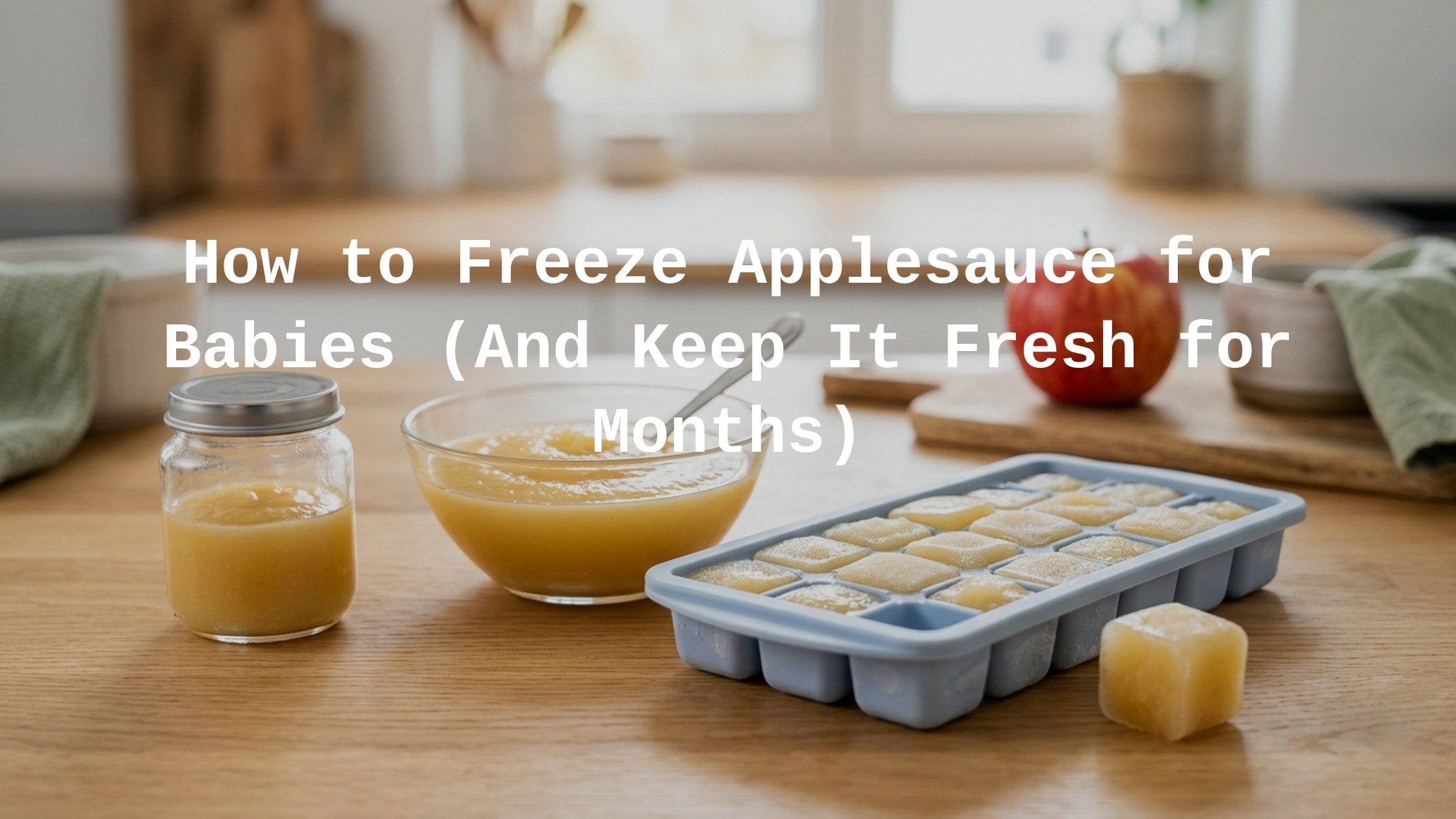
If you’ve ever made a big batch of homemade applesauce only to wonder what to do with the leftovers before they go bad, the freezer is your best friend. Freezing applesauce for babies is one of the easiest and most practical food storage moves a parent can make — and it works beautifully.
Whether you’re batch-cooking on a Sunday afternoon or trying to stretch a store-bought jar a little further, this guide walks you through everything you need to know: how to freeze applesauce the right way, how long it lasts, how to thaw it safely, and how to tell when it’s time to toss it. You’ll be ready to stock your freezer with confidence.
Yes, You Can Freeze Applesauce for Babies — Here’s What to Know First
Apples are a great choice for one of your baby’s first foods — they’re easy to digest, are a great source of fiber, and are so versatile, they can be paired with almost any other purée. That makes applesauce an ideal candidate for batch-cooking and freezing, so you always have a nutritious option ready to go.
Applesauce freezes incredibly well, and lasts longer than many frozen sauces since it doesn’t contain any milk ingredients. That’s great news for parents who want to get ahead on meal prep without worrying about quality loss. You can freeze both homemade and store-bought versions — as long as you follow the right steps.
Pro Tip: If you’re buying store-bought applesauce for your baby, look for unsweetened versions with no added sugar, honey, cane sugar, or cane syrup in the ingredient list. Applesauce without added sugars is plenty sweet, since there will be some natural sugars from the apples.
Freezing is also a smart way to save money. For less money than you’d spend on boxed baby food, you can cook large batches of applesauce at home and freeze the leftovers to avoid having to run to the store as frequently. It’s one of the most budget-friendly moves in the world of homemade convenience food for babies.
Can You Freeze Applesauce? The Short Answer
Yes — absolutely. You can absolutely freeze applesauce. Freezing applesauce is a simple and effective way to preserve its delicious flavor and extend its shelf life, allowing you to enjoy homemade or store-bought applesauce months after preparation.
When you freeze homemade applesauce, you get to enjoy it for a longer amount of time, but you can also extend the life of store-bought applesauce by tucking it away in the freezer. Both options work well, so don’t feel like you need to make everything from scratch to benefit from freezing.
Key Insight: Freezing has minimal impact on the nutritional value of applesauce. Vitamins and minerals are generally well-preserved during freezing. So your baby still gets the full benefit of those apple nutrients even after months in the freezer.
Does Freezing Change the Texture or Taste of Applesauce?
This is one of the most common concerns parents have, and it’s a fair one. The good news is that applesauce handles freezing better than most foods. When you freeze applesauce, it basically turns into an ice cube. It is preserved as long as it’s under 0 degrees. Thaw it and it’s good to use as you normally do.
Some minor separation can happen after thawing, but that’s completely normal and easy to fix. The water may separate a little bit from the apple, but giving the applesauce a good stir will reincorporate the liquid and return the applesauce to its original texture. A quick stir is all it takes.
Once thawed, stir the applesauce to restore its consistency and check the texture, as freezing can sometimes alter it. For baby food especially, you want to make sure the texture is appropriate for your little one’s developmental stage before serving. You can also check out tips for understanding common baby behaviors as your child grows and explores new foods.
Important Note: Adding spices, butter, or other ingredients to your applesauce before freezing can make it spoil faster, so save those additions for when you’re ready to eat it. Keep the base plain for the longest freezer life.
How to Freeze Applesauce the Right Way
Getting the freezing process right makes all the difference. Follow these steps to ensure your baby’s applesauce stays fresh, safe, and delicious:
- Cool it completely first. Once you have cooked your apples down into a sauce with the desired consistency, it is important to remember to allow it to cool. Freezing a still-warm sauce of any kind will affect the taste and cause problems when it’s freezing. You can prevent this from happening by letting your applesauce cool to room temperature before putting it into its freezer-safe containers.
- Portion it into baby-sized servings. The absolute best method for freezing baby purées is utilizing flexible silicone ice cube trays. For long-term storage, spoon the purée into flexible silicone ice cube trays, freeze until solid, and transfer to a labeled freezer bag. This allows you to easily thaw the exact portion your baby needs.
- Freeze the tray overnight. Place the lid on the storage container or cover with a piece of plastic wrap and label with the date and recipe name. Place the tray into the freezer and let freeze completely — preferably overnight. Pop out the baby food cubes and place in a zip-lock bag or stasher bag — don’t forget to re-label the bag for future reference.
- Remove excess air. Scoop the applesauce into the bags, then unfold the edges and squeeze out the excess air. Seal the bag, then label and date it.
- Freeze within 3 days of making. For best results, freeze applesauce within 3 days of preparing it or as soon after opening the container as possible.
Pro Tip: Ice cube trays are the single best option for freezing applesauce to use as baby food. Before you freeze your applesauce in freezer trays, ensure that you’ve cleaned the trays thoroughly. Also, select trays with lids for easier stacking and less potential for ice to form.
You can also use reusable pouches as a convenient alternative. You can freeze applesauce in a freezer-safe container, ice cube trays, or reusable pouches for up to 12 months. Pouches are especially handy for on-the-go feeding and can be popped straight into a diaper bag once thawed. Learning about how to transport frozen food safely is also useful if you’re traveling with your baby’s meals.
One more important tip: because applesauce may expand a bit once frozen, try to leave a little room in the container you choose to ensure the lid remains tightly sealed. This is especially important when using glass jars or sealed containers.
How Long Can You Freeze Applesauce?
Freezer life for applesauce depends on whether it’s homemade or store-bought, and how well it’s packaged. Here’s a clear breakdown:
| Type of Applesauce | Freezer Life | Notes |
|---|---|---|
| Homemade (plain) | Up to 12 months | Best quality within 6 months |
| Homemade (with spices/add-ins) | 3–4 months | Add-ins reduce shelf life |
| Store-bought (opened) | 8–12 months | Transfer to freezer-safe container |
| Baby food puree (portioned cubes) | 3–6 months | Best when used within 3 months |
If you make your applesauce at home, it can last up to 12 months in the freezer. However, for the best flavor and texture, most sources recommend using it within 3 to 6 months. Applesauce can be safely frozen for 8–12 months without significant loss of quality.
For baby-specific purées stored in portioned cubes, freeze, once cooled, in a silicone ice cube tray overnight, then transfer to a zip-top storage bag and freeze for up to 6 months. This is a reliable guideline that balances safety with optimal flavor. Understanding how food preservatives and storage affect shelf life can give you a broader perspective on why proper packaging matters so much.
Important Note: It’s a good idea to jot down the date on the container to ensure the applesauce doesn’t go too long in the freezer, which can result in the food succumbing to freezer burn. Always label before you freeze!
How to Thaw Frozen Applesauce
Thawing applesauce safely is just as important as freezing it correctly — especially when you’re serving it to a baby. Here are your best options:
- Refrigerator thaw (recommended): Remove the bag from the freezer and place it in the fridge for several hours or overnight. This is the safest and most gentle method, preserving texture and flavor best.
- Microwave thaw (quick option): Leave the applesauce at room temperature if you don’t need a rapid thaw, or use a microwave if you do. Note that if you use the microwave method, you should consume the applesauce reasonably quickly afterward.
- Cold water thaw: Thaw applesauce in the refrigerator or under running cold water. This method ensures a gradual temperature change that preserves texture and flavor.
Common Mistake: Never thaw baby food at room temperature for extended periods. When defrosting, do so in the refrigerator or using a safe, gentle method, avoiding prolonged exposure to room temperature to minimize bacterial growth.
After thawing, always stir the applesauce well. Thaw in the refrigerator and stir before using, as separation is normal. Once thawed, keep it in the fridge and consume it within a week.
It’s also worth checking the temperature before serving. Applesauce thawed in the fridge can be served cold or gently warmed. If you warm it in the microwave, always stir thoroughly and test the temperature on your wrist before giving it to your baby. Paying attention to your baby’s nutritional needs connects to broader healthy eating habits — you might also enjoy reading about whole plant-based foods as your little one grows.
Can You Refreeze Applesauce After Thawing?
This is a question many parents ask, and the answer is a cautious no — especially for baby food. Technically, you can refreeze applesauce that has been thawed, but it will lose taste and texture. For best results, don’t refreeze the applesauce.
Refreezing thawed applesauce is not recommended. Refreezing can lead to a further breakdown in texture and increase the risk of bacterial growth. Only refreeze if the applesauce was thawed in the refrigerator and has not been left at room temperature for more than two hours.
The best way to avoid this situation entirely is to freeze your applesauce in small, single-serving portions from the start. Applesauce freezes best when it is stored in small, easily defrostable batches. These pre-portioned containers will take much of the guesswork out of defrosting and will ensure that you only thaw the amount needed at any given time.
How to Use Frozen Applesauce (Best Uses After Freezing)
Once your applesauce is thawed, the options go well beyond spoon-feeding. Here are some of the best ways to use it:
- Straight as a purée: Serve thawed applesauce on its own as a simple, nutritious baby food. You’ll want a smoother texture for younger babies, while older babies who have a few teeth may be able to handle something a little chunkier.
- Mixed with other purées: Apple purée is commonly used as an early baby food because it is nutritious and easy to digest. It can be enjoyed by itself or mixed with a range of other purées. Try pairing it with sweet potato, carrot, or pear for new flavor combinations.
- As a teething treat: Frozen applesauce teething treats are a great food for babies cutting teeth. The cold temperature and hard object helps to soothe aggravated gums while still providing your little one with a serving of fruit.
- Stirred into oatmeal: A spoonful or two of thawed applesauce can naturally sweeten and flavor baby oatmeal without any added sugar.
- In reusable pouches: To thaw frozen pouches, place them in the fridge and let them thaw overnight. For a cool toddler treat, you can pack the pouches straight from the fridge in their lunch box or snack bag, and by lunchtime, they will be soft-frozen.
- Added to smoothies: Frozen applesauce can be added to smoothies for a boost of extra flavor and fiber. This works especially well for older babies and toddlers transitioning to more varied textures.
Applesauce is also a wonderful gateway food for introducing new flavors. Introducing subtle spices around 8 to 10 months can greatly expand your baby’s palate and make mealtime much more exciting. Some innovative parents even blend the apples with steamed sweet potatoes or carrots to create nutrient-dense combination meals. For more inspiration on foods that support your baby’s overall development, take a look at foods that boost brain health and function.
Pro Tip: Applesauce can also be used to sweeten other vegetable purées. This is a great trick for getting babies to accept less sweet vegetables like broccoli or spinach — just blend in a small cube of frozen applesauce after thawing.
Signs That Frozen Applesauce Has Gone Bad
Even in the freezer, applesauce can eventually degrade in quality or safety. Knowing what to look for protects your baby from consuming food that’s past its prime. Here are the key warning signs:
- Visible mold: Throw out applesauce if there’s any mold or any other organic growth on the surface, or if it develops an off or “funny” smell. Either one of these is a sure sign of spoilage.
- Off smell after thawing: Signs of spoilage include a sour or fermented smell, visible mold, off tastes, excessive bubbling or foaming, and discoloration beyond normal browning. Trust your nose — if it doesn’t smell like apples, don’t serve it.
- Freezer burn: Check for signs like freezer burn, ice crystals, discoloration, or a strange smell once thawed. Freezer burn doesn’t necessarily make food unsafe, but it ruins the taste and texture. For baby food, it’s best to discard heavily freezer-burned portions rather than risk an unpleasant experience.
- Unusual discoloration: A thin layer of surface browning is normal oxidation and harmless. However, monitor for changes in smell, appearance, or texture. An off-odor, mold, or significant discoloration are signs that the applesauce should be discarded.
- Damaged or compromised packaging: If the jar or bag is damaged, assume that the applesauce is bad, no matter if it shows any signs of spoilage or not. A broken seal means potential contamination.
- Exceeded storage time: Even without visible signs, applesauce stored beyond its recommended window should be discarded. If your applesauce has been open for way more than the recommended period, toss it out.
Common Mistake: Don’t rely solely on appearance. A common misunderstanding is that if frozen food doesn’t look or smell bad, it’s safe to eat. While appearance and smell are indicators of food quality, they are not reliable measures of safety for frozen food. Harmful bacteria and pathogens can be present without altering the smell or appearance of the food. When in doubt, throw it out — especially for babies.
Proper food safety habits matter even more when you’re feeding an infant. For a broader look at how food choices affect long-term health, you might find it helpful to explore foods to be cautious about and superfoods for a healthy heart as your family’s diet evolves.
Frequently Asked Questions
Can you freeze store-bought applesauce for babies?
Yes — you can use homemade applesauce or the kind you buy at the store. Just transfer the store-bought applesauce into a freezer-safe container or ice cube tray before freezing, since the original packaging typically isn’t designed for the freezer.
What age can babies eat frozen or thawed applesauce?
Apple baby food purée is a wonderful first food for babies — great as a Stage 1 baby food from 6 months and up. Always consult your pediatrician before introducing new foods, especially if you have concerns about allergies or readiness.
How do I know if my baby’s frozen applesauce is still good?
Check for off smells, visible mold, unusual discoloration, or heavy freezer burn after thawing. Ensure the applesauce was frozen shortly after preparation to maintain its freshness and nutritional value. If you labeled it with a date, use that as your guide and discard anything beyond 6 months for baby food.
Can I freeze applesauce in glass jars?
Yes, but with care. Mason jars can be an adequate storage method for freezing applesauce, as long as you remember to leave half an inch to an inch of space at the top of the jar. This headspace allows for expansion as the applesauce freezes.
How long does thawed applesauce last in the fridge?
Once you’ve thawed the applesauce, keep it in the fridge and consume it within a week. For baby food specifically, aim to use it within 3–4 days to be safe.
Does homemade applesauce freeze better than store-bought?
Both freeze well, but homemade applesauce without additives tends to have a cleaner freeze and thaw. Homemade applesauce lacks the preservatives found in commercial products, so its shelf life is shorter in the fridge — making the freezer an even smarter storage choice for homemade batches. You can also explore different types of food and their storage characteristics to build better habits across your whole kitchen.
Is it safe to warm frozen applesauce in the microwave for babies?
Yes, but always stir it thoroughly after microwaving and test the temperature before serving. Microwaves heat unevenly and can create hot spots that could burn your baby’s mouth. A few seconds at a time with frequent stirring is the safest approach.