
Maine’s pristine wilderness comes with a notorious reputation for one thing: biting flies that can turn a perfect outdoor adventure into a bloody, itchy nightmare.
While millions of visitors flock to the Pine Tree State each year to experience its natural beauty, many are unprepared for the aerial assault that awaits them.
Understanding these five species of biting flies in Maine isn’t just helpful—it’s essential for anyone planning to venture outdoors between May and October.
The state hosts over 40 species of black flies alone, plus dozens of other biting insects that have earned Maine the dubious honor of having some of the most aggressive fly populations in North America.
Unlike simple mosquito encounters, these flies employ different feeding strategies, attack patterns, and seasonal cycles that require specific defensive approaches. What worked against bugs in other states won’t necessarily protect you here.
Climate change and clean water legislation have fundamentally altered Maine’s bug season, extending what was once a predictable two-week black fly period into an all-summer ordeal with overlapping species.
This guide will help you identify each species, understand their behavior patterns, and develop effective protection strategies so you can reclaim your outdoor activities without surrendering to the swarms.
1. Black Flies

Black flies reign as Maine’s most infamous biting insect, earning the tongue-in-cheek title of “Maine State Bird” among locals who’ve endured their relentless attacks.
These tiny terrors, measuring barely one-eighth of an inch long, pack a disproportionate punch that can overwhelm even experienced outdoors enthusiasts.
Key Insight: Only female black flies bite humans, and they don’t just pierce the skin like mosquitoes—they use serrated jaws to tear open flesh before injecting anticoagulant saliva to keep blood flowing.
The state hosts approximately 40 black fly species, though only a handful target humans. The most problematic species include Simulium venustum and Simulium vittatum, which are found throughout Maine, and Simulium penobscotensis, discovered in the late 1970s breeding in Penobscot River tributaries.
This latter species extended Maine’s black fly misery by remaining active through July and August when other species typically die off.
Seasonal Activity and Behavior
Black flies have transformed Maine’s traditional “bug season” from a predictable two-week period in late May and early June to an extended ordeal lasting from spring through fall.
Maine Public reports that clean water legislation and climate change have created ideal breeding conditions for multiple species with staggered emergence times.
Unlike mosquitoes, black flies are strictly daytime feeders who become inactive after dark. They thrive in cloudy, humid conditions and are less active in bright sunlight with strong breezes.
These flies require clean, fast-moving water for breeding, which explains their abundance near Maine’s pristine streams and rivers.
Pro Tip: Black flies stop biting precisely at dusk—experienced hikers have noted they cease activity at exact times like 8:35 PM during peak season.
Health Impact and Reactions
Black fly bites create distinctive open wounds that differ significantly from mosquito punctures. The anticoagulant in their saliva can cause reactions ranging from localized swelling to severe allergic responses known as “black fly fever.” Symptoms may include headaches, nausea, fever, and swollen lymph nodes in the neck.
Common Mistake: Many people assume DEET provides adequate protection against black flies, but these insects show remarkable resistance to standard mosquito repellents.
Individual sensitivity varies dramatically. Newcomers to Maine often experience severe reactions, while long-term residents develop some immunity over time.
The Maine Forest Service notes that people seem to have different chemical attractants, with some individuals drawing swarms while others nearby remain relatively unbothered.
2. Deer Flies

Deer flies, also called moose flies, represent the aerial cavalry of Maine’s biting insect army. These larger, faster, and more aggressive hunters can reach up to one inch in length and possess the speed to outfly most humans attempting to escape their pursuit.
Important Note: Deer flies are among the fastest flying insects in North America—trying to outrun them typically just annoys them and intensifies their pursuit.
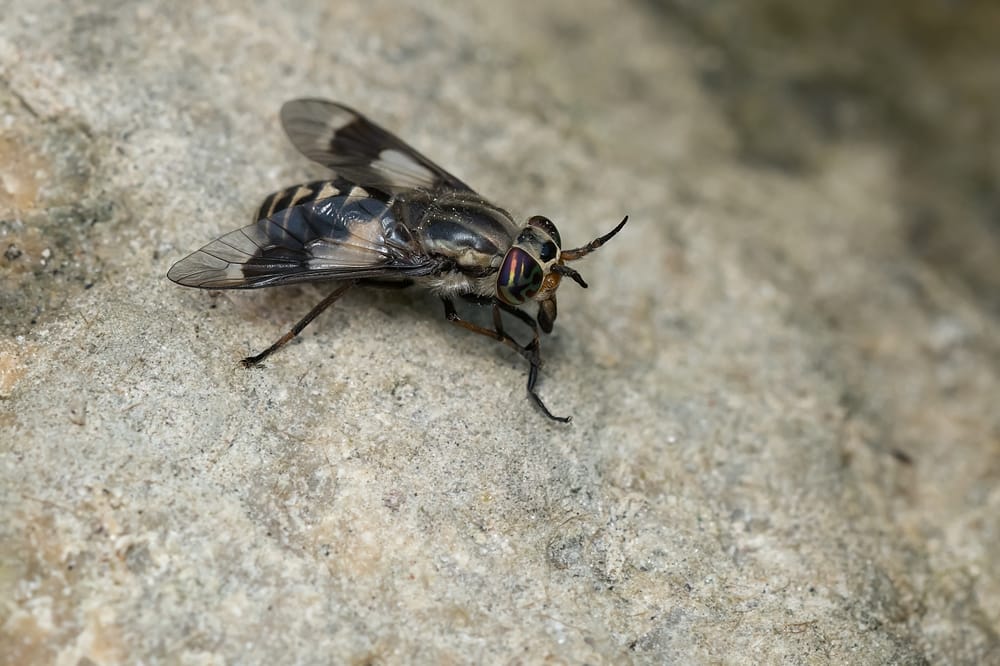
Recognition comes easily once you know what to look for. Deer flies display distinctive large eyes with gold or green patterns and dark bands across their triangular wings.
Their substantial size makes them impossible to miss when they circle around your head, waiting for the perfect moment to strike.
Attack Patterns and Feeding Behavior
Deer flies employ a different hunting strategy than black flies. Rather than swarming in groups, they typically attack individually or in small numbers, using their superior speed and agility to circle potential hosts.
Their scissor-like mouthparts slash through skin to create wounds they can lap blood from, resulting in painful, persistent welts.
Peak activity occurs during July and August when conditions favor their breeding in the soggy, wet areas they require.
Recent years have seen unprecedented deer fly populations due to increased rainfall and optimal breeding conditions.
Residents report the worst deer fly seasons in decades, with some people resorting to carrying shirts specifically for waving around to scatter the persistent insects.
Geographic Distribution and Habitat
Maine hosts approximately 50 deer fly species, each adapted to specific wetland environments. These flies require moist soil for egg laying and larval development, making them particularly abundant near marshes, bogs, and areas with seasonal flooding.
Comparison Table: Deer Flies vs. Black Flies
| Characteristic | Deer Flies | Black Flies |
|---|---|---|
| Size | ¼ to 1+ inch | ⅛ inch |
| Attack Pattern | Individual pursuit | Swarm attacks |
| Speed | Extremely fast | Moderate |
| Bite Pain | Immediate, sharp | Often unfelt initially |
| Active Time | All day | Daylight only |
| Peak Season | July-August | May-June (extended) |
Unlike black flies that lose interest when you move to open, breezy areas, deer flies will follow you across open fields and even to parking lots.
Their persistence and painful bites make them particularly dreaded by hikers, campers, and anyone working outdoors during peak summer months.
3. Horse Flies
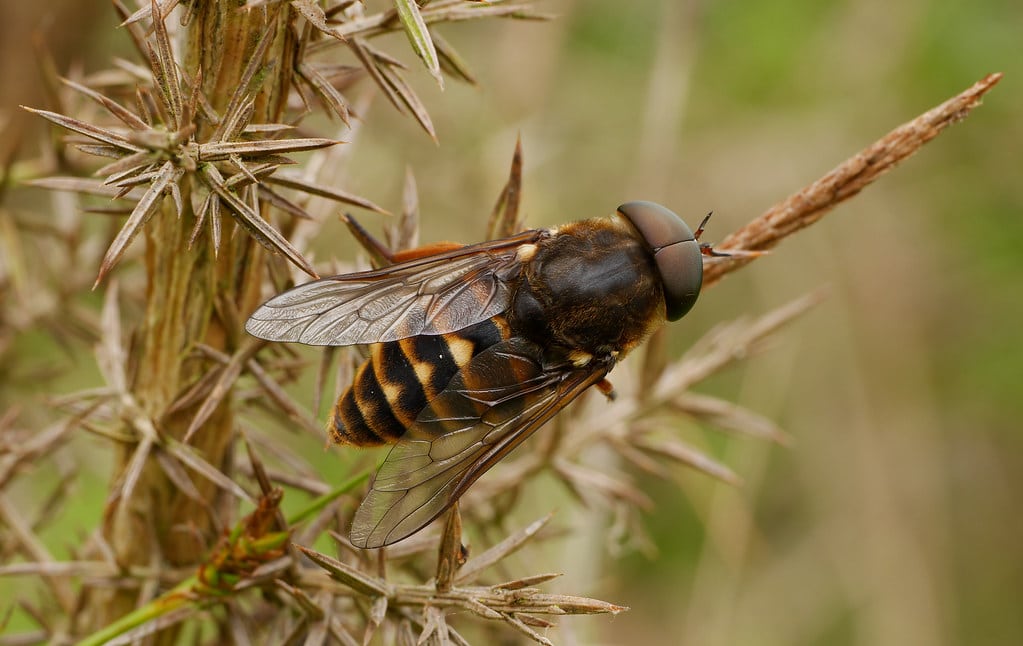
Horse flies represent the heavy artillery in Maine’s arsenal of biting insects. These imposing creatures can reach lengths of up to one inch and deliver some of the most painful bites you’ll encounter in the Maine wilderness. Their substantial size and aggressive nature make encounters memorable for all the wrong reasons.
Physical Characteristics and Identification
Horse flies display robust builds with large, prominent eyes that often show horizontal striping in iridescent greens, blues, and violets.
Their substantial wing span and powerful flight muscles allow them to cover significant distances while hunting for blood meals.
Some species appear solid black, while others show complex patterns of gray, brown, black, greenish, and yellow coloration.
The Maine Encyclopedia describes these larger biting flies as ranging from 5/16 to 1 inch long, with most averaging around ½ inch. Their size alone makes them intimidating, but their feeding behavior proves even more concerning for outdoor enthusiasts.
Key Insight: Horse flies use their powerful mandibles to create significant wounds, often leaving bleeding cuts that take longer to heal than other insect bites.
Seasonal Patterns and Life Cycle
Horse flies follow a different developmental timeline than black flies or deer flies. Their eggs hatch in moist soil rather than running water, and most species produce only one generation per year.
Some species require two full years to complete their life cycle, which helps explain their lower overall numbers compared to black flies.
Peak activity typically occurs during the hottest months of July and August, when adult females seek blood meals for egg production.
Unlike the colonial swarming behavior of black flies, horse flies usually attack individually or in small groups, using their superior size and strength to overwhelm their targets.
Habitat Preferences and Behavior
Horse flies favor areas near wetlands, pastures, and forest edges where they can find both the moist soil needed for reproduction and the large mammals they prefer as hosts. While they will bite humans, they show strong preferences for livestock, deer, and other large animals.
Pro Tip: Horse flies are attracted to movement and dark colors, making stationary individuals in light-colored clothing less likely targets.
Their hunting strategy involves visual tracking of potential hosts, which explains why they often circle before attacking.
Unlike black flies that become inactive in bright sunlight, horse flies remain active throughout daylight hours and seem unbothered by weather conditions that deter other biting insects.
4. Stable Flies

Stable flies earn their name from their historical association with livestock areas, but these persistent biters have expanded their range throughout Maine’s diverse landscapes.
Often confused with house flies due to their similar size and appearance, stable flies pack a much more painful punch that makes their presence unmistakable.
Distinguishing Features
Stable flies measure approximately ¼ inch in length and possess a distinctive forward-projecting proboscis that they use to pierce skin.
Unlike house flies that feed on organic matter, stable flies require blood meals for reproduction and will aggressively pursue human hosts when their preferred livestock targets aren’t available.
The key identification feature is their biting behavior combined with their fly-like appearance. While house flies might land on you occasionally, stable flies will immediately begin attempting to feed, creating sharp, sudden pain that distinguishes them from other nuisance insects.
Breeding and Habitat Requirements
Stable flies develop in decaying organic matter, particularly hay, straw, seaweed, and manure piles. This adaptability allows them to thrive in various Maine environments, from coastal areas with seaweed deposits to inland farms and even suburban areas with compost piles.
Important Note: Coastal Maine experiences stable fly problems when seaweed accumulates on beaches and begins decomposing, creating ideal breeding conditions.
Their life cycle from egg to adult takes approximately three weeks under optimal conditions, allowing multiple generations per season.
This rapid reproduction can lead to sudden population explosions when conditions align, particularly after storms that deposit large amounts of organic matter.
Feeding Behavior and Health Concerns
Stable flies exhibit persistent feeding behavior that makes them particularly annoying to outdoor enthusiasts. Unlike mosquitoes that feed quickly and leave, stable flies may require several minutes to complete their blood meal, during which they’re easily disturbed and will return repeatedly to the same host.
Numbered Process for Identifying Stable Fly Activity:
- Initial Landing – Fly lands and immediately begins probing for feeding site
- Penetration – Sharp, immediate pain as proboscis pierces skin
- Feeding Attempt – Fly remains in position for extended period
- Disturbance Response – When swatted away, returns quickly to same area
- Persistence – Continues attempts until successful feeding or permanent deterrent
The University of Maine research indicates that stable flies can travel several miles from their breeding sites, explaining why they appear in areas without obvious organic matter accumulation.
Their strong flight capabilities and host-seeking behavior make them formidable opponents for anyone spending extended time outdoors.
Their bites typically create small, raised welts that itch intensely and may persist for several days. While stable flies don’t transmit diseases to humans in Maine, their painful bites and persistent behavior make them significant nuisances during peak activity periods.
5. Biting Midges (No-See-Ums)

Biting midges, universally known as no-see-ums throughout Maine, represent perhaps the most insidious members of the state’s biting fly consortium.
Their microscopic size allows them to slip through standard window screens and tent mesh, making them nearly impossible to exclude through conventional barriers.
Common Mistake: Most people underestimate no-see-ums because of their tiny size, but their collective impact can be more miserable than larger, more obvious biting flies.
Size and Identification Challenges
No-see-ums measure less than 1/16 inch in length, making them virtually invisible to the naked eye under most conditions.
You’ll typically notice their presence only when you feel the characteristic pinprick sensation of their bites or observe the small, intensely itchy welts they leave behind.
Their diminutive size allows them to penetrate most standard screening materials, including tent mesh and window screens designed to exclude mosquitoes and black flies.
This penetration ability makes them particularly problematic for campers and anyone seeking refuge in screened areas.
Breeding Habitat and Seasonal Activity
No-see-ums breed in moist soil and organic matter, thriving in the boggy, marshy conditions abundant throughout Maine.
Unlike other biting flies that prefer running water or specific soil types, these adaptable insects exploit various wetland environments from coastal salt marshes to inland peat bogs.
Peak Activity Schedule:
- Dawn: Moderate activity levels
- Dusk: Maximum feeding intensity
- Night: Continued activity in warm conditions
- Overcast Days: Extended activity periods
Their most active feeding period occurs around dusk, when they emerge in large numbers to seek blood meals. This timing often coincides with camping activities like cooking dinner or sitting around campfires, creating frustrating encounters for outdoor enthusiasts.
Bite Characteristics and Treatment
No-see-um bites create distinctive small, red welts that itch intensely despite their tiny size. The Maine Forest Service reports that common insect repellents show limited effectiveness against these persistent biters, making protection particularly challenging.
Key Insight: No-see-ums inject an anticoagulant similar to other biting flies, but their small size means individual bites feel like pin pricks rather than the tearing sensation of larger flies.
Individual reactions vary significantly, with some people developing severe allergic responses while others experience minimal irritation.
The bites typically resolve within a few days, but scratching can lead to secondary infections due to their intensely itchy nature.
Protection Strategies
Standard DEET-based repellents provide limited protection against no-see-ums, requiring specialized approaches for effective defense.
Fine-mesh clothing and head nets offer the most reliable protection, though complete exclusion remains challenging due to their microscopic size.
Protection Effectiveness Comparison:
| Method | Effectiveness | Notes |
|---|---|---|
| DEET Repellents | Limited | Must reapply frequently |
| Fine Mesh Clothing | High | Requires very small mesh size |
| Permethrin-Treated Gear | Moderate | Provides some deterrent effect |
| Wind/Breezy Areas | High | No-see-ums avoid windy conditions |
| Indoor Refuges | Variable | Can penetrate standard screens |
The best defense involves combining multiple strategies: using fine-mesh protective clothing, applying repellents specifically formulated for no-see-ums, and timing outdoor activities to avoid peak feeding periods around dawn and dusk.
6. Essential Protection Strategies
Successfully defending against Maine’s biting flies requires understanding that each species responds differently to various deterrent methods.
What works against black flies may prove useless against no-see-ums, and deer fly protection strategies differ significantly from those needed for stable flies.
Multi-Species Defense System:
Physical Barriers
- Light-colored, long-sleeved clothing – Essential for all species
- Fine-mesh head nets – Critical during peak black fly season
- Pants tucked into socks – Prevents flies from accessing legs
- Permethrin-treated gear – Provides lasting protection across species
Repellent Selection
- DEET-based products – Most effective against black flies and deer flies
- Picaridin formulations – Alternative option with less odor
- Natural oil blends – Limited effectiveness but preferred by some users
- Specialized no-see-um repellents – Required for midge protection
Timing and Environmental Awareness
- Avoid peak activity periods – Early morning and dusk for most species
- Seek breezy areas – Wind disrupts most biting fly activity
- Monitor weather conditions – Cloudy, humid days increase activity
- Choose campsites carefully – Distance from breeding habitats reduces encounters
The Northern Outdoors survival guide emphasizes that movement often provides the best defense: “Keep moving, and you won’t even notice the flies until you stop.”
Understanding Maine’s five primary biting flies allows you to develop targeted protection strategies rather than hoping generic bug spray will solve everything.
Each species presents unique challenges, but with proper preparation and knowledge, you can successfully enjoy Maine’s incredible outdoor opportunities without surrendering to the swarms.
Remember that locals have coexisted with these insects for generations, developing practical approaches that balance protection with outdoor enjoyment.
The key lies in respecting these formidable opponents while refusing to let them dictate your outdoor adventures in one of America’s most beautiful wilderness destinations.