12 Pieces of Traditional Basque Clothing and the Stories Behind Them

November 18, 2026
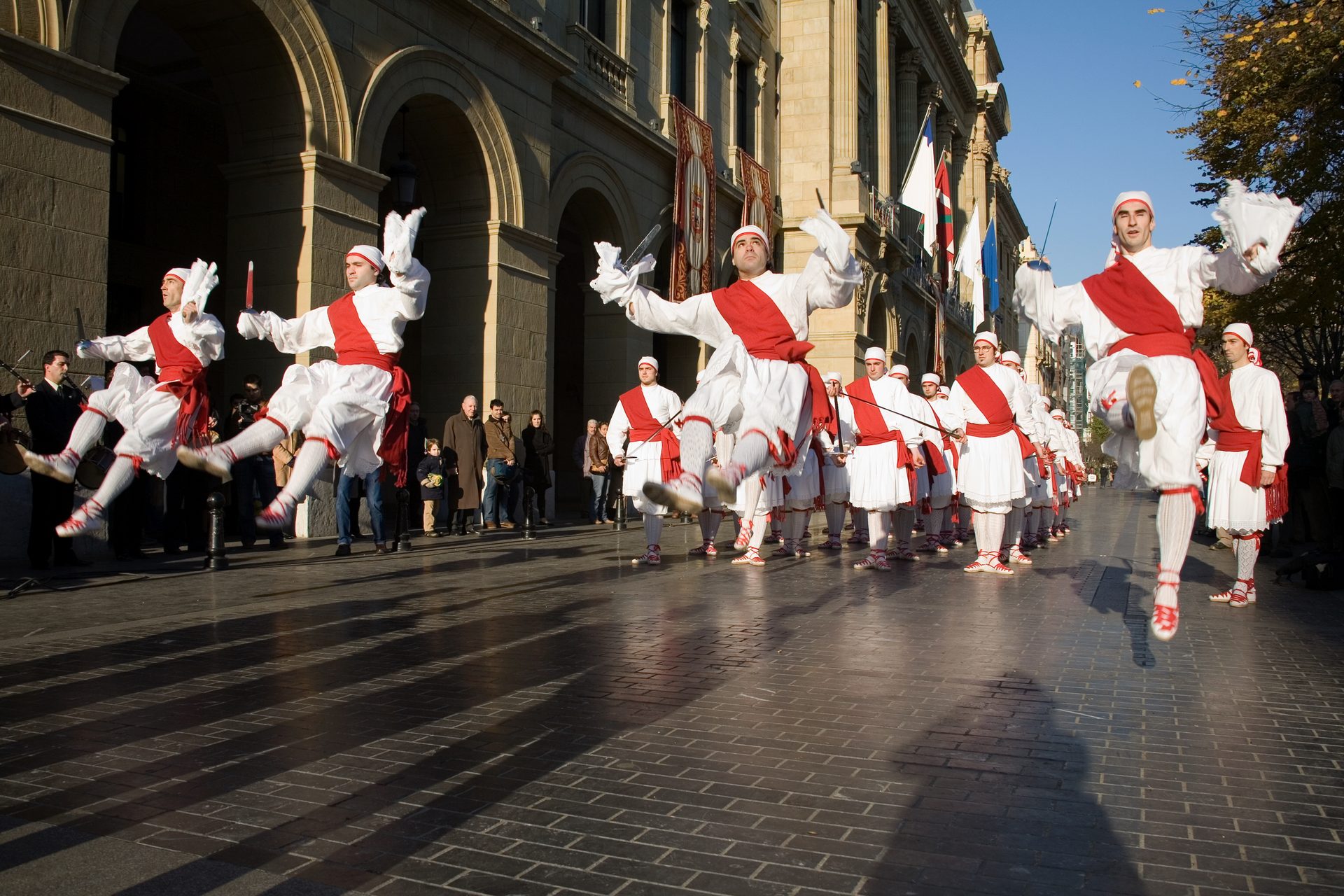
Ask someone from Bilbao and someone from the Roncal Valley to describe traditional Basque clothing, and you will likely get two different answers. The Basque Country never settled on one national costume the way some neighboring regions did; instead, farmers, fishermen, shepherds, and dancers each shaped garments to fit their own work and weather. That regional patchwork is exactly what makes Basque dress worth exploring piece by piece.
This guide walks through twelve garments that recur across festivals, folklore groups, and family photo albums throughout the seven historical Basque provinces. Some, like the beret, became international symbols almost by accident. Others, like the Erronkari costume, remain tied to a single valley. For readers comparing dress traditions more broadly, the clothing and style archive covers similar regional wardrobes from around the world.
| Garment | Primary Association | Typical Material |
|---|---|---|
| Txapela | Men, all regions | Fulled wool |
| Espartinak | Rural workers | Esparto rope, canvas |
| Arrantzale outfit | Fishers, Biscay | Cotton, tartan wool |
| Casera outfit | Farmhouse owners, Gipuzkoa | Wool, linen |
| Mendigoizale jacket | Mountain walkers | Heavy wool |
| Txamarra | Rural laborers | Fulled wool |
| Erronkari costume | Roncal Valley, Navarre | Wool, embroidered trim |
| Fisherman’s coat | Coastal fleets | Oiled canvas, wool |
| Colored sash | Men and women, festive dress | Woven cloth |
| Black vest | Women, dance costume | Wool or cotton |
| Red skirt | Women, dance costume | Wool or cotton |
| Black apron | Women, work and church wear | Linen or cotton |
1. Txapela
Txapela is the Basque word for beret, and it remains the single most recognizable marker of traditional Basque clothing. According to Buber’s Basque Page, the txapela is a defining feature of the traditional Basque costume. The word itself did not originate in Basque; it derives from the Latin capellum, meaning cap.
Scattered references to berets appear in Basque texts from the 15th century, but the garment only became widespread later. Despite its ubiquitous association with the Basques, the tradition of Basques wearing a beret is not so old, with real popularity arriving in the 1800s, likely due to the influence of Tomas Zumalakarregi, the Carlist general who outfitted his troops with red berets and named them the txapelgorris. According to a history of the Basque txapela , it was during the Carlist Wars, between 1833 and 1840, that the red colour began to become popular for the txapela, displacing more traditional hats.
Industrial production later cemented the beret’s place in everyday wardrobes. Beret manufacturing industrialized first in Oloron-Donamaria, just outside Iparralde in France, then in Gipuzkoa in 1859 and Bizkaia soon after. Germany has its own history of regional headwear tied to local identity, as covered in the traditional German clothing overview, though few hats anywhere carry the same one-word global recognition as the txapela.
Pro Tip: Modern txapelak are sized in centimeters across the diameter, not in standard hat sizes, so measure your head circumference before buying one from a Basque workshop.
2. Espartinak
Espartinak are the rope-soled shoes Basques wear with much of their traditional dress, better known internationally as espadrilles. The Basque name comes directly from the fiber used to make them. Esparto is a tough, wiry Mediterranean grass used in making rope, and its name in the Basque region is espartina.
These shoes are old, and not just by a few centuries. Espadrilles were the usual peasant footwear since the 14th century at least, and are still being produced as from old. Their adoption into formal Basque costume, however, came later and alongside another garment on this list: with the First Carlist War, the espartinak and the txapela were introduced, both becoming central elements of the popular costume.
Production methods have shifted since then. At San Telmo Museum in Donostia, curators point to espartinak as a clear example of craft giving way to industry, since certain workshops still hand-make them by rope while others now mass-produce the same shoe. Handmade footwear traditions persist elsewhere too, including the techniques described in the traditional Indian clothing guide.
3. Arrantzale Outfit
The arrantzale outfit takes its name from the Basque word for fisherman, and it is sometimes called the sardinera, or sardine seller, instead. It belongs specifically to one province rather than the Basque Country as a whole. The arrantzale, or sardinera, costume is mostly typical of Biscay.
Unlike heavier farmhouse dress, this outfit was built for warmer conditions near the water. It is used for warmer weather, and usually consists of a blouse, tartan skirt, and apron. The tartan pattern, bright against the cotton blouse, distinguishes it at a glance from the more muted Casera outfit worn in the neighboring province.
Because fishing and sardine selling were historically women’s trades along the Biscay coast, the arrantzale outfit is closely tied to working women rather than to dance troupes alone, though folklore groups now perform in it during summer festivals.
4. Casera Outfit
Where the arrantzale outfit belongs to the coast, the casera outfit belongs to the farmhouse, or caserío. The name itself comes from the Basque word for the woman who runs that household. There is this other model called casera, meaning owner of the traditional Basque house, and it is worn mostly in Gipuzkoa.
The costume plays a visible role during one of the region’s oldest winter traditions. According to the Wikipedia entry on Christmas in the Basque Country , Christmas starts with the Feast of Santo Tomas on 21 December, when most people go out to dance and eat talo with txistorra while wearing the casera outfit, which for women and girls consists of a long skirt and a long-sleeved old-fashioned shirt with headscarves and aprons. The men’s and boys’ version pairs a long black shirt and trousers with the txapela already described above, and the mountain-dwelling Olentzero, the Basque equivalent of Santa, wears the boys’ casera.
Rural garment traditions tied to a specific building or homestead show up in other cultures too, including the farmstead-linked wardrobes covered in the traditional American clothing feature.
Important Note: Casera outfits are traditionally dark blue but appear in other colors depending on the family or village, so color alone is not a reliable way to identify one.
5. Mendigoizale Jacket
The mendigoizale jacket takes its name from the Basque word for mountain walker or climber, built from “mendi” (mountain) and a root referring to those who go out early. It belongs to the tradition of Basque mountaineering clubs that formed as hiking and alpine walking grew into an organized pastime across Gipuzkoa and Navarre in the early 20th century.
Unlike the lighter fabrics used in coastal or farmhouse dress, the mendigoizale jacket is cut from heavier wool to handle the cold winds common on Pyrenean ridgelines. Many clubs still issue a version of this jacket to members, often marked with a small emblem identifying the group. Mountain communities elsewhere have developed similarly insulated garments to suit their terrain, a pattern also visible in the traditional Chinese clothing overview of highland regional dress.
Because mountaineering clubs recorded their own histories rather than relying on court or church archives, detailed written sources on the mendigoizale jacket’s early design are harder to find than for more ceremonial garments on this list.
6. Txamarra
The txamarra is a heavier work jacket, often cut fuller than a vest and sometimes padded for warmth. The term surfaces in discussions of Olentzero’s costume, where it describes the blue, slightly puffed jacket associated with the character’s mountain origins.
Historically, a txamarra served rural laborers who needed more coverage than a vest but more flexibility than a full coat. Fulled wool, the same treated fabric that made the txapela weather-resistant, was the standard choice. Regional jacket styles built for manual outdoor work appear widely, including the examples detailed in the traditional Pakistani clothing guide.
Because the txamarra overlaps functionally with other jackets on this list, folklore groups sometimes use the terms loosely, which is part of why Basque costume research remains an active, ongoing conversation rather than a settled catalog.
7. Erronkari Costume
Erronkari, known in Spanish as Roncal, is a valley tucked into the Navarrese Pyrenees, and its traditional dress reflects that geographic isolation. Because the valley sat somewhat apart from the larger Basque-speaking regions to the west, its costume developed distinct embroidery and trim patterns that folklore researchers treat as a separate case study from Biscayan or Gipuzkoan dress.
The valley is also historically linked to Erronkariera, a Basque dialect once spoken there that fell out of everyday use during the 20th century, underscoring how isolated mountain communities can preserve or lose cultural markers independently of the wider region. Isolated communities developing their own distinct garment identity is not unique to the Basque Country; the traditional Australian clothing piece covers a comparable pattern among remote regional communities.
Today, the Erronkari costume survives mainly through local folklore associations and festival performances rather than daily wear, which is true of several entries on this list once rural life moved away from subsistence farming and fishing.
8. Fisherman’s Coat
Distinct from the lighter arrantzale outfit worn for selling fish in town, the fisherman’s coat was a heavier, weatherproof overcoat built for the open water of the Bay of Biscay. Basque crews needed protection that an ordinary blouse or vest could not provide once they moved beyond coastal waters.
That maritime economy shaped more than just outerwear. According to Euskal Kazeta’s coverage of the San Telmo Museum , the whale was very important to the Basque economy through the beginning of the 20th century and was even used in apparel, with whale teeth providing the support in an early version of the corset, so much so that the corsets were called ballenas, the Spanish word for whale. A coat built to survive whaling and cod-fishing voyages had to be more rugged than anything worn on land.
Oiled canvas and heavy wool were the standard materials, chosen for their resistance to salt water rather than for appearance. Maritime communities elsewhere built similarly functional outerwear around their own fishing economies, a theme also present in the traditional Japanese clothing guide.
9. Colored Sash
A colored sash, worn wrapped around the waist, appears in both men’s and women’s traditional Basque dress and ties several garments on this list together visually. In the men’s costume, it sits at the point where trousers meet the rest of the outfit. The pants share space with the stockings, both made of canvas or cloth, with a colored sash completing the look, according to Buber’s Basque Page’s history of Basque clothing.
The sash is known locally as the gerriko, and it is one of several named pieces that make up the fuller women’s ensemble alongside the skirt and apron described later in this guide. In Spanish-language cultural guides, writers note that Basque dress terminology keeps the gerriko, gona, and mantala as fixed vocabulary even when the colors and patterns vary by village.
- Men’s sashes tend to run in solid, bold colors such as red or blue.
- Women’s sashes are sometimes narrower and worn higher, closer to the waistline of the skirt.
- Festival sashes are typically brighter than the everyday work version, which favored muted tones that showed less wear.
10. Black Vest
The black vest is a staple of the women’s dance costume, worn over a white blouse and fastened snugly at the waist. Travel writers describing Basque festival dress note that men typically wear long trousers with a loose blouse and a vest , and the women’s version follows a parallel structure, pairing a fitted black vest with the red skirt covered next.
Unlike the heavier jackets worn for mountain or farm work, the black vest is purely festive, designed to show off the blouse underneath rather than to provide warmth. Dance troupes performing traditional jotas and fandangos rely on the vest’s structured shape to keep the upper body of the costume crisp during fast footwork.
11. Red Skirt
A bright red skirt, worn long and often paired with petticoats underneath for volume, is one of the most visually distinctive pieces in the women’s festival costume. The color choice is not incidental. Folk costume researchers note that red and white are generally reserved for festive occasions across northern Spanish regional dress, while black and blue dominate everyday wear, a pattern that holds for Basque skirts as much as for the txapela discussed earlier.
Underneath the vest and above the apron, the red skirt provides the main block of color that makes Basque dance costumes recognizable from a distance, even before a viewer notices the finer details of the sash or scarf.
12. Black Apron
The black apron finishes the women’s dance costume, worn over the red skirt and tied at the waist with the same colored sash described earlier. Its purpose historically was practical as much as decorative, since aprons across Basque dress served double duty for both labor and formal wear.
Basque clothing historians describe two distinct versions of the garment depending on occasion, one cut wide for work and a narrower, more elegant version reserved for church and festivals. That same distinction between a utilitarian everyday apron and a decorative formal one shows up across European folk dress generally, though the black-on-red color pairing remains specifically Basque.
Pro Tip: If you are shopping for a dance costume rather than a museum reproduction, look for aprons with reinforced waistbands, since festival dancing puts more strain on the tie than everyday wear ever did.
Across all twelve garments, the throughline is geography rather than a single royal court or national design authority. Fishing villages, mountain valleys, and farmhouses each produced clothing suited to their own work, which is why Basque costume collections at museums like San Telmo in Donostia organize displays by province and occupation rather than by a single timeline. Readers curious how other regions solved similar problems of climate and craft can find comparable stories in the broader clothing traditions collection.