How Much Does It Cost to Build a House in the US? A Real-Numbers Breakdown

September 3, 2026
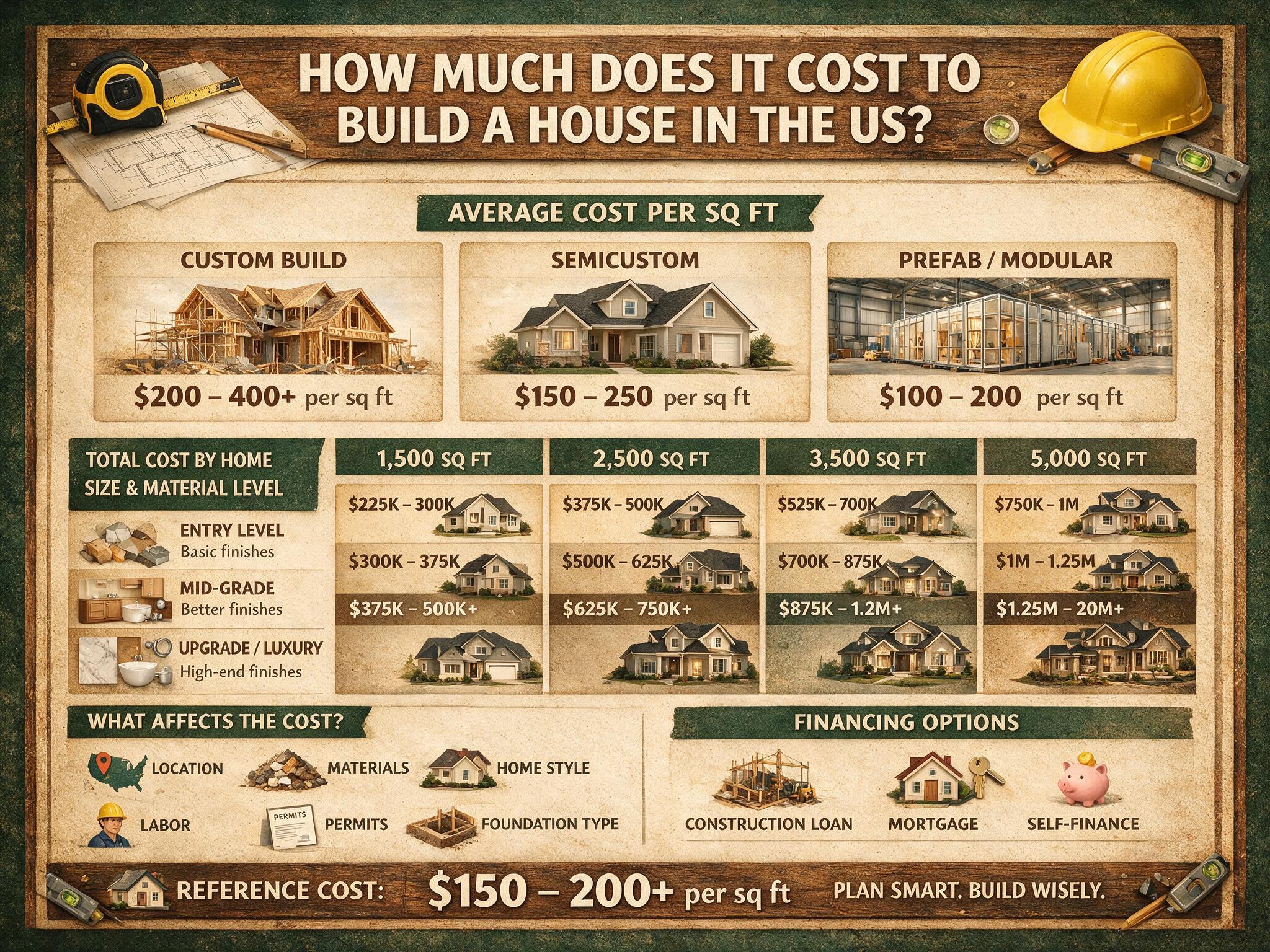
Building a house from the ground up is one of the biggest financial decisions you’ll ever make — and the price tag is rarely what you expect when you first start researching. Between land, labor, permits, materials, and contractor fees, the numbers can shift dramatically depending on where you build, how large your home is, and what finishes you choose.
This guide walks you through every major cost category involved in building a house in the United States, with current figures, regional comparisons, and practical strategies to help you build smarter without blowing your budget.
Average Cost to Build a House in the US
Building a house in the US generally costs between $138,937 and $531,294, with an average of around $323,026, excluding land. That wide range reflects real differences in home size, location, build quality, and contractor pricing across the country.
According to the National Association of Home Builders (NAHB), the average construction cost of a typical single-family home in the 2024 survey is $428,215, or about $162 per square foot — the highest in the history of this series. Keep in mind that this figure represents construction costs only and does not include the finished lot, builder profit, or sales and marketing expenses.
For a typical newly constructed home with around 2,647 square feet of finished space, here’s a fuller picture of what you’re looking at: construction costs alone at $428,215 (64.4% of total), finished lot at $91,146 (13.7%), builder profit margin at $73,183 (11.0%), overhead and general expenses at $37,922 (5.7%), sales commission at $18,628 (2.8%), financing costs at $9,980 (1.5%), and marketing costs at $5,322 (0.8%), bringing the total average sales price to $665,298.
Key Insight: The $162/sq ft NAHB figure excludes the general contractor’s overhead and profit. Once you add those in, the effective average rises to approximately $195 per square foot — a critical distinction when budgeting.
By bedroom count, costs break down roughly as follows. A small two-bedroom house typically costs between $93,000 and $155,000 to build, while a three-bedroom home ranges from $248,000 to $310,000. A four-bedroom house may cost anywhere from $388,000 to $465,000 or more.
Cost to Build a House Per Square Foot in the US
The average cost to build a house is $180 to $450+ per square foot, or around $350,000 to $800,000 total, not including the land or site prep. However, what you actually pay per square foot depends heavily on the type of home you’re building.
Here is how per-square-foot costs break down by build tier, based on HomeAdvisor 2025 data and Angi construction cost analysis:
| Build Type | Cost Per Square Foot | What You Get |
|---|---|---|
| Basic builder-grade | $150 – $200 | Standard finishes, limited customization |
| Mid-range custom | $200 – $280 | Durable materials, energy-efficient features, moderate customization |
| High-end / luxury custom | $280 – $450+ | Premium finishes, complex design, premium location |
Cost per square foot refers only to construction costs — materials and labor to build the house. Land, permits, utility connections, landscaping, driveways, and financing costs are all additional. These extras typically add 25–40% on top of the construction cost.
Regional differences are significant. National averages suggest a range of $150 to $300 per square foot, yet new home build prices vary widely. The Midwest hovers closer to $130–$200, while the Northeast and West Coast can exceed $350.
State-level data from the NAHB 2024 survey tells a similar story. Hawaii is the most expensive state, with an average cost of $230 per square foot, followed closely by Alaska at $228. Other high-cost states include California and New Jersey at $225, New York at $211, and Massachusetts at $210. States like Colorado, Iowa, and Texas have moderate construction costs at $172, $171, and $162 respectively. The least expensive states include Oklahoma at $158, Arkansas at $156, and Mississippi at $154.
Pro Tip: Smaller homes often cost more per square foot than larger ones, because fixed costs like permits, foundation work, and mechanical systems are spread across fewer square feet. Don’t assume a smaller build automatically means a lower per-square-foot price.
Cost Breakdown: What You’re Actually Paying For in the US
Understanding where your money goes is essential for making smart trade-offs during the planning process. Material costs make up about 50% to 60% of the total home construction budget, while labor makes up the rest. Here is a stage-by-stage look at the major cost categories.
Foundation
The average cost to build a foundation is $25,000 to $70,000, depending on the type. The best foundation depends on the soil conditions, water level, and frost line in your area. A concrete or slab-on-grade foundation is the least expensive, while a basement foundation costs the most.
Framing
House framing costs $35,000 to $75,000 on average. This includes the cost of materials and labor for constructing the skeleton of your home, including exterior and interior walls, floor systems, and roof trusses. Lumber is a major driver here. Framing lumber sits around $870 per thousand board feet as of early 2026, up about 17% from the prior year. Canadian tariffs — nearly 45% combined duties — are keeping prices from dropping significantly.
Roofing
A new roof costs $10,000 to $25,000+ installed, depending on the home size and roofing material. Asphalt shingles remain the most popular choice due to their cost-effectiveness and performance. Metal roofing costs more but is gaining popularity for its durability and long lifespan.
Exterior Finishes
Siding costs $12,000 to $45,000, depending on the material. Vinyl siding remains popular due to its low maintenance requirements and performance in variable weather conditions. Windows and doors also fall into this category, with costs that vary widely based on style, material, and energy-efficiency ratings.
Plumbing, Electrical, and HVAC
Electrical installation for a new house costs $12,000 to $20,000 total for an average-sized home. Expect costs on the high end if your house has a complex layout or requires a high-capacity electrical service panel. New plumbing installation costs $12,000 to $20,000 and includes water supply lines, drainage systems, venting, and fixture connections. HVAC system installation costs $8,000 to $18,000, with total costs depending on the house size and the HVAC system size, type, and brand.
Interior Finishes
Of the eight major stages of construction, interior finishes, at 24.1%, remains the largest component share of construction costs, followed by major system rough-ins at 19.2% and framing at 16.6%. Interior finishes include insulation, drywall, flooring, cabinetry, countertops, painting, lighting, and appliances — and this is where budget overruns most commonly occur.
Insulation and Drywall
Insulation and drywall costs $12,000 to $40,000 installed, depending on the insulation type and the home’s interior layout. The location and climate determine the ideal insulation type for your home.
Permits and Soft Costs
Local governments can charge anywhere from $5,000 to $30,000 in permit and inspection fees, depending on location and scope. Professional drawings can run $5,000 to $20,000, or more for custom homes. Architectural plans typically cost between 5% and 15% of your total construction budget.
Important Note: Always ask your contractor exactly what their per-square-foot quote includes. Many quotes cover only the shell — not permits, land prep, utility hookups, or interior finishes. These extras routinely add 25–40% to the quoted construction cost.
Cost of Land in the US
Land is one of the most variable costs in any home-building project, and it is often underestimated in early budget planning. Buying land involves varying costs influenced by location and size, with prices typically between $4,000 and over $350,000 per acre.
Beyond the purchase price, you will also need to budget for site preparation. Surveying expenses usually range from $300 to $1,000 to ensure your property boundaries are clear. Additionally, preparing the land — including clearing and grading — can cost anywhere from $1,500 to $5,000.
Utility connections are another often-overlooked expense. Installing water, sewer, and electrical lines can cost $10,000 to $50,000 depending on location. Rural lots that lack existing utility infrastructure are especially prone to high connection costs.
Geography plays a major role in what you pay for land. The South Central region maintains the nation’s most affordable construction environment through a combination of low land acquisition costs ($4,000–$12,000 per acre), non-union labor markets, minimal permit fees ($500–$2,500), and permissive building codes that reduce compliance expenses. Coastal markets and major metro areas are a different story entirely, where a single lot can cost several hundred thousand dollars before a single nail is driven.
If you are comparing housing markets, it is worth checking what apartment costs in Miami or apartment costs in San Francisco look like relative to building — in high-cost coastal cities, building can sometimes pencil out more favorably than buying or renting long-term.
Factors That Affect Building Costs in the US
No two home builds cost the same, and several key variables explain why quotes for the same floor plan can differ by tens of thousands of dollars.
Location
Location is the single biggest cost driver in new construction. The Northeast and West Coast regions command 25–45% cost premiums over South Central states due to cumulative regulatory burdens, with California’s Title 24 energy code adding approximately $15,000 to construction costs and New York’s union labor requirements increasing framing expenses by 30–40% compared to right-to-work states. If you are comparing markets like Washington, DC versus Oklahoma, the construction cost gap can be just as stark as the housing market gap.
Labor Shortages
Labor remains the industry’s most acute structural challenge. Approximately 439,000 additional workers were needed in 2025, with nearly 500,000 required in 2026 to meet projected demand. About 94% of contractors report difficulty filling open positions, contributing to schedule risk, selective bidding, and continued wage escalation.
Material Costs and Tariffs
JLL reports that material prices in 2025 averaged approximately 4.2% above 2024 levels. Longer-term tariff impacts are expected to range from 5 to 25% depending on material type, with aggregate construction costs estimated to rise roughly 8% under current policy conditions. Tariffs alone could add an estimated $7,500–$10,000 to the average new home.
Home Size and Design Complexity
While a larger home costs more overall, a simple 2,500-square-foot design can be cheaper per square foot than a complex 1,800-square-foot home. A simple rectangular ranch is the most cost-effective option. Curved walls, cathedral ceilings, and intricate details require specialized labor and materials, increasing costs.
Urban vs. Rural Builds
Urban buildings almost always cost more than rural ones — not just because of land values, but also permits, regulatory requirements, and competition for skilled labor. In rural areas, labor gets more affordable, but you have limited access to specialized trades, which can slow timelines.
Climate and Building Code Requirements
Florida’s post-Hurricane Andrew building code revisions require all new construction in High Velocity Hurricane Zones to withstand 140+ mph winds, necessitating impact-resistant windows ($12,000–$18,000 premium), reinforced roof-to-wall connections ($4,000–$7,000), and engineered foundation systems that collectively add 8–12% to construction costs in coastal counties. Cold-weather states face their own added costs: Minnesota, North Dakota, and Wisconsin require residential foundations to extend below the 42–60 inch frost line, adding $8,000–$15,000 to foundation costs compared to Southern states where 12–18 inch slab-on-grade foundations suffice.
Common Mistake: Budgeting based only on the builder’s quoted cost per square foot. That number almost never includes land, permits, utility connections, landscaping, or financing costs. Always add 25–40% to the construction quote to estimate your true all-in project cost.
Building vs. Buying a House in the US
The building vs. buying question does not have a universal answer — it depends on your market, timeline, and priorities.
On the cost side, in most markets, building is 10–20% more expensive than buying an existing home of similar size. However, you get a brand-new home with modern energy efficiency, no deferred maintenance, full customization, and current building codes. In areas with limited inventory, building can actually be competitive with buying.
The timeline difference is also significant. Buying is usually a faster option than building. While new homes take 9–12 months, homes for sale close in just 1–2 months, with more listings and lower prices. For buyers who need to move quickly, an existing home is almost always the faster path.
| Factor | Building New | Buying Existing |
|---|---|---|
| Average cost (excl. land) | ~$323,026–$428,215 | ~$419,200 (existing home avg., Jan 2025) |
| Timeline | 9–16+ months | 1–2 months to close |
| Customization | Full control | Limited to renovations |
| Maintenance risk | Low (new systems) | Higher (aging systems) |
| Energy efficiency | Modern codes and standards | Varies widely |
| Budget predictability | Lower (change orders common) | Higher (known purchase price) |
According to the National Association of Realtors, the average existing home price in January 2025 was $419,200. Meanwhile, the NAHB 2024 Construction Cost Survey puts the average new construction home price (with land) at $665,298. NAHB analysis of Census Bureau data shows the median new home price in Q1 2025 was $416,900. The gap between the average and median new home price is explained by high-end custom builds pulling the average upward.
If you are weighing your options in specific markets, exploring what apartment and housing costs look like locally can provide useful context. For example, see what apartments cost in New Jersey, Ohio, or North Carolina to compare renting, buying, and building side by side.
How to Save Money When Building a House in the US
Building on a budget requires decisions made early — long before you break ground. The homeowners who stay on budget are rarely the ones who found the cheapest contractor. They are the ones who planned every detail in advance and minimized costly mid-build changes.
Keep the Footprint Simple
A rectangle costs less per square foot than an L-shape. Every corner, bump-out, and angle adds framing labor and material waste. Going up rather than out — building a two-story home — costs 15–20% less per square foot than a single-story of the same size because you share one roof and one foundation.
Reduce Your Square Footage
Every additional 100 square feet costs $15,000 to $40,000. Reducing your footprint from 2,800 to 2,400 square feet could save $60,000 to $160,000. Be honest about what you actually need versus what would be nice to have.
Lock In Material Costs Early
With recent volatility in lumber and other building materials, negotiate fixed-price contracts or material cost locks when possible. This protects you from price spikes that can emerge mid-project, especially given ongoing tariff pressures on imported building materials.
Minimize Change Orders
Change orders cost 3–5x more than the same decision made during planning. Every outlet, every fixture, every finish — decide it on paper, not on the job site. Every change you make after plans are finalized costs 10 to 20% more than if you’d included it originally.
Choose Your Lot Carefully
Level lots cost less to build on than sloped lots. Municipal water and sewer cost less than wells and septic. Established subdivisions cost less than raw land. These are not glamorous decisions, but they can save you $30,000 to $75,000.
DIY the Finish Work
Painting, landscaping, and simple fixtures are DIY-friendly if you have the skills and time. You could save $10,000 to $25,000 in labor costs. Leave structural, electrical, and plumbing work to licensed professionals, but finish-level tasks are often manageable for motivated homeowners.
Be Strategic About Finishes
You don’t need premium finishes everywhere. Use them in the kitchen where they make an impact; go with quartz or laminate in less-visible bathrooms. Interior finishes represent the largest single share of construction costs, which means they also offer the most flexibility for savings without sacrificing structural quality.
Build a Contingency Buffer
Set aside 10–20% of your budget as a contingency. Construction projects almost never come in under budget, and having a reserve prevents a single unexpected cost from derailing the entire project. Most contractors add 10–15% padding to your budget to prepare for material hikes, weather delays, or labor issues.
Pro Tip: If you are also thinking about adding a separate structure to your property, such as a greenhouse or workshop, plan for it during the initial build. Utility hookups and permitting done in parallel with the main home are far cheaper than returning later. See our guide on how much it costs to build a greenhouse for a sense of what secondary structures add to a project.
Building a house in the US is a significant financial undertaking, but it is also one that gives you full control over what you get. Knowing the cost to build a home in the US has never been more complicated than it is in 2026. Inflation cooled in some sectors, but construction costs per square foot remain volatile because the prices of concrete, steel, and copper continue to fluctuate. Labor shortages persist, with hundreds of thousands of jobs unfilled, driving wages higher and timelines longer. The builders who come out ahead are the ones who go in with clear numbers, a realistic contingency, and a plan that leaves little room for expensive surprises.