How Much Does It Cost to Build a House in Illinois? A Complete Price Breakdown

September 28, 2026
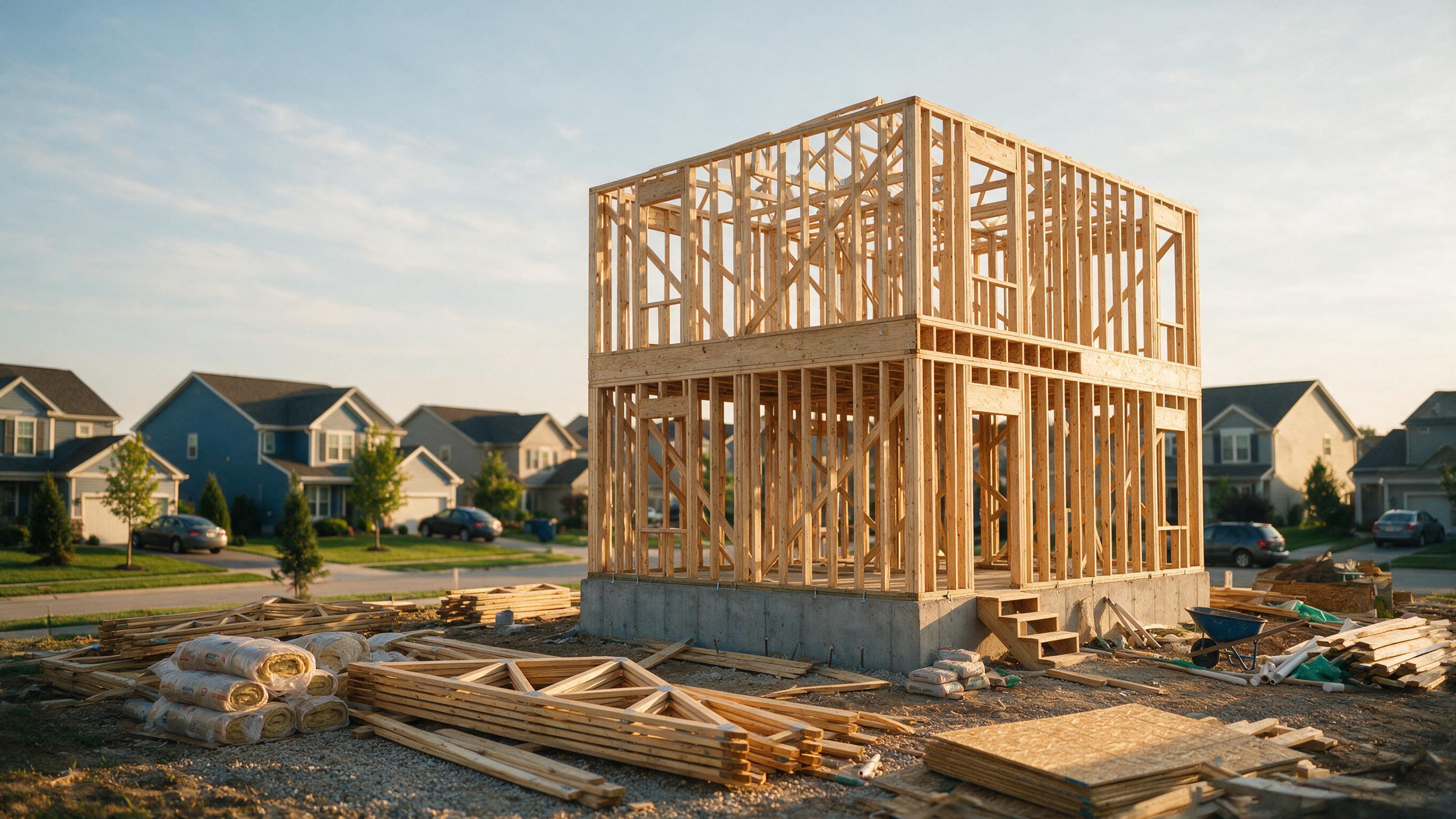
Building a house in Illinois costs significantly more than the national average — and if you’re planning a new construction project in the Prairie State, knowing what drives that price tag can save you from some very expensive surprises.
Whether you’re eyeing a modest ranch-style home in Springfield or a custom colonial in the Chicago suburbs, this guide walks you through every major cost category: square footage rates, land prices, labor, materials, permits, and how building stacks up against buying an existing home.
Average Cost to Build a House in Illinois
Building a new home in Illinois typically costs between $285,000 and $865,000, depending on your location, design choices, and finish level. That’s a wide range — and for good reason. The state spans everything from dense urban neighborhoods to rural farmland, and construction costs follow that same geography.
Illinois has the fourth-highest estimated cost to build, at an average of $380,189 for a 2,100 square-foot spec home, compared to a national average of $332,397. If you’re building in or near Chicago, expect those numbers to climb even higher.
The cost to build a house in Chicago averages around $410,285, with most projects falling between $206,000 and $635,000. Once you layer in land, permits, utility hookups, and interior furnishings, the all-in total can push well past $500,000 for even a modestly sized home.
Key Insight: Illinois ranks among the most expensive states for new home construction. Budget conservatively, and always add a 10–15% contingency buffer for unexpected overruns.
For context on how Illinois compares to neighboring states, the nationwide average cost to build a builder-grade home is $180 to $280 per square foot, while Indiana comes in at $150 to $350+ per square foot, Wisconsin at $220 to $500+ per square foot, and Missouri at $180 to $500 per square foot.
Cost to Build a House Per Square Foot in Illinois
New home construction costs in Illinois range from $250 to $550+ per square foot on average, depending on the location, house size and design, material quality, and amount of customization. Here’s how those numbers break down by build type:
| Build Type | Cost Per Square Foot | Notes |
|---|---|---|
| Basic / Builder-Grade | $250 – $350 | Standard finishes, limited customization |
| Mid-Range | $350 – $450 | Upgraded finishes, more design options |
| Custom / High-End | $450 – $550+ | Premium materials, unique architecture |
| Chicago Metro Luxury | $600+ | Full customization, top-tier finishes |
Simpler wood-framed homes like Saltboxes start around $132 per square foot, while upscale custom homes with high-end finishes can exceed $500 per square foot. For Chicago specifically, the average cost to build a home ranges from $250 to $650 per square foot as of 2025.
The cost per square foot for building a custom home in Chicago varies based on quality: Standard Grade runs $150 to $180 per square foot, Premium Grade $180 to $220 per square foot, and Luxury Grade $220 to $270 per square foot. Luxury builds in DuPage County — covering communities like Naperville, Hinsdale, and Oak Brook — can climb even higher. It’s not uncommon for luxury homes in DuPage County to exceed $350 to $450 per square foot, with total project costs easily surpassing $1 million.
Pro Tip: If you’re comparing bids from multiple builders, make sure each quote specifies whether it includes the general contractor’s overhead and profit margin. That markup typically adds 15–25% to the base construction cost.
Cost Breakdown: What You’re Actually Paying For in Illinois
Your total build cost is the sum of many moving parts. Understanding each category helps you identify where to spend and where to trim.
Material costs account for 50% to 60% of the total construction budget, while labor makes up the rest. Here’s a closer look at the major line items:
Foundation: Foundation costs range from $25,000 to $60,000+, with full basements being extremely popular in Illinois due to severe weather concerns. Building on sloped land or high-clay soil can push this number higher.
Framing: Framing a house costs $35,000 to $75,000 on average, depending on the home’s size and complexity. Illinois building codes require framing capable of withstanding the state’s weather extremes, including potential high winds from severe thunderstorms and tornadoes. Framing typically accounts for 10–20% of your total project cost.
Roofing: A new roof costs $10,000 to $25,000+, depending on home size and roofing material. Asphalt shingles remain the most popular roofing material in Illinois due to their affordability, though metal roofing is gaining popularity for its enhanced durability and storm resistance.
Siding and Exterior: Siding costs $12,000 to $45,000, with vinyl siding remaining popular in Illinois for its affordability and performance, while fiber cement siding offers enhanced durability against the state’s weather extremes. Exterior finishes overall — siding, windows, and roofing — can account for $25,000 to $60,000 of your total build.
Interior Finishes: Interior work — flooring, cabinets, countertops, paint, and lighting — can take 25% to 35% of your total budget, depending on your style choices. For a 2,000 sq ft home, budget at least $20,000 just for furniture and appliances after you move in.
Mechanical Systems: Installing essential systems like power, water, sewer, and HVAC typically runs 10% to 15% of your total cost. Labor rates for trades in Chicago run $90–$100/hr for electricians and $80–$95/hr for plumbers, per EcoBuild Plus.
Site Preparation: Site preparation costs in Illinois range from $8,000 to $25,000 or more, depending on terrain and existing site conditions. Illinois’s generally flat topography and prairie soils are favorable for construction, though building sites in areas with high clay content may require additional drainage considerations.
Utilities: Getting utilities to a new home site costs $10,000 to $50,000+, depending on the location and existing infrastructure. Most suburban and urban areas in Illinois have well-established utility networks, making connections relatively straightforward, while rural properties may require longer utility runs.
Permits: The cost per square foot to build a home in Illinois includes permit fees. Construction or building permits are legal documents that authorize the construction process, with costs based on construction type, occupancy type, home building area, and project scope. Permit costs alone can reach up to $3,000 for a standard build.
Important Note: If you’re building in Chicago, be aware that Chicago has one of the highest sales tax rates in the country at about 10.25%, and contractors factor that in when they buy building materials, so it gets passed along in the price you’re quoted.
Cost of Land in Illinois
Land is one of the most variable costs you’ll face, and it can make or break your total budget. Land prices in Illinois vary dramatically based on proximity to metropolitan areas. Rural farmland costs $8,000 to $15,000+ per acre, while smaller suburban lots in established neighborhoods cost $50,000 to $200,000.
A small lot in a rural area might cost $20,000, while a 1,000-square-foot lot in downtown Chicago could set you back $200,000 to over $1 million. For a general statewide baseline, the average price per acre in Illinois is around $29,300, though this depends heavily on the size and location of the land.
If you’re considering raw farmland or rural acreage, the picture shifts considerably. In 2025, the average Illinois farmland price was $10,028.26 per acre, up 1.53% from $9,876.94 per acre in 2024, according to WMG Auction. That figure reflects agricultural land, not residential lots — residential land near metro areas commands a significant premium.
| Land Type / Location | Estimated Cost Per Acre |
|---|---|
| Rural farmland (statewide avg.) | $8,000 – $15,000+ |
| Suburban residential lot | $50,000 – $200,000 |
| Chicago metro area lot | $200,000 – $1,000,000+ |
| Small town / downstate | $20,000 – $50,000 |
Beyond the purchase price, don’t overlook preparation costs. You must clear and level the land before construction, which can cost anywhere between $1,500 and $3,000 for a relatively flat, accessible site. Wooded or uneven terrain will cost more. You should also budget for soil testing, zoning verification, and utility access assessments before you commit to a parcel.
If you’re exploring apartment living as an alternative while you plan your build, it helps to understand what apartments cost in Illinois to compare your housing options side by side.
Factors That Affect Building Costs in Illinois
No two builds in Illinois cost the same. Several key variables push your total up or down — and understanding them helps you make smarter decisions before breaking ground.
Location Within the State: Labor and material prices shift significantly depending on where you build — construction in Chicago or Naperville runs far higher than in Springfield or Rockford. Building in a high-demand suburb like Evanston or Naperville can easily add $100+ per square foot compared to a downstate city.
Home Size and Design Complexity: The square footage and complexity of your home’s design play a major role in determining the final price tag. Larger homes spread fixed costs across more square footage, which can lower the per-square-foot rate, but total costs still climb with every added room, custom roofline, or architectural detail.
Material Quality: The quality and type of materials you choose for your home will affect the total cost. Choosing engineered hardwood over luxury hardwood flooring, or asphalt shingles over slate, can shave tens of thousands off your final bill without sacrificing structural quality.
Labor Costs and Trade Availability: The labor cost usually represents anywhere from 35% to 50% of total project costs. In competitive metro markets, skilled tradespeople are in high demand. A strong real estate market means builders and subcontractors can charge a premium due to demand.
Permits and Local Regulations: Local regulations and building codes may require specific permits and inspections, adding to the overall expense. Some municipalities have more stringent building codes and permitting fees, adding to the overall cost. Always verify permit requirements with your local municipality before finalizing your budget.
Foundation Type: Full basements are extremely common in Illinois due to the state’s severe weather and the desire for additional living space. A full basement adds significant cost compared to a slab or crawl space foundation, but it also adds usable square footage and increases resale value.
Climate-Driven Requirements: Chicago’s climate plays a role since foundations must be built to handle deep frost lines, and roofing and siding materials need to withstand freeze-thaw cycles. These requirements aren’t optional — they’re baked into Illinois building codes and affect every build across the state.
Common Mistake: Underestimating indirect costs. Hidden expenses like permits, utility hookups, landscaping, and HOA fees can tack on tens of thousands to a budget that only accounts for construction. Always include these line items from day one.
If you’re also weighing housing costs in other markets, check out what it costs to rent an apartment in Washington D.C. or rent in Miami to see how Illinois compares to other high-cost metros.
Building vs. Buying a House in Illinois
For most buyers in Illinois, purchasing an existing home is cheaper and faster than building from scratch — but the gap is narrowing in some markets, and building still offers advantages that money alone can’t fully capture.
In most cases, it’s cheaper to buy an existing house than build a new one in Illinois, but it depends on the location, the home size, style, and features, and current housing market conditions. According to HomeGuide, the median sale price for single-family homes in Illinois ranges from $285,000 to $315,000 depending on the region, with Chicago-area homes typically commanding higher prices.
Compare that to the average build cost of $380,189 (excluding land), and the math generally favors buying — especially when you factor in the time involved. Buying is usually a faster and cheaper option than building. While new homes take 9 to 12 months to complete, homes for sale in Illinois close in just 1 to 2 months, with more listings and lower prices.
| Factor | Building | Buying Existing |
|---|---|---|
| Average Total Cost (IL) | $380,000 – $865,000+ | $285,000 – $315,000 (median) |
| Timeline | 9 – 12 months | 1 – 2 months |
| Customization | Full control | Limited without renovation |
| Energy Efficiency | Modern systems, lower bills | Older systems may need upgrades |
| Maintenance (Year 1) | Minimal | Potential repairs needed |
| Location Flexibility | Choose your lot | Limited to available inventory |
That said, building offers real advantages that existing homes can’t always match. New construction homes offer better energy efficiency, fewer repairs, and often stronger resale value. You also get to design the home around your life — not the previous owner’s preferences.
On a national level, the dynamic is shifting. According to U.S. Census Bureau and National Association of REALTORS data from Q2 2025, the median price for a new single-family home was $410,800, while existing homes sold for $429,400 — meaning in some markets, new construction is actually the more affordable option.
For Illinois specifically, the decision often comes down to where you want to live. In high-demand Chicago suburbs, finding an existing home in your preferred neighborhood at a reasonable price can be just as challenging as managing a custom build. In smaller downstate cities, buying almost always wins on cost.
You might also find it useful to compare renting versus owning in nearby metros. See what apartment costs in Ohio or apartment costs in Michigan look like if you’re weighing a broader regional move.
How to Save Money When Building a House in Illinois
Building a home in Illinois is expensive, but there are concrete strategies that can reduce your total cost without compromising quality. The key is making smart decisions early — before the foundation is poured.
1. Choose a Simpler Home Design
Complex rooflines, custom angles, and multi-level layouts all add labor and material costs. Saltbox homes are one of the most affordable home styles to construct in Illinois. Because of their lightweight structure, they can be constructed fast and efficiently, allowing you to move in sooner than a brick or concrete home. Sticking to a rectangular footprint with a simple roofline can save $20,000 or more compared to a complex custom design.
2. Build Outside the Chicago Metro
Construction costs vary widely depending on where you build. In general, expect to pay more in metro areas like Chicago and Naperville, and less in smaller cities like Springfield or Edwardsville. If your lifestyle allows for it, building 30–60 miles outside Chicago can meaningfully reduce both land and labor costs.
3. Get Multiple Contractor Bids
Never settle for a single quote. Meet with at least three builders to discuss your preferred home size, architectural design, and features. Visit the builders’ recently completed projects or model homes to assess work quality. Price differences between contractors for the same scope of work can be substantial — sometimes 15–25%.
4. Lock In Material Costs Early
Construction costs have stabilized somewhat compared to the volatility of previous years, but inflationary pressures and supply chain constraints still impact budgets. Work with your builder to lock in material pricing as early as possible. Delays in purchasing lumber, windows, or roofing materials can expose you to price spikes mid-project.
5. Opt for Builder-Grade Finishes First, Upgrade Later
Building a basic builder-grade house in Illinois costs $250 to $350 per square foot. These homes feature standard finishes and limited customization options — but nothing stops you from upgrading countertops, flooring, or fixtures after you move in. Starting with standard finishes and upgrading over time is far less expensive than paying premium construction rates for every finish upfront.
6. Consider a Modular or Prefab Build
Modular homes are factory-built and assembled onsite. This construction method typically reduces both labor costs and build time compared to fully custom stick-built homes. If complete customization isn’t a priority, a modular build can deliver significant savings while still producing a high-quality, permanent home.
7. Plan Your Lot Purchase Carefully
Illinois’s generally flat topography and prairie soils are favorable for construction, though building sites in areas with high clay content may require additional drainage considerations. Choosing a lot with good soil conditions, existing utility access, and minimal clearing requirements can save $10,000–$30,000 in site preparation costs alone.
Pro Tip: Budget a contingency fund of at least 10–15% of your total estimated build cost. Cost overruns are common in new construction, and having a financial buffer prevents a single unexpected expense from derailing your entire project.
If you’re exploring financing options beyond a traditional construction loan, a greenhouse or accessory structure project can give you hands-on experience managing a smaller build budget before committing to a full home construction. It’s also worth reviewing apartment costs in New Jersey or apartment costs in North Carolina if you’re comparing Illinois to other states for your long-term housing decision.
Building a house in Illinois is a significant financial undertaking — but with the right location, the right builder, and a well-planned budget, it can deliver a home that’s precisely tailored to your needs. Start with solid cost research, get multiple quotes, and always keep a contingency buffer ready. The more informed your decisions are upfront, the fewer surprises you’ll face once construction begins.