How Much Does an Apartment Cost in Hong Kong? Rent, Buy & Neighborhood Prices Explained

April 15, 2026
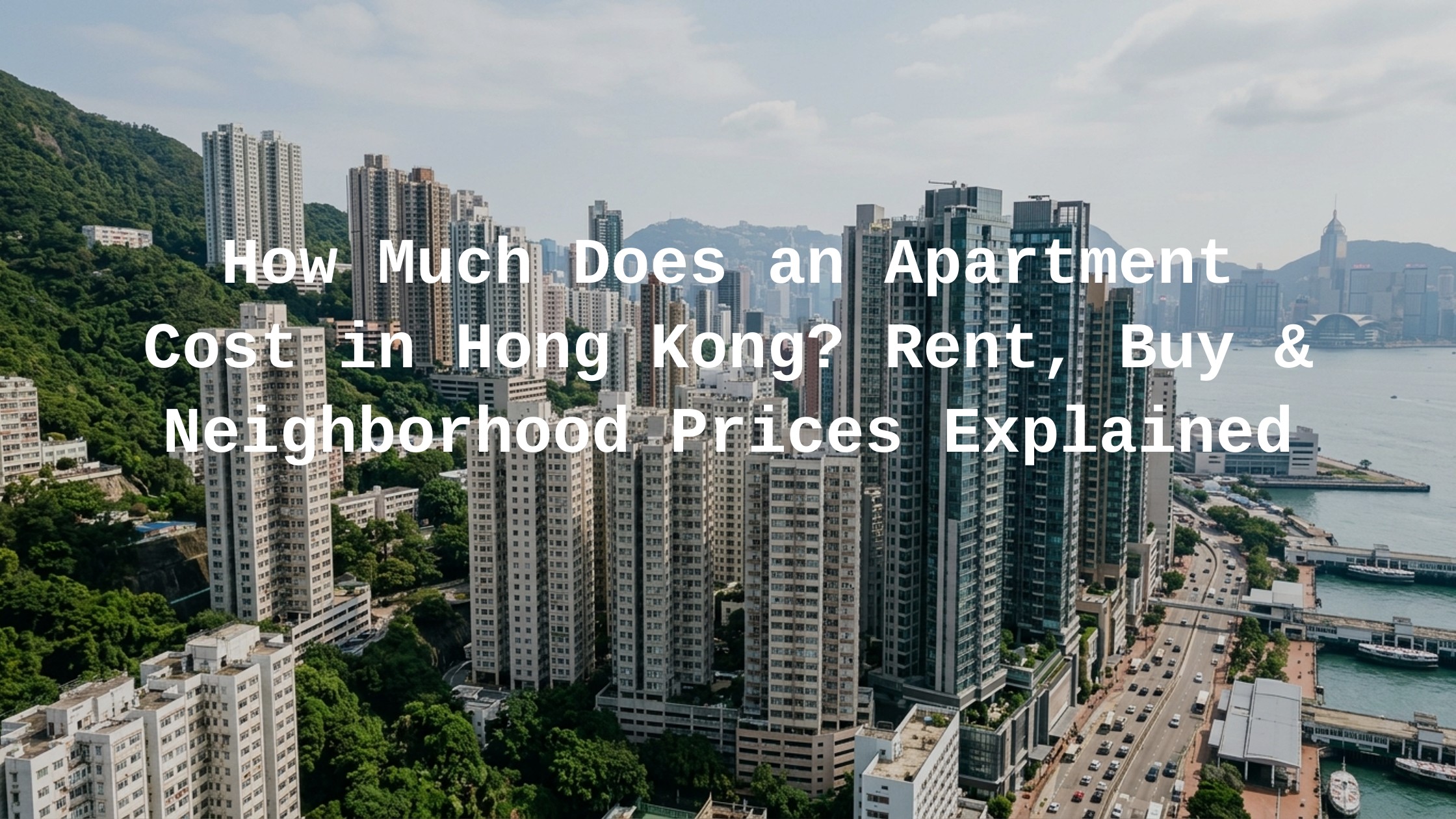
Hong Kong has one of the most expensive housing markets on the planet — and the numbers back it up. In Mercer’s 2024 Cost of Living Survey, Hong Kong was ranked the world’s most expensive city for expatriates, and the 2025 UBS Global Real Estate Bubble Index ranked it the least affordable city, with approximately 14 years of income needed to purchase a 60 sqm apartment. Whether you’re planning a move, scoping out an investment, or simply trying to understand what your budget will get you, knowing the real numbers before you start your search is essential.
From compact studios in Sai Ying Pun to spacious flats in the New Territories, apartment costs in Hong Kong vary dramatically by size, district, and building age. This guide breaks down current rent and purchase prices, compares neighborhoods, and gives you practical tips for navigating the market — whether you’re a local, an expat, or a foreign buyer.
Average Rent in Hong Kong by Apartment Size
Rental prices in Hong Kong are directly tied to size and location, and even modest apartments command significant monthly costs. In 2025, the median rent for a 1-bedroom apartment in Hong Kong is approximately $2,421 USD per month. But that figure shifts significantly depending on where you look.
Here’s a breakdown of typical monthly rents by apartment size across Hong Kong’s private market:
| Apartment Type | Size Range | City Centre / Prime Districts | Outside City Centre |
|---|---|---|---|
| Studio | ~290–450 sq ft | HK$18,000–HK$19,650/mo | HK$13,700/mo (avg) |
| 1-Bedroom | ~400–600 sq ft | HK$16,500–HK$28,000/mo | HK$8,000–HK$12,000/mo |
| 2-Bedroom | ~500–800 sq ft | HK$27,700–HK$40,000/mo | HK$12,000–HK$18,000/mo |
| 3-Bedroom+ | 800+ sq ft | HK$40,000–HK$80,000+/mo | HK$20,000–HK$35,000/mo |
In core business areas like Central and Causeway Bay, furnished studios of around 450 sq ft cost about HK$19,650 per month, while outside the main hubs, similar-sized studios average around HK$13,700 per month. Two-bedroom units (500–800 sq ft) in central areas typically range from HK$27,700 to nearly HK$40,000 per month, with outlying New Territories offering the lower end while prime districts approach HK$40,000.
Pro Tip: Apartments are measured in saleable area (SA) in Hong Kong — not gross floor area. Always confirm which measurement is being quoted, as gross floor area can be 20–30% larger than the actual usable space.
In February 2025, private rental values rose 0.3%–0.46% compared to January, breaking a seasonal slowdown and marking three consecutive months of growth, with the Centa-City index hitting a 5½-year high. Top real estate agencies project approximately 5% growth in private rents during the 2025 fiscal year. If you’re budgeting for a move, factor in this upward trend.
Average Apartment Purchase Price in Hong Kong
Buying an apartment in Hong Kong is a major financial commitment. Apartments smaller than 40 sq m saw prices fall slightly by 0.6% year-on-year in October 2025, to an average of HK$131,305 (US$16,885) per square meter. That means even a compact flat can carry a multi-million-dollar price tag.
Prices vary by location, but a small apartment can start at HK$4 million, while central areas can exceed HK$10 million. Here’s a general overview of purchase prices by district type:
| District Type | Price per Sq Ft (HKD) | Typical Total Price (Small Flat) |
|---|---|---|
| The Peak (Ultra-Luxury) | HK$80,000–HK$130,000 | HK$240M–HK$390M+ |
| Mid-Levels / Repulse Bay | HK$35,000–HK$70,000 | HK$45M–HK$80M+ |
| West Kowloon / Urban Core | HK$25,000–HK$45,000 | HK$8M–HK$20M |
| New Towns / Mass Market | HK$6,000–HK$18,000 | HK$4M–HK$10M |
Hong Kong’s residential property price index increased slightly by 1.13% in October 2025 compared to the same period last year — a sharp improvement from the year-on-year decline of 9.63% in October 2024, marking the second consecutive month of year-on-year price increase after falling continuously from February 2022 to August 2025.
Key Insight: The 2025 UBS Global Real Estate Bubble Index ranked Hong Kong as the least affordable city, but noted that Hong Kong, along with Toronto, recorded the largest declines in bubble-risk scores, now falling into low bubble-risk territory due to recent sharp declines in house prices.
Cost of Renting vs. Buying in Hong Kong
For most people living in Hong Kong, renting is the practical default — and for good reason. The price-to-rent ratio in the city centre sits at approximately 47.79, meaning it takes nearly 48 years of rental payments to equal the purchase price of a comparable property. That’s one of the highest ratios in the world.
Here’s a side-by-side comparison to help you think through the decision:
| Factor | Renting | Buying |
|---|---|---|
| Upfront Cost | 1–2 months deposit + first month | 10–40%+ down payment + stamp duties |
| Flexibility | High — typically 1-year leases | Low — long-term commitment |
| Monthly Cost | HK$8,000–HK$40,000 (typical range) | Mortgage + management fees + rates |
| Stamp Duty | None | Up to 4.25% (residents); higher for non-residents |
| Capital Gains Exposure | None | Potential gain (no capital gains tax) |
The average gross rental yield in Hong Kong stood at 3.9% in Q2 2025, up from 3.88% in Q4 2024 and 3.39% in Q1 2024. While yields are improving, they remain low by global standards — which means buying purely for income generation is a tough proposition. While Hong Kong’s rental yields are gradually rising, they remain extremely low by international standards, largely attributed to the surge in property prices over the past decade — it is a place where the rich choose to park assets in the form of apartments, similar to Monaco and Singapore.
For most expats and short-to-medium-term residents, renting offers far more financial flexibility. If you’re exploring different types of apartments to understand what suits your lifestyle, that research will pay off before you commit to either path in Hong Kong’s market.
Important Note: There is no capital gains tax in Hong Kong, meaning gains from the disposal of property are generally not subject to tax — a notable advantage for long-term buyers who can ride out market cycles.
Cheapest and Most Expensive Neighborhoods in Hong Kong
Where you choose to live in Hong Kong has an enormous impact on what you’ll pay. The city is divided into four main regions — Hong Kong Island, Kowloon, the New Territories, and the Outlying Islands — each with its own pricing tier.
Most Expensive Neighborhoods:
- The Peak: Historically home to the city’s elite, The Peak continues to command the highest property prices in Hong Kong, typically ranging from HK$80,000 to HK$130,000 per square foot, with some exceptional properties commanding even higher prices.
- Mid-Levels: Located between Victoria Peak and Central, Mid-Levels features high-end apartments popular among professionals and executives close to the business district, with property prices generally falling between HK$35,000 and HK$60,000 per square foot.
- Repulse Bay / Southside: Popular among expatriate families for its resort-style living, international schools, and recreational activities, properties in Repulse Bay generally cost from HK$45,000 to HK$70,000 per square foot.
More Affordable Neighborhoods:
- New Territories (Sha Tin, Tuen Mun, Yuen Long): Gross rental yields for apartments in the New Territories ranged from 2.69% to 4.56% in Q2 2025, with a city average of 3.72% — and purchase prices are significantly lower than on Hong Kong Island.
- West Kowloon / Tseung Kwan O: These areas present strong growth potential, with West Kowloon home to the International Commerce Centre and the new cultural district seeing significant price appreciation. Property prices range from HK$25,000 to HK$45,000 per square foot, with rental yields around 3–3.5%.
- North Point: Located just east of Wan Chai, North Point is a more local neighbourhood with the MTR running through it, making it convenient for expats who want easy access to offices and city amenities while seeking a balance between affordability, accessibility, and urban living.
Pro Tip: Kowloon-side districts like Hung Hom and Ho Man Tin offer significantly lower rents than comparable flats on Hong Kong Island, while still providing excellent MTR access to Central and the business districts.
If you’re curious how Hong Kong’s street-level lifestyle compares to the price tag, take a look at the street foods in Hong Kong — one area where the city remains genuinely affordable.
What Affects Apartment Prices in Hong Kong
Understanding why Hong Kong apartments cost so much starts with supply and demand — and both sides of that equation are extreme.
Land Scarcity: Only about 7% of Hong Kong’s land is usable for housing; the rest is rural or protected. Over 7.3 million residents live mostly within 78 km², which forces developers to charge more for each flat.
Population Density and Demand: A steady stream of newcomers — from mainland students to professionals — continues to add pressure on the rental market, and Bloomberg noted that rent climbed to near-record highs in 2024, fuelled by students and expats.
Public Housing Shortfall: Public housing construction has missed government targets (70% public, 30% private) since 2014. Subdivided flats — tiny units carved from existing apartments — are filling the gap in poor condition and still costly per square metre, demonstrating how short supply is driving rents across all segments.
Property as an Asset Class: Hong Kong is not a typical market. It is a place where the rich choose to park assets in the form of apartments as part of a diversified asset-safeguard strategy — similar to Monaco and Singapore — which typically results in lower rental yields than more normal housing markets.
Government Policy and Stamp Duties: Stamp duty structures directly affect both buyer demand and pricing. Ad valorem stamp duty (AVD) ranges from HKD$100 up to 4.25% of the consideration or value of the property, and as of February 28, 2024, the same AVD scale is applicable to purchasers of all nationalities.
Future Supply: From 2025 to 2030, the government plans to deliver about 189,000 public flats — an 80% increase from the previous five years — and by 2026–27, the average waiting time is projected to drop from 5.5 to 4.5 years. This may eventually ease pressure on private rents in lower-tier apartments. To understand how these urban housing dynamics play out day-to-day, the guide on urban living essentials every big city apartment must have is worth a read.
How Hong Kong Compares to Other Major Cities
Hong Kong consistently tops global rankings for housing unaffordability, but how does it stack up against other major cities in concrete terms?
| City | Avg. 1-Bed Rent (City Centre) | Avg. Price per Sq Meter (Buy) | Affordability Notes |
|---|---|---|---|
| Hong Kong | ~HK$18,000–20,000 (~US$2,300–2,560) | HK$131,305 (~US$16,885) | Least affordable globally (UBS 2025) |
| Singapore | ~SGD 3,500–4,500 (~US$2,600–3,300) | ~SGD 18,000–25,000 | 2nd most expensive for expats (Mercer 2024) |
| New York City | ~US$3,748/mo (avg) | ~US$15,000–18,000 | High, but more sq footage per dollar |
| London | ~£2,300/mo (~US$2,900) | ~£8,000–12,000 | Expensive, but larger average flat sizes |
| Kathmandu | ~NPR 25,000–60,000/mo | Significantly lower | Fraction of Hong Kong costs |
Hong Kong property prices are much more expensive than in the UK — between 244% and 331% higher, depending on whether you buy in the heart of the city centre or on the outskirts. For a different end of the spectrum, see our breakdown of how much an apartment costs in Kathmandu, where the market is a world apart.
According to Global Property Guide, average home prices in Hong Kong were 16.7 times the gross annual median household income as of 2023 — the lowest level since 2016, yet still staggeringly high by any international comparison. The sheer density of the city plays a role too: housing 7.5 million residents in an area of 427 square miles requires inventive solutions, from luxury micro-apartments to the tiny coffin and cage homes of the city’s poorest.
Can Foreigners Buy an Apartment in Hong Kong?
The short answer is yes — Hong Kong has a relatively open property market for foreign buyers. Anyone, including foreigners, can own and occupy real estate, including shares in property-owning companies, and there is generally no nationality restriction on the ownership and occupation of real estate.
However, there are important caveats and costs to be aware of:
- Buyer’s Stamp Duty (BSD): Foreigners must pay an additional property purchase tax (Buyer’s Stamp Duty) of 15%, plus standard housing stamp duties.
- Total Cost Premium: The combined application of BSD and related duties significantly increases total acquisition costs for foreigners — up to 30% compared to listed prices — a tax regime that explicitly aims to limit foreign speculation to protect local housing access.
- Mortgage Access: For properties under HK$10 million, banks can finance up to 90% of the price (10% down payment required). For properties between HK$10M–HK$12M, the loan cap is around 80%. For properties above HK$12 million, the down payment can be 40% or more.
- Nationality Restrictions: All foreigners can own a home in Hong Kong except Afghans, Albanians, Cubans, North Koreans, and Chinese from the mainland (unless they are permanent residents in another country).
- No Capital Gains Tax: There is no capital gains tax in Hong Kong, meaning gains from the disposal of property are generally not subject to tax — a meaningful advantage for long-term investors.
Important Note: After the additional stamp duty previously payable by foreigners was cancelled under a new tax regime, purchasers of all nationalities are now subject to the same tax treatment when buying real estate. Always verify the current stamp duty structure with a licensed Hong Kong solicitor before proceeding.
Despite the additional costs, the market remains attractive due to economic stability and strong rental demand — and in 2022, approximately 6% of Hong Kong real estate transactions involved foreign buyers, demonstrating persistent interest despite taxes.
Tips for Finding an Apartment in Hong Kong
Hong Kong’s rental market moves fast. Properties in desirable districts can be snapped up within days, and landlords often favor tenants who are ready to commit quickly. Here’s what to know before you start your search.
1. Use the Right Platforms
The major property portals for Hong Kong are Squarefoot.com.hk
, 28hse.com
, and Centaline Property (Centanet)
. These list both rental and sale properties with saleable area, floor level, and price history data.
2. Work with a Licensed Agent
Agent commissions for residential transactions are commonly 1–2% and are negotiable. For rentals, the fee is typically split between landlord and tenant (half a month’s rent each) or paid entirely by one party — clarify this upfront.
3. Budget for Upfront Costs
Additional costs beyond rent include stamp duties, legal fees, and agent commissions. For rentals, expect to pay 2–3 months of rent upfront (first month + deposit). For purchases, budget for stamp duty, legal fees, and agent commission on top of your down payment. You can find strategies to manage ongoing expenses in our guide on ways to cut your grocery costs — helpful when housing already takes a big bite of your budget.
4. Prioritize MTR Proximity
Hong Kong’s MTR (Mass Transit Railway) is world-class and heavily influences property values. The escalator system connecting Mid-Levels to Central, for example, adds significant value to properties along its route. Apartments within a 5-minute walk of an MTR station consistently command a premium — but they also ensure you won’t need a car.
5. Understand the Size Reality
For any place with rental prices below HK$10,000 in either Hong Kong Island or Kowloon, expect a very small space of around 60 to 150 square feet. Hong Kong apartments are compact by global standards — visit in person before committing, and check if the listed size is saleable area or gross floor area.
6. Consider New Territories for Better Value
If your workplace allows flexibility, towns like Sha Tin, Tseung Kwan O, and Tuen Mun offer noticeably more space per dollar. Gross rental yields for apartments in the New Territories ranged from 2.69% to 4.56% in Q2 2025, and rents are considerably lower than on Hong Kong Island. If you’re weighing apartment options, our overview of apartment living considerations may also help you think through your lifestyle needs.
Common Mistake: Signing a lease without checking the management fees (also called “maintenance fees”). In Hong Kong, these are paid on top of rent and can add HK$1,000–HK$5,000+ per month depending on the building’s facilities.
7. Time Your Search Strategically
A RICS survey in March 2025 found tenant demand increasing (+14%) and landlords listing more properties (+13%), with forecasts showing 9% expecting further rent increases in the next three months. The rental market typically sees more listings between February–April and September–October, aligned with corporate relocation cycles. Shopping during these windows gives you more negotiating leverage.
Hong Kong’s housing market is demanding, but understanding the numbers — by size, by neighborhood, and by whether you’re renting or buying — puts you in a far stronger position. Whether you’re budgeting for a studio in Sai Ying Pun or scoping out a flat in the New Territories, the key is knowing what you’re walking into before you start.