How Much Does an Apartment Cost in Hawaii? Rent, Buy, and Budget Breakdown

April 28, 2026
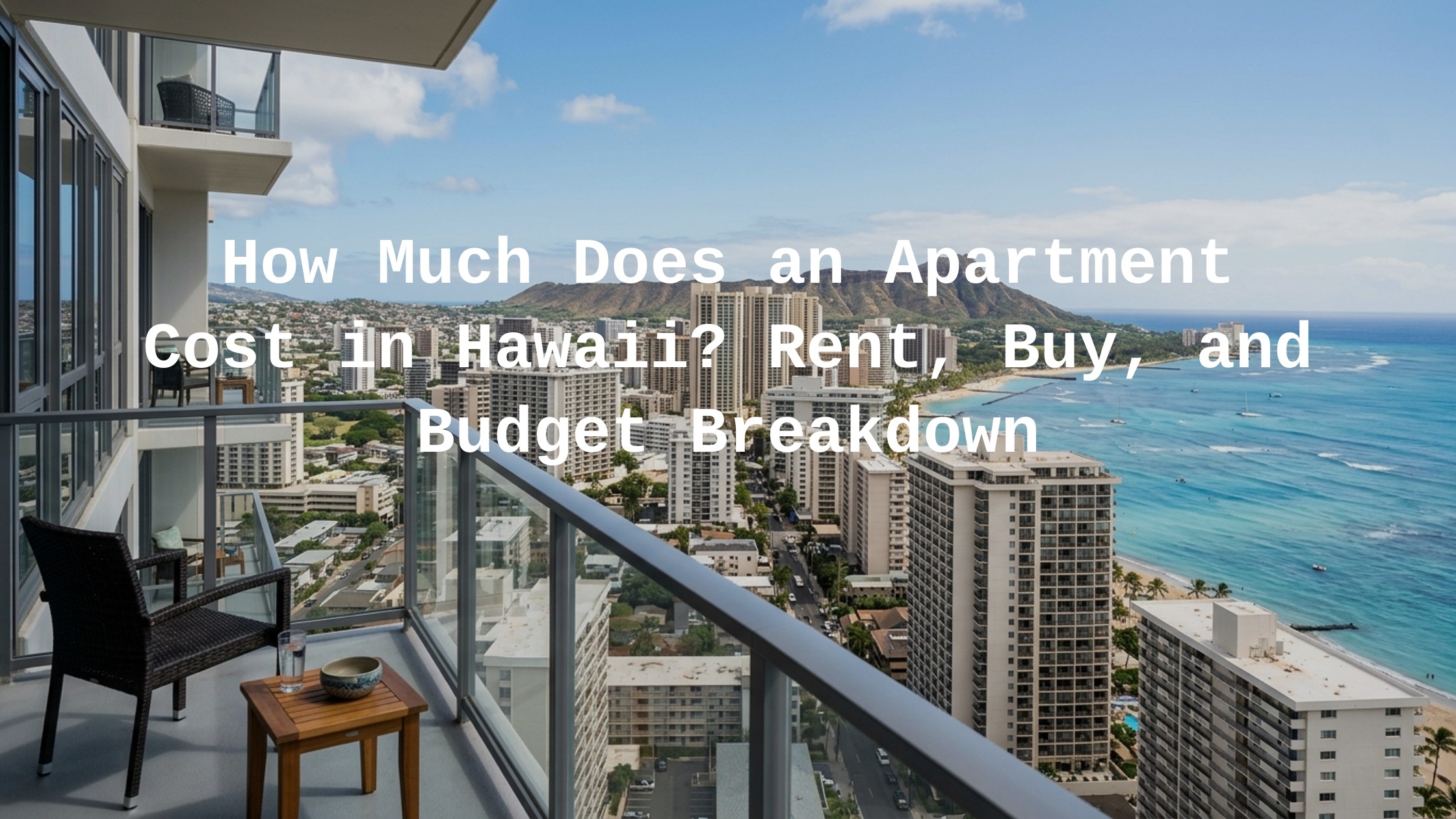
Hawaii is one of the most breathtaking places in the world to call home — but that beauty comes with a price tag that surprises most newcomers. Rent in Hawaii is 41% higher than the national median, and the purchase market is even more eye-opening. Whether you’re relocating from the mainland, planning a long-term stay, or just trying to figure out what your budget needs to look like, understanding how much an apartment costs in Hawaii is the essential first step.
The good news is that costs vary dramatically depending on which island you choose, which neighborhood you target, and whether you rent or buy. This breakdown covers all of it — from average rents by apartment size to purchase prices, neighborhood comparisons, and practical tips for making your move work financially.
Pro Tip: Hawaii isn’t one housing market — it’s several. Costs on Oahu (Honolulu) can be more than double what you’d pay on the Big Island (Hilo). Always compare island-by-island before budgeting.
Average Rent in Hawaii by Apartment Size
Rental prices in Hawaii span a wide range depending on the island, city, and unit size. As of 2025, the overall average fair market rent for a residential rental property in Hawaii is $2,741, with studios averaging $1,819, one-bedrooms at $1,907, two-bedrooms at $2,498, three-bedrooms at $3,434, and four-bedrooms at $4,048.
On Oahu — the most populated and priciest island — numbers run higher. The average rent for an apartment in Honolulu is $2,109, a 1.92% increase year-over-year. Studio apartments average $1,813 for 363 square feet, one-bedroom apartments run $2,262 for 581 square feet, two-bedroom units cost $2,622 for 790 square feet, and three-bedroom apartments reach $3,830 for 1,096 square feet.
The Big Island offers a much more affordable alternative. In Hilo, a one-bedroom rents for about $1,300 and a studio for $1,000. Kona, being more popular with tourists, sees slightly higher prices — around $1,600 for a one-bedroom and $2,100 for a two-bedroom.
Maui falls somewhere in the middle. Maui rental prices have surged in recent years. Kihei rents average $2,000 for a one-bedroom, while studios are around $1,600. Lahaina, although affected by the 2023 wildfires, is rebuilding and rental prices are stabilizing.
On Kauai, known for its lush landscapes, rental costs are moderate. In Līhuʻe, one-bedrooms average $1,800 and studios go for around $1,400, while Princeville, being a resort destination, tends to be pricier with two-bedroom units reaching $2,800.
| Island / City | Studio | 1-Bedroom | 2-Bedroom |
|---|---|---|---|
| Honolulu (Oahu) | ~$1,813 | ~$2,262 | ~$2,622 |
| Kailua (Oahu) | — | ~$2,500 | ~$3,200 |
| Kihei (Maui) | ~$1,600 | ~$2,000 | ~$2,500+ |
| Līhuʻe (Kauai) | ~$1,400 | ~$1,800 | ~$2,200 |
| Kona (Big Island) | — | ~$1,600 | ~$2,100 |
| Hilo (Big Island) | ~$1,000 | ~$1,300 | ~$1,450 |
Key Insight: Utilities are rarely included in Hawaii rent. Electricity averages $0.40 per kWh, with monthly electric bills ranging $150–$200. Water runs around $30–$50 monthly, and high-speed internet starts at $70/month. Budget accordingly.
Average Apartment Purchase Price in Hawaii
Buying an apartment — typically a condo in Hawaii — is a significant financial commitment, but it can be a smart long-term move if you plan to stay for several years. The average cost of a home in Hawaii typically ranges from $564,100 for condos to $1,024,000 for single-family homes, depending on location, size, and market conditions.
On Oahu, the numbers are especially striking. The median sales price for a single-family home rose 5.5% year-over-year to $1,160,000, while the condo median price remained at $500,000. More recent data shows Oahu’s median sale price up 1% to $1,208,900 for homes and the condo price up 3% to $504,000 as of early 2026.
For buyers eyeing specific neighborhoods, prices vary widely. Kahala continues to set the pace for luxury real estate, with median single-family home prices reaching $2.65 million. On the more accessible end, Ewa Beach at an $875,000 median price point offers the most accessible entry into single-family home ownership.
Condos specifically represent the most realistic entry point for most buyers. Kakaako leads the luxury condo market with median prices at $860,000, driven by new development completions and mainland buyer interest, as the neighborhood’s transformation into Honolulu’s premier urban district continues to attract young professionals and empty nesters. For first-time buyers, condos under $600,000 represent the primary entry point.
On the Big Island, prices are considerably more manageable. Hilo on the Big Island is a more budget-friendly option at a median home price of $463,400. The Big Island offers more affordable options, with median single-family homes starting around $500,000 in certain specific areas.
Important Note: Hawaii’s property taxes are relatively low compared to many mainland states, but HOA fees are common in condo communities and can range from $300 to over $1,000 per month, covering maintenance and amenities. Always factor these into your monthly cost calculation.
Cost of Renting vs. Buying in Hawaii
The rent-vs.-buy decision is rarely simple anywhere, but in Hawaii it carries especially high stakes given the extreme purchase prices and elevated rents. Both paths have real trade-offs worth understanding before you commit.
On the rental side, a two-bedroom apartment in Honolulu averages around $3,000/month, while a one-bedroom in town typically runs $2,200–$2,800/month. Those numbers are steep, but they come with flexibility and zero maintenance costs.
Buying comes with significantly higher monthly obligations. Buying a $1M home with 20% down can mean a $5,500–$6,000 monthly payment including taxes and insurance — often plus HOA fees. That’s nearly double the cost of renting a comparable unit in many cases.
So when does buying make sense? On Oahu, renting usually wins on flexibility and lower upfront cost, while buying begins to pay off if you’ll stay at least 5–7 years, can comfortably take on a higher monthly payment, and value stability and long-term equity.
| Factor | Renting | Buying |
|---|---|---|
| Avg. monthly cost (1BR Honolulu) | ~$2,200–$2,800 | ~$5,500–$6,000 (on $1M home) |
| Upfront costs | 1–2 months deposit | 20% down + closing costs |
| Flexibility | High | Low |
| Long-term equity | None | Strong (historically) |
| Maintenance responsibility | Landlord’s | Owner’s |
| HOA fees | Not applicable | $300–$1,000+/month |
If you’re weighing this decision, also consider the different types of apartments available in Hawaii — from high-rise condos to garden-style units — as the type of property affects both monthly costs and long-term value. You may also want to review ways to cut your grocery costs since food expenses in Hawaii are significantly higher than on the mainland.
Pro Tip: Renting is often the more realistic first step because of high purchase prices and upfront cash needs. Buying becomes compelling once your job, lifestyle, and preferred area feel stable for 5–7 years and you’ve saved for upfront costs and a financial cushion.
Cheapest and Most Expensive Neighborhoods in Hawaii
Location within Hawaii — and even within a single island — can swing your rent or purchase price dramatically. Knowing where the deals are (and where costs peak) helps you make a smarter housing decision.
Most Affordable Neighborhoods for Renters:
The most affordable neighborhoods in Honolulu include Makiki-Lower Punchbowl-Tantalus, where the average one-bedroom apartment rent goes for $675, Kuakini at $1,250, and Lower Manoa at $1,400. Kalihi Valley and Downtown Honolulu also offer one-bedrooms around $1,400–$1,450.
Beyond Oahu, Hilo offers much more wallet-friendly rents, closer to $1,263 for a one-bedroom and $1,450 for two-bedrooms. Hawaii’s rental market follows a familiar pattern: coastal hot spots like Honolulu and Kapolei command sky-high prices, while smaller towns like Hilo offer better value.
Most Expensive Neighborhoods for Renters:
The most expensive neighborhood in Honolulu is Waikiki, where the average rent for a one-bedroom apartment reaches $4,083. Based on current rent prices, Waikiki, Dewey Beach, and Ward Village are the most expensive neighborhoods in Honolulu.
In Kailua, expect to pay slightly more due to its beachside appeal and family-friendly communities — one-bedroom units average $2,500 and two-bedrooms can reach $3,200.
Most Affordable Neighborhoods for Buyers:
- Ewa Beach (Oahu): Offers newer developments, family-friendly communities, and relatively affordable pricing compared to Honolulu. Median home price around $875,000.
- Hilo (Big Island): The most budget-friendly option at a median home price of $463,400.
- Wailuku (Maui): Provides a central location with access to schools, government services, and shopping, making it a practical choice for families.
Most Expensive Neighborhoods for Buyers:
- Kahala (Oahu): Median single-family home prices reach $2.65 million — a robust 4.8% year-over-year increase.
- Kailua (Oahu): Median home price of $1,675,000.
- Hawaii Kai (Oahu): Median price of $1,650,000.
If you’re interested in apartment living specifically, exploring urban living essentials for city apartments can help you evaluate whether a Honolulu high-rise fits your lifestyle before signing a lease.
What Affects Apartment Prices in Hawaii
Hawaii’s housing costs don’t exist in a vacuum. Several structural and geographic forces push prices far above the mainland norm, and understanding them helps you anticipate where costs might go in the future.
1. Island Geography and Import Costs
Hawaii’s high cost of living comes down to its island reality: almost everything — from groceries to furniture — needs to be shipped in, driving up prices. Add limited housing, strong demand, and a world-famous lifestyle, and it’s no surprise that living here costs a premium.
2. Limited Land and Housing Supply
Hawaii has strict development regulations and limited buildable land, which keeps inventory tight. Active inventory on Oahu ended March 2025 with 773 single-family home and 2,302 condo listings, reflecting year-over-year increases of 33.0% and 54.2%, respectively — a sign that supply is growing but still constrained relative to demand.
3. Tourism and Short-Term Rental Demand
Hawaii has tightened regulations on short-term rentals to preserve long-term housing availability. In counties like Maui and Honolulu, new laws limit vacation rentals to specific zones and require permits. These regulations are gradually pushing more units back into the long-term rental pool.
4. Mortgage Rates and Financing Costs
The average mortgage rate for buyers in the Hawaii real estate market fluctuates between 6% and 8%. At those rates, even a modestly priced condo at $500,000 carries a substantial monthly payment. Competitive pressures may increase later if for-sale inventory remains low and mortgage interest rates, currently between 6.5% and 7%, decrease.
5. Mainland and International Buyer Demand
Market trends show strong interest from mainland and international buyers, which contributes to upward pressure on prices. Luxury neighborhoods like Kahala and Kakaako are particularly affected by this dynamic.
6. Utility Costs
The price of electricity in Hawaii is much higher compared to much of the mainland, with Hawaii’s average electricity price coming in at $0.416/kWh — over double the national average of roughly $0.166/kWh. This significantly inflates the true cost of any apartment.
Common Mistake: Budgeting only for rent or mortgage without accounting for utilities, HOA fees, and the higher cost of everyday goods. You can expect to pay 31.6% more for groceries, 100.1% more for utilities, and 36.0% more for transportation in Honolulu compared to the national average.
Is Hawaii Affordable Compared to the Rest of the US?
The short answer: no — Hawaii is one of the least affordable states in the country by nearly every housing metric. But the longer answer includes important nuances that can make it more manageable depending on where and how you live.
Average rent prices in Hawaii sit above the national average rent of $1,274, with Hawaii ranking as the 1st highest rent among all 50 states. Rent in Hawaii is 41% higher than the national median.
On the purchase side, even Hawaii’s affordable homes are well above the national median of $338,100, but for many buyers, the trade-off is waking up to ocean views, lush landscapes, and a paradise lifestyle.
Income requirements reflect the strain. With average one-bedroom rents in Honolulu hovering around $3,174 a month, you’d need to earn roughly $126,960 a year to stay comfortably within the 30% rule. The median household income in Hawaii is about $98,317, which is higher than the national median of around $78,538. That gap between what you need to earn and what most people actually earn explains why housing affordability remains a persistent challenge.
There are ways to make the numbers work, however. The Big Island (Hilo) offers the most affordable rents and homes, while Oahu and Maui are the costliest. A single person generally needs $70,000–$100,000/year to live comfortably, and families need $120,000–$200,000.
For context, if you’re curious how Hawaii’s apartment market compares to other international locations, check out this breakdown of how much an apartment costs in Kathmandu — a striking contrast that underscores just how premium Hawaii’s market really is.
Key Insight: The MIT Living Wage Calculator estimates that a single adult in Hawaii needs at least $29.92 per hour to cover the basics, while a single parent with two children needs closer to $54.33 per hour to remain above the poverty threshold — and those numbers cover necessities only, not extras like travel, savings, or debt payments.
Tips for Finding an Apartment in Hawaii
Hawaii’s rental market moves fast, especially in desirable areas. Going in without a strategy means paying more or settling for less. Here’s how to approach your search with a practical, financially aware mindset.
1. Choose Your Island Based on Budget First
Before falling in love with a specific neighborhood, run the numbers by island. The Big Island offers great value compared to Oahu. If your work allows remote flexibility, Hilo can save you $800–$1,200/month compared to Honolulu for a comparable unit.
2. Understand What’s Included (and What Isn’t)
Short-term rentals cost more due to flexibility and furnishings, while long-term rentals offer better overall value. Always confirm whether utilities, parking, and internet are included before comparing listings.
3. Budget for Move-In Costs
Most landlords require a deposit equal to one month’s rent. Some may also require first and last month’s rent upfront. Application fees typically range from $25 to $50 and are non-refundable. Have at least 2–3 months of rent saved before you start applying.
4. Watch for Pet Policies
Pet-friendly rentals exist but may be limited. Expect deposits and possible monthly pet rent. In condos especially, HOA rules can be more restrictive than the landlord’s own policy, so verify both.
5. Consider Neighborhoods Just Outside the Hot Zones
You don’t have to live in Waikiki or Kailua to enjoy island life. North Urban Center offers one-bedroom apartments at $2,375 and Moanalua at $2,287 — significantly below the Honolulu city average. These areas often provide quicker commutes and a more local feel.
6. Time Your Search Strategically
Hawaii’s real estate market experiences seasonal fluctuations. Summer and early fall tend to be busier, with more listings and increased competition due to mainland buyers visiting during vacation periods. Late fall and winter often see a slight slowdown, which may present opportunities for buyers seeking less competition and more negotiation leverage.
7. Use Local Resources and Build Your Network
Many of the best rentals in Hawaii never make it to national listing sites. Local Facebook groups, community boards, and word-of-mouth referrals are often the fastest path to finding a unit at a fair price. Connecting with residents already living on your target island is invaluable.
8. Know Your Rights as a Renter
Hawaii has tenant-friendly laws in many respects. Familiarizing yourself with state landlord-tenant rules before signing a lease protects you from unexpected fees or unfair lease terms.
If you’re planning to settle in for the long haul, you might also want to explore the best pets for apartment living and think through whether your lifestyle is a good fit for Hawaii’s condo-heavy housing stock. And if you’re still in the early stages of budgeting your move, reviewing urban living essentials can help you anticipate setup costs beyond just rent.
Pro Tip: A single renter should budget $2,500–$3,200 monthly total, including rent, utilities, groceries, and transportation, depending on location and lifestyle. Use that as your baseline when evaluating whether a specific apartment is truly within reach.
Hawaii’s apartment market is undeniably expensive, but it’s not impenetrable. The key is knowing the real numbers — by island, by neighborhood, and by unit size — so you can make a decision that fits your life and your budget. Whether you’re renting a studio in Hilo or buying a condo in Kakaako, going in informed is the single most valuable thing you can do.