Why Is My Pothos Drooping? 7 Causes and How to Fix Each One

March 10, 2026
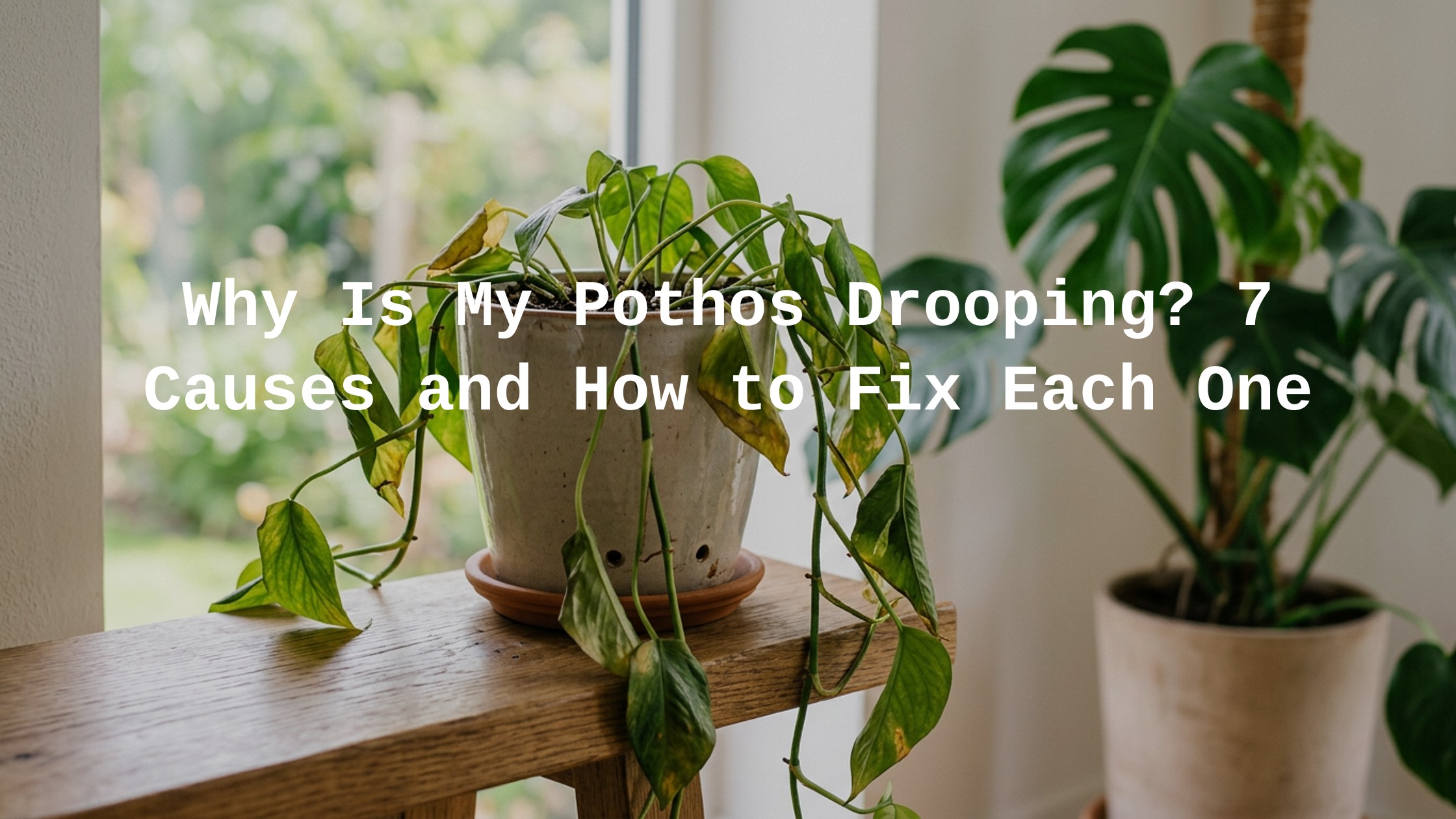
A drooping pothos can stop you mid-water-can and send you straight to a search bar — and that reaction makes complete sense. Pothos plants are famously resilient, so when those trailing vines suddenly go limp, something is clearly off. The good news is that drooping is almost always a fixable problem once you know what you’re looking for.
In most cases, your plant is reacting to a care condition that’s easy to adjust. Whether you’ve been watering too much, too little, or your pothos has simply outgrown its pot, this guide walks you through every likely cause, how to tell them apart, and exactly what to do next. No guesswork — just a calm, clear path back to a healthy, thriving plant.
Is It Serious?
The first thing to know is that drooping alone is rarely a death sentence for your pothos. Unlike yellowing leaves or black stems, wilting is usually your plant’s early warning system — a signal that something is off before the damage becomes permanent. That’s actually a good thing. It means you likely caught the problem early enough to fix it.
That said, the urgency of the situation does depend on the cause. A pothos drooping from underwatering can bounce back within hours of a good drink. One suffering from root rot, on the other hand, needs prompt attention before the damage spreads too far. The key is not to panic, but also not to wait too long before investigating.
Key Insight: Drooping leaves with firm, green stems usually indicate a watering issue. Drooping combined with mushy stems or a sour soil smell points to something more serious, like root rot.
As one of the most popular houseplants for low-light areas, pothos are naturally tough — which means even a struggling plant often has plenty of healthy roots left to work with. A little detective work now goes a long way.
Common Reasons Your Pothos Is Drooping
Pothos droop for a handful of well-documented reasons, and most of them come down to water, roots, or environment. Here are the seven most common culprits to consider.
1. Underwatering
This is the most common cause of a drooping pothos, and thankfully the easiest to fix. When the soil dries out completely, your plant loses the water pressure it needs to keep its leaves upright. The leaves will look limp and possibly slightly curled at the edges, but the soil will feel bone dry when you stick your finger in.
2. Overwatering
Counterintuitively, too much water can cause the same drooping symptoms as too little. When soil stays waterlogged, roots are deprived of oxygen and begin to suffocate. The plant can no longer transport water effectively, leaving leaves limp even though the soil is wet. This is one of the most misdiagnosed pothos problems because the fix looks opposite to what you’d expect.
3. Root Rot
Root rot is the natural progression of chronic overwatering. Fungal pathogens take hold in soggy soil and begin breaking down the root system. A pothos with root rot will droop persistently, and you may notice a foul, musty smell coming from the soil. This is the most serious cause on this list, but it’s still recoverable if caught early. You can learn more about the full care picture for this plant in this pothos houseplant overview.
4. Being Rootbound
When a pothos has completely filled its pot with roots, it loses the ability to absorb water and nutrients efficiently. A rootbound plant will droop even with regular watering because there’s simply no room left for soil to hold moisture. You might also notice roots circling the bottom of the pot or poking out of drainage holes.
5. Temperature Stress or Cold Drafts
Pothos are tropical plants that prefer temperatures between 65°F and 85°F. Exposure to cold drafts from air conditioning vents, open windows in winter, or temperatures below 50°F can cause sudden wilting. The leaves may also develop dark patches or look water-soaked after a cold exposure event.
6. Low Humidity
In very dry indoor environments — especially during winter when heating systems run constantly — pothos can lose moisture through their leaves faster than their roots can replace it. This leads to a subtle, ongoing droop that doesn’t fully resolve even after watering. It’s a common issue that’s easy to overlook.
7. Pest Infestation
Sap-sucking insects like spider mites, mealybugs, and fungus gnats can weaken a pothos to the point of wilting. These pests drain the plant’s resources quietly, often going unnoticed until the damage is significant. If your pothos is drooping and none of the other causes seem to fit, it’s worth checking the undersides of leaves and the soil surface carefully. Our guide to common houseplant pests can help you identify exactly what you’re dealing with.
Pro Tip: Always check the soil moisture before doing anything else. Sticking your finger two inches into the soil takes five seconds and immediately rules out the two most common causes — overwatering and underwatering.
How to Tell Which Cause Is Affecting Your Pothos
Narrowing down the cause of drooping is easier than it sounds. Most causes leave behind specific clues, and by working through a simple checklist, you can usually identify the problem within a few minutes of observation.
Check the Soil First
Push your finger about two inches into the soil. Bone dry soil points to underwatering. Soggy, wet soil that smells sour or earthy points to overwatering or root rot. Moist but not wet soil shifts your attention toward environmental causes like temperature, humidity, or pests.
Inspect the Roots and Pot
If the soil moisture doesn’t explain the droop, tip the pot gently and look at the drainage holes. Roots circling out of the bottom signal a rootbound plant. If you can, slide the root ball out and check the roots directly — healthy roots are white or light tan, while rotten roots are brown, black, and mushy.
Look at the Leaves and Stems
- Limp leaves, dry soil: Underwatering
- Limp leaves, wet soil, yellowing: Overwatering or root rot
- Drooping near a vent or window: Temperature stress
- Drooping with sticky residue or tiny insects: Pest infestation
- Drooping with crispy leaf tips: Low humidity
- Drooping despite good watering habits: Rootbound or root rot
Consider Recent Changes
Think back to the past week or two. Did you move the plant? Change your watering schedule? Turn on the heat for the season? Recent environmental changes are often the hidden trigger behind sudden drooping. Pothos are sensitive to disruption even when they seem tough.
Important Note: Don’t water a drooping pothos automatically. If the soil is already wet, adding more water will make root rot worse. Always diagnose before you treat.
If you’re unsure what you’re looking at, a pothos identification and care resource can help you match your plant’s symptoms to specific varieties, since some types droop more readily than others. You might also find it useful to browse the different types of pothos plants to understand whether your specific variety has any unique tendencies.
How to Fix It
Once you’ve identified the cause, the fix is usually straightforward. Here’s what to do for each of the seven causes.
Fix for Underwatering
Water your pothos thoroughly until water drains freely from the bottom of the pot. Allow it to sit for 30 minutes, then empty the saucer so roots aren’t sitting in standing water. In most cases, leaves will begin to perk up within a few hours. Going forward, water when the top inch or two of soil feels dry to the touch.
Fix for Overwatering
Stop watering immediately and move the plant to a spot with bright, indirect light to help the soil dry out faster. If the pot lacks drainage holes, repot into one that does. Let the soil dry out almost completely before watering again, and adjust your schedule to water less frequently.
Fix for Root Rot
This one requires more intervention. Remove the plant from its pot and shake off as much soil as possible. Trim away all brown, black, or mushy roots with clean scissors, then let the remaining roots air dry for an hour. Repot into fresh, well-draining soil and a clean pot. Hold off on watering for two to three days to let the trimmed roots recover.
Fix for Being Rootbound
Choose a new pot that is one to two inches larger in diameter than the current one — not much bigger, as excess soil holds moisture that can lead to overwatering. Gently loosen the root ball, place it in fresh potting mix, and water well. Your pothos should begin recovering within a week as the roots spread into the new space.
Fix for Temperature Stress
Move your plant away from cold drafts, air conditioning vents, or single-pane windows during winter. Aim for a consistent temperature between 65°F and 85°F. If the plant was exposed to a significant cold event, give it a few days in a warm, stable spot before evaluating whether further action is needed.
Fix for Low Humidity
Increase humidity around your pothos by placing a small humidifier nearby, grouping it with other plants, or setting the pot on a tray of pebbles filled with water (making sure the pot itself doesn’t sit in the water). Misting is a short-term option but not as effective as a consistent humidity source.
Fix for Pest Infestation
Isolate the affected plant immediately to prevent pests from spreading. Wipe down leaves with a damp cloth, then treat with neem oil, insecticidal soap, or rubbing alcohol on a cotton swab for targeted pests. Repeat treatment every five to seven days for two to three weeks to break the pest lifecycle. For severe infestations, consider a systemic insecticide labeled for houseplants.
Pro Tip: After treating root rot or repotting, hold off on fertilizing for at least four to six weeks. Feeding a stressed plant can burn already-vulnerable roots and slow recovery.
How to Prevent It
Prevention is genuinely simpler than treatment, and a few consistent habits will keep your pothos upright and thriving year-round.
Master Your Watering Routine
The single biggest thing you can do is water based on soil condition, not a fixed schedule. Seasons change, pot sizes vary, and your home’s humidity fluctuates — all of which affect how quickly soil dries out. Check the soil before every watering and let the top inch or two dry out between sessions. This one habit prevents both overwatering and underwatering.
Use Well-Draining Soil and Pots with Drainage
Pothos thrive in a light, airy potting mix that doesn’t hold excess moisture. A standard houseplant potting mix works well, but you can improve drainage by mixing in a small amount of perlite. Always use pots with drainage holes — decorative pots without drainage should only be used as outer sleeves, with a well-draining inner pot inside.
Monitor Temperature and Placement
Keep your pothos away from exterior doors, drafty windows, and air conditioning or heating vents. A stable, warm spot with bright to moderate indirect light is ideal. Avoid placing the plant directly in front of south-facing windows where intense afternoon sun can stress the leaves.
Check for Pests Regularly
Make a habit of inspecting your pothos every time you water. Flip a few leaves over and look at the undersides, check the soil surface for fungus gnat activity, and look for any sticky residue on the leaves. Catching pests early makes treatment far easier and prevents the kind of damage that leads to drooping. If you have multiple houseplants, keeping them in good health collectively reduces the risk — knowing how to protect your houseplants from other household stressors helps too.
Repot Before It Becomes a Problem
Most pothos need repotting every one to two years. Don’t wait until the plant is severely rootbound and drooping — check the drainage holes annually and repot when you see roots beginning to circle or escape. Spring is the ideal time to repot, as the plant’s active growing season helps it recover quickly.
Common Mistake: Choosing a pot that’s too large when repotting. A pot that’s much bigger than the root ball holds excess moisture in the unused soil, dramatically increasing the risk of root rot — even with careful watering.
Pothos Quick Care Guide
If you’re looking for a fast reference to keep your pothos healthy long-term, the table below covers everything you need at a glance. Pothos (Epipremnum aureum) are one of the most forgiving houseplants available, but they do have a few non-negotiables worth keeping in mind.
| Care Factor | Ideal Condition | Warning Signs |
|---|---|---|
| Watering | When top 1–2 inches of soil are dry | Drooping, yellowing, soggy soil |
| Light | Bright to moderate indirect light | Pale leaves (too much), slow growth (too little) |
| Temperature | 65°F – 85°F (18°C – 29°C) | Wilting, dark patches after cold exposure |
| Humidity | 50–70% relative humidity | Crispy leaf tips, persistent drooping |
| Soil | Light, well-draining potting mix | Compacted soil, slow drainage |
| Pot Type | Any pot with drainage holes | Waterlogged soil, root rot |
| Fertilizing | Monthly during spring and summer | Slow growth, pale leaves (underfed) |
| Repotting | Every 1–2 years, one size up | Roots escaping drainage holes, drooping |
| Pests | Check monthly during watering | Sticky residue, tiny insects, sudden droop |
Pothos are also remarkably adaptable in terms of light, making them a great fit for rooms that don’t get much natural sun. If you’re building out a collection of low-maintenance plants, exploring different types of plants suited to your space can help you find companions that thrive under similar conditions. Plants like English ivy and begonias share some overlapping care needs and pair well with pothos in a mixed indoor garden.
Key Insight: Pothos are mildly toxic to pets and children if ingested. If you share your home with curious cats or dogs, place your plant on a high shelf or in a room they don’t access freely.
Frequently Asked Questions
Transplant shock is completely normal. When you disturb the root system during repotting, the plant temporarily loses some of its ability to take up water. Keep the soil lightly moist (not wet), place the plant in bright indirect light, and avoid fertilizing for at least a month. Most pothos bounce back within one to two weeks.
This is one of the most common and confusing scenarios. Moist soil with a drooping plant usually means one of three things: overwatering has damaged the roots, the plant is rootbound and can’t absorb moisture efficiently, or a pest infestation is draining the plant’s resources. Work through the diagnostic checklist above — check the roots and inspect the leaves carefully before adding any more water.
In almost all cases, yes. Even plants with moderate root rot can make a full recovery if treated promptly. The key is to act once you’ve identified the cause rather than waiting to see if the plant improves on its own. Pothos are genuinely resilient, and with the right fix, most drooping plants are back to normal within days to a few weeks.
There’s no universal answer because it depends on your pot size, soil type, light levels, and season. As a general rule, most pothos in average indoor conditions need watering every seven to ten days in summer and every ten to fourteen days in winter. But always let the soil guide you rather than the calendar — check before you water, every single time.
Drooping combined with yellowing almost always points to overwatering or root rot. Yellow leaves appear when roots can no longer deliver nutrients effectively, which happens when they’re sitting in waterlogged soil. Let the soil dry out significantly, check the roots if the problem persists, and adjust your watering habits going forward. For a deeper look at your plant’s overall needs, revisit the pothos care guide to make sure all the basics are covered.
Low light alone rarely causes drooping directly, but it can slow root function and make the plant more vulnerable to other stressors. If your pothos is in a very dark corner and also showing slow growth or pale leaves alongside drooping, moving it to a brighter spot may help. Pothos are among the best plants for low-light conditions, but “low light” doesn’t mean no light — they still need some indirect brightness to function well. You can also explore other houseplants suited to low-light spaces if your room has limited natural light.