40 Must-See Tourist Attractions in Wyoming for Every Type of Traveler

March 13, 2026
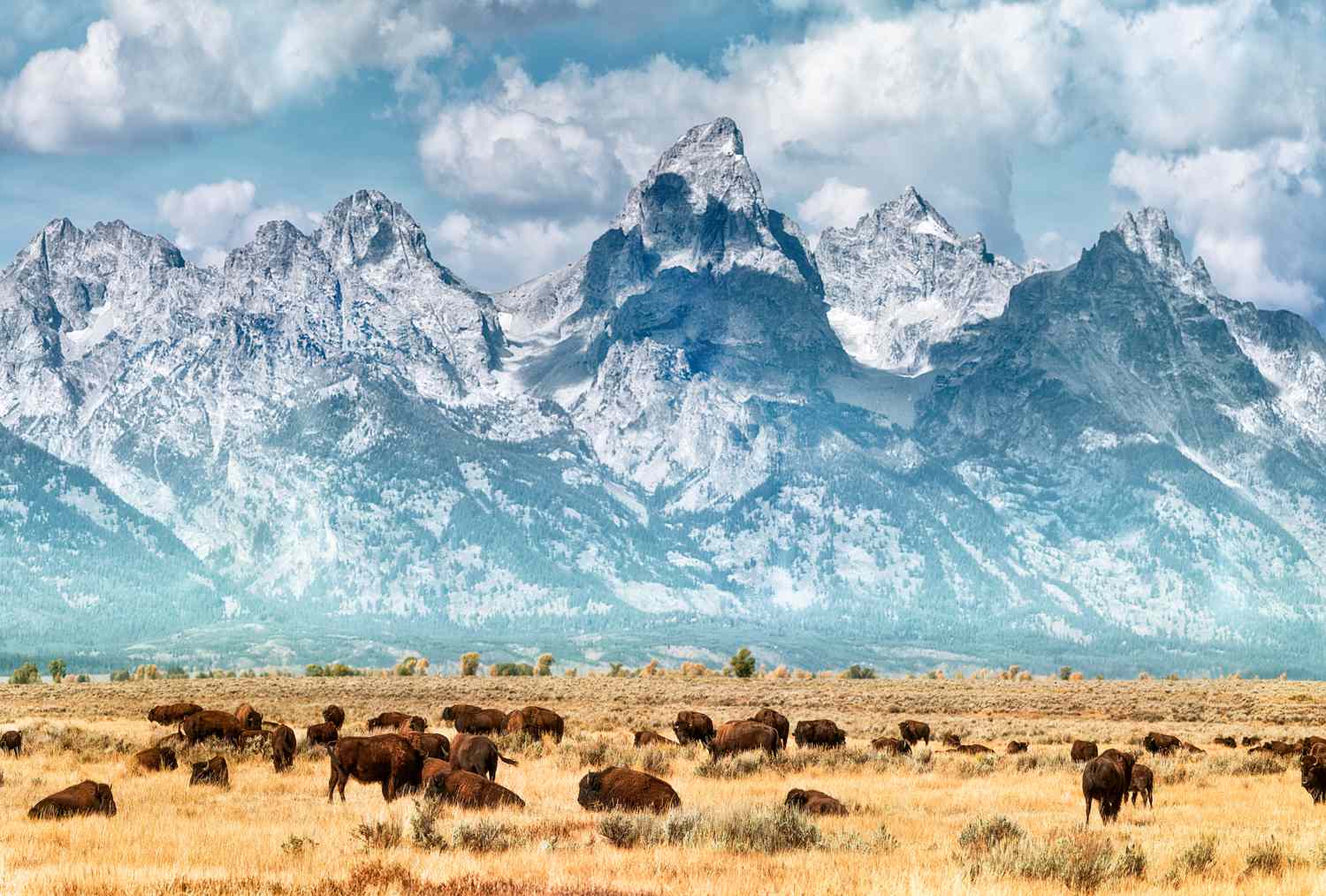
Wyoming is one of those places that earns your respect the moment you cross the state line. Wide open skies, jagged mountain peaks, steaming geothermal vents, and roads that stretch so far you start to wonder if they end at all.
Whether you’re chasing wildlife at dawn, walking in the footsteps of pioneers, or simply pulling over to take in a canyon you can’t believe is real, the tourist attractions in Wyoming deliver exactly what the American West promises but rarely always delivers.
This guide covers 40 destinations — from world-famous national parks to quiet historic sites that most travelers rush past — so you can plan a trip that matches your pace and your curiosity.
1. Yellowstone National Park

Few places on Earth pack as much wonder into one destination as Yellowstone National Park . Sitting primarily in northwestern Wyoming, this 2.2-million-acre park welcomed nearly 4.74 million visitors in 2024 alone, and for good reason. Here you’ll find the world’s greatest concentration of geothermal features, including more than 500 active geysers, bubbling mud pots, fumaroles, and hot springs that paint the landscape in impossible colors.
Beyond the thermal features, Yellowstone is home to roaming bison herds, grizzly bears, wolves, and elk — wildlife so accessible it can feel like you’ve wandered into a nature documentary.
- Arrive at popular sites like Old Faithful and Grand Prismatic Spring early in the morning to avoid peak crowds
- Pick up a free map at any entrance station and use it to plan your route around the Grand Loop Road
- Stay on marked boardwalks at all times near thermal features — the ground can be dangerously thin
Pro Tip: June and July are Yellowstone’s busiest months. If you visit in late April or early May, you’ll find shorter lines, cheaper lodging, and animals that are more active in the cooler temperatures.
2. Grand Teton National Park
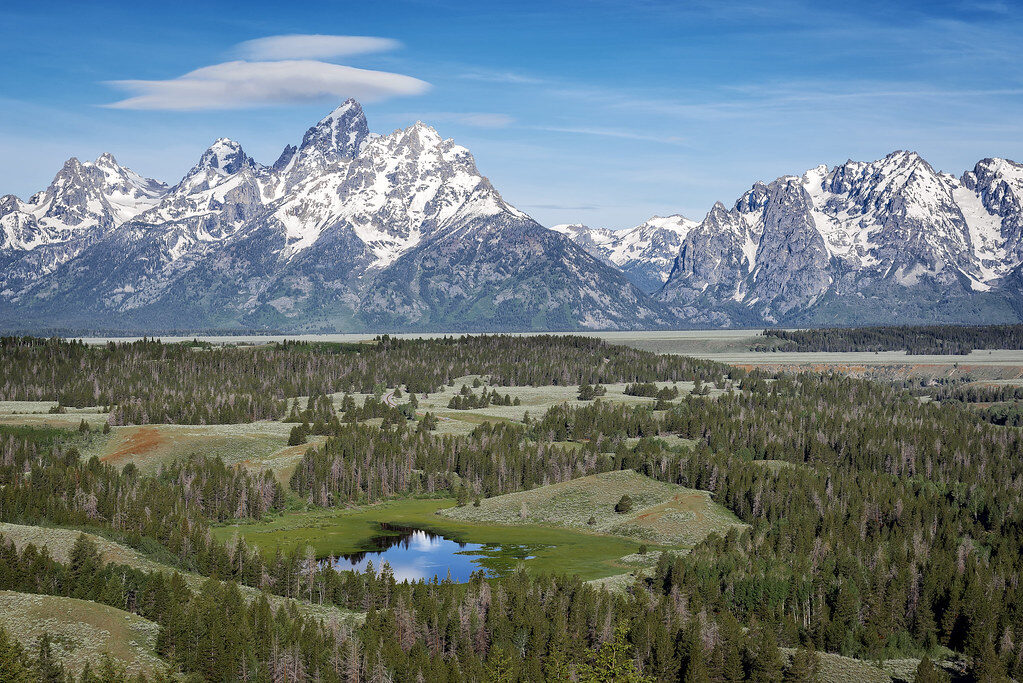
Just 10 miles south of Yellowstone, Grand Teton National Park offers a completely different kind of spectacle. The Teton Range rises more than 7,000 feet above the valley floor, with the Grand Teton itself reaching 13,770 feet — and no foothills to soften the view. The park spans over 310,000 acres and includes more than 200 miles of trails at varying difficulty levels, six large lakes at the base of the mountains, and over 100 alpine backcountry lakes. Whether you prefer a casual lakeside stroll or a full-day summit attempt, this park adapts to your ambition.
Spring and fall are considered the best times to visit Grand Teton for wildlife sightings and fall foliage, with far fewer crowds than summer weekends.
3. Old Faithful Geyser
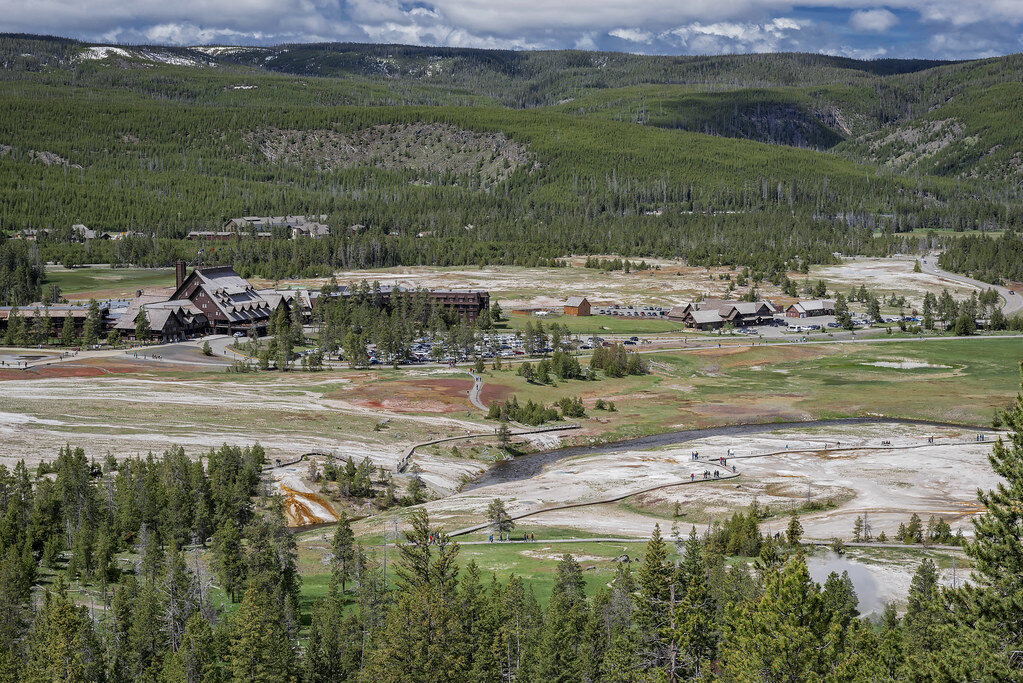
Old Faithful has earned its name. Located in Yellowstone’s Upper Geyser Basin, this iconic geyser erupts roughly 20 times each day, sending 14,000 to 31,800 liters of geothermal water shooting up to 56 meters into the air, with each eruption lasting between 90 seconds and five minutes.
The park posts predicted eruption times at the Old Faithful Visitor Education Center, so you can plan your schedule around the show. The surrounding boardwalk network lets you explore dozens of other geysers and thermal pools in the same basin.
Key Insight: Old Faithful is the most visited geyser in the world, but the Fairy Falls Trail nearby leads to an elevated overlook with one of the best aerial views of the Greater Yellowstone basin — and far fewer people.
4. Grand Prismatic Spring
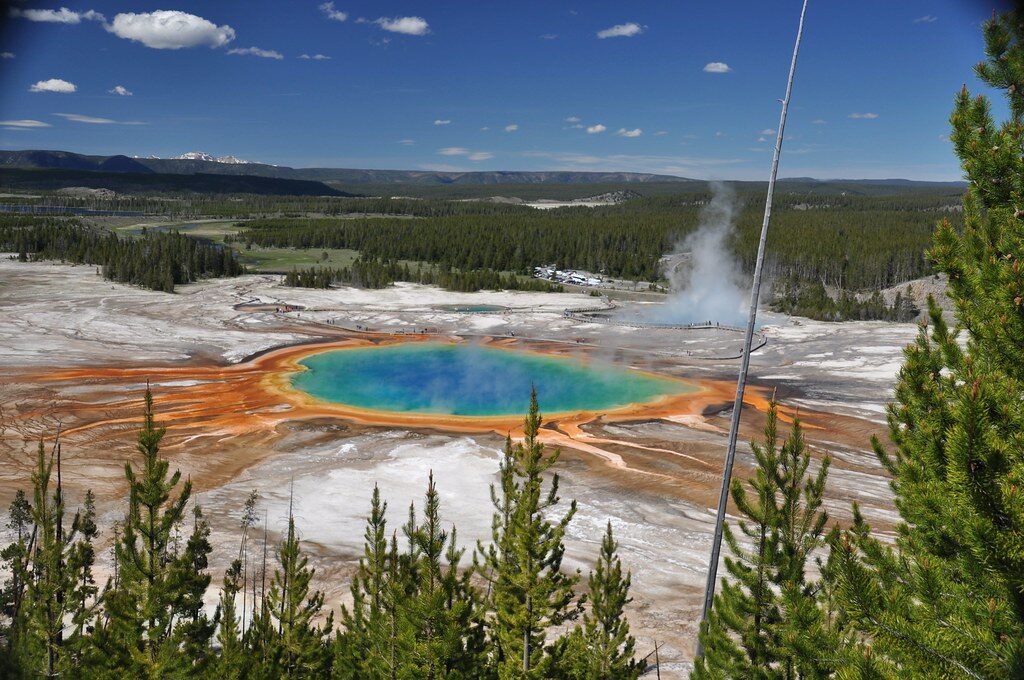
Though Old Faithful gets more name recognition, the Grand Prismatic Spring is the most photographed thermal feature in all of Yellowstone. At 370 feet in diameter and over 121 feet deep, it ranks as the third-largest hot spring in the world.
Its vivid rings of orange, yellow, and green come from thermophile bacteria living in progressively cooler water around the edge, while the center glows a brilliant, almost electric blue from the sheer depth and purity of the water. You’ll find it in the Midway Geyser Basin, easily accessible via a short boardwalk walk from the parking area.
For a bird’s-eye view, hike the Fairy Falls Trail for 0.5 miles to the designated overlook — the perspective from above makes the spring’s full scale and color spectrum far more visible.
5. Jackson Hole
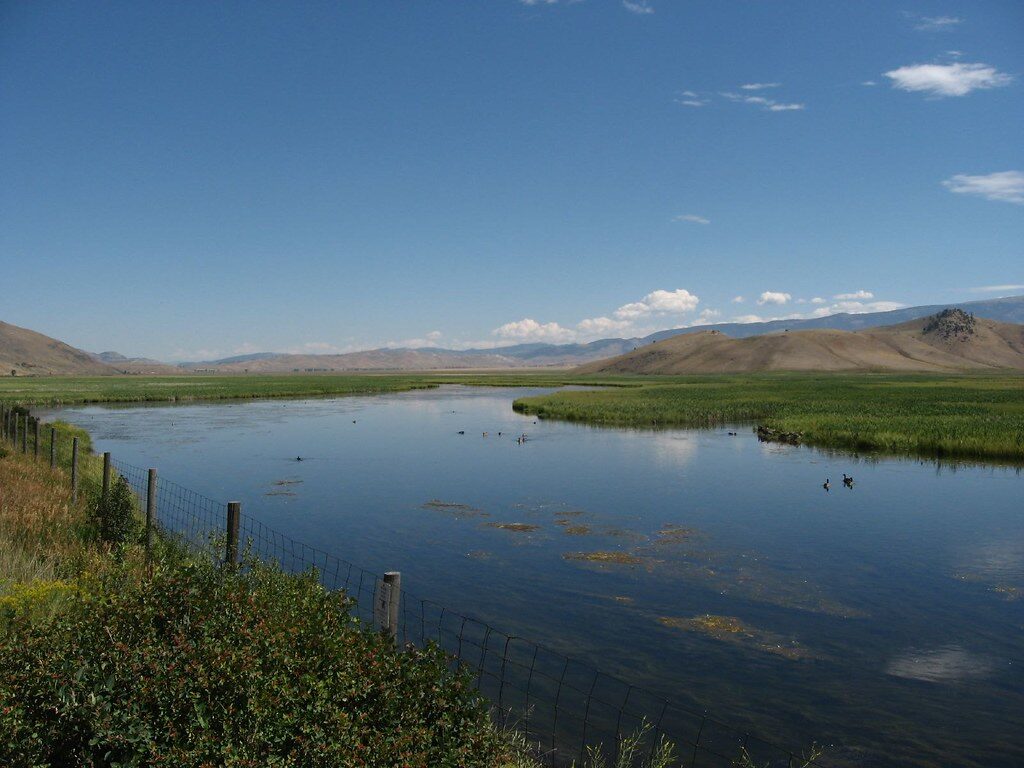
Jackson Hole is not just a ski resort town — it’s one of the most dynamic year-round destinations in the American West. The name refers to the entire valley surrounding the town of Jackson, flanked by the Teton Range to the west and the Gros Ventre Range to the east.
In summer, you can raft the Snake River, mountain bike scenic trails, attend a rodeo, ride the Jackson Hole Aerial Tram to the summit of Rendezvous Peak, or simply browse the shops and galleries around the famous antler-arch Town Square. In winter, the mountain resort draws skiers and snowboarders from around the world.
The Jackson Hole Airport is conveniently located within Grand Teton National Park, making this valley one of the most accessible Wyoming destinations by air.
6. Jenny Lake
Jenny Lake sits at the base of the Teton Range and ranks as one of the most visited areas within Grand Teton National Park. Formed approximately 12,000 years ago by glaciers that carved out Cascade Canyon, the lake covers 1,191 acres and reaches depths of 256 feet. Its waters are startlingly clear, reflecting the jagged peaks on calm mornings.
You can hike the 6.5-mile loop trail around the perimeter, take the scenic boat shuttle across the lake, rent a kayak or canoe from Jenny Lake Boating, or hike the half-mile path from the west dock to Hidden Falls.
| Activity | Details |
|---|---|
| Lake Loop Hike | 6.5 miles, flat terrain, full lake circumnavigation |
| Hidden Falls Hike | 0.5 miles from west boat dock, easy uphill |
| Cascade Canyon Trail | 7.5 miles round trip, mountain and canyon views |
| Boat Shuttle | Runs seasonally, cuts across the lake to the west trailheads |
| Kayak/Canoe Rental | Available from Jenny Lake Boating, $20/hour or $80/day |
Plan to arrive before 8 a.m. or after 4 p.m. — parking fills quickly during peak season.
7. Snake River
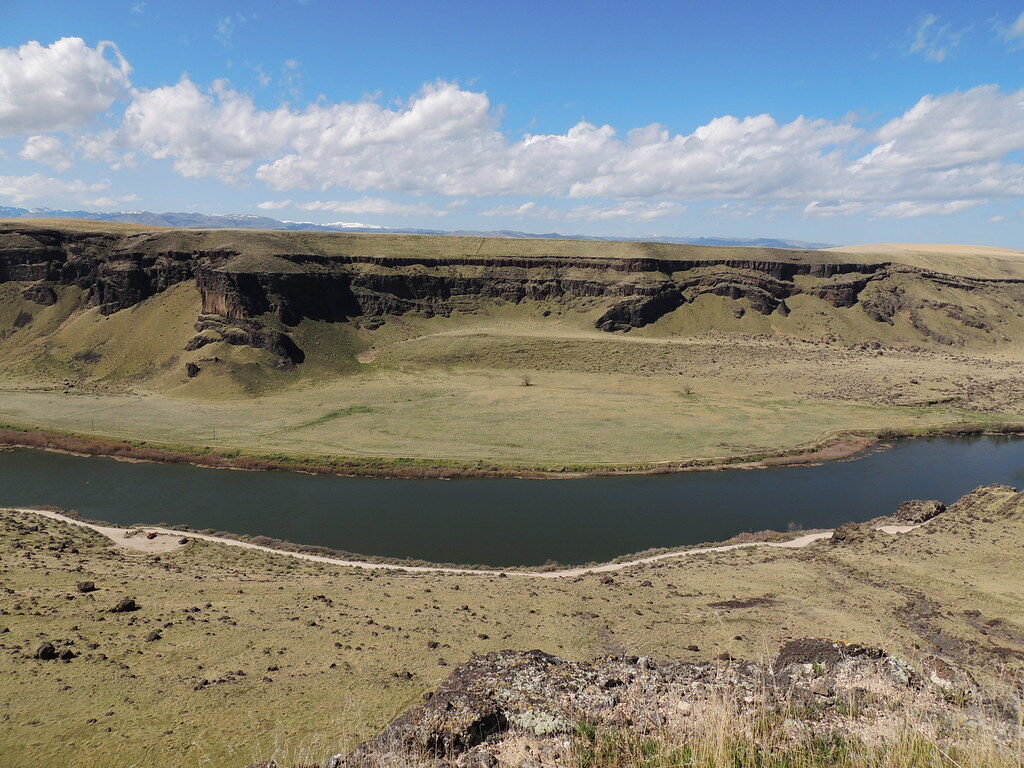
The Snake River originates in Grand Teton National Park and winds through Jackson Hole Valley, offering one of the most scenic rafting and fishing corridors in Wyoming. Float trips range from mellow scenic floats with panoramic Teton views to exhilarating whitewater sections in Snake River Canyon south of Jackson.
Guided fishing trips on the river are popular for fly anglers targeting cutthroat and brown trout. Several outfitters in Jackson offer half-day and full-day guided trips, and both kayaking and stand-up paddleboarding are common on calmer stretches.
Pro Tip: The 10-mile scenic float from Deadman’s Bar to Moose Landing is ideal for families and first-timers — calm water, abundant wildlife sightings, and the Teton Range framing every bend in the river.
8. Devils Tower National Monument
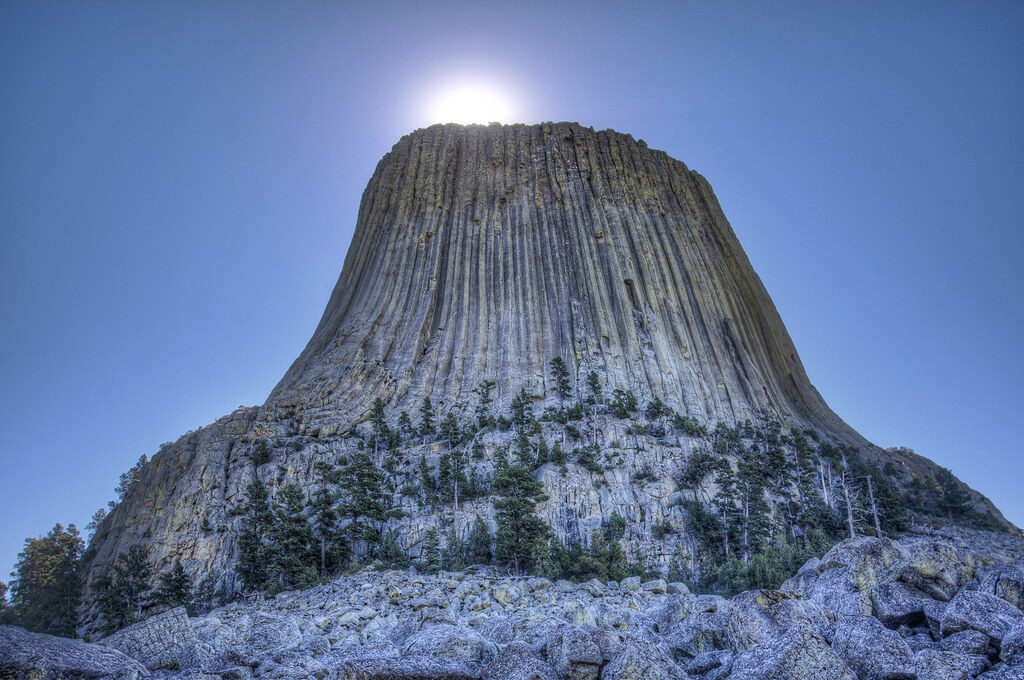
Rising 1,267 feet above Wyoming’s eastern plains and the Belle Fourche River Valley, Devils Tower is one of the most striking geological features in North America. President Theodore Roosevelt designated it as the first U.S. national monument in 1906. The tower holds profound spiritual significance for numerous Northern Plains tribes, and you’ll see prayer bundles and cloth offerings tied to trees along the Tower Trail as a visible reminder of that connection.
The paved 1.3-mile Tower Trail loops around the base and offers close-up views of the columnar rock faces. Experienced climbers can apply for permits to ascend the tower, though a voluntary climbing closure is observed each June out of respect for Native American ceremonies.
9. Flaming Gorge National Recreation Area
Located in the southwestern corner of Wyoming and spilling into northern Utah, Flaming Gorge National Recreation Area is built around a 91-mile reservoir created by the Flaming Gorge Dam on the Green River. The canyon walls here burn red and orange in the afternoon light, which gives the area its name. It’s a well-known destination for boating, water skiing, kayaking, and fishing — rainbow and lake trout and kokanee salmon are among the most sought-after catches. Scenic drives along the rim offer dramatic overlooks, and hiking trails range from short interpretive walks to multi-day backcountry routes.
10. Bighorn Canyon National Recreation Area
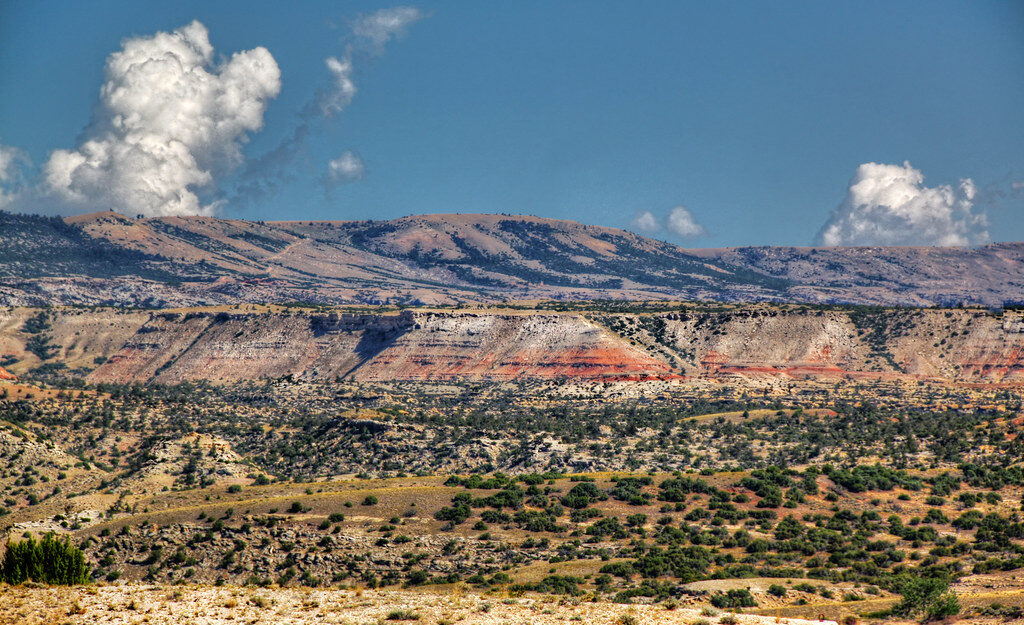
Bighorn Canyon spans roughly 120,000 acres across northern Wyoming and southern Montana, centered on a 71-mile-long reservoir with canyon walls that rise more than 1,000 feet in places. The Devil’s Canyon Overlook alone is worth the drive. The area supports over 200 bird species, bighorn sheep, mule deer, and wild horses, making it a productive wildlife-watching destination. Historic ranches — including the Mason-Lovell and Ewing-Snell ranches — are preserved within the park boundaries, offering a look at the region’s ranching heritage alongside its natural drama.
11. Hot Springs State Park
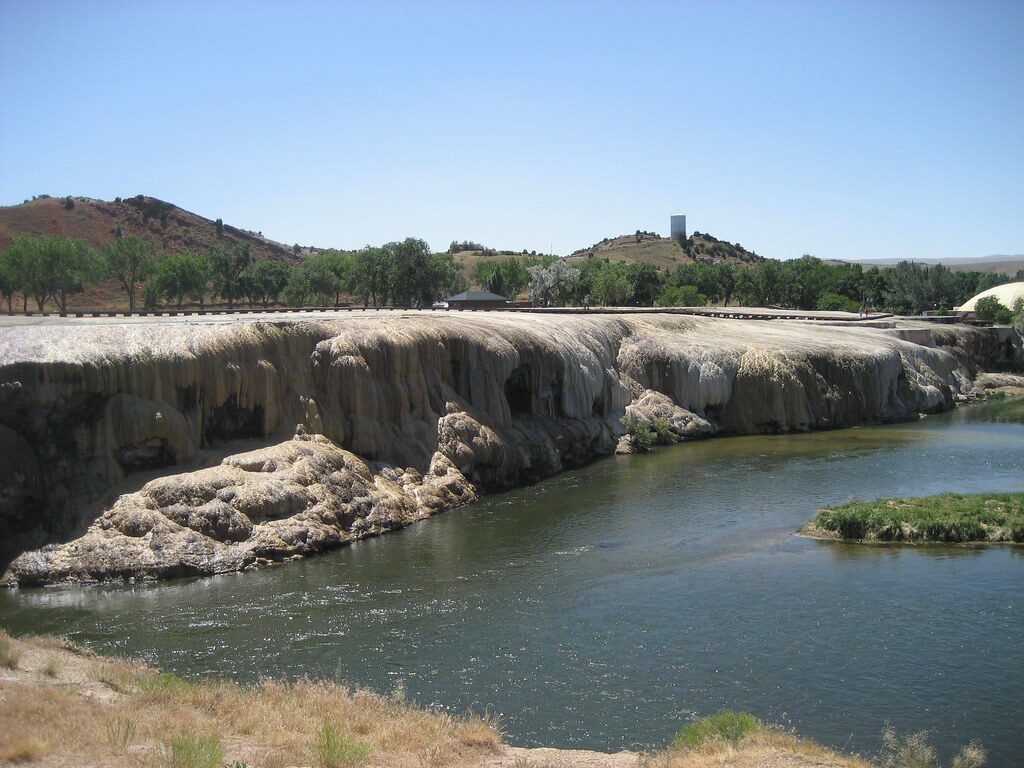
Thermopolis is home to one of Wyoming’s most relaxing and underrated stops: Hot Springs State Park , which sits on what is reportedly the world’s largest mineral hot spring. The state-owned bathhouse offers free public soaking, a rare amenity in any national or state park system. The park also includes a bison herd, scenic walking trails along the Bighorn River, and a terraced mineral deposit formation that gives the landscape an otherworldly appearance. The Wyoming Pioneer Memorial Museum in Thermopolis adds historical context to the region if you want to extend your visit.
Key Insight: The free soaking pools at Hot Springs State Park are open year-round, making this a worthwhile stop even on shoulder-season road trips through central Wyoming.
12. Fossil Butte National Monument
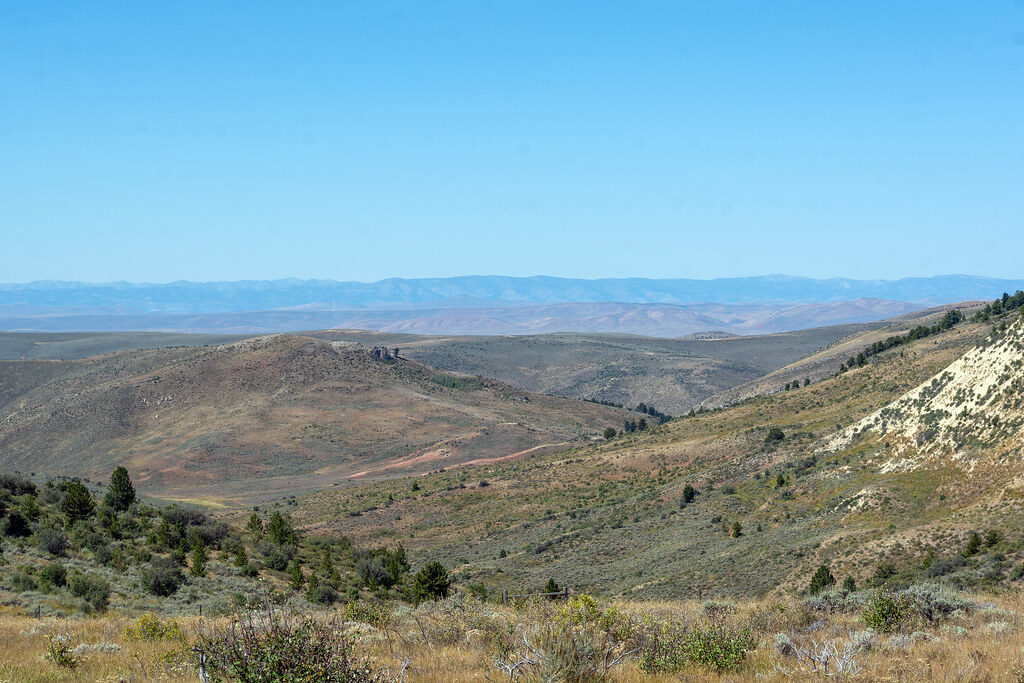
Fifty-two million years ago, what is now southwestern Wyoming lay at the bottom of a subtropical lake teeming with fish, insects, birds, and plant life. Today, Fossil Butte National Monument protects one of the world’s most complete and detailed records of that ancient ecosystem.
The fine-grained limestone here preserves fossils in extraordinary detail — fish, turtles, bats, palm fronds, and crocodilians have all been recovered from these rocks. The visitor center displays many of the park’s finest specimens, and interpretive trails lead through the butte’s distinctive landscape. Fossil Butte is relatively uncrowded compared to Wyoming’s major parks, making it a peaceful and genuinely fascinating stop.
13. Fort Laramie National Historic Site
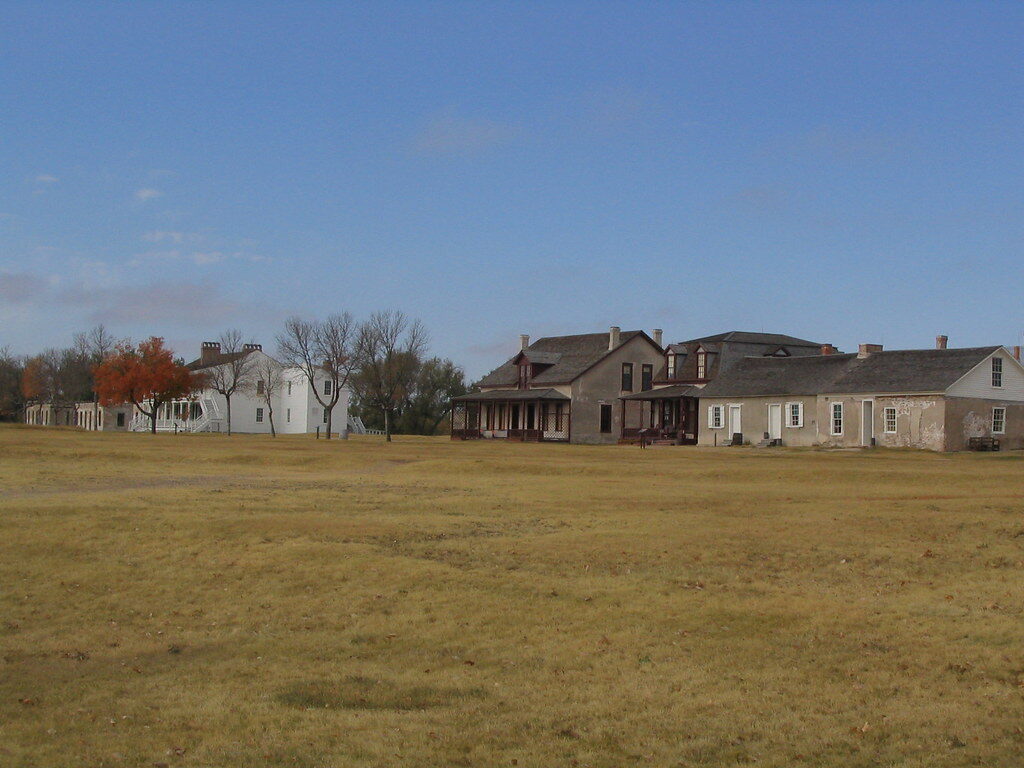
Fort Laramie sits near the confluence of the North Platte and Laramie rivers in eastern Wyoming, and its story is central to understanding the American West. Originally a fur trading post, it became the most important military garrison on the northern Plains, a rest stop for hundreds of thousands of emigrants heading west on the Oregon, California, and Mormon trails, and the site of critical treaty negotiations between the U.S. government and Northern Plains tribes. Twenty-two original and restored structures survive on the grounds today, and costumed interpreters bring the 19th century to life throughout the summer season.
14. Oregon Trail Ruts (Guernsey)

Near the small town of Guernsey, you can walk up to one of the most tangible reminders of westward migration in the entire country. The sandstone here preserves wagon ruts up to five feet deep, cut by the iron-rimmed wheels of thousands of wagons heading west along the Oregon Trail between the 1840s and 1860s.
Standing in those grooves gives you a different kind of connection to history than any museum can — the sheer depth of them tells you just how many people passed through this exact spot. The site is easily accessible from Guernsey State Park, and admission is free.
15. Register Cliff (Guernsey)
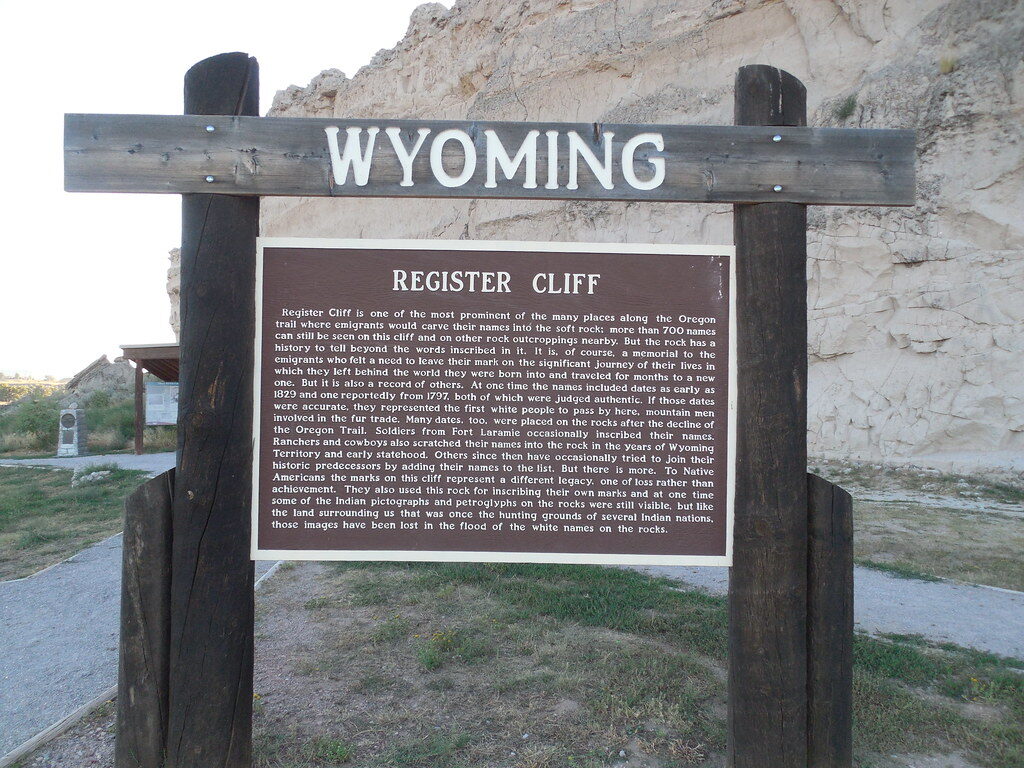
Less than three miles from the Oregon Trail Ruts, Register Cliff is a soft sandstone bluff where westbound emigrants carved their names, hometowns, and dates of passage into the rock face as they made camp. Hundreds of names from the 1840s through the 1860s are still legible today, ranging from neatly carved signatures to hurried scratches.
This is one of several such inscription sites along the trail, but Register Cliff is among the best preserved. Combined with the nearby wagon ruts, Guernsey makes for a half-day immersion in overland migration history.
16. Buffalo Bill Center of the West (Cody)
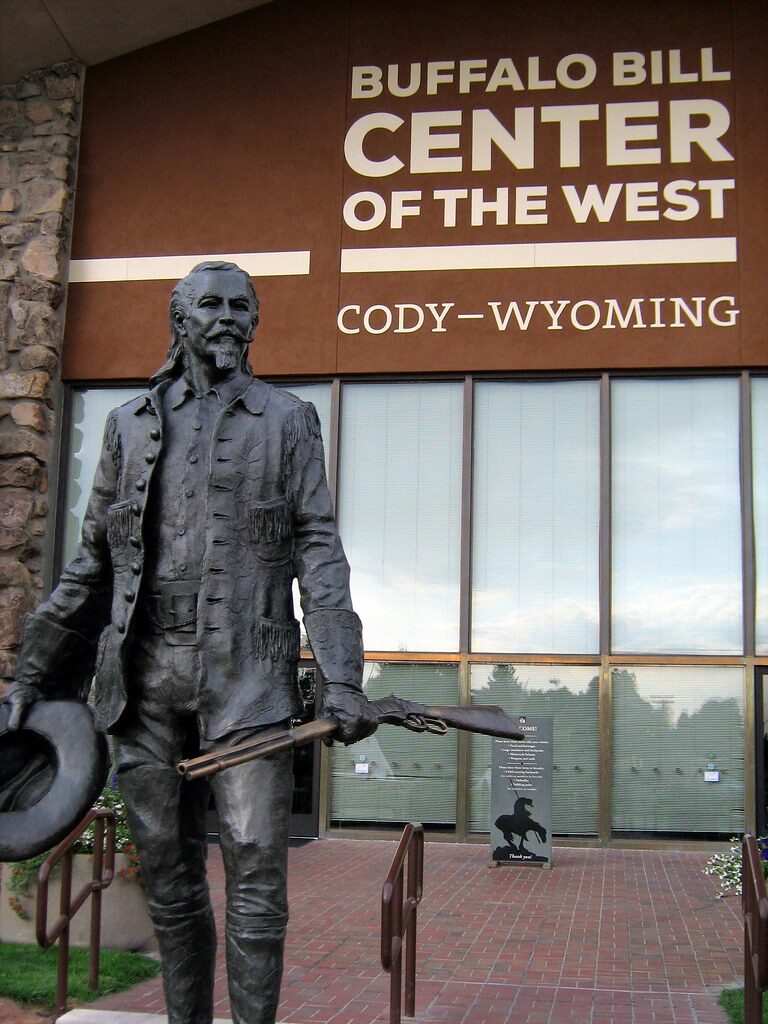
Cody, Wyoming — the town William “Buffalo Bill” Cody helped found — is home to what many Western historians consider the finest collection of Western American museums under one roof. The Buffalo Bill Center of the West comprises five separate museums: the Buffalo Bill Museum, the Whitney Western Art Museum, the Plains Indian Museum, the Draper Natural History Museum, and the Cody Firearms Museum.
The Plains Indian Museum alone holds one of the most comprehensive collections of Northern Plains Indian art and material culture in existence. Plan on spending at least half a day here — most visitors find that a full day still isn’t quite enough.
Pro Tip: Cody is located just 52 miles from Yellowstone’s East Entrance, making it an ideal base town for park visits combined with an afternoon at the Center of the West.
17. Cheyenne Frontier Days
Every July, the Wyoming state capital hosts Cheyenne Frontier Days , billed as the world’s largest outdoor rodeo and Western celebration. Since 1897, this 10-day event has featured world-class rodeo competitions, nightly concerts from major country and rock acts, a parade, a carnival, and the famous free pancake breakfast open to anyone who shows up.
The rodeo grounds draw tens of thousands of visitors each year, and the event genuinely captures the cowboy culture that defines Wyoming’s identity. If your trip timing allows it, this is one of the most memorable Western events in the country.
18. Wyoming State Capitol (Cheyenne)
Downtown Cheyenne’s most recognizable landmark is the Wyoming State Capitol , a Corinthian-style building with a gold-leaf dome that has stood since 1886. The capitol underwent an extensive restoration completed in 2019 and is open for free self-guided tours on weekdays. Inside, you’ll find original murals, detailed stonework, historical exhibits, and the famous “Esther Hobart Morris” statue commemorating the woman credited with helping secure Wyoming’s landmark 1869 women’s suffrage legislation — the first of its kind in the United States. The surrounding capitol grounds are walkable from several downtown restaurants and shops.
19. Medicine Bow National Forest
Covering more than 1.1 million acres across southeastern Wyoming, Medicine Bow National Forest is a year-round outdoor playground. The Snowy Range, within the forest, offers some of the most accessible alpine scenery in the state — the Snowy Range Scenic Byway (Wyoming State Highway 130) crosses 10,847-foot Snowy Range Pass and delivers views of Medicine Bow Peak at every turn. The forest supports mountain biking, fishing, cross-country skiing, snowmobiling, and dozens of campgrounds. Laramie, just east of the forest, makes an excellent base for exploring this often-overlooked corner of Wyoming.
20. Shoshone National Forest
Shoshone National Forest , the nation’s first federally protected forest reserve established in 1891, covers 2.4 million acres on the eastern slopes of the Absaroka and Wind River ranges west of Cody. It’s a gateway to Yellowstone on its western edge and shares much of the Greater Yellowstone Ecosystem’s wildlife — grizzly bears, wolves, and elk are all present. The Beartooth Highway cuts through the northern section of the forest, connecting Cody to Red Lodge, Montana, through some of the most dramatic road scenery in North America. Horse packing, fly fishing, and backcountry camping are popular throughout the summer months.
21. Bridger-Teton National Forest
At 3.4 million acres, Bridger-Teton National Forest is one of the largest national forests in the contiguous United States and wraps around the southern and eastern edges of Grand Teton National Park. The forest contains the headwaters of multiple major river systems, hundreds of miles of backcountry trails, and the massive Bridger Wilderness, which encompasses much of the Wind River Range. Towns like Pinedale and Dubois serve as access points, offering local outfitters, guest ranches, and lodging that make Bridger-Teton accessible for both day trippers and multi-week expeditions.
22. Laramie Plains Lakes
Southwest of Laramie, a series of glacially formed lakes sits at high elevation on the Laramie Plains, offering excellent fishing, boating, and birdwatching against a backdrop of rolling high-country terrain. Wheatland Reservoir and Lake Hattie are among the most accessible and popular for anglers targeting rainbow trout and walleye. The plains surrounding these lakes host large populations of pronghorn antelope — the fastest land animal in North America — and the sunsets here across open grassland have a kind of austere beauty that typifies the Wyoming landscape most travelers don’t know to look for.
23. Vedauwoo Recreation Area
Located just off Interstate 80 between Laramie and Cheyenne, Vedauwoo is one of Wyoming’s best-kept secrets for rock climbers and hikers. The area features massive Sherman granite formations — rounded, bulging outcrops unlike the sharp peaks of the Tetons — that have been popular with technical climbers for decades. Beginner hikers can explore the 2.8-mile Turtle Rock Loop through the boulders, while experienced climbers will find challenging crack routes and face climbs. Vedauwoo is accessible year-round, and a quick stop off I-80 makes it easy to work into a longer Wyoming road trip.
24. Ayres Natural Bridge
Hidden in a canyon of the Laramie Mountains in eastern Wyoming, Ayres Natural Bridge is one of the few natural arches in North America where a living stream flows beneath the span. The red sandstone arch rises about 50 feet above La Prele Creek and is free to visit through a small county park. It’s an easy, short hike from the parking area and makes a pleasant stop between Casper and Douglas. The canyon setting, complete with cottonwood trees and the creek running through, provides a quiet contrast to Wyoming’s more wide-open scenery.
25. Boysen State Park
Boysen State Park surrounds Boysen Reservoir in the Wind River Canyon area of central Wyoming. The reservoir, created by Boysen Dam on the Wind River, offers 71 miles of shoreline and is one of Wyoming’s premier warm-water fishing destinations — walleye, perch, rainbow trout, and large-mouth bass are all present. Waterskiing, sailing, and camping are popular throughout the summer, and the surrounding landscape of canyon walls and open sagebrush flats gives the park a distinctly western feel.
26. Glendo State Park
Glendo State Park on the North Platte River in eastern Wyoming is a relaxed, family-friendly destination centered on Glendo Reservoir. Swimming beaches, boat ramps, fishing for walleye and bass, and multiple campgrounds along wooded coves make it one of the more popular summer getaways for Wyoming families and visitors from neighboring Nebraska and Colorado. It’s also positioned near the Oregon Trail corridor, so the historical and recreational dimensions of a stop here combine naturally.
27. Sinks Canyon State Park
One of Wyoming’s most unusual geological features anchors Sinks Canyon State Park near Lander in central Wyoming. The Popo Agie River flows into a cave in the limestone — called “The Sinks” — disappears completely underground, then reappears a quarter-mile away in a large clear pool called “The Rise.” Scientists have found that the water takes more than two hours to travel that short distance underground, a mystery that hasn’t been fully explained. The Rise pool is stocked with large trout, and wildlife including bighorn sheep and black bears are regularly spotted along the canyon trails.
Key Insight: The park offers free parking and accessible boardwalks near both The Sinks and The Rise, making it one of the most rewarding stops in central Wyoming for all ability levels.
28. Wind River Canyon
Between the towns of Thermopolis and Shoshoni, the Wind River cuts through the Owl Creek Mountains to form Wind River Canyon — a dramatic gorge with walls rising over 2,500 feet. U.S. Highway 20 runs directly through the canyon along the river’s edge, making this one of the most scenic drives in Wyoming without requiring a single step out of the car. The canyon walls expose some of the oldest rock in North America, dating back nearly 2.9 billion years, and geological markers along the road identify the formations as you pass through. Fishing access points along the river draw fly anglers throughout the season.
29. Cloud Peak Wilderness
Within the Bighorn National Forest in north-central Wyoming, the Cloud Peak Wilderness protects 189,000 acres of pristine alpine terrain centered on Cloud Peak, which rises to 13,167 feet. The wilderness has no roads, no mechanized vehicles, and no designated campsites — just trails, glacial lakes, high tundra, and the kind of silence that’s genuinely hard to find anywhere near a major highway. This is backcountry territory best suited for experienced hikers and backpackers. The trailheads near Buffalo, Wyoming, provide access to the western side of the wilderness, with multi-day routes connecting dozens of high alpine lakes.
30. Beartooth Highway (Northern Wyoming)
Connecting Cody, Wyoming, to Red Lodge, Montana, the Beartooth Highway crosses the Beartooth Plateau at nearly 11,000 feet and is widely considered one of the most scenic highways in the United States. The road passes through Shoshone National Forest and the Custer-Gallatin National Forest, climbing through switchbacks to tundra views that extend for miles in every direction. Snow can linger at the summit well into June, and the highway typically closes from November through mid-May. Budget two to three hours each way to stop for photos and short walks at the numerous overlooks.
31. Norris Geyser Basin
Norris Geyser Basin is the hottest and most dynamic thermal area in Yellowstone, and arguably the most scientifically fascinating. Located at the intersection of three major fault lines, the basin shifts constantly — geysers appear, disappear, and change behavior from season to season. Steamboat Geyser, located here, is the world’s tallest active geyser, capable of erupting over 300 feet high during major events. Two self-guided trail loops — the Porcelain Basin Loop and the Back Basin Loop — cover the area’s main features, and the Norris Geyser Basin Museum provides excellent geological context.
32. Mammoth Hot Springs
Near Yellowstone’s north entrance, Mammoth Hot Springs presents a completely different thermal landscape than the geyser basins in the park’s interior. Here, hot water saturated with calcium carbonate flows over terraced limestone formations, depositing new layers of travertine and creating a landscape of white, cream, and orange terraces that shifts perceptibly year to year. The Upper and Lower Terrace boardwalk loops let you walk through the formations safely, and the historic Fort Yellowstone buildings nearby date to the U.S. Army’s administration of the park in the late 1800s.
33. Lamar Valley (Wildlife Watching)
If you want to see wolves in the wild, Lamar Valley is one of the best places in North America to do it. Located in Yellowstone’s northeastern corner, the valley’s open meadows and river floodplain support bison herds that number in the thousands, along with elk, pronghorn, coyotes, grizzly bears, and the wolves of the Lamar pack, which are regularly spotted from the road. Wildlife watchers and photographers arrive before dawn with spotting scopes to catch the action during the golden hour. The park road through the valley is open year-round, and winter offers some of the best wolf viewing as the animals are more active and easier to spot against snow.
34. Absaroka Range
The Absaroka Range runs along Yellowstone’s eastern edge and continues south through Shoshone National Forest, forming one of Wyoming’s most rugged and remote mountain backdrops. The range isn’t heavily marketed as a destination in itself, but its deep river drainages, 12,000-foot peaks, and dense wildlife populations make it prized territory for outfitters, hunters, and serious backcountry travelers. The road over Togwotee Pass (U.S. Highway 26/287), which crosses the Absaroka on its way between Dubois and Jackson Hole, offers a spectacular and less-traveled alternative to the main park corridors.
35. National Elk Refuge (Jackson)
Just north of downtown Jackson, the National Elk Refuge protects 25,000 acres of winter range for the Jackson elk herd, which can number 7,000 to 10,000 animals during peak winter months. From December through March, horse-drawn sleigh rides carry visitors out into the refuge for close-up views of the elk at feeding time — a genuinely memorable winter wildlife experience. The refuge is also productive for birding year-round, and the surrounding sagebrush flats support pronghorn, coyotes, and raptors in the warmer months.
36. National Museum of Wildlife Art (Jackson)
Perched on a ridge just north of Jackson, the National Museum of Wildlife Art holds one of the most significant collections of wildlife-focused fine art in the world. The permanent collection spans more than 5,000 works across 14 galleries and includes paintings and sculptures from artists like Carl Rungius, Georgia O’Keeffe, and John James Audubon, with work ranging from 2500 B.C. to the present day. The building’s rough-stone exterior blends into the sagebrush hillside, and the large windows in the main galleries frame live views of the National Elk Refuge across the valley. Admission is charged, and the museum’s café and outdoor terrace are worth lingering in.
37. Wyoming Territorial Prison State Historic Site
Before Wyoming had a state penitentiary, it had the Wyoming Territorial Prison in Laramie, which operated from 1872 to 1903 and briefly housed the notorious outlaw Butch Cassidy. Today the site functions as a living history museum, with restored cellblocks, costumed interpreters, a replica frontier town, and hands-on exhibits focused on law, order, and outlaw culture in the 19th-century West. The broom factory where prisoners worked has also been restored and interpreted. It’s a family-friendly stop in Laramie that pairs well with a visit to Vedauwoo or the University of Wyoming campus nearby.
38. Ames Monument
Rising 60 feet from a windswept plateau between Laramie and Cheyenne along old U.S. Highway 30, the Ames Monument is a granite pyramid built in 1882 to honor brothers Oakes and Oliver Ames, who were central figures in financing and building the First Transcontinental Railroad. Designed by architect Henry Hobson Richardson, the pyramid once marked the highest point on the original Union Pacific line. The monument sits on private land adjacent to a pullout, and while you can view it from outside, the isolated setting — no trees, just open plains and the pyramid — makes it an evocative stop on a cross-state drive.
39. Independence Rock State Historic Site
Between Casper and Rawlins along Wyoming Highway 220, Independence Rock is a massive granite dome that sits beside the Sweetwater River and served as one of the most important landmarks on the Oregon, California, and Mormon trails. Emigrant parties aimed to reach the rock by July 4th — Independence Day — to stay on schedule for crossing the Sierra Nevada before winter. More than 50,000 names were carved or painted onto the rock’s surface by passing emigrants, many of which remain legible today. A paved path circles the base of the rock, and interpretive panels explain the migration history in detail.
40. South Pass City State Historic Site
High in the Wind River Range at nearly 7,800 feet, South Pass City preserves a gold rush town that flourished briefly in the late 1860s and is best known today for producing Wyoming’s first territorial legislature — the body that passed the nation’s first women’s suffrage law in 1869. More than 30 original structures survive, including a hotel, saloon, smithy, and miners’ cabins, all interpreted by state park staff. The site also contains the Carissa Mine, one of the area’s most productive gold operations, with guided tours available in summer. South Pass City is a genuinely preserved piece of frontier Wyoming that most travelers drive past without knowing it’s there.
Wyoming rewards the curious traveler. The tourist attractions in Wyoming range from globally recognized natural wonders to roadside historical markers that most people zoom past without a second glance — and both kinds deserve your attention.
Whether you’re crossing the state in three days or spending three weeks in the Wind Rivers, this list gives you the framework for a trip that goes well beyond Yellowstone’s boardwalks. Pack a Wyoming road map, leave room in your schedule for the unexpected, and keep your eyes on the horizon. In this state, the best things are usually just around the next bend.

A blogger. She writes regularly for an online website.