How Much Does an Apartment Cost in Puerto Rico? Rents, Prices & Neighborhoods Explained

April 10, 2026
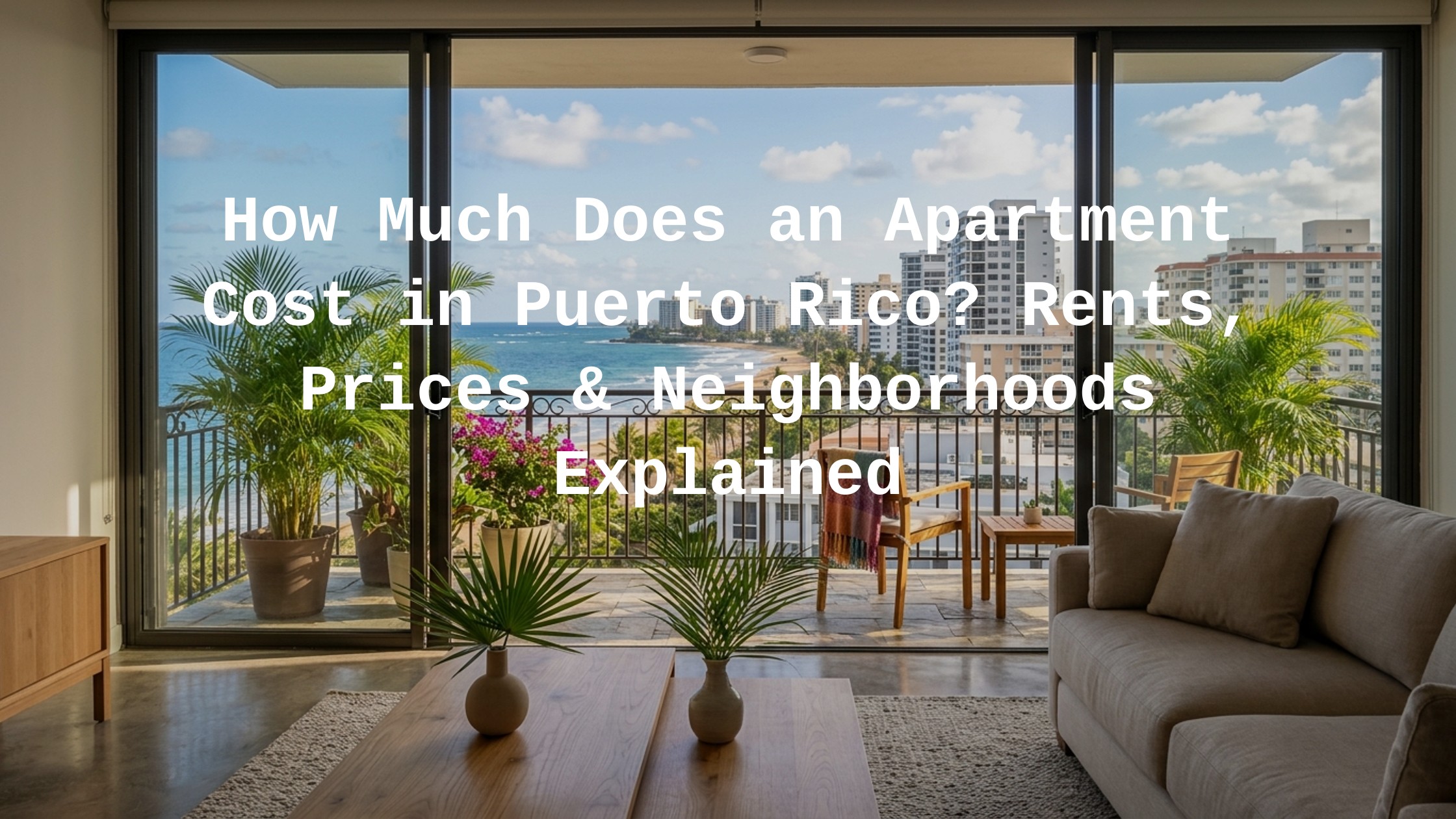
Puerto Rico sits in a fascinating middle ground when it comes to housing costs — more affordable than most major U.S. cities, yet pricier than many people expect, especially in tourist-heavy neighborhoods like Condado or Isla Verde. Whether you’re planning a move, considering a real estate investment, or just trying to understand what your budget can realistically get you on the island, knowing the actual numbers matters.
In this guide, you’ll find a detailed breakdown of apartment costs in Puerto Rico by size, location, and ownership status — plus practical tips for navigating the local rental market. From studio apartments in San Juan to budget-friendly options in the island’s western towns, here’s what you need to know before you sign a lease or make an offer.
Average Rent in Puerto Rico by Apartment Size
Rental prices in Puerto Rico vary considerably depending on the size of the unit and where on the island you’re looking. Understanding the typical ranges by bedroom count gives you a realistic starting point for budgeting.
Studio Apartments: Studio apartments range from $833 per month in normal areas to $1,735 in more expensive locations. If you’re looking to minimize costs and don’t need much space, studios in smaller cities or inland towns can be found at the lower end of that range.
1-Bedroom Apartments: The price range for a 1-bedroom apartment in Puerto Rico is between $650 and $1,200 per month. However, prime urban neighborhoods push that figure higher. In San Juan, expect to pay around $950–$1,400 a month for a one-bedroom apartment. In smaller cities like Arecibo, costs drop significantly: a one-bedroom apartment in the city center runs about $452, while one outside the center costs around $363 per month.
2-Bedroom Apartments: The price range for a 2-bedroom apartment in Puerto Rico is between $650 and $2,150 per month. In urban areas like San Juan and Ponce, a two-bedroom apartment typically costs $700–$1,500 per month.
3-Bedroom Apartments: Renting a three-bedroom apartment in the center of San Juan typically costs about $2,709 per month, whereas a comparable apartment located outside the city center is around $1,340 per month. In more affordable cities like Bayamón, a three-bedroom apartment in the center averages around $900 per month, while one farther from downtown typically costs about $807 monthly.
| Apartment Size | Budget Range (Island-Wide) | San Juan (Prime Areas) | Smaller Cities (e.g., Arecibo) |
|---|---|---|---|
| Studio | $833 – $1,735/mo | $1,200 – $1,735/mo | $833 – $1,000/mo |
| 1-Bedroom | $650 – $1,400/mo | $950 – $1,400/mo | $363 – $452/mo |
| 2-Bedroom | $650 – $2,150/mo | $700 – $1,500/mo | $500 – $800/mo |
| 3-Bedroom | $807 – $2,709/mo | $1,340 – $2,709/mo | $656 – $900/mo |
Pro Tip: If you need more space but want to keep costs down, look at different types of apartments — garden units, basement units, or split-level layouts in suburban areas often offer more square footage at lower price points than standard urban apartments.
Average Apartment Purchase Price in Puerto Rico
If you’re considering buying rather than renting, Puerto Rico’s real estate market has seen dramatic shifts in recent years. Prices have climbed sharply, but the island still offers relative value compared to the U.S. mainland.
In the first quarter of 2025, the median home sale price in Puerto Rico was $290,000, up 32% from a year earlier, but still well below the U.S. median of about $398,000 for that period. That gap makes Puerto Rico one of the more accessible real estate markets under the U.S. flag.
Entry-level buyers have options too. For those looking to buy, real estate prices can be attractive, with beachfront condos available for as low as $200,000 to $400,000 in some areas. On the other end of the spectrum, luxury markets are far more expensive. Premium markets like Condado show median listing prices climbing to $1.8 million, driven by scarcity in the luxury segment.
The Puerto Rico housing market experienced dramatic changes in 2025, with home prices jumping 71% year-over-year in many desirable areas. Much of this surge is driven by outside demand. A major factor in Puerto Rico’s soaring home prices is the explosive growth of short-term rentals across the island — with its abundant beaches, historic Old San Juan, and natural beauty, Puerto Rico has become a hugely popular destination for tourists and remote workers opting to stay in private rentals.
Key Insight: Apartment purchase prices are approximately 62.8% higher in U.S. city centers and 69.3% higher outside centers compared to Puerto Rico — meaning your dollar stretches considerably further on the island when buying property.
Cost of Renting vs. Buying in Puerto Rico
Deciding between renting and buying in Puerto Rico comes down to how long you plan to stay, your financial goals, and whether you qualify for any of the island’s tax incentive programs.
Renting offers flexibility and lower upfront costs, making it ideal for short-term stays. At the same time, buying is often a better long-term investment, especially with Puerto Rico’s growing property market and potential tax incentives under Act 60 for buyers.
From a purely financial standpoint, buying becomes advantageous for stays exceeding two years, particularly for Act 60 beneficiaries. Property appreciation rates currently outpace rental cost savings, creating wealth-building opportunities for patient investors.
On the ownership side, there are additional costs to factor in beyond the purchase price. Property purchases include closing costs of 3–5%, ongoing property taxes averaging 1.03% annually, and maintenance reserves of 1–2% of property value yearly. Renters, meanwhile, face their own hidden costs: rental agreements often exclude utilities, internet, and maintenance, adding $300–$800 monthly to base rent.
| Factor | Renting | Buying |
|---|---|---|
| Upfront Cost | First/last month + deposit | Down payment + closing costs (3–5%) |
| Monthly Cost | Rent + utilities ($300–$800 extra) | Mortgage + taxes (1.03%/yr) + maintenance |
| Flexibility | High — easy to relocate | Low — tied to property |
| Long-Term Value | No equity built | Appreciation + potential Act 60 tax benefits |
| Best For | Short stays, testing the market | Stays of 2+ years, investors |
For those interested in the tax angle, one of the biggest financial incentives for moving to Puerto Rico is the potential tax savings under Act 60, which allows investors relocating to Puerto Rico to benefit from no tax on both short and long-term capital gains, compared to the 15–20% tax rate on the mainland. This makes ownership particularly compelling for qualifying individuals.
Important Note: Most luxury rentals require the first month, last month, and a security deposit upfront — so budget for three months of rent before you even move in when targeting higher-end properties in areas like Condado or Dorado.
Cheapest and Most Expensive Neighborhoods in Puerto Rico
Where you choose to live on the island makes an enormous difference in what you’ll pay. Puerto Rico’s geography and tourism patterns create sharp contrasts between neighborhoods just a few miles apart.
Most Expensive Areas: Prime areas like San Juan, Condado, and Isla Verde are more expensive, with furnished apartments averaging $2,341 for an 85 m² unit. Trendy neighborhoods like Condado, Miramar, and Isla Verde come with convenience, ocean views, and a higher price tag. Dorado is another premium market: rental prices there vary significantly, with single-family homes listed between $2,100 and $30,000 per month.
Mid-Range Areas: Guaynabo apartments have a median rental price of $2,100 per month. A three-bedroom apartment in Bayamón’s center averages around $900 per month, while a similar apartment situated farther from downtown typically costs about $807 monthly — making Bayamón a solid middle-ground option with easy access to San Juan.
Most Affordable Areas: Higher rent prices are common in the northern parts of Puerto Rico, while lower rent rates are often available in western areas. Mountain towns are more affordable and peaceful, with cooler weather. Cities like Arecibo and Ponce offer rural area pricing of $400–$800 per month for comparable properties to what you’d find in urban zones.
- Condado / Isla Verde / Old San Juan: $1,500–$2,500+/mo for a 1-bed; luxury market
- Dorado: $2,100–$30,000/mo depending on property type
- Guaynabo: Median ~$2,100/mo
- Bayamón: $807–$900/mo for a 3-bed; strong value near San Juan
- Arecibo: $363–$824/mo; one of the most affordable cities
- Mountain Towns (Jayuya, Orocovis, etc.): $400–$700/mo; lowest costs on the island
You can also explore apartment-friendly lifestyle considerations when evaluating neighborhoods — factors like walkability, pet policies, and proximity to green spaces vary widely across Puerto Rico’s municipalities.
What Affects Apartment Prices in Puerto Rico
Several forces shape how much you’ll pay for an apartment in Puerto Rico. Understanding them helps you make smarter decisions about where and when to rent or buy.
Tourism and Short-Term Rentals: In less than a decade, the number of short-term rental units in Puerto Rico surged from roughly 1,000 in 2014 to over 25,000 in 2023. This “Airbnb boom” has effectively diverted a significant share of the island’s housing stock into the vacation market, contributing to a housing shortage and higher prices for locals. Rental inventory has tightened significantly as property owners convert long-term rentals to short-term vacation rentals, capitalizing on tourism demand.
Location and Proximity to the Coast: Rental costs in Puerto Rico vary by location, property type, and amenities. Beachfront and ocean-view properties command the steepest premiums. Living just outside the tourist core — for example, beyond Old San Juan’s most popular blocks — is often cheaper than a beachfront high-rise.
Remote Work and Mainland Migration: Remote work adoption brings mainland professionals seeking island lifestyles, while tourism recovery drives short-term rental conversions. This influx of higher-income earners has pushed prices upward in desirable neighborhoods.
Act 60 Tax Incentives: Among the newcomers driving demand are wealthy individuals drawn by Puerto Rico’s lucrative tax incentives, known as Act 60. This program has made the island a hotspot for high-net-worth buyers, particularly in premium neighborhoods like Condado and Dorado.
Infrastructure and Utilities: Infrastructure challenges such as power stability and hurricane preparedness can impact living expenses depending on location. Electricity costs are notably high: rates reach $0.28–$0.30 per kilowatt-hour, compared to about $0.17–$0.19 per kWh for the U.S. residential average.
Common Mistake: Budgeting only for rent without factoring in Puerto Rico’s high electricity costs. Electricity alone can run $150–$350 monthly, varying by property size and AC usage — a significant line item that renters often underestimate.
Is Puerto Rico Affordable Compared to the Rest of the US
The short answer is yes — but with important caveats that depend heavily on your income source and chosen neighborhood.
Puerto Rico’s cost of living is generally lower than many parts of the United States, particularly in terms of housing and utilities. However, imported goods and private healthcare may be more expensive. More specifically, housing costs are 20–40% lower than the U.S. average.
The data reinforces this picture. U.S. rents are approximately 108.9% higher than Puerto Rico, and apartment purchase prices are roughly 62.8% higher in city centers and 69.3% higher outside centers compared to Puerto Rico. That’s a significant advantage for anyone relocating from a high-cost state.
However, the income side of the equation complicates things for local residents. Puerto Rico’s average monthly net salary is approximately $2,433, which is about 38.8% lower than the average U.S. salary of $4,537. This income disparity means that while the cost of living is generally lower, local wages may not support a high standard of living for everyone.
Individuals earning mainland-level salaries often find Puerto Rico comfortably affordable, especially if they make careful choices about where to live and how to spend their money. Remote workers and retirees drawing U.S.-level income are particularly well-positioned to benefit from the island’s lower housing costs.
For a useful comparison point, similar apartments in New York or San Francisco cost over $3,000 per month — often double or triple what you’d pay in San Juan for equivalent space. You can also compare how Puerto Rico stacks up against other international destinations by looking at apartment costs in Kathmandu for a broader global perspective.
That said, Puerto Rico’s cost of living is lower than that of major metropolitan areas like New York, San Francisco, or Miami. While some expenses, like electricity and imported goods, can be higher, the overall affordability — especially in housing — makes Puerto Rico an attractive option.
If you’re actively working to stretch your budget further, strategies like cutting your grocery costs can make a meaningful difference given that imported food items tend to run higher in Puerto Rico than on the mainland.
Tips for Finding an Apartment in Puerto Rico
The Puerto Rico rental market moves fast in desirable areas and requires a different approach than searching on the mainland. Here’s how to navigate it effectively.
1. Research neighborhoods before committing. Prices vary by neighborhood — living just outside the tourist core is often cheaper than a beachfront high-rise. Spend time in multiple areas before signing a lease. What looks affordable online can feel very different in person once you factor in commute times and access to amenities.
2. Understand what’s included in the rent. Rental agreements often exclude utilities, internet, and maintenance, adding $300–$800 monthly to base rent. Always ask for a full breakdown of what’s covered before you compare listings side by side.
3. Budget for upfront costs. Most luxury rentals require the first month, last month, and a security deposit upfront. Even for standard apartments, be prepared to have two to three months of rent liquid before you move in.
4. Look beyond San Juan for value. Housing rentals in Arecibo are significantly lower than those in San Juan. Cities like Bayamón, Ponce, and Mayagüez offer solid infrastructure and community amenities at a fraction of the cost of prime San Juan neighborhoods. Ponce and Mayagüez offer mid-range costs with a strong cultural life.
5. Use multiple platforms to search. Listings on Zillow, RentCafe, and local Puerto Rico real estate sites like Point2Homes often show different inventory. Local Facebook groups and word-of-mouth referrals are also common ways to find off-market rentals on the island.
6. Act quickly in competitive areas. The Puerto Rican rental market thrives on vibrant demand. Urban areas like San Juan boast an average gross rental yield of 8.36%, with neighborhoods like Río Piedras offering even higher yields of 9% to 10% — meaning landlords have little trouble filling vacancies and aren’t likely to wait long for the right tenant.
7. Consider the urban living essentials you’ll need. Before signing, evaluate whether the unit meets your day-to-day needs. Reviewing urban living essentials every big city apartment must have can help you build a checklist so you don’t overlook key features like reliable AC, backup power options, or in-unit laundry — all of which matter significantly in Puerto Rico’s climate.
Pro Tip: If you’re relocating from the mainland and want to test island life before committing, consider a short-term furnished rental for the first one to three months. Long-term rentals offer stability and lower monthly rates, while short-term options provide flexibility, especially in tourist-heavy areas like San Juan. Starting short-term gives you time to find the right neighborhood without locking into a lease you might regret.
Whether you’re drawn to Puerto Rico for its tax incentives, its Caribbean lifestyle, or simply the lower cost of living compared to major U.S. cities, understanding the apartment market is the first step toward making a smart financial decision. Costs range from under $400 per month in rural inland towns to well over $2,500 in premium coastal neighborhoods — meaning your budget and priorities will ultimately determine what’s possible. Take the time to research specific neighborhoods, compare total monthly costs (not just base rent), and factor in your income source before committing to a lease or purchase.