How Much Does an Apartment Cost in Alaska? Rent and Buy Prices Explained

April 27, 2026
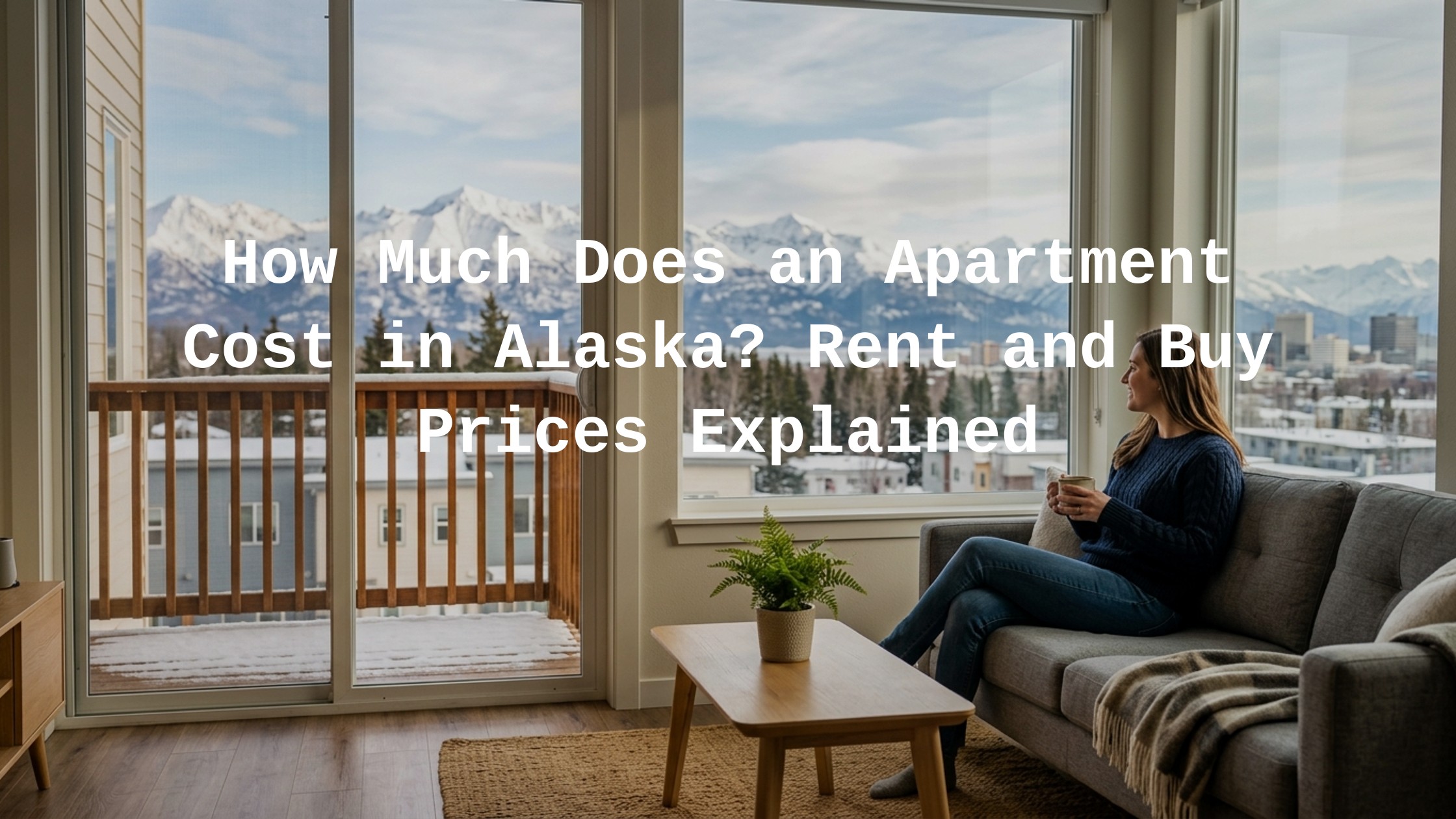
Alaska is one of the most unique places to live in the United States — and one of the most misunderstood when it comes to housing costs. Many people assume renting in the Last Frontier will drain their savings, but the reality is more nuanced than you might expect.
Whether you’re relocating for work, military service, or simply chasing an adventure, understanding apartment costs in Alaska before you commit is one of the smartest financial moves you can make. This guide breaks down current rent prices, purchase costs, neighborhood comparisons, and practical tips to help you find the right apartment at the right price.
Average Rent in Alaska by Apartment Size
Rental prices in Alaska vary significantly depending on the city, but statewide averages give you a solid baseline for budgeting. Across Alaska, you can generally expect to pay about $1,082 per month for a studio, $1,297 for a one-bedroom apartment, around $1,562 for a two-bedroom apartment, and $1,877 or more for a three-bedroom rental.
Anchorage, as the state’s largest city, commands slightly higher prices. When you rent an apartment in Anchorage, you can expect to pay about $1,123 per month for a studio, $1,325 for a one-bedroom, around $1,623 for a two-bedroom, and $1,793 or more for a three-bedroom unit.
Key Insight: Anchorage is the most rental-dense city in the state. You are more likely to find an apartment rental in Anchorage than anywhere else in Alaska, which gives you more options to compare before signing a lease.
Fairbanks, Alaska’s second-largest city, trends slightly higher than Anchorage for apartments. The average rent in Fairbanks for a one-bedroom apartment sits at $1,500 and two-bedroom apartments go for $1,750. Meanwhile, smaller cities like Kenai and Palmer tend to offer more budget-friendly options.
| Apartment Size | Alaska Statewide Avg. | Anchorage Avg. | Fairbanks Avg. |
|---|---|---|---|
| Studio | $1,082 | $1,123 | ~$1,679 |
| 1-Bedroom | $1,297 | $1,325 | ~$1,500 |
| 2-Bedroom | $1,562 | $1,623 | ~$1,750 |
| 3-Bedroom | $1,877+ | $1,793+ | N/A |
Keep in mind that the price range for all bedrooms and all property types across Alaska runs from $750 to $9,000, so outliers — particularly in remote or resort-adjacent areas — can skew the picture considerably.
Average Apartment Purchase Price in Alaska
If you’re thinking beyond renting, Alaska’s for-sale apartment and condo market is worth understanding. Home prices across the state have been climbing steadily. As of 2025, the median home price for all home types in Alaska is approximately $383,000, reflecting an 8.3% year-over-year increase.
Prices differ considerably between cities. The median home sale price in Anchorage is approximately $279,900, with a mix of suburban homes, condos, and townhouses. Fairbanks offers a lower entry point for buyers: the median home sale price in Fairbanks is $265,000, making homeownership slightly more attainable compared to other major Alaskan cities.
Important Note: Juneau is a notable outlier on the high end. In Juneau, the average home price is now over $500,000. If you’re considering the state capital, be prepared for significantly elevated purchase costs compared to the rest of Alaska.
Alaska has seen a steady increase in home values in recent years, and projections for the real estate market suggest the potential for continued growth, driven by investment inflows and the appeal of unique local property features. If you’re exploring different types of apartments before deciding whether to buy or rent, it helps to understand how unit types affect pricing in this market.
Cost of Renting vs. Buying in Alaska
The gap between renting and buying in Alaska has widened considerably in recent years, making this one of the most important financial decisions you’ll face if you’re moving to the state. In 2024, the principal and interest payment on a typical 30-year fixed-rate mortgage in Alaska was roughly $2,300 per month — 75% higher than in 2021.
In Anchorage specifically, it costs $860 more per month to buy than to rent, based on average monthly mortgage payments calculated using a 30-year fixed-rate loan with a 20% down payment. That’s a substantial premium that many renters are choosing to avoid — at least for now.
| Factor | Renting | Buying |
|---|---|---|
| Avg. Monthly Cost (Anchorage) | ~$1,325–$1,500 | ~$2,300+ |
| Upfront Cost | Security deposit + first month | 20% down payment + closing costs |
| Flexibility | High | Low |
| Long-Term Equity | None | Yes |
| Maintenance Responsibility | Landlord handles most repairs | Owner responsible |
About one-third of Alaskans rent, and when the cost of home buying rises — specifically mortgage costs — more people tend to rent, since the two are economic substitutes. If you’re still building your savings or unsure about long-term plans in Alaska, renting is often the more practical short-term choice.
Pro Tip: Use the 30% rule as your rent ceiling. To have enough money to cover bills, entertainment, and savings, you should keep rent under 30% of your total income before taxes. For a one-bedroom in Anchorage, that means targeting an annual income of roughly $48,560 or more.
You can also check out ways to cut your grocery costs to help offset Alaska’s notoriously high food prices while you’re budgeting your overall monthly expenses.
Cheapest and Most Expensive Neighborhoods in Alaska
Location within a city matters just as much as the city itself. In Anchorage, the spread between the most and least affordable neighborhoods is significant. Based on current rent prices, Midtown Anchorage, Downtown Anchorage, and North Star are the most affordable neighborhoods, while Sand Lake, Abbott Loop, and Campbell Park are the most expensive.
At the premium end, neighborhoods like Towne East command rents around $2,218 per month — well above the city average. On the affordable side, Independence Park comes in at around $1,327 per month, falling below the citywide average of $1,500.
Pro Tip: The largest share of rentals in Anchorage (53%) fall between $1,001–$1,500 per month, which means the majority of the market sits in a manageable range. You don’t have to settle for the cheapest option to stay within budget.
Beyond Anchorage, city-to-city differences are just as stark. The most expensive city in Alaska is Unalaska, where the cost of living is 36.4% higher than the rest of the U.S. and 17.1% higher compared to the state average. On the other end of the spectrum, the major city in Alaska with the lowest cost of living is Fairbanks, where it’s 10.7% lower compared to the state average — though still 4.0% higher than the national average.
For even more affordable options, smaller communities like Kenai and Palmer stand out. Kenai (cost-of-living index 105) and Palmer (107.5) have the cheapest cost of living in Alaska — Kenai’s is 16% below the state average, while Palmer’s is 14% lower. If you’re open to living outside a major city, these areas are worth a serious look. Before you sign a lease anywhere, it’s worth reviewing urban living essentials to make sure your apartment checks the right boxes.
What Affects Apartment Prices in Alaska
Alaska’s apartment pricing doesn’t follow the same logic as the lower 48 states. Several unique factors drive costs up — and understanding them helps you make smarter housing decisions.
Remote location and supply chain costs are the biggest culprits. The higher expenses stem from the state’s remote location, reliance on diesel fuel, and the energy demands of colder climates — with areas like Fairbanks and Juneau experiencing even steeper costs due to the logistical challenges of fuel delivery and heating during long winter months.
Population density and housing supply also play a major role. Economic stability, population growth, and limited housing supply are key factors currently shaping the real estate market in Anchorage. When supply is tight and demand is steady, landlords have more pricing power.
- Military and university presence: Fairbanks is home to the University of Alaska Fairbanks, Fort Wainwright, and Eielson Air Force Base — three major tenant magnets that keep rental demand consistently high.
- Heating and utility costs: For most Alaskan residents, the bulk of their utility bills stem from the necessary cost of heating their homes in the winter months. This cost is often baked into rent or passed on to tenants.
- Grocery and goods costs: On average, Alaskans spend about 36% more on groceries each month compared to the national average, making it the third most expensive state for grocery bills, behind only Hawaii and Vermont.
- Internet and connectivity: Internet prices are higher in Alaska because of its remote location, low population density, and the high cost of building and maintaining infrastructure.
- Seasonal demand: Tourism and seasonal employment create fluctuations in rental availability and pricing, especially in coastal and tourist-heavy areas.
Common Mistake: Budgeting only for rent without accounting for utilities. Internet and cell phone service alone can tack on about $200 or more per month to your estimated utility bill — and that’s before heating costs in winter.
If you’re curious how Alaska’s apartment market compares globally, take a look at what apartments cost in Kathmandu for an interesting international perspective on housing affordability.
Is Alaska Affordable Compared to the Rest of the US?
The short answer: it depends on where in Alaska you live — and what you’re comparing. For renters, Alaska is actually slightly below the national average. The average rent in Alaska is $2,000 — about 4.76% lower than the national average of $2,100. That might surprise you, but it reflects Alaska’s relatively modest apartment inventory in urban areas.
However, when you factor in the full cost of living, the picture shifts. The average cost of living in Alaska is 25% higher than the national average. Housing may be manageable, but groceries, utilities, healthcare, and transportation all add up quickly.
| Cost Category | Alaska vs. National Average |
|---|---|
| Rent (avg.) | ~5% lower |
| Overall Cost of Living | ~25% higher |
| Groceries | ~36% higher |
| Utilities (Anchorage) | ~13.3% higher |
| Transportation (Anchorage) | ~13.9% higher |
The good news is that Alaska’s income levels help offset some of these costs. The U.S. Census Bureau reports the median household income in Alaska as $86,370 a year, which is significantly above what you would need to follow the 30% rule for the median rent in areas like Anchorage.
While Fairbanks is the most affordable city to live in Alaska with a cost-of-living index of 121.4, even the cheapest major city still runs above the national average. Fairbanks does rank as a cheaper place to live when compared to Anchorage, but only slightly — both cities rank far above national averages.
Key Insight: Alaska has no state income tax and no state sales tax, which can meaningfully offset higher living costs for many residents. This is a financial advantage that doesn’t show up in standard cost-of-living comparisons.
If you’re weighing whether Alaska fits your lifestyle and budget, exploring apartment-friendly living choices and other lifestyle factors can help round out your decision.
Tips for Finding an Apartment in Alaska
Finding a good apartment in Alaska takes more preparation than in most states. The market moves quickly in cities like Anchorage, and remote areas have very limited inventory. Here’s how to approach your search strategically.
1. Start your search online early. Use platforms like Apartments.com , Zillow , and RentCafe to monitor listings and track price trends before you arrive. Alaska’s rental inventory is smaller than most states, so acting fast matters.
2. Factor in total monthly costs, not just rent. In Anchorage, you can expect to pay 26.5% more for groceries, 13.3% more for utilities, and 13.9% more for transportation compared to the national average. Build these into your budget from day one.
3. Consider smaller cities for better value. More affordable options can be found in places like Palmer, where housing prices are a little easier on the wallet. If your job allows flexibility, living outside Anchorage or Fairbanks can stretch your dollar considerably.
4. Check if utilities are included in rent. Many Alaskan landlords bundle heating costs into rent during winter months. Always ask upfront — a unit that appears more expensive may actually be a better deal once utilities are factored in.
5. Save on groceries strategically. You can save on groceries by shopping strategically at stores like Fred Meyer or Costco for bulk deals and member discounts. Local farmers’ markets, such as the Anchorage Farmers’ Market, can also offer fresh produce at competitive prices during summer months.
6. Time your move wisely. Summer months bring more listings and more competition. If you can move in late fall or winter, you may find landlords more willing to negotiate on price or lease terms.
7. Understand the lease terms for Alaska winters. Some leases include clauses about snow removal, heating system maintenance, or frozen pipe liability. Read the fine print carefully — investing in Alaska means higher maintenance costs, since cold weather leads to frozen pipes and other weather-related issues that can affect your living situation.
Pro Tip: If you’re relocating for a job, ask your employer about housing assistance or relocation stipends. Many Alaskan employers — especially in healthcare, energy, and government — offer housing benefits to attract workers from outside the state.
Once you’re settled, making your space work for you matters just as much as the rent you pay. Explore must-have essentials for apartment living to get your new Alaskan home set up right. And if you’re still comparing costs across different types of housing before making your final decision, reviewing the different types of apartments available can help you zero in on the best fit for your lifestyle and budget.